David A Foy – författare
Visar alla böcker från författaren David A Foy. Handla med fri frakt och snabb leverans.
6 produkter
6 produkter
620 kr
Skickas inom 5-8 vardagar
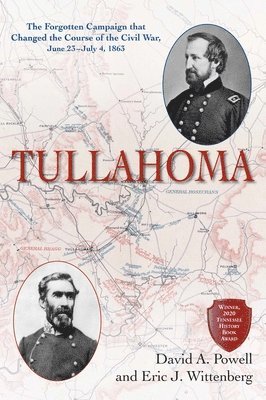
Tullahoma
The Forgotten Campaign that changed the Civil War, June 23 - July 4, 1863
Inbunden, Engelska, 2024
373 kr
Tillfälligt slut
July 1863 was a momentous month in the Civil War. News of Gettysburg and Vicksburg electrified the North and devastated the South. Sandwiched geographically between those victories and lost in the heady tumult of events was news that William S. Rosecrans’s Army of the Cumberland had driven Braxton Bragg’s Army of Tennessee entirely out of Middle Tennessee. The brilliant campaign nearly cleared the state of Rebels and changed the calculus of the Civil War in the Western Theater. Despite its decisive significance, few readers even today know of these events. The publication of Tullahoma: The Forgotten Campaign that Changed the Course of Civil War, June 23 - July 4, 1863 by award-winning authors David A. Powell and Eric J. Wittenberg, forever rectifies that oversight. On June 23, 1863, Rosecrans, with some 60,000 men, initiated a classic campaign of maneuver against Bragg’s 40,000. Confronted with rugged terrain and a heavily entrenched foe, Rosecrans intended to defeat Bragg through strategy rather than bloodshed by outflanking him and seizing control of Bragg’s supply line, the Nashville& Chattanooga Railroad, at Tullahoma and thus force him to fight a battle outside of his extensive earthworks. It almost worked. The complex and fascinating campaign included deceit, hard marching, fighting, and incredible luck - both good and bad. Rosecrans executed a pair of feints against Guy’s Gap and Liberty Gap to deceive the Rebels into thinking the main blow would fall somewhere other than where it was designed to strike. An ineffective Confederate response exposed one of Bragg’s flanks - and his entire army - to complete disaster. Torrential rains and consequential decisions in the field wreaked havoc on the best-laid plans. Still Bragg hesitated, teetering on the brink of losing the second most important field army in the Confederacy. The hour was late and time was short, and his limited withdrawal left the armies poised for a climactic engagement that may have decided the fate of Middle Tennessee, and perhaps the war. Finally fully alert to the mortal threat facing him, Bragg pulled back from the iron jaws of defeat about to engulf him and retreated - this time all the way to Chattanooga, the gateway to the rest of the Southern Confederacy. Powell and Wittenberg mined hundreds of archival and firsthand accounts to craft a splendid study of this overlooked campaign that set the stage for the Battles of Chickamauga and Chattanooga, the removal of Rosecrans and Bragg from the chessboard of war, the elevation of U.S. Grant to command all Union armies, and the early stages of William T. Sherman’s Atlanta Campaign. Tullahoma - one of the most brilliantly executed major campaigns of the war—was pivotal to Union success in 1863 and beyond. And now readers everywhere will know precisely why.
Tullahoma
The Forgotten Campaign that Changed the Course of the Civil War, June 23–July 4, 1863
Häftad, Engelska, 2024
242 kr
Skickas
July 1863 was a momentous month in the Civil War. News of the Union victories at Gettysburg and Vicksburg electrified the North and devastated the South. Sandwiched geographically between them—and lost in the heady tumult of events—was news that William S. Rosecrans’s Army of the Cumberland had driven Braxton Bragg’s Army of Tennessee entirely out of Middle Tennessee. The brilliant campaign nearly cleared the state of Rebels and changed the calculus of the Civil War in the Western Theater. Despite its decisive significance, surprisingly few people know much about Rosecrans’s triumph. Now in paperback, Tullahoma: The Forgotten Campaign that Changed the Course of Civil War, June 23–July 4, 1863 by award-winning authors David A. Powell and Eric J. Wittenberg rectifies that oversight.On June 23, 1863, Rosecrans, with 60,000 men, began a classic campaign of maneuver against Bragg’s 40,000\. Confronted by rugged terrain and a heavily entrenched foe, Rosecrans intended to utilize strategic maneuver to defeat Bragg rather than direct assaults. He would outflank him, seize control of the Nashville & Chattanooga Railroad (Bragg’s supply line) at Tullahoma, force the Rebels out of their extensive earthworks, and fight the decisive battle thereafter. The complex and fascinating campaign included deceit, hard marching, fighting, and incredible luck—both good and bad. Rosecrans executed a pair of feints against Guy’s Gap and Liberty Gap to deceive the Rebels about where the main blow would fall. An ineffective Confederate response exposed one of Bragg’s flanks—and thus his entire army—to complete disaster. Torrential rains and consequential decisions in the field wreaked havoc on Rosecrans’s well-designed scheme. Bragg, however, hesitated as he teetered on the brink of losing the second most important field army in the Confederacy. The hour was late, the time was short, and his limited withdrawal left the armies poised for a climactic engagement to decide the fate of Middle Tennessee and perhaps the war.Authors Powell and Wittenberg mined hundreds of archival and firsthand accounts to craft a splendid study of this overlooked campaign that set the stage for the fighting to follow at Chickamauga and Chattanooga, the removal of Rosecrans and Bragg from the chessboard of war, the elevation of U. S. Grant to command the Union armies, and the early stages of William T. Sherman’s Atlanta Campaign. Readers will find the original maps and extensive footnotes enhance their understanding of this dramatic event.Tullahoma was one of the most brilliantly executed major campaigns of the war and was pivotal to Union success in 1863 and beyond. Now, after all these decades, students of the war everywhere will know precisely why.
301 kr
Skickas inom 3-6 vardagar
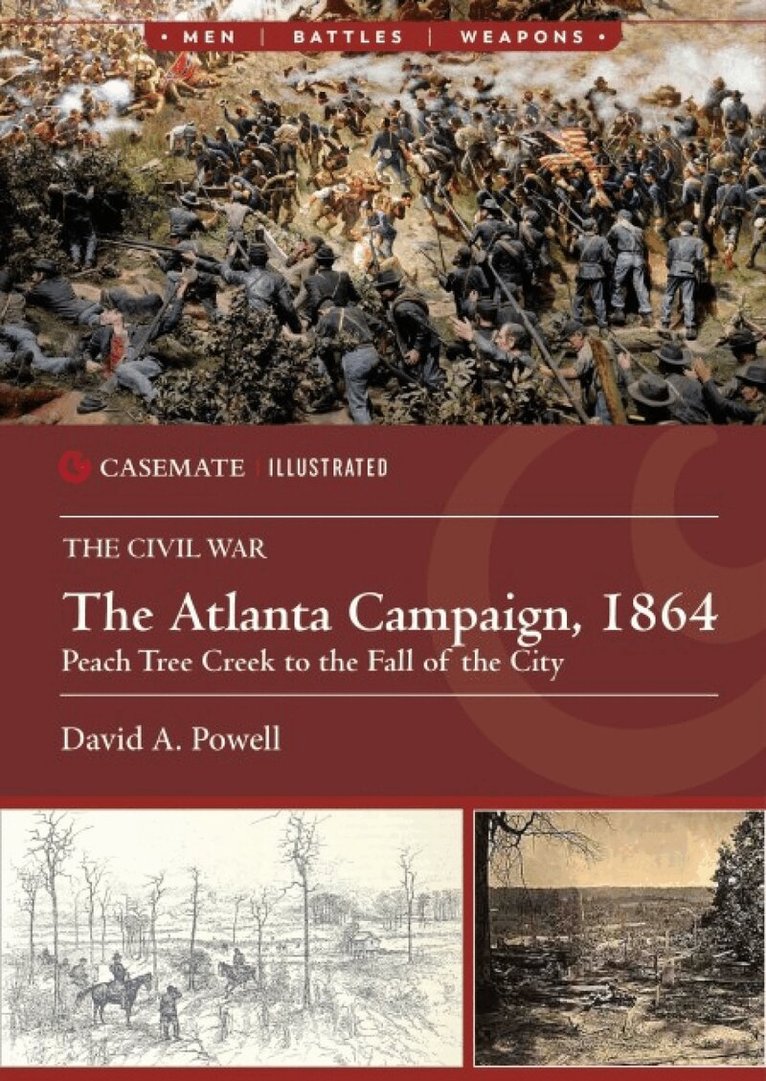
The campaign for Atlanta was pivotal to the outcome of the American Civil War. Roughly 190,000 men waged war across northern Georgia in a struggle that lasted 133 days. Today a national park at Kennesaw commemorates this titanic fight, and there are a surprising number of physical reminders still extant across the state.The struggle for Atlanta divides naturally into two stages. The first half of the campaign, from May to mid-July, can be defined as a war of maneuver, called by one historian the “Red Clay Minuet.” Under Joseph E. Johnston the Confederate Army of Tennessee repeatedly invited battle from strong defensive positions. Under William T. Sherman, the combined Federal armies of the Cumberland, the Tennessee, and the Ohio repeatedly avoided attacking those positions; Sherman preferring to outflank them instead. Though there were a number of sharp, bloody engagements during this phase of the campaign, the combats were limited. Only the battles of Resaca and Kennesaw Mountain could be considered general engagements.Johnston’s repeated retreats and the commensurate loss of terrain finally forced Confederate President Jefferson Davis to replace him with a more aggressive commander—John B. Hood.This work will portray the first half of the Atlanta Campaign in text and images, using both historic sketches and photographs, as well as post-war and modern images. Extant trenches, rifle pits, redoubts, shoupades, and other works, as well as the battlefields, will be covered, as well as surviving historic structures and the monuments and cemeteries that commemorate the campaign.
271 kr
Skickas
General John Bell Hood’s tenure commanding the Confederate Army of Tennessee stood in marked contrast to that of his predecessor Joseph E. Johnston. Where Johnston was forced to conduct a war of maneuver, parrying William T. Sherman’s repeated flanking attempts, he rarely risked offensive blows. The initiative remained almost entirely with the Federals. When Johnston did stand to accept battle, with only a few exceptions, he received enemy assaults behind fortified lines. However, weeks of retreating undermined morale.With Hood in charge, offense became the order of the day. Hood fought the two largest and bloodiest battles of the entire campaign within the space of two days: attacking at Peachtree Creek on July 20, and again at the Battle of Atlanta on July 22. A third attack at Ezra Church on July 28 was launched by Stephen D. Lee, on his own initiative. The results of all three battles, however, were the same—bloody failures for the Confederates. Thereafter, Hood adopted a more defensive strategy, choosing to preserve what combat power his army retained.The second volume on the Atlanta campaign portrays the final months of the struggle for Atlanta, from mid-July to September, including what remains to be seen of the battles around the city: Peachtree Creek, Atlanta, Decatur, and Ezra Church. The siege will cover historic views of Atlanta, operations east of the city, and the city’s capture. The cavalry chapter focuses on the Union cavalry raids south of Atlanta which ended in disaster. Finally, the fighting at Jonesboro will bring the series to a close.
400 kr
Kommande
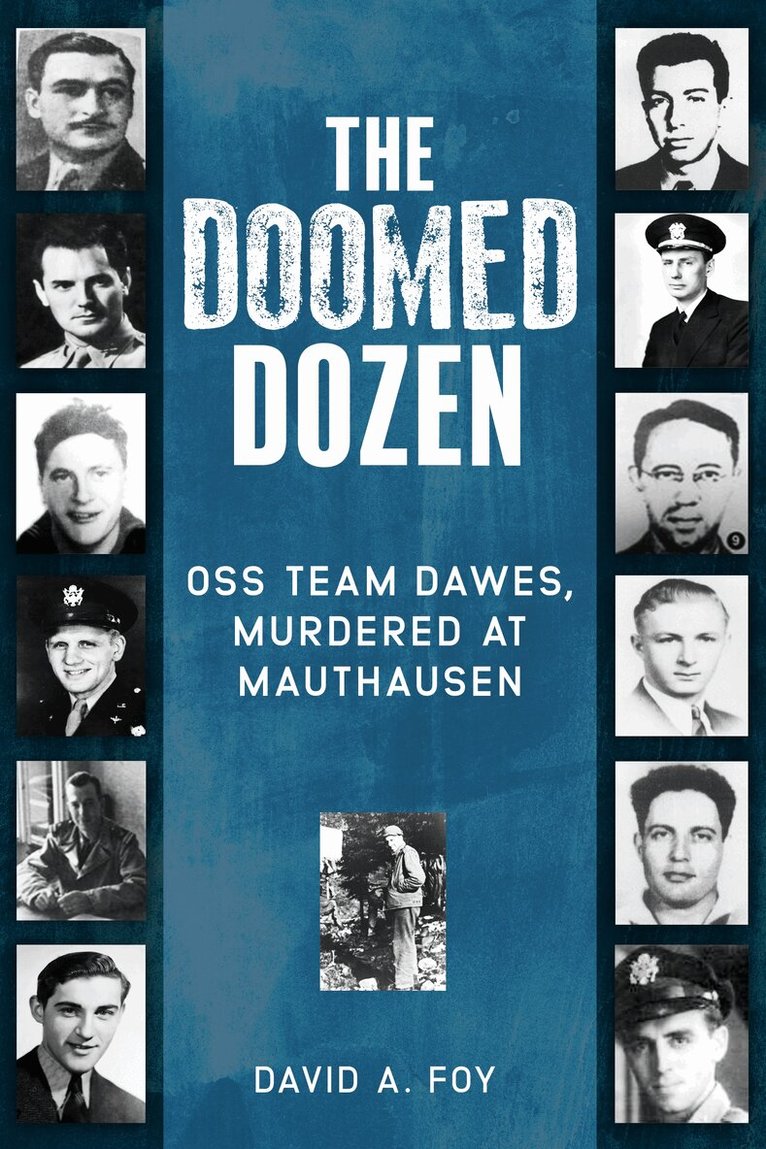
By late 1944, the collapse of the Third Reich seemed imminent, yet pockets of determined resistance remained, including in Slovakia, where 15,000 German troops had been dispatched to quell an underground resistance movement. General Donovan had persuaded US President Roosevelt that his OSS personnel could make a difference, not only helping downed Allied airmen but also aiding the Czech resistance and collecting intelligence on and conducting sabotage against the German occupier. Thus, in September 1944, the Office of Strategic Services dispatched the Dawes Team to Slovakia, almost simultaneously with the British Special Operations Executive “Windproof” mission. However, beset by larger numbers of German and allied troops, a shortage of food, illness, and Europe’s worst winter in 50 years, members of the Dawes Team and sub-units were soon captured. Despite being taken in uniform and with military ID, these OSS and SOE personnel were brutally interrogated, tortured, and ultimately executed by the SS on January 24, 1945 at Mauthausen Concentration Camp in Austria. Given the inherent secret nature of both missions, news of the massacre emerged only slowly. The May 1945 liberation of Mauthausen by US forces uncovered eyewitnesses—including another OSS member—and the discovery of damning records. The perpetrators who had survived the war were soon tried by US Army authorities, with the majority of the accused sentenced to death. The proceedings generated controversy—then and since—due to the speed with which they were conducted and the irregular nature of some of the proceedings. In the years since, the sacrifices of the OSS, SOE, and partisan personnel have been recalled not only by the veterans themselves, but also by a grateful Slovak population in yearly remembrance. This book follows the disastrous mission and the treatment and death of the twelve OSS personnel, the post-war reckoning, and the ongoing remembrance of these men’s sacrifice.