David D. Vail - Böcker
Visar alla böcker från författaren David D. Vail. Handla med fri frakt och snabb leverans.
5 produkter
5 produkter
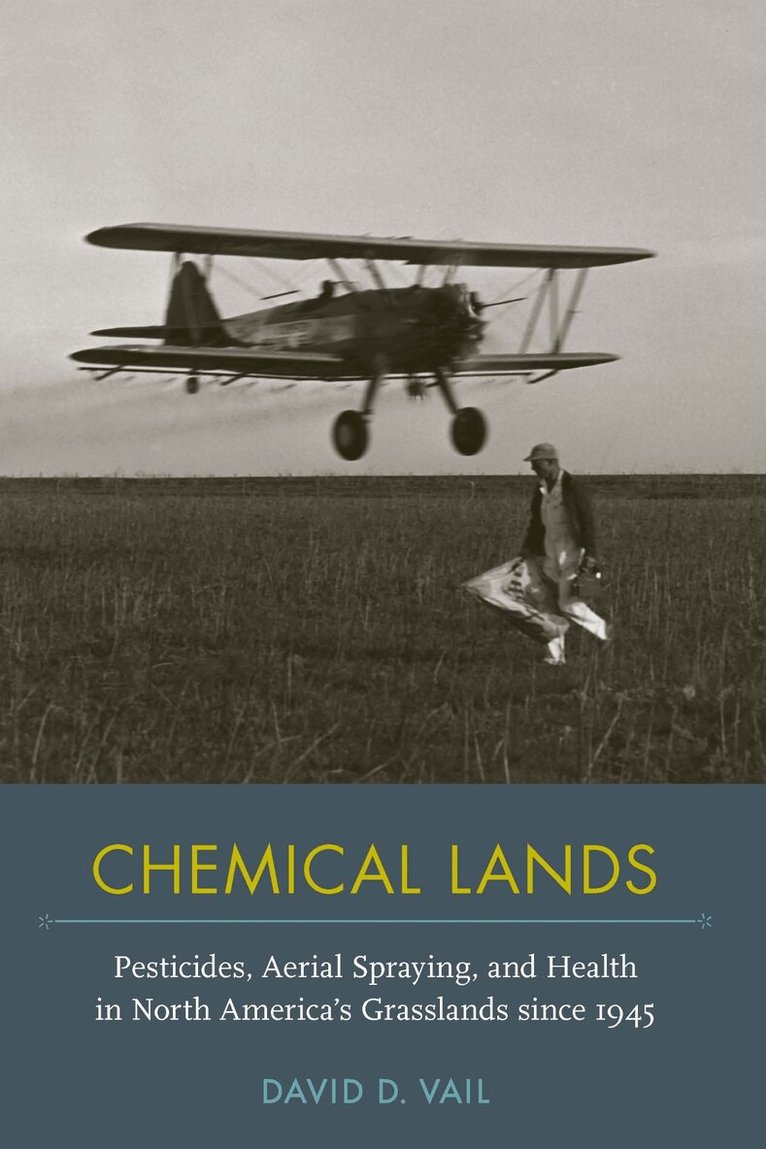
Chemical Lands
Pesticides, Aerial Spraying, and Health in North America's Grasslands Since 1945
Häftad, Engelska, 2025
318 kr
Skickas inom 7-10 vardagar
An exploration of the elaborate relationship between farmers, aerial sprayers, agriculturalists, crop pests, chemicals, and the environment.The controversies in the 1960s and 1970s that swirled around indiscriminate use of agricultural chemicals—their long-term ecological harm versus food production benefits—were sparked and clarified by biologist Rachel Carson’s Silent Spring (1962). This seminal publication challenged long-held assumptions concerning the industrial might of American agriculture while sounding an alarm for the damaging persistence of pesticides, especially chlorinated hydrocarbons such as DDT, in the larger environment. In Chemical Lands: Pesticides, Aerial Spraying, and Health in North America’s Grasslands since 1945 David D. Vail shows, however, that a distinctly regional view of agricultural health evolved. His analysis reveals a particularly strong ethic in the North American grasslands where practitioners sought to understand and deploy insecticides and herbicides by designing local scientific experiments, engineering more precise aircraft sprayers, developing more narrowly specific chemicals, and planting targeted test crops. Their efforts to link the science of toxicology with environmental health reveal how the practitioners of pesticides evaluated potential hazards in the agricultural landscape while recognizing the production benefits of controlled spraying. Chemical Lands adds to a growing list of books on toxins in the American landscape. This study provides a unique Grasslands perspective of the Ag pilots, weed scientists, and farmers who struggled to navigate novel technologies for spray planes and in the development of new herbicides/insecticides while striving to manage and mitigate threats to human health and the environment.
1 214 kr
Skickas inom 10-15 vardagar
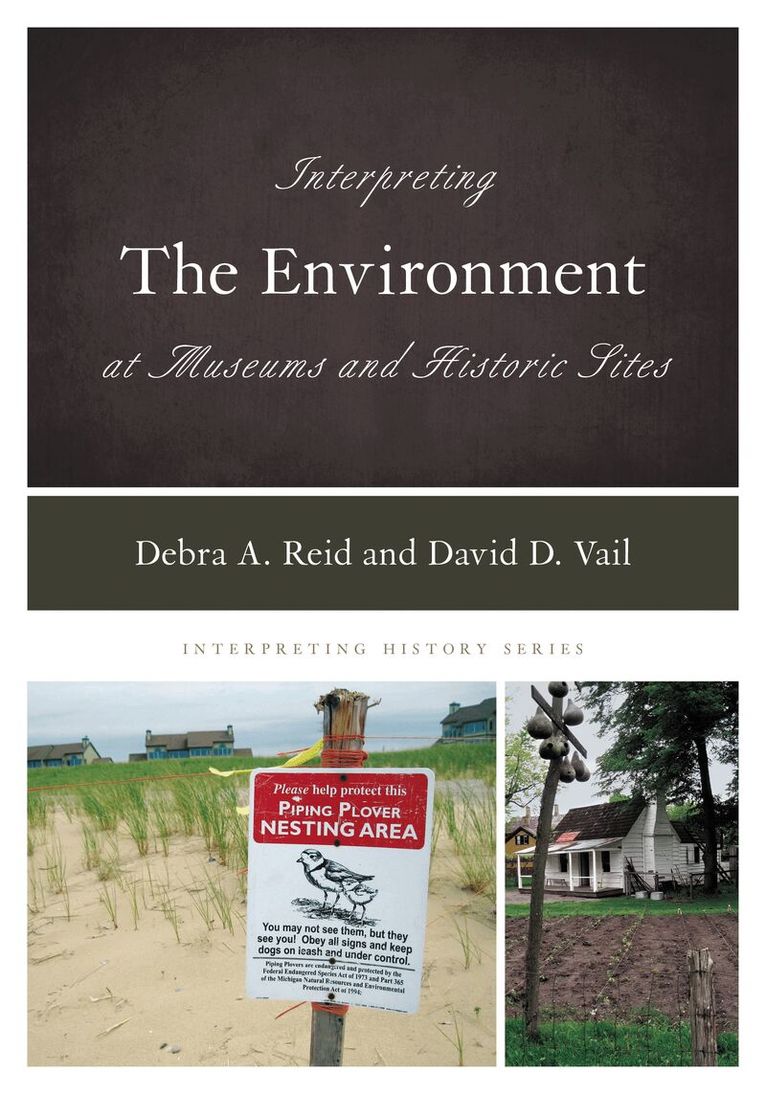
Interpreting the Environment at Museums and Historic Sites is for anyone who wants to better understand the environment that surrounds us and sustains us, who wants to become a better steward of that environment, and who wants to share lessons learned with others. The process starts by focusing attention on the environment – the physical space that constitutes the largest three-dimensional object in museum collections. It involves conceptualizing spaces and places of human influence; spaces that contain layer upon layer documenting human struggles to survive and thrive. This evidence exists in natural environments as well as city centers. The process continues by adopting an environment-centric view of the spaces destined to be interpreted. This mind-set forms the basis for devising research plans that document how humans have changed, destroyed, conserved and sustained spaces over time, and the ways that the environment reacts. Interpretation built on this evidence then becomes the basis for minds-on engagement with the places that humans inhabit and the spaces that they have changed and continue to manipulate.Interpreting the Environment at Museums and Historic Sites provides a tool kit designed to help you research environmental history, document evidence of human influence on land and the environment over time, and tailor that knowledge to new public engagement. It proposes a multi-disciplinary approach that requires expertise in the humanities as well as the sciences and social sciences to best understand space and place over time. It incorporates case studies of the theory and method of environmental history to explore how human goals take lasting shape in the environment – creating working environments, getting water, generating and harnessing power, growing food, traveling and trading, building things, and preserving natural landscapes. Features include the Interpreting the Environment Tool Kit to help you launch the good work of interpreting the environment:Raw Materials (the evidence): landscape, ecosystems, artifacts, and the built environmentPreparation (methods): thinking like a naturalist/scientist; thinking like a historian; combining approachesPlanning (envisioning the goal): proactive message, stewardship, sustainabilityPartnerships (sharing work): strength in numbers; allying across disciplinary divides; united in efforts to inform the public about their individual and collective effects on the landscape and the environmentPotential: educating the public about people and places is part of a world-wide goal with the cumulative effect of saving the planet, one story at a time.A Timeline and Bibliographic essay round out the book’s resources.
570 kr
Skickas inom 10-15 vardagar
Interpreting the Environment at Museums and Historic Sites is for anyone who wants to better understand the environment that surrounds us and sustains us, who wants to become a better steward of that environment, and who wants to share lessons learned with others. The process starts by focusing attention on the environment – the physical space that constitutes the largest three-dimensional object in museum collections. It involves conceptualizing spaces and places of human influence; spaces that contain layer upon layer documenting human struggles to survive and thrive. This evidence exists in natural environments as well as city centers. The process continues by adopting an environment-centric view of the spaces destined to be interpreted. This mind-set forms the basis for devising research plans that document how humans have changed, destroyed, conserved and sustained spaces over time, and the ways that the environment reacts. Interpretation built on this evidence then becomes the basis for minds-on engagement with the places that humans inhabit and the spaces that they have changed and continue to manipulate.Interpreting the Environment at Museums and Historic Sites provides a tool kit designed to help you research environmental history, document evidence of human influence on land and the environment over time, and tailor that knowledge to new public engagement. It proposes a multi-disciplinary approach that requires expertise in the humanities as well as the sciences and social sciences to best understand space and place over time. It incorporates case studies of the theory and method of environmental history to explore how human goals take lasting shape in the environment – creating working environments, getting water, generating and harnessing power, growing food, traveling and trading, building things, and preserving natural landscapes. Features include the Interpreting the Environment Tool Kit to help you launch the good work of interpreting the environment:Raw Materials (the evidence): landscape, ecosystems, artifacts, and the built environmentPreparation (methods): thinking like a naturalist/scientist; thinking like a historian; combining approachesPlanning (envisioning the goal): proactive message, stewardship, sustainabilityPartnerships (sharing work): strength in numbers; allying across disciplinary divides; united in efforts to inform the public about their individual and collective effects on the landscape and the environmentPotential: educating the public about people and places is part of a world-wide goal with the cumulative effect of saving the planet, one story at a time.A Timeline and Bibliographic essay round out the book’s resources.
1 476 kr
Skickas inom 10-15 vardagar
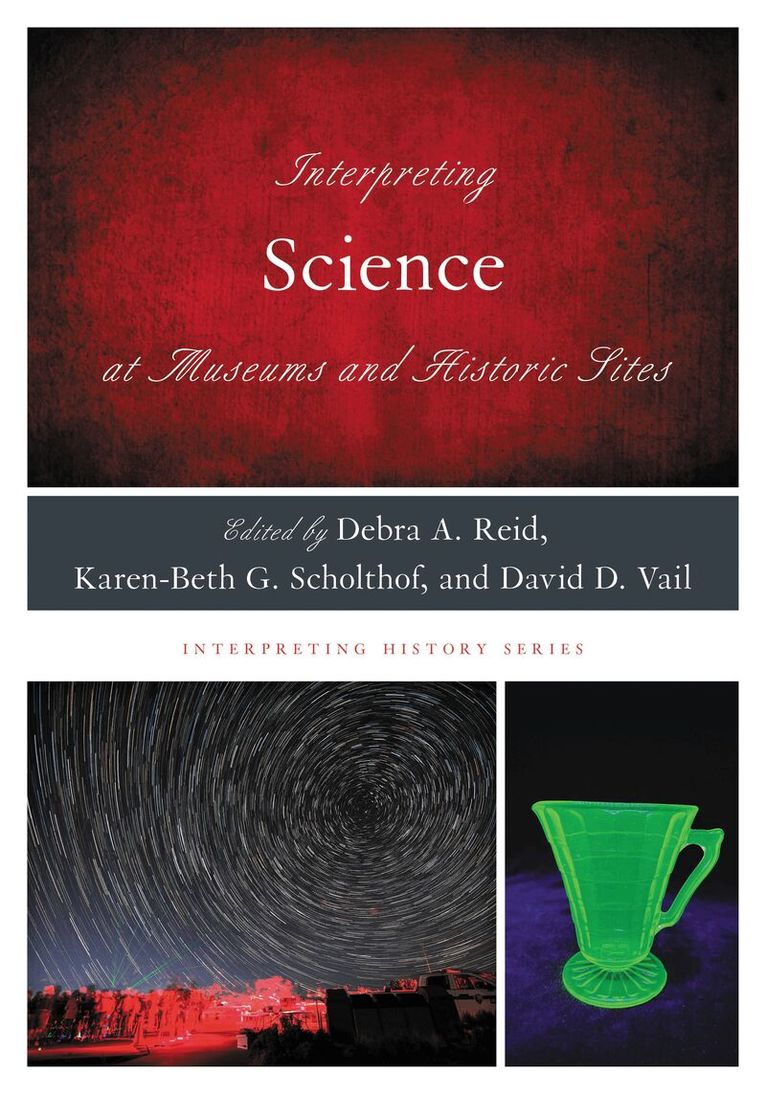
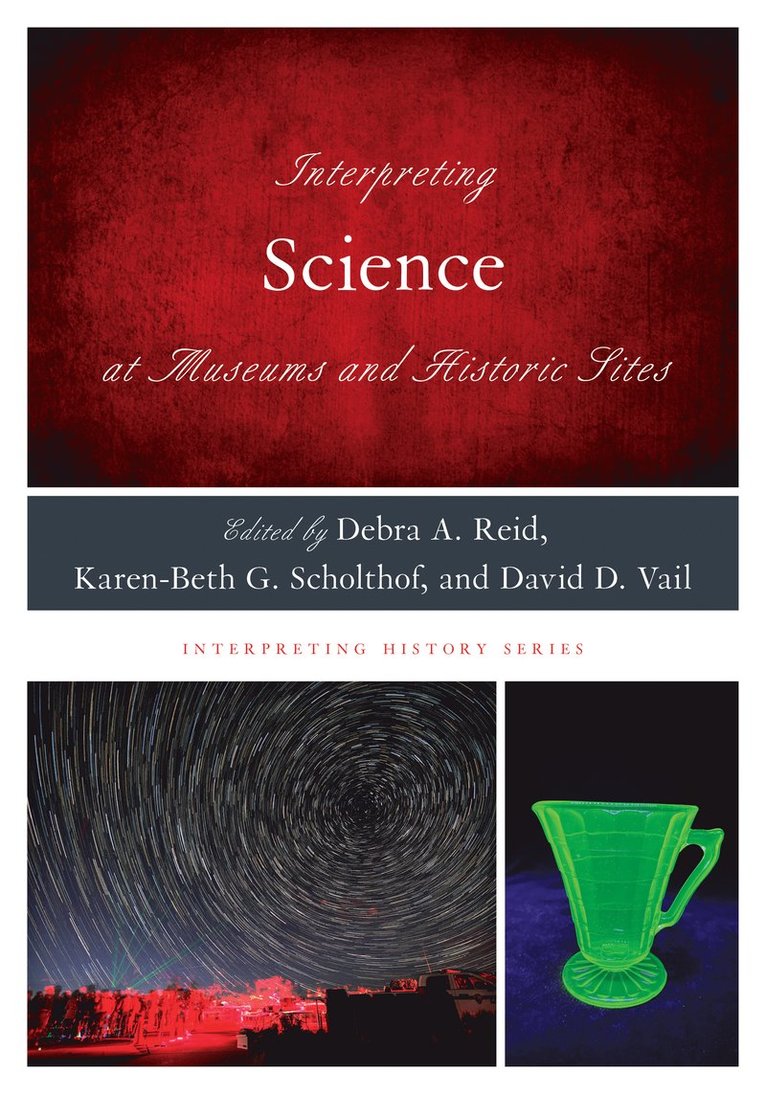
Ask not what science can do for you, but what public history can do for science! Interpreting Science in Museums and Historic Sites stresses the untapped potential of historical artifacts to inform our understanding of scientific topics. It argues that science gains ground when contextualized in museums and historic sites. Engaging audiences in conversations about hot topics such as health and medical sciences or climate change and responses to it, mediated by a history museum, can emphasize scientific rigor and the time lag between discovery and confirmation of societal benefit. Interpreting Science emphasizes the urgency of this work, provides a toolkit to start and sustain the work, shares case studies that model best practice, and resources useful to facilitate and sustain a science-infused public history.
581 kr
Skickas inom 10-15 vardagar
Ask not what science can do for you, but what public history can do for science! Interpreting Science in Museums and Historic Sites stresses the untapped potential of historical artifacts to inform our understanding of scientific topics. It argues that science gains ground when contextualized in museums and historic sites. Engaging audiences in conversations about hot topics such as health and medical sciences or climate change and responses to it, mediated by a history museum, can emphasize scientific rigor and the time lag between discovery and confirmation of societal benefit. Interpreting Science emphasizes the urgency of this work, provides a toolkit to start and sustain the work, shares case studies that model best practice, and resources useful to facilitate and sustain a science-infused public history.