• Fri frakt över 249 kr
  • •
  • Snabba leveranser
  • •
  • Billiga böcker
Kundservice

Du är på sajten för privatpersoner.

Företag, bibliotek eller offentlig verksamhet?

Du handlar på classic.bokus.com, där alla dina funktioner finns intakta.
Till classic.bokus.com
Bokus logotyp. Gå till startsidan.
  • Erbjudanden
  • Nyheter
  • Student
  • Topplistor
  • Barn & ungdom
  • Bokus Play
  • E-böcker
  • Pocketböcker
  • Spel & pussel

10% rabatt på allt med kod: NYSTART10 →

Sidfot

Mina sidor

    Hjälp

    • Kundservice
    • Vanliga frågor och svar
    • Frakt och leverans
    • Retur vid ångerrätt
    • Reklamera vara
    • Betalning
    • Köpvillkor
    • Allmänna villkor
    • Information om webbplatsens tillgänglighet

    Om Bokus

    • Om oss
    • Pressrum
    • För studenter
    • För företag
    • För bibliotek och offentlig verksamhet
    • För leverantörer
    • Hållbarhet

    Populärt

    • Aktuella erbjudanden
    • Presentkort
    • Studentlitteratur
    • Nya böcker
    • Topplistor
    • Signerade böcker
    • Engelska böcker

    Inspiration

    • Boktips
    • BookTok
    • Populära bokserier
    • Barnbokskaraktärer
    • Populära författare
    Logotyp för Bokus
    Följ oss på Facebook (extern länk)Följ oss på Instagram (extern länk)Följ oss på YouTube (extern länk)Följ oss på TikTok (extern länk)
    bokus @ CookiesAnpassa cookiesIntegritetspolicyKöpvillkor
    Till Citymail hemsida (extern länk)Till Budbee hemsida (extern länk)Till Postnord hemsida (extern länk)Till Schenker hemsida (extern länk)Till Early Bird hemsida (extern länk)Till Walleys hemsida (extern länk)
    1. Ekonomi och Ledarskap
    2. Ledarskapsböcker

    Interpreting the Environment at Museums and Historic Sites

    AvDebra A. Reid,David D. Vail

    Inbunden, Engelska, 2019

    Del 17 i serien Interpreting History

    1 256 kr

    Beställningsvara. Skickas inom 10-15 vardagar. Fri frakt över 249 kr.

    Fler format och utgåvor

    Häftad

    590 kr

    Beskrivning

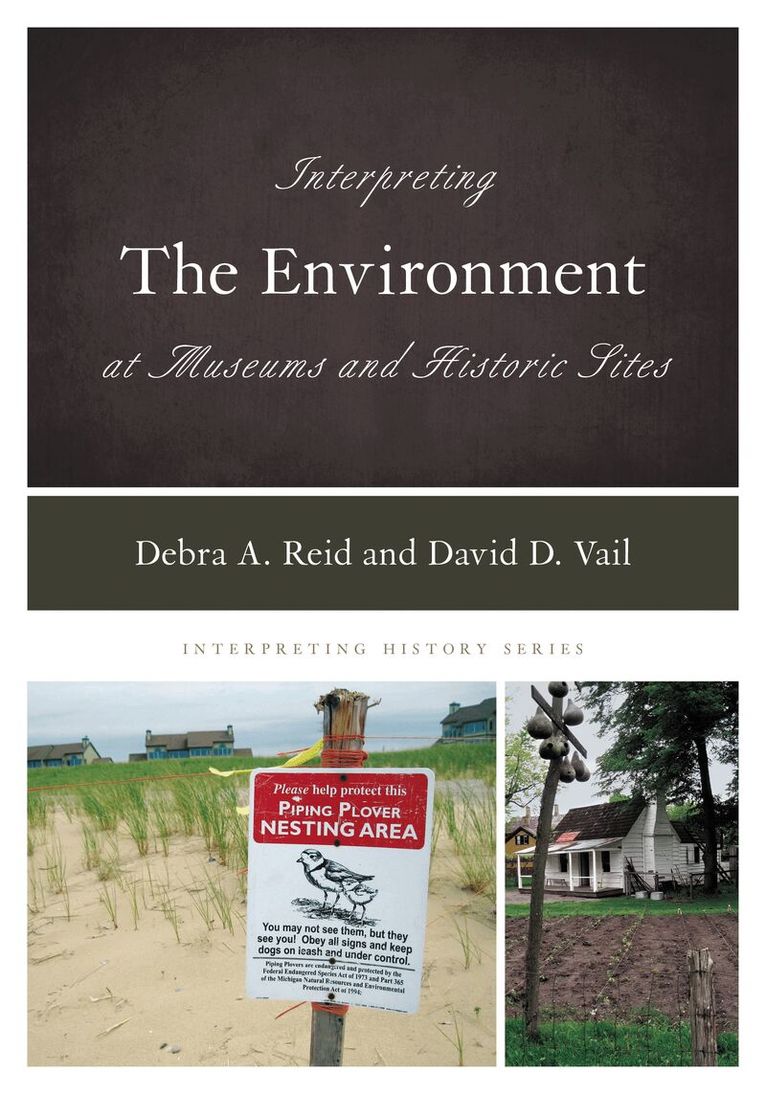
    Interpreting the Environment at Museums and Historic Sites is for anyone who wants to better understand the environment that surrounds us and sustains us, who wants to become a better steward of that environment, and who wants to share lessons learned with others. The process starts by focusing attention on the environment – the physical space that constitutes the largest three-dimensional object in museum collections. It involves conceptualizing spaces and places of human influence; spaces that contain layer upon layer documenting human struggles to survive and thrive. This evidence exists in natural environments as well as city centers. The process continues by adopting an environment-centric view of the spaces destined to be interpreted. This mind-set forms the basis for devising research plans that document how humans have changed, destroyed, conserved and sustained spaces over time, and the ways that the environment reacts. Interpretation built on this evidence then becomes the basis for minds-on engagement with the places that humans inhabit and the spaces that they have changed and continue to manipulate.Interpreting the Environment at Museums and Historic Sites provides a tool kit designed to help you research environmental history, document evidence of human influence on land and the environment over time, and tailor that knowledge to new public engagement. It proposes a multi-disciplinary approach that requires expertise in the humanities as well as the sciences and social sciences to best understand space and place over time. It incorporates case studies of the theory and method of environmental history to explore how human goals take lasting shape in the environment – creating working environments, getting water, generating and harnessing power, growing food, traveling and trading, building things, and preserving natural landscapes. Features include the Interpreting the Environment Tool Kit to help you launch the good work of interpreting the environment:Raw Materials (the evidence): landscape, ecosystems, artifacts, and the built environmentPreparation (methods): thinking like a naturalist/scientist; thinking like a historian; combining approachesPlanning (envisioning the goal): proactive message, stewardship, sustainabilityPartnerships (sharing work): strength in numbers; allying across disciplinary divides; united in efforts to inform the public about their individual and collective effects on the landscape and the environmentPotential: educating the public about people and places is part of a world-wide goal with the cumulative effect of saving the planet, one story at a time.A Timeline and Bibliographic essay round out the book’s resources.

    Produktinformation

    • Utgivningsdatum:2019-09-19
    • Mått:186 x 262 x 20 mm
    • Vikt:689 g
    • Format:Inbunden
    • Språk:Engelska
    • Serie:Interpreting History
    • Antal sidor:226
    • Förlag:Bloomsbury Publishing Plc
    • ISBN:9781538115480

    Utforska kategorier

    • Ledarskapsböcker inom Ekonomi och Ledarskap
    • Referensverk och tvärvetenskap inom Samhälle och politik
    • Miljövetenskap och miljöpolitik inom Naturvetenskap och teknik

    Mer om författaren

    Debra A. Reid, PhD, is curator of agriculture and the environment at The Henry Ford. She saw the landscape through new eyes after earning a minor in Historical Geography at Southeast Missouri State University, studying with Michael Roark. She completed a minor field in Geography, studying with Peter Hugill, and her PhD in History at Texas A&M University. She taught in the Department of History at Eastern Illinois University from 1999 through 2016 before joining The Henry Ford. She is a Fellow of the Agricultural History Society (and current president) and is a past-president of the Association for Living History, Farm and Agricultural Museums (ALHFAM). David D. Vail, PhD, has training in environmental history, agricultural history, and science and technology, earning a PhD at Kansas State University. He is assistant professor in the Department of History at the University of Nebraska at Kearney. His book, Chemical Lands: Pesticides, Aerial Spraying, and Health in North America’s Grasslands since 1945 (University of Alabama Press, 2018) is part of the NEXUS Series: New Histories of Science, Technology, the Environment, Agriculture, and Medicine. He is book review editor for The Public Historian (National Council on Public History), and a member of the editorial committee for Agricultural History.

    Recensioner i media

    With this valuable contribution, Reid and Vail go beyond introducing environmental history or locating its intersection with public history. "Interpreting the Environment at Museums and Historic Sites" is certainly useful to students, but provides a practical guide for those already working in the field and it is a long awaited and overdue contribution to both environmental public history.

    Innehållsförteckning

    • ContentsForeword by John C.F. LuzaderPrefaceAcknowledgments Part 1: A Primer on the Environment, Cultural Heritage, and History InterpretationChapter 1: Exploring Environmental HistoryChapter 2: Thinking Historically about the EnvironmentChapter 3: Constructing Stories about Humans and the Environment Part 2: Telling Stories about Humans and Their Environments: Topics and Practice Chapter 4: Creating Working EnvironmentsChapter 5: Getting WaterChapter 6: Generating and Harnessing PowerChapter 7: Growing FoodChapter 8: Traveling and TradingChapter 9: Building ThingsChapter 10: Preserving and Conserving Natural LandscapesConclusion Bibliographic EssayTimeline of Environmental Ideas, Policies, and LegislationAbout the Authors