David E. Fishman - Böcker
Visar alla böcker från författaren David E. Fishman. Handla med fri frakt och snabb leverans.
4 produkter
4 produkter
1 188 kr
Skickas inom 10-15 vardagar
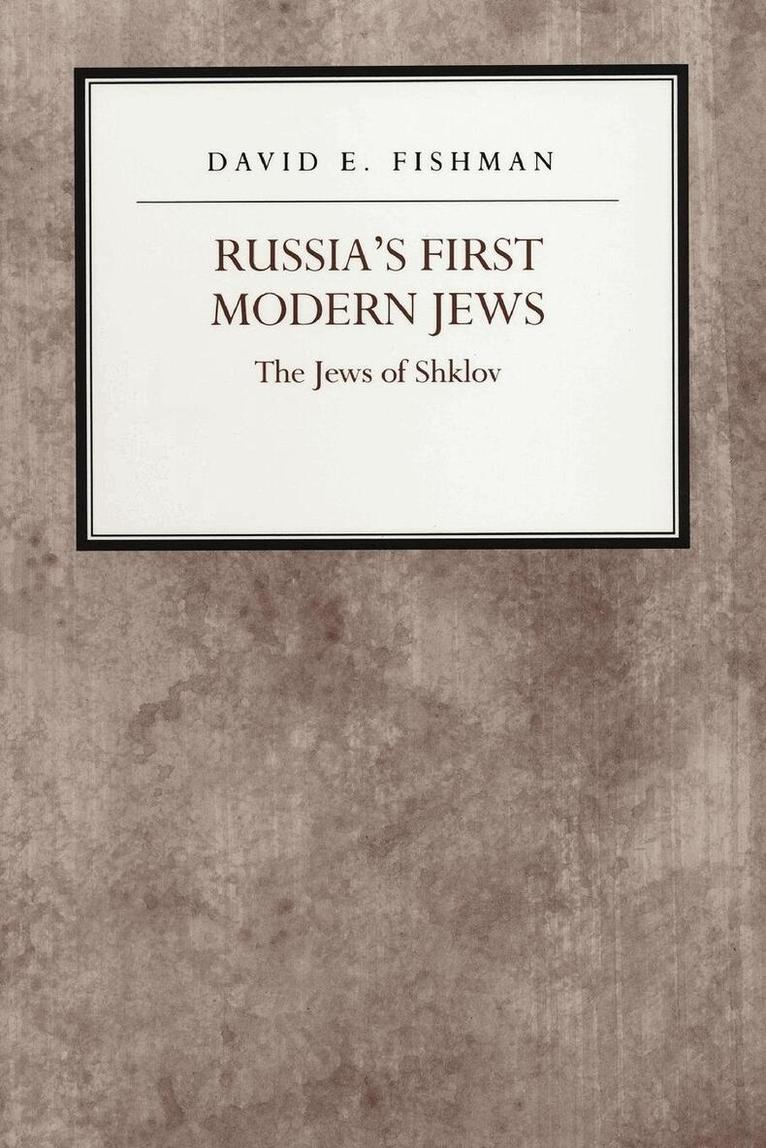
Long before there were Jewish communities in the land of the tsars, Jews inhabited a region which they called medinat rusiya, the land of Russia. Prior to its annexation by Russia, the land of Russia was not a center of rabbinic culture. But in 1772, with its annexation by Tsarist Russia, this remote region was severed from the Polish-Lithuanian Commonwealth; its 65,000 Jews were thus cut off from the heartland of Jewish life in Eastern Europe. Forced into independence, these Jews set about forging a community with its own religious leadership and institutions.The three great intellectual currents in East European Jewry--Hasidism, Rabbinic Mitnagdism, and Haskalah--all converged on Eastern Belorussia, where they clashed and competed. In the course of a generation, the community of Shklovthe most prominent of the towns in the areawitnessed an explosion of intellectual and cultural activity.Focusing on the social and intellectual odysseys of merchants, maskilim, and rabbis, and their varied attempts to combine Judaism and European culture, David Fishman here chronicles the remarkable story of these first modern Jews of Russia.
359 kr
Skickas inom 7-10 vardagar
Long before there were Jewish communities in the land of the tsars, Jews inhabited a region which they called medinat rusiya, the land of Russia. Prior to its annexation by Russia, the land of Russia was not a center of rabbinic culture. But in 1772, with its annexation by Tsarist Russia, this remote region was severed from the Polish-Lithuanian Commonwealth; its 65,000 Jews were thus cut off from the heartland of Jewish life in Eastern Europe. Forced into independence, these Jews set about forging a community with its own religious leadership and institutions.The three great intellectual currents in East European Jewry--Hasidism, Rabbinic Mitnagdism, and Haskalah--all converged on Eastern Belorussia, where they clashed and competed. In the course of a generation, the community of Shklovthe most prominent of the towns in the areawitnessed an explosion of intellectual and cultural activity.Focusing on the social and intellectual odysseys of merchants, maskilim, and rabbis, and their varied attempts to combine Judaism and European culture, David Fishman here chronicles the remarkable story of these first modern Jews of Russia.
Book Smugglers
Partisans, Poets, and the Race to Save Jewish Treasures from the Nazis
Häftad, Engelska, 2018
250 kr
Skickas inom 7-10 vardagar
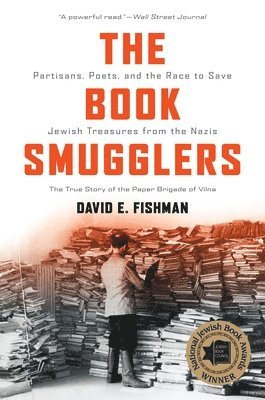
Winner of the National Jewish Book Award, Holocaust category (2017) Runner-up for the National Jewish Book Award, history category (2017) The Book Smugglers is the nearly unbelievable story of ghetto residents who rescued thousands of rare books and manuscripts—first from the Nazis and then from the Soviets—by hiding them on their bodies, burying them in bunkers, and smuggling them across borders. It is a tale of heroism and resistance, of friendship and romance, and of unwavering devotion—including the readiness to risk one’s life—to literature and art. And it is entirely true. Based on Jewish, German, and Soviet documents, including diaries, letters, memoirs, and the author’s interviews with several of the story’s participants, The Book Smugglers chronicles the daring activities of a group of poets turned partisans and scholars turned smugglers in Vilna, “The Jerusalem of Lithuania.”The rescuers were pitted against Johannes Pohl, a Nazi “expert” on the Jews, who had been dispatched to Vilna by the Nazi looting agency, Einsatzstab Reichsleiter Rosenberg, to organize the seizure of the city’s great collections of Jewish books. Pohl and his Einsatzstab staff planned to ship the most valuable materials to Germany and incinerate the rest. The Germans used forty ghetto inmates as slave-laborers to sort, select, pack, and transport the materials, either to Germany or to nearby paper mills. This group, nicknamed “the Paper Brigade,” and informally led by poet Shmerke Kaczerginski, a garrulous, street-smart adventurer and master of deception, smuggled thousands of books and manuscripts past German guards. If caught, the men would have faced death by firing squad at Ponar, the mass-murder site outside of Vilna.To store the rescued manuscripts, poet Abraham Sutzkever helped build an underground book-bunker sixty feet beneath the Vilna ghetto. Kaczerginski smuggled weapons as well, using the group’s worksite, the former building of the Yiddish Scientific Institute, to purchase arms for the ghetto’s secret partisan organization. All the while, both men wrote poetry that was recited and sung by the fast-dwindling population of ghetto inhabitants.With the Soviet “liberation” of Vilna (now known as Vilnius), the Paper Brigade thought themselves and their precious cultural treasures saved—only to learn that their new masters were no more welcoming toward Jewish culture than the old, and the books must now be smuggled out of the USSR.Thoroughly researched by the foremost scholar of the Vilna Ghetto—a writer of exceptional daring, style, and reach—The Book Smugglers is an epic story of human heroism, a little-known tale from the blackest days of the war.
Nazi-Looted Jewish Archives in Moscow
A Guide to Jewish Historical and Cultural Collections in the Russian State Military Archive
Inbunden, Engelska, 2011
253 kr
Skickas inom 7-10 vardagar
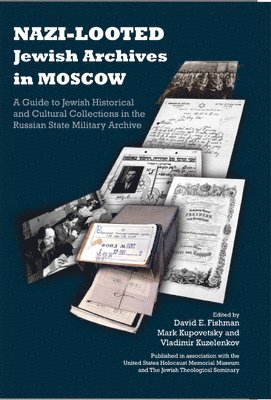
During their ascendancy and subsequent occupation of much of Europe, the Nazis plundered the documents and cultural treasures of Jewish organizations as well as other groups and individuals they deemed to be enemies of the Reich. When the Nazis were crushed, many of these looted collections, as well as records of Nazi state agencies that persecuted and murdered Jews, were discovered by the Soviet Army, then transferred to Moscow and held for decades in closed, secret archives. This catalog and guide supplies the first comprehensive, collection-by-collection English-language description of this historical and cultural documentation, which the Nazis meant to be among the only vestiges of the millions of victims they annihilated. Scholars and lay researchers will find this reference a unique and indispensable guide to the invaluable remains of a rich world brutally destroyed.