David Fallows – författare
Visar alla böcker från författaren David Fallows. Handla med fri frakt och snabb leverans.
18 produkter
Art Songs of the Burgundian Era, 1415-1480
Inbunden, 2026
1696 kr
Lägg i varukorg
In a study as deep as it is broad, Art Song of the Burgundian Era, 1415-1480 presents a rich and thorough survey of art song in the heart of the fifteenth century, during a 65-year period characterized by the rise of French repertory and the arrival of a musical style that crossed linguistic and …
Art Songs of the Burgundian Era, 1415-1480
E-bok, 2026
1609 kr
Lägg i varukorg
In a study as deep as it is broad, Art Song of the Burgundian Era, 1415-1480 presents a rich and thorough survey of art song in the heart of the fifteenth century, during a 65-year period characterized by the rise of French repertory and the arrival of a musical style that crossed linguistic and …
Art Songs of the Burgundian Era, 1415-1480
E-bok, 2026
1609 kr
Lägg i varukorg
In a study as deep as it is broad, Art Song of the Burgundian Era, 1415-1480 presents a rich and thorough survey of art song in the heart of the fifteenth century, during a 65-year period characterized by the rise of French repertory and the arrival of a musical style that crossed linguistic and …
A Catalogue of Polyphonic Songs 1415-1480
Inbunden, 1999
10399 kr
Lägg i varukorg
A detailed inventory of polyphonic songs from 1415-1480 in any European language, with language subdivisions: English, French, German (including Flemish), Italian, Latin, Spanish, and textless (this last with musical incipits). Each entry includes full details of all sources, facsimiles, modern …
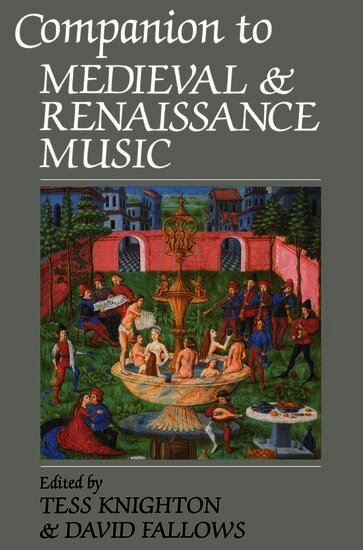
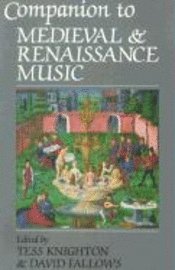
Companion to Medieval and Renaissance Music
Av Tess Knighton, David Fallows
Häftad, 1998
888 kr
Lägg i varukorg
The years since the early music revival gathered momentum in the 1960s and 70s have witnessed many new developments in the field of pre-Baroque music: some revelatory recordings and concert performances have opened our ears to a new range of possible sound worlds for music of this period, and …
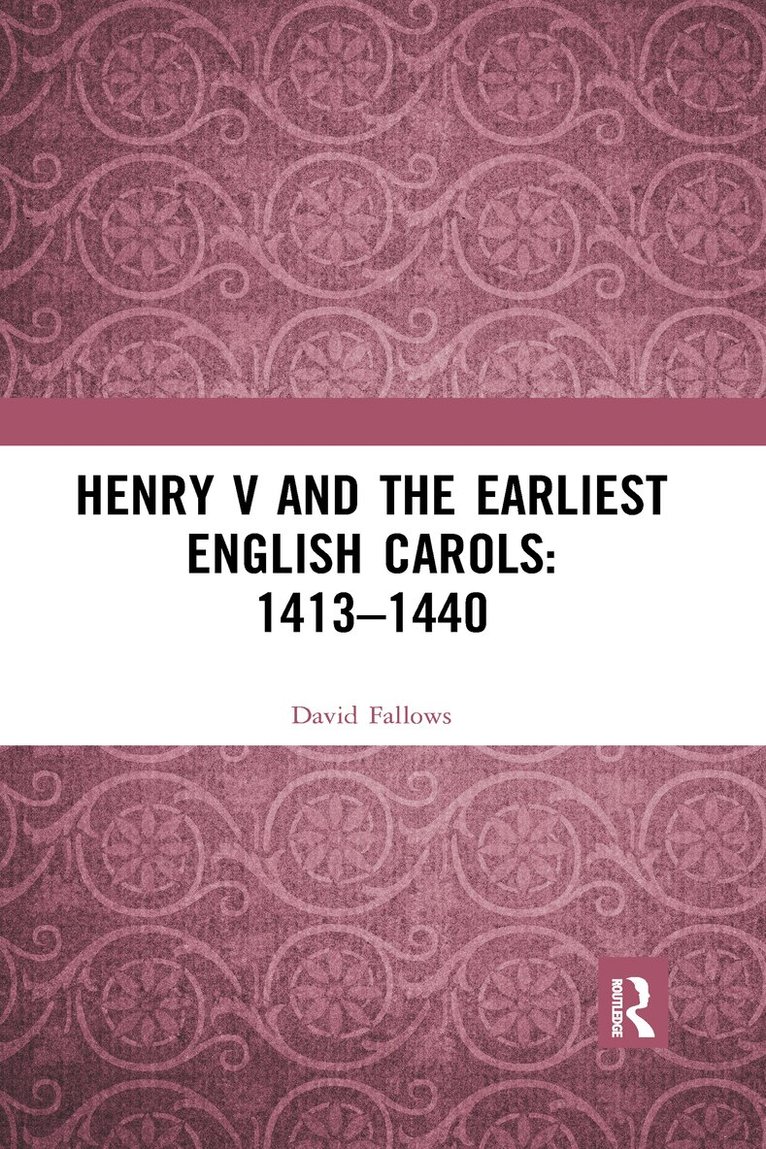
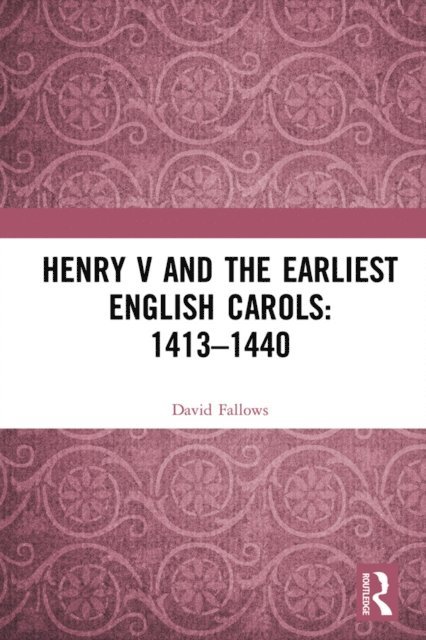
Henry V and the Earliest English Carols: 1413–1440
Häftad, 2020
725 kr
Lägg i varukorg
As a distinctive and attractive musical repertory, the hundred-odd English carols of the fifteenth century have always had a ready audience. But some of the key viewpoints about them date back to the late 1920s, when Richard L. Greene first defined the poetic form; and little has been published …
Companion to Medieval and Renaissance Music
Av Tess Knighton, David Fallows
Häftad
666 kr
Lägg i varukorg
Songs and Musicians in the Fifteenth Century
Inbunden, 1996
2578 kr
Lägg i varukorg
The essays in this volume are concerned with song repertories and performance practice in 15th-century Europe. The first group of studies arises from the author's long-term fascination with the widely dispersed traces of English song and , in particular, with the most successful song by any English …
Composers and their Songs, 1400-1521
E-bok, 2023
890 kr
Lägg i varukorg
This second selection of essays by David Fallows draws the focus towards individual composers of the ''long'' fifteenth century and what we can learn about their songs. In twenty-one essays on the secular works of composers from Ciconia and Oswald von Wolkenstein via Binchois, Ockeghem, Busnoys and …
Composers and their Songs, 1400-1521
E-bok, 2023
910 kr
Lägg i varukorg
This second selection of essays by David Fallows draws the focus towards individual composers of the ''long'' fifteenth century and what we can learn about their songs. In twenty-one essays on the secular works of composers from Ciconia and Oswald von Wolkenstein via Binchois, Ockeghem, Busnoys and …
Songs and Musicians in the Fifteenth Century
E-bok, 2024
1052 kr
Lägg i varukorg
The essays in this volume are concerned with song repertories and performance practice in 15th-century Europe. The first group of studies arises from the author''s long-term fascination with the widely dispersed traces of English song and , in particular, with the most successful song by any …
Songs and Musicians in the Fifteenth Century
E-bok, 2024
1030 kr
Lägg i varukorg
The essays in this volume are concerned with song repertories and performance practice in 15th-century Europe. The first group of studies arises from the author''s long-term fascination with the widely dispersed traces of English song and , in particular, with the most successful song by any …
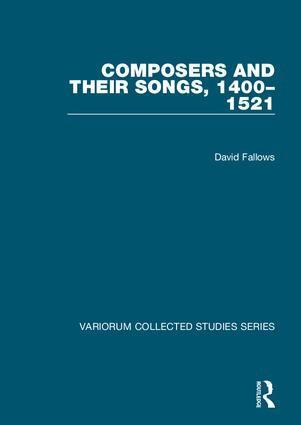
Composers and their Songs, 1400–1521
Häftad, 2019
770 kr
Lägg i varukorg
This second selection of essays by David Fallows draws the focus towards individual composers of the 'long' fifteenth century and what we can learn about their songs. In twenty-one essays on the secular works of composers from Ciconia and Oswald von Wolkenstein via Binchois, Ockeghem, Busnoys and …
Henry V and the Earliest English Carols: 1413-1440
E-bok, 2018
856 kr
Lägg i varukorg
As a distinctive and attractive musical repertory, the hundred-odd English carols of the fifteenth century have always had a ready audience. But some of the key viewpoints about them date back to the late 1920s, when Richard L. Greene first defined the poetic form; and little has been published …
Henry V and the Earliest English Carols: 1413-1440
E-bok, 2018
838 kr
Lägg i varukorg
As a distinctive and attractive musical repertory, the hundred-odd English carols of the fifteenth century have always had a ready audience. But some of the key viewpoints about them date back to the late 1920s, when Richard L. Greene first defined the poetic form; and little has been published …
Henry V and the Earliest English Carols: 1413–1440
Inbunden, 2018
2578 kr
Lägg i varukorg
As a distinctive and attractive musical repertory, the hundred-odd English carols of the fifteenth century have always had a ready audience. But some of the key viewpoints about them date back to the late 1920s, when Richard L. Greene first defined the poetic form; and little has been published …
Oxford, Bodleian Library, MS. Canon. Misc. 213
Inbunden, 1996
3044 kr
Tillfälligt slut
This volume makes available, in a facsimile edition, one of the most important musical manuscripts of the late Middle Ages. Copied probably in Venice around 1430, the Oxford manuscript contains the most comprehensive surviving collection of secular songs of the late 14th and early 15th centuries. …
Composers and their Songs, 1400–1521
Inbunden, 2010
1638 kr
Tillfälligt slut
This second selection of essays by David Fallows draws the focus towards individual composers of the 'long' fifteenth century and what we can learn about their songs. In twenty-one essays on the secular works of composers from Ciconia and Oswald von Wolkenstein via Binchois, Ockeghem, Busnoys and …