Tess Knighton - Böcker
Visar alla böcker från författaren Tess Knighton. Handla med fri frakt och snabb leverans.
9 produkter
9 produkter
803 kr
Skickas inom 7-10 vardagar
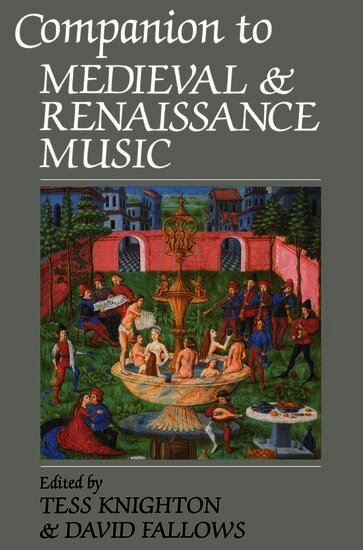
The years since the early music revival gathered momentum in the 1960s and 70s have witnessed many new developments in the field of pre-Baroque music: some revelatory recordings and concert performances have opened our ears to a new range of possible sound worlds for music of this period, and scholars have made discoveries that in many ways challenge the accepted views about this until recently neglected end of the repertory. Much pre-1600 music, the more so the further we go back in time, sound not only unfamiliar but also strange to modern ears accustomed to the harmonies and rhythms that later came to dominate the Western musical tradition. How to account for this strangeness and how to weave it into our own musical experience are questions that confront us whenever we attempt to draw nearer to the music: its beauty is readily appreciated, but its meaning is often elusive. David Fallows and Tess Knighton, scholars and critics in the field of medieval and Renaissance music, invited a number of international researchers and performers to contribute short essays on some of the most intriguing aspects of the subject. The aim was not so much a comprehensive reference book, although the Glossary gives brief definitions of terms and composer biographies, nor a strictly chronological survey, though the Chronology provides an overview of the main developments of the period, for these basic tools are already available. Rather, the Companion to Medieval and Renaissance Music, spanning over eight centuries of music-making, hopes to broaden and stimulate the reader's interest by discussing issues of live debate such as the original context for the music, how it was composed, and the ways in which it was performed. What was it like to be a composer in the Middle Ages? Can we appreciate the difference between a good and a bad piece of medieval polyphony? Why did certain musical genres flourish and others fall into disuse? What can surviving documents or pictures or the musical manuscripts themselves tell us about how the music was performed, listened to, and appreciated during the period? The essays consider a wide range of the kind of evidence from which scholars and performers have to draw their conclusions and make the decisions that affect the ways in which the music can be brought back to life today.
649 kr
Skickas inom 10-15 vardagar
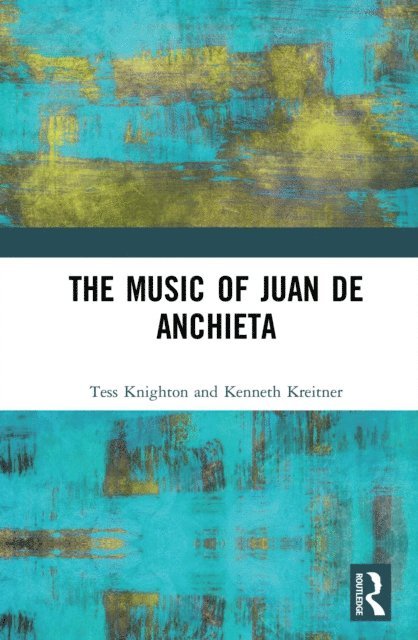
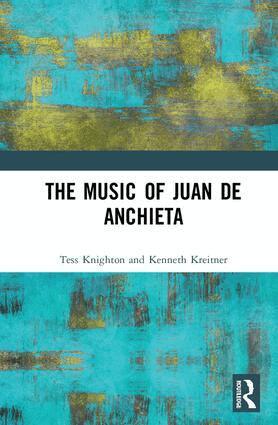
This book explores Juan de Anchieta’s life and his music and, for the first time, presents a critical study of the life and works of a major Spanish composer from the time of Ferdinand and Isabel. A key figure in musical developments in Spain in the decades around 1500, Anchieta served in the Castilian royal chapel for over thirty years, from his appointment in 1489 as a singer in the household of Queen Isabel, and he continued to receive a pension from her grandson, the Emperor Charles V, until his death in 1523. He traveled to Flanders in the service of the Catholic Monarchs’ daughter Juana, and was briefly music master to Charles himself. Anchieta, along with Francisco de Peñalosa, his contemporary in the Aragonese chapel, and a few others, was a key figure in the rise of elaborate written polyphony in the Spain of Josquin’s time. The book brings together two of the leading specialists in Spanish music of the era in order to review and revise the rich biographical material relating to Anchieta’s life, and the historiographical traditions which have dominated its telling. After a biographical overview, the chapters focus on specific genres of his music, sacred and secular, with suggestions as to a possible chronology of his work based on its codicology and style, and consideration of the contexts in which it was conceived and performed. A final chapter summarizes his achievement and his influence in his own time and after his death. As the first comprehensive study of Anchieta’s life and works, The Music of Juan de Anchieta is an essential addition to the history of Spanish music.
639 kr
Skickas inom 3-6 vardagar
1 485 kr
Skickas inom 7-10 vardagar
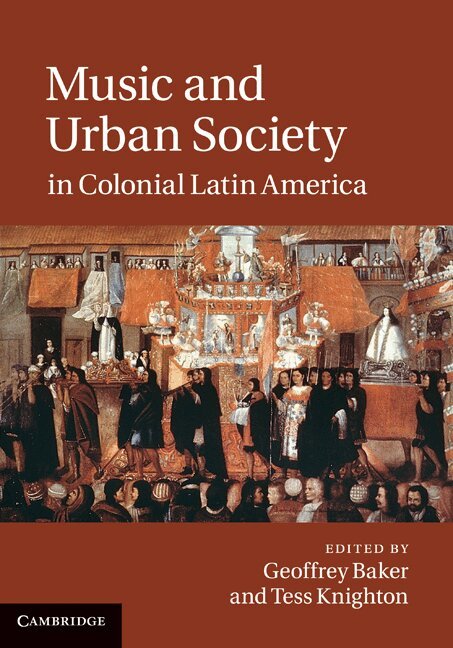
The Spanish colonial project in Latin America from the sixteenth to the eighteenth centuries was distinctly urban in focus. The impact of the written word on this process was explored in Ángel Rama's seminal book The Lettered City, and much has been written by historians of art and architecture on its visible manifestations, yet the articulation of sound, urban geography and colonial power - 'the resounding city' - has been passed over in virtual silence. This collection of essays by leading scholars examines the role of music in Spanish colonial urbanism in the New World and explores the urban soundscape and music profession as spheres of social contact, conflict, and negotiation. The contributors demonstrate the role of music as a vital constituent part of the colonial city, as Rama did for writing, and therefore illustrate how musicology may illuminate and take its place in the broader field of Latin American urban history.
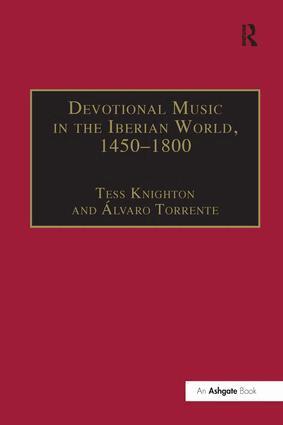
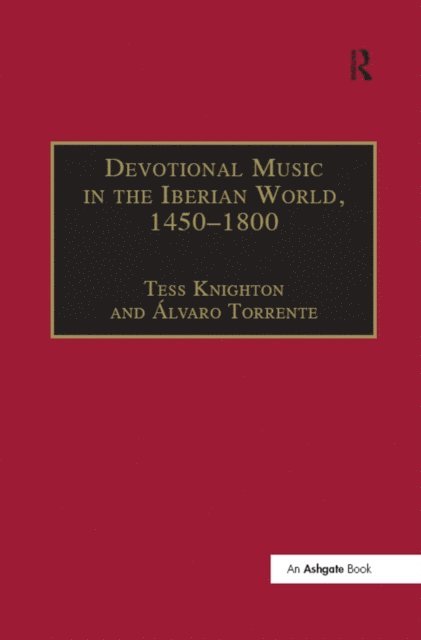
Devotional Music in the Iberian World, 1450–1800
The Villancico and Related Genres
Inbunden, Engelska, 2007
2 772 kr
Skickas inom 10-15 vardagar
From the fifteenth century to the beginning of the nineteenth century, devotional music played a fundamental role in the Iberian world. Songs in the vernacular, usually referred to by the generic name of 'villancico', but including forms as varied as madrigals, ensaladas, tonos, cantatas or even oratorios, were regularly performed at many religious feasts in major churches, royal and private chapels, convents and in monasteries. These compositions appear to have progressively fulfilled or supplemented the role occupied by the Latin motet in other countries and, as they were often composed anew for each celebration, the surviving sources vastly outnumber those of Latin compositions; they can be counted in tens of thousands. The close relationship with secular genres, both musical, literary and performative, turned these compositions into a major vehicle for dissemination of vernacular styles throughout the Iberian world. This model of musical production was also cultivated in Portugal and rapidly exported to the Spanish and Portuguese colonies in America and Asia. In many cases, the villancico repertory represents the oldest surviving source of music produced in these regions, thus affording it a primary role in the construction of national identities. The sixteen essays in this volume explore the development of devotional music in the Iberian world in this period, providing the first broad-based survey of this important genre.
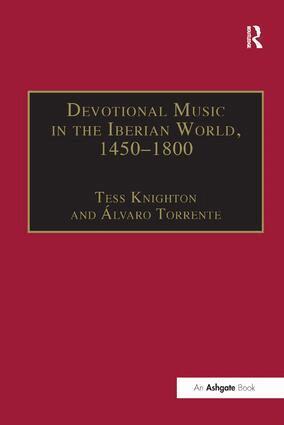
Devotional Music in the Iberian World, 1450–1800
The Villancico and Related Genres
Häftad, Engelska, 2016
858 kr
Skickas inom 10-15 vardagar
From the fifteenth century to the beginning of the nineteenth century, devotional music played a fundamental role in the Iberian world. Songs in the vernacular, usually referred to by the generic name of 'villancico', but including forms as varied as madrigals, ensaladas, tonos, cantatas or even oratorios, were regularly performed at many religious feasts in major churches, royal and private chapels, convents and in monasteries. These compositions appear to have progressively fulfilled or supplemented the role occupied by the Latin motet in other countries and, as they were often composed anew for each celebration, the surviving sources vastly outnumber those of Latin compositions; they can be counted in tens of thousands. The close relationship with secular genres, both musical, literary and performative, turned these compositions into a major vehicle for dissemination of vernacular styles throughout the Iberian world. This model of musical production was also cultivated in Portugal and rapidly exported to the Spanish and Portuguese colonies in America and Asia. In many cases, the villancico repertory represents the oldest surviving source of music produced in these regions, thus affording it a primary role in the construction of national identities. The sixteen essays in this volume explore the development of devotional music in the Iberian world in this period, providing the first broad-based survey of this important genre.
2 150 kr
Skickas inom 10-15 vardagar
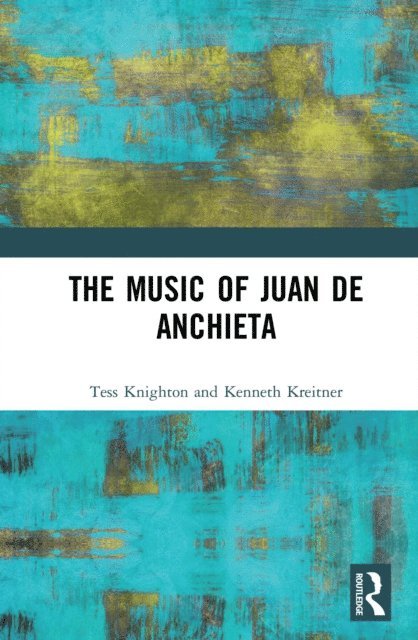
This book explores Juan de Anchieta’s life and his music and, for the first time, presents a critical study of the life and works of a major Spanish composer from the time of Ferdinand and Isabel. A key figure in musical developments in Spain in the decades around 1500, Anchieta served in the Castilian royal chapel for over thirty years, from his appointment in 1489 as a singer in the household of Queen Isabel, and he continued to receive a pension from her grandson, the Emperor Charles V, until his death in 1523. He traveled to Flanders in the service of the Catholic Monarchs’ daughter Juana, and was briefly music master to Charles himself. Anchieta, along with Francisco de Peñalosa, his contemporary in the Aragonese chapel, and a few others, was a key figure in the rise of elaborate written polyphony in the Spain of Josquin’s time. The book brings together two of the leading specialists in Spanish music of the era in order to review and revise the rich biographical material relating to Anchieta’s life, and the historiographical traditions which have dominated its telling. After a biographical overview, the chapters focus on specific genres of his music, sacred and secular, with suggestions as to a possible chronology of his work based on its codicology and style, and consideration of the contexts in which it was conceived and performed. A final chapter summarizes his achievement and his influence in his own time and after his death. As the first comprehensive study of Anchieta’s life and works, The Music of Juan de Anchieta is an essential addition to the history of Spanish music.
Del 22 - Studies in Medieval and Renaissance Music
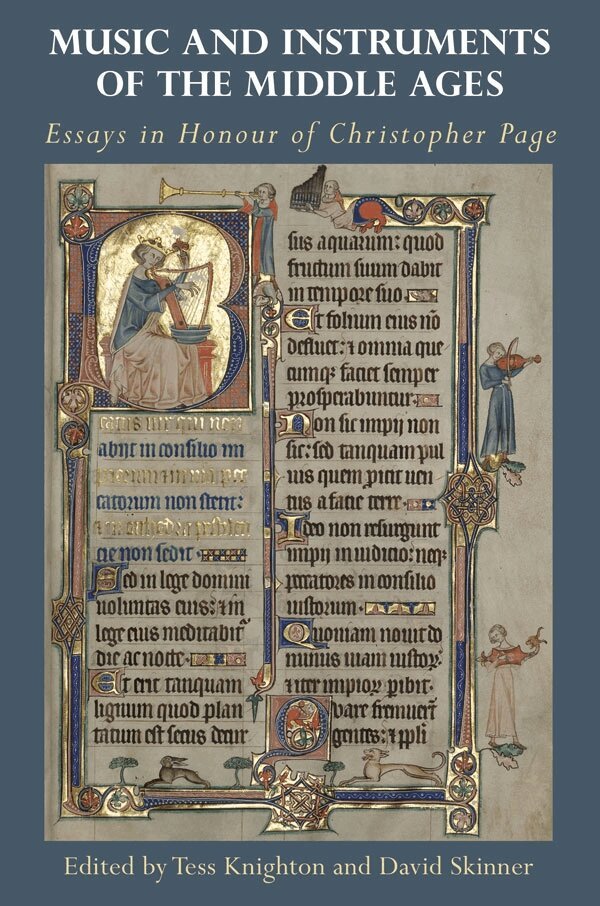
Music and Instruments of the Middle Ages
Essays in Honour of Christopher Page
Inbunden, Engelska, 2020
1 617 kr
Skickas inom 7-10 vardagar
Essays on important topics in early music.Christopher Page is one of the most influential and distinguished scholars and performers of medieval music. His first book, Voices and Instruments of the Middle Ages (1987), marked the beginning of what might be called the"Page turn" in the study and performance of medieval music. His many subsequent publications, radio broadcasting (notably the series Spirit of the Age) and performances and recordings with his ensemble Gothic Voices changed the perception of and thinking about music from before about 1400 and forged new ways of communicating its essence to scholars as well as its subtle beauty to wider audiences.The essays presented here in his honour reflectthe broad range of subject-matter, from the earliest polyphony to the conductus and motet of the thirteenth and fourteenth centuries, the troubadour and trouvère repertories, song and dance, church music, medieval music theory, improvisation techniques, historiography of medieval music, musical iconography, instrumental music, performance practice and performing, that has characterised Page's major contribution to our knowledge of music of the Middle Ages.
Del 92 - Intersections
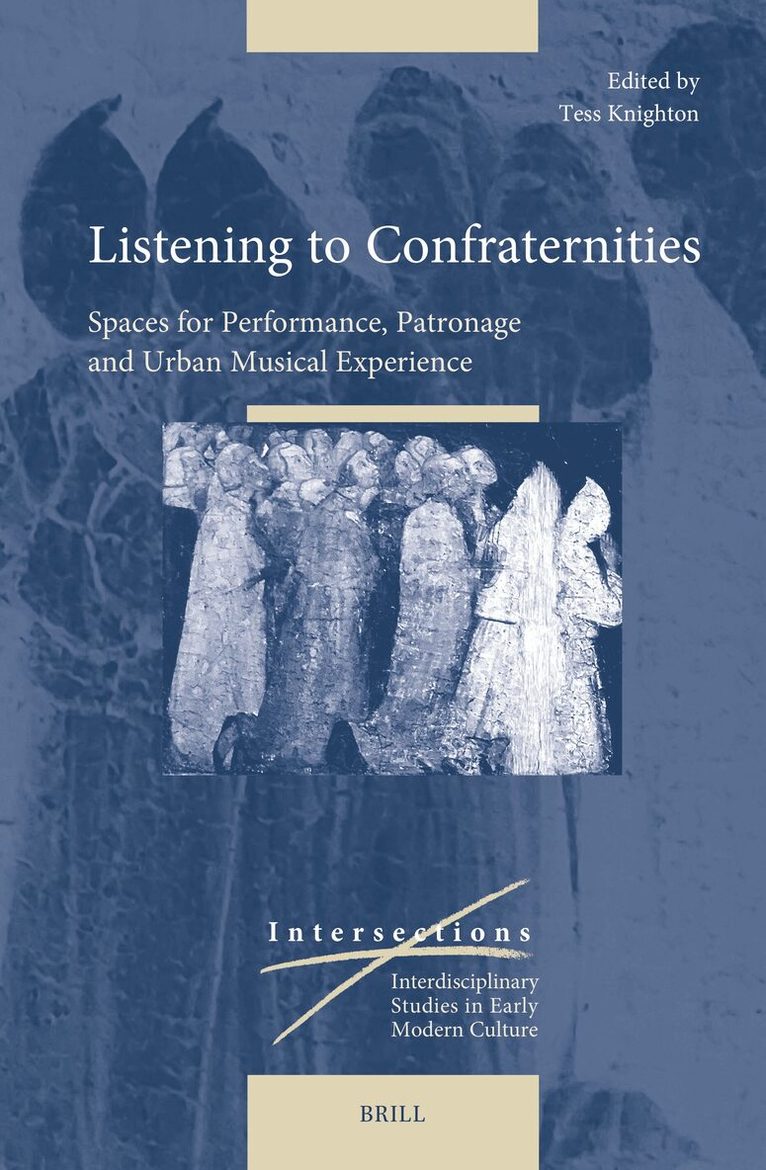
Listening to Confraternities
Spaces for Performance, Patronage and Urban Musical Experience
Inbunden, Engelska, 2024
2 286 kr
Skickas inom 3-6 vardagar
Listening to Confraternities offers new perspectives on the contribution of guild and devotional confraternities to the urban phonosphere based on original research and an interdisciplinary approach. Historians of art, architecture, culture, sound, music and the senses consider the ways in which, through their devotional practices, confraternities acted as patrons of music, created their identity through sound and were involved in the everyday musical experience of major cities in early modern Europe. Confraternities have been studied from many different angles, but only rarely as acoustic communities that communicated through sound and whose musical activities delimited the urban spaces in which they were active. Contributors: Nicholas Terpstra, Emanuela Vai, Ana López Suero, Henry Drummond, Ascensión Mazuela-Anguita, Ferrán Escrivà-Llorca, Noel O’Regan, Magnus Williamson, Xavier Torres Sans, Erika Honisch, Alexander Fisher, Konrad Eisenbichler, Daniele Filippi, Dylan Reid, Elisa Lessa, Antonio Ruiz Caballero, Juan Ruiz Jiménez, Sergi González González, and Tess Knighton.