David Hardiman - Böcker
Visar alla böcker från författaren David Hardiman. Handla med fri frakt och snabb leverans.
9 produkter
9 produkter
986 kr
Skickas inom 3-6 vardagar
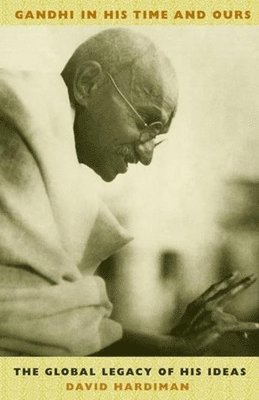
Gandhi was the creator of a radical style of politics that has proved effective in fighting insidious social divisions within India and elsewhere in the world. How did this new form of politics come about? David Hardiman shows that it was based on a larger vision of an alternative society, one that emphasized mutual respect, resistance to exploitation, nonviolence, and ecological harmony. Politics was just one of the many directions in which Gandhi sought to activate this peculiarly personal vision, and its practice involved experiments in relation to his opponents. From representatives of the British Raj to Indian advocates of violent resistance, from right-wing religious leaders to upholders of caste privilege, Gandhi confronted entrenched groups and their even more entrenched ideologies with a deceptively simple ethic of resistance. Hardiman examines Gandhi's ways of conducting his conflicts with all these groups, as well as with his critics on the left and representatives of the Dalits. He also explores another key issue in Gandhi's life and legacy: his ideas about and attitudes toward women.Despite inconsistencies and limitations, and failures in his personal life, Gandhi has become a beacon for posterity. The uncompromising honesty of his politics and moral activism has inspired such figures as Jayaprakash Narayan, Medha Patkar, Martin Luther King Jr., Nelson Mandela, and Petra Kelly and influenced a series of new social movements-by environmentalists, antiwar campaigners, feminists, and human rights activists, among others-dedicated to the principle of a more just world.
2 288 kr
Skickas inom 10-15 vardagar
Examining the world of popular healing in South Asia, this book looks at the way that it is marginalised by the state and medical establishment while at the same time being very important in the everyday lives of the poor. It describes and analyses a world of ‘subaltern therapeutics’ that both interacts with and resists state-sanctioned and elite forms of medical practice. The relationship is seen as both a historical as well as ongoing one.Focusing on those who exist and practice in the shadow of statist medicine, the book discusses the many ways in which they try to heal a range of maladies, and how they experience their marginality. The contributors also provide a history of such therapeutics, in the process challenging the widespread belief that such ‘traditional’ therapeutics are relatively static and unchanging. In focusing on these problems of transition, they open up one of the central concerns of subaltern historiography. This is an important contribution to the history of medicine and society, and subaltern and South Asian studies.
Del 71 - Studies in Imperialism
Missionaries and Their Medicine
A Christian Modernity for Tribal India
Häftad, Engelska, 2014
354 kr
Skickas inom 5-8 vardagar
Missionaries and their medicine is a lucid and enthralling study of the encounter between Christian missionaries and an Indian tribal community, the Bhils, in the period 1880 to 1964. The study is informed by a deep knowledge of the people amongst whom the missionaries worked, the author having lived for extensive periods in the tribal tracts of western India. He argues that the Bhils were never the passive objects of missionary attention and that they created for themselves their own form of ‘Christian modernity.’ The book provides a major intervention in the history of colonial medicine, as Hardiman argues that missionary medicine had a specific quality of its own – which he describes and analyses in detail – and that in most cases it was preferred to the medicine of colonial states. He also examines the period of transition to Indian independence, which was a highly fraught and uncertain process for the missionaries.
831 kr
Skickas inom 10-15 vardagar
Examining the world of popular healing in South Asia, this book looks at the way that it is marginalised by the state and medical establishment while at the same time being very important in the everyday lives of the poor. It describes and analyses a world of ‘subaltern therapeutics’ that both interacts with and resists state-sanctioned and elite forms of medical practice. The relationship is seen as both a historical as well as ongoing one.Focusing on those who exist and practice in the shadow of statist medicine, the book discusses the many ways in which they try to heal a range of maladies, and how they experience their marginality. The contributors also provide a history of such therapeutics, in the process challenging the widespread belief that such ‘traditional’ therapeutics are relatively static and unchanging. In focusing on these problems of transition, they open up one of the central concerns of subaltern historiography. This is an important contribution to the history of medicine and society, and subaltern and South Asian studies.
321 kr
Skickas
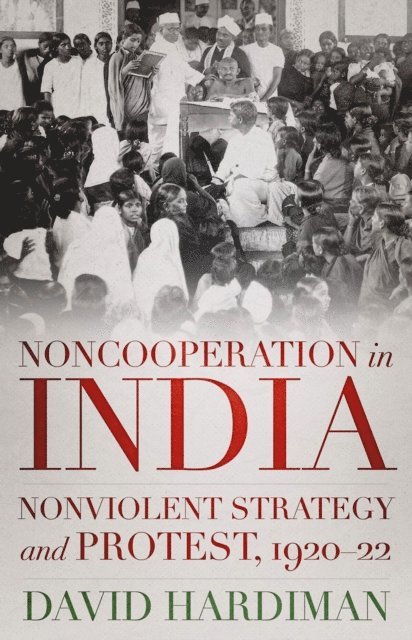
The Noncooperation Movement of 1920-22, led by Mahatma Gandhi, challenged every aspect of British rule in India. It was supported by people from all levels of the social hierarchy and united Hindus and Muslims in a way never again achieved by Indian nationalists. It was remarkably nonviolent. In all, it was one of the major mass protests of modern times. Yet there are almost no accounts of the entire movement, although many aspects of it have been covered by local-level studies. This volume both brings together and builds on these studies, looking at fractious all-India debates over strategy; the major grievances that drove local-level campaigns; the ways leaders braided together these streams of protest within a nationalist agenda; and the distinctive features of popular nonviolence for a righteous cause. David Hardiman's previous volume, The Nonviolent Struggle for Indian Freedom, examined the history of nonviolent resistance in the Indian nationalist movement. The present volume takes his study forward to examine the culmination of this first surge of struggle. While the campaign of 1920-22 did not achieve its desired objective of immediate self-rule, it did succeed in shaking to the core the authority of the British in India.
461 kr
Skickas inom 7-10 vardagar
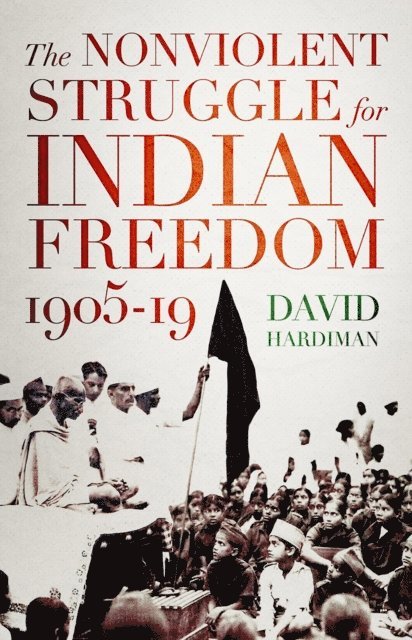
Much of the recent surge in writing about the practice of nonviolent forms of resistance has focused on movements that occurred after the end of the Second World War, many of which have been extremely successful. Although the fact that such a method of resistance was developed in its modern form by Indians is acknowledged in this writing, there has not until now been an authoritative history of the role of Indians in the evolution of the phenomenon.Celebrated historian David Hardiman shows that while nonviolence is associated above all with the towering figure of Mahatma Gandhi, ‘passive resistance’ was already being practised by nationalists in British-ruled India, though there was no principled commitment to nonviolence as such. It was Gandhi, first in South Africa and then in India, who evolved a technique that he called ‘satyagraha’. His endeavours saw ‘nonviolence’ forged as both a new word in the English language, and a new political concept.This book conveys in vivid detail exactly what nonviolence entailed, and the formidable difficulties that the pioneers of such resistance encountered in the years 1905-19.
1 068 kr
Tillfälligt slut
"Histories for the Subordinated" brings together the key writings of David Hardiman, one of the foremost contemporary historians of the subcontinent. Hardiman's practice as a historian - his enormously rich empiricism, archival work, and fieldwork, as well as his clarity - has been an inspiration to many, even as it has implicitly questioned some of the fashionably arcane modes of history-writing. Ranging across politics, environmental issues, Gandhi, moneylending, disease, and subaltern history, the book will interest all serious readers of Indian history as well as scholars in the areas of politics, sociology, culture, and religion in modern India.
Del 80 - Clio Medica
Healing Bodies, Saving Souls
Medical Missions in Asia and Africa
Inbunden, Engelska, 2006
1 601 kr
Skickas inom 5-8 vardagar
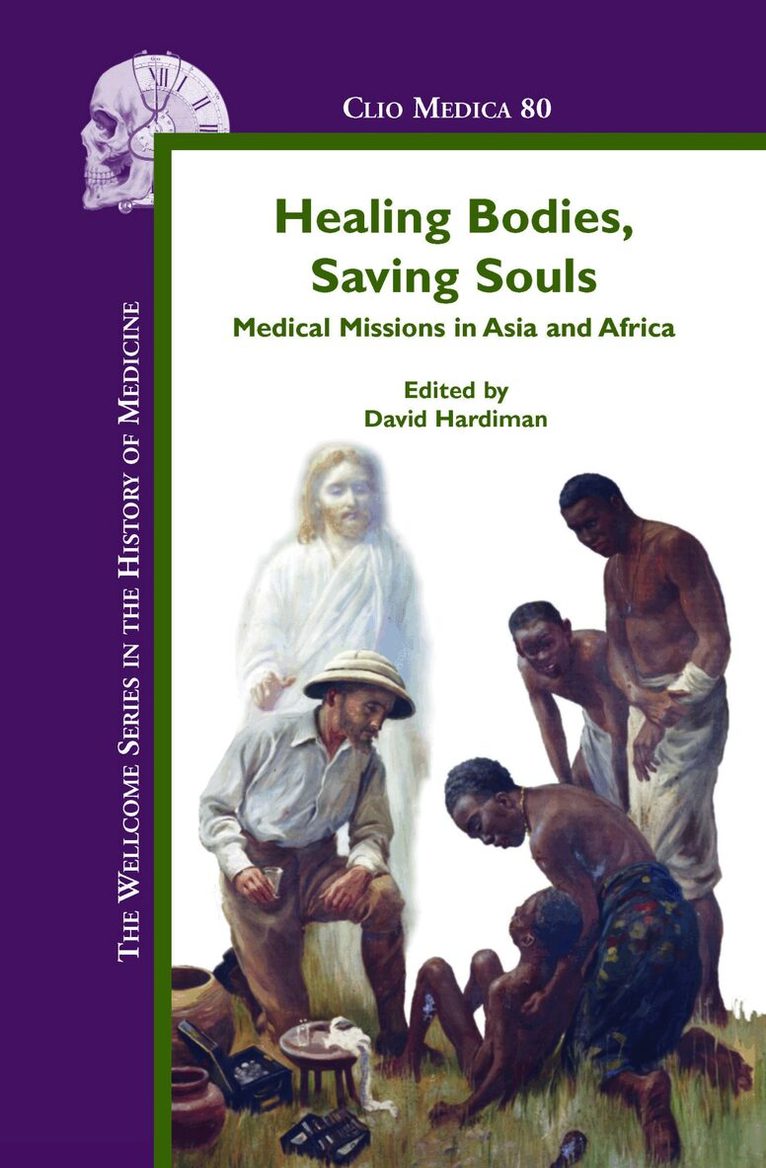
Missionary medicine flourished during the period of high European imperialism, from the late-1800s to the 1960s. Although the figure of mission doctor – exemplified by David Livingstone and Albert Schweitzer – exercised a powerful influence on the Western imagination during the nineteenth and early-twentieth centuries, few historians have examined the history of this important aspect of the missionary movement. This collection of articles on Asia and Africa uses the extensive archives that exist on medical missions to both enrich and challenge existing histories of the clinic in colonial territories – whether of the dispensary, the hospital, the maternity home or leprosy asylum.Some of the major themes addressed within include the attitude of different Christian denominations towards medical mission work, their differing theories and practices, how the missionaries were drawn into contentious local politics, and their attitude towards supernatural cures.Leprosy, often a feature of such work, is explored, as well as the ways in which local people perceived disease, healing and the missionaries themselves. Also discussed is the important contribution of women towards mission medical work. Healing Bodies, Saving Souls will be of interest not only to students and historians but also the wider reader as it aims to define the place of missionary within the overall history of medicine.
294 kr
Skickas inom 5-8 vardagar