David Pan - Böcker
Visar alla böcker från författaren David Pan. Handla med fri frakt och snabb leverans.
3 produkter
3 produkter
802 kr
Skickas inom 10-15 vardagar
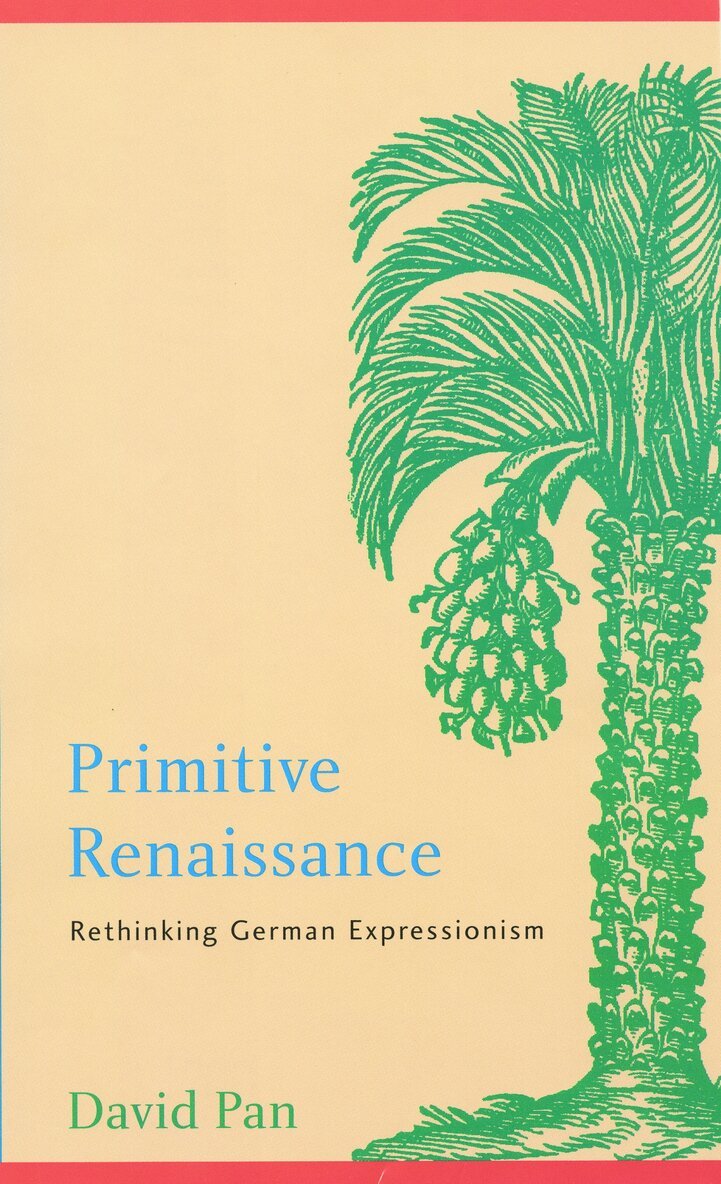
Primitive Renaissance argues that the radicality of early-twentieth-century movements such as expressionism was not their modernism but rather their primitivism. At the heart of the work of Friedrich Nietzsche, Pablo Picasso, Wassily Kandinsky, Carl Einstein, and others was a critique of modernity through a primitivist aesthetic that privileged art over science and reason. Although drawing on non-European cultural traditions, the new aesthetic was not merely exoticism, an artistic phase or fad that opened a window on the cultural other. It was conceived less as a simple negation of the trappings of civilization than as a more pervasive and structured critique of how life is organized in the modern world. Based on a traditionalist rather than Enlightenment view of the function of art in society, primitivism contended that art provides the core mythic structure for human consciousness. On a broader level, by negating modernity, primitivism also challenged its inevitability. Modernity became one of a number of equally plausible cultural strategies for organizing life in the contemporary world. Ranging insightfully across the visual arts, literature, and philosophy, Primitive Renaissance offers a provocative reassessment of the significance of primitivism and its contribution to the intellectual, artistic, and cultural climate of Europe in the early twentieth century.
Sacrifice in the Modern World
On the Particularity and Generality of Nazi Myth
Inbunden, Engelska, 2012
550 kr
Skickas inom 7-10 vardagar
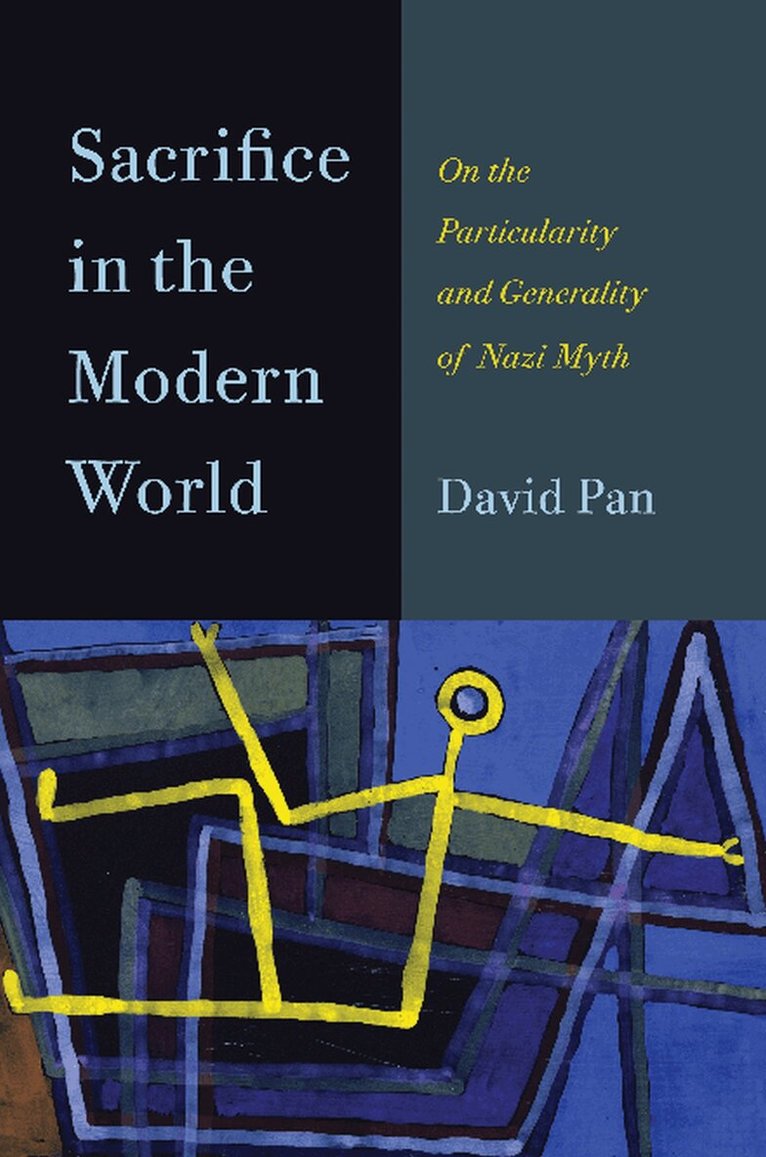
A landmark book, David Pan’s Sacrifice in the Modern World seeks to explain the continuing emphasis, in modern times, on sacrifice. Pan specifically turns to the culture of sacrifice—ritualized and sanctified death—in Nazi Germany, showing how that regime co-opted an existing discussion of sacrifice and infused it with its own mythology. Pan suggests that sacrifice is a key value in every society but that there is a preponderance of association of sacrifice with Nazi culture and therefore a largely pejorative treatment of sacrifice. Surveying the arguments of philosopher Alfred Baeumler and other symptomatic Nazi texts, Pan shows how the Nazis’ reactionary intellectual culture unraveled much of the Enlightenment project. In so doing, he is able to offer a compelling new perspective on basic theoretical concepts in the work of Kant, Nietzsche, Adorno, Bataille, Girard, and others. He posits that it is only by clearing our way through the Nazis’ misuse of sacrifice that we can understand the durability of sacrificial structures that—following several of the theorists he discusses— establish the fundamental values by which we live our lives. Rather than condemning the Nazi appeal to sacrifice itself, this book looks at the particular ways in which sacrifice was distributed and structured within that society. All cultures must grapple with the existential violence of the human condition, and they frequently do so through aesthetic treatments of sacrifice, rooted in myths and traditions. Pan argues that our task is not to eradicate these traditions but to engage them by carefully evaluating the commitments and values that they imply.
2 522 kr
Kommande
This book fills a gap in the current literature by demonstrating how to implement CBT with diverse clients. It stresses cultural sensitivity to ethnoracial considerations, with attention to evidence-based practice.As much of the available data is skewed toward White, Western populations, this book explores what empirically supported treatments can be suitable for other groups.Throughout, the connection between research and effective practice is maintained, and clinical guidelines are presented.Geared toward professionals of any discipline, the material offers a solid foundation for the understanding and efficacious treatment of a range of ethnoracially diverse clients.