Deborah Lutz - Böcker
Visar alla böcker från författaren Deborah Lutz. Handla med fri frakt och snabb leverans.
13 produkter
13 produkter
189 kr
Skickas inom 7-10 vardagar
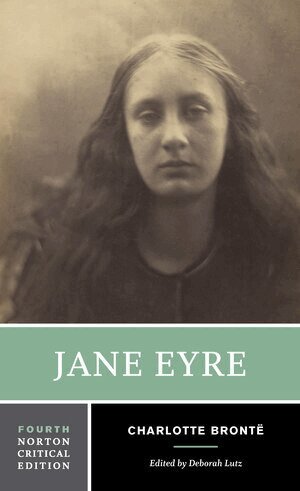
"For the classroom and for the general reader, there’s no better way to experience the context in which Jane Eyre was written, illuminating modern commentary, and the novel itself in an authoritative text.” Fred kaplan, Queens College and The Graduate Center, City University of New York
624 kr
Skickas inom 5-8 vardagar
This book shows how authors in nineteenth-century Britain used the materials of writing (and of reading, drawing, and handicraft) for inspiration and creative composition. In doing so, it reshapes the sensory history of working on and with paper. These activities were many and varied: Charlotte Brontë composed poems and doodled in the margins of school books, George Eliot recorded writing ideas on her blotter, Elizabeth Barrett Browning sewed paper to paper to edit her poems, and Jane Austen employed straight pins to "cut and paste." Albums provided a playful space to collect and to produce text-and-collage gifts for friends, circumventing print culture for a more intimate book making, as Elizabeth Gaskell and Anna Atkins knew. Notebooks and commonplace books were vital to Eliot, Michael Field, and Emily Brontë as part of a writing process. Writers experimented with crafts and needlework to compose text without paper and ink, most notably in the case of samplers. What writing and drawing happened on--including bibles, sewing patterns, and walls--mattered, as related to, and generative of, the themes of the work. This expansive field of meanings that creativity with textual (and material) things could have was common to the Victorians, but the writers explored here were extravagant even among their self-reflexive contemporaries in their undoing, remaking, miniaturizing, encrypting, reusing, and transforming. The edge of the page, the width of the margin, the covers of the book, were limiting factors, but also provocations to push on further, be radical.
269 kr
Skickas inom 7-10 vardagar
At the height of the Victorian era, a daring group of artists and thinkers defied the reigning obsession with propriety, testing the boundaries of sexual decorum in their lives and in their work. Dante Gabriel Rossetti exhumed his dead wife to pry his only copy of a manuscript of his poems from her coffin. Legendary explorer Richard Burton wrote how-to manuals on sex positions and livened up the drawing room with stories of eroticism in the Middle East. Algernon Charles Swinburne visited flagellation brothels and wrote pornography amid his poetry. By embracing and exploring the taboo, these iconoclasts produced some of the most captivating art, literature, and ideas of their day. As thought-provoking as it is electric, Pleasure Bound unearths the desires of the men and women who challenged buttoned-up Victorian mores to promote erotic freedom. These bohemians formed two loosely overlapping societies—the Cannibal Club and the Aesthetes—to explore their fascinations with sexual taboo, from homosexuality to the eroticization of death. Known as much for their flamboyant personal lives as for their controversial masterpieces, they created a scandal-provoking counterculture that paved the way for such later figures as Gustav Klimt, Virginia Woolf, and Jean Genet. In this stunning exposé of the Victorian London we thought we knew, Deborah Lutz takes us beyond the eyebrow-raising practices of these sex rebels, revealing how they uncovered troubles that ran beneath the surface of the larger social fabric: the struggle for women’s emancipation, the dissolution of formal religions, and the pressing need for new forms of sexual expression.
167 kr
Tillfälligt slut
The story of the Brontës is told through the things they wore, stitched, wrote on and inscribed at the parsonage in Haworth. From Charlotte’s writing desk and the manuscripts it contained to the brass collar worn by Emily’s dog, Keeper, each object opens a window onto the sisters’ world, their fiction and the Victorian era. By unfolding the histories of the things they used, the chapters form a chronological biography of the family. A walking stick evokes Emily’s solitary hikes on the moors and the stormy heath—itself a character in Wuthering Heights. Charlotte’s bracelet containing Anne and Emily’s intertwined hair gives voice to her grief over their deaths. These possessions pull us into their daily lives: the imaginary kingdoms of their childhood writing, their time as governesses and their stubborn efforts to make a mark on the world.
160 kr
Skickas inom 7-10 vardagar
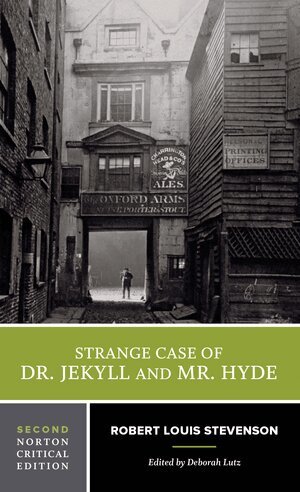
This Norton Critical Edition includes:The first British edition of the novel, published in 1886 by Longmans, Green, and Co., the only edition set directly from Stevenson’s manuscript and for which he read and corrected proofs.Deborah Lutz’s thorough introduction and detailed explanatory footnotes to the novel.Seven illustrations.A rich and relevant selection of background materials centered on the novel’s composition, reception, and historical and cultural contexts, alongside seven of Stevenson’s letters.Interpretative essays by Elaine Showalter, Jack Halberstam, Martin Danahay and Stephen Arata.A chronology and a selected bibliography.About the SeriesRead by more than 12 million students over fifty-five years, Norton Critical Editions set the standard for apparatus that is right for undergraduate readers. The three-part format—annotated text, contexts and criticism—helps students to better understand, analyse and appreciate the literature, while opening a wide range of teaching possibilities for instructors. Whether in print or in digital format, Norton Critical Editions provide all the resources students need.
116 kr
Skickas inom 7-10 vardagar
About Emily Brontë’s Wuthering Heights:“It is as if [Brontë] could tear up all that we know human beings by, and fill these unrecognisable transparencies with such a gust of life that they transcend reality. Hers, then, is the rarest of all powers. She could free life from its dependence on facts; with a few touches indicate the spirit of a face so that it needs no body; by speaking of the moor make the wind blow and the thunder roar.” —Virginia Woolf
Dangerous Lover
Gothic Villains, Byronism, and the Nineteenth-Century Seduction Narrative
Häftad, Engelska, 2016
417 kr
Skickas inom 5-8 vardagar
Del 96 - Cambridge Studies in Nineteenth-Century Literature and Culture
Relics of Death in Victorian Literature and Culture
Inbunden, Engelska, 2015
1 431 kr
Skickas inom 7-10 vardagar
Nineteenth-century Britons treasured objects of daily life that had once belonged to their dead. The love of these keepsakes, which included hair, teeth, and other remains, speaks of an intimacy with the body and death, a way of understanding absence through its materials, which is less widely felt today. Deborah Lutz analyzes relic culture as an affirmation that objects held memories and told stories. These practices show a belief in keeping death vitally intertwined with life - not as memento mori but rather as respecting the singularity of unique beings. In a consumer culture in full swing by the 1850s, keepsakes of loved ones stood out as non-reproducible, authentic things whose value was purely personal. Through close reading of the works of Charles Dickens, Emily Brontë, Alfred Lord Tennyson, Thomas Hardy, and others, this study illuminates the treasuring of objects that had belonged to or touched the dead.
Del 96 - Cambridge Studies in Nineteenth-Century Literature and Culture
Relics of Death in Victorian Literature and Culture
Häftad, Engelska, 2017
493 kr
Skickas inom 7-10 vardagar
Nineteenth-century Britons treasured objects of daily life that had once belonged to their dead. The love of these keepsakes, which included hair, teeth, and other remains, speaks of an intimacy with the body and death, a way of understanding absence through its materials, which is less widely felt today. Deborah Lutz analyzes relic culture as an affirmation that objects held memories and told stories. These practices show a belief in keeping death vitally intertwined with life - not as memento mori but rather as respecting the singularity of unique beings. In a consumer culture in full swing by the 1850s, keepsakes of loved ones stood out as non-reproducible, authentic things whose value was purely personal. Through close reading of the works of Charles Dickens, Emily Brontë, Alfred Lord Tennyson, Thomas Hardy, and others, this study illuminates the treasuring of objects that had belonged to or touched the dead.
391 kr
Kommande
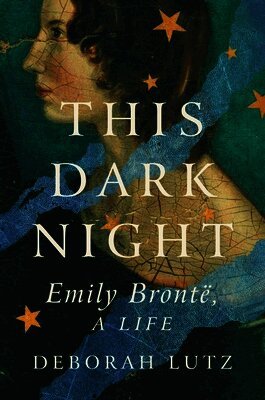
Emily Brontë (1818–48) was only twenty-seven years old when she began work on one of the most important novels in the English language. It took the world almost a century to catch up to Wuthering Heights, and it has taken even longer to know Brontë—an elusive figure, with a ghostly legacy marred by the loss (and likely destruction) of almost all her personal papers. Drawing on formerly inaccessible notebooks and manuscripts, Deborah Lutz constructs a portrait of Brontë, her famous writing sisters Charlotte and Anne, and the family’s tragic deaths against the texture of Brontë’s days as a woman both tending a Victorian household and crafting otherworldly fiction. Lutz traces Brontë’s passions from her animal menagerie to her beloved moors as she honed her fantastical poems and transcendent novel. This Dark Night plumbs the life and writing of this idiosyncratic woman, dark soul, and monumental genius.
234 kr
Kommande
The first comprehensive biography of Emily Brontë in over two decades.Emily Jane Brontë was just 27 when she started writing the wayward and electric novel Wuthering Heights. Three years later, she was dead. Out of step with her own time and remembered as the strangest of the Brontë sisters, there's much that we don't know about her — most of her papers were destroyed after her death. But as Deborah Lutz explores in this, one of the first biographies of Emily in 20 years, the writing that has survived seethes with storm and strife and with the beautifully desolate landscape of Yorkshire.Drawing on a vast quantity of unexplored archival materials, Deborah reconstructs the texture of Emily Brontë's days, bringing us closer to one of the greatest and fiercest writers we have, by showing us her creative process and her confidence in her strange art.This book has much to reveal to readers of Wuthering Heights, as we accompany Emily around the wild moorlands she loved so much. Also threaded through with the contemporary politics and events of the era (from the early labour movements of the Chartists and reformists, to the slave uprisings in the colonies), and authors and locals that Emily read about or knew (from proto-feminist Mary Wollstonecraft to the masculine lesbian Anne Lister).Featuring illuminating readings of her poems, This Dark Night takes us inside the world of Emily's irrepressible spirit and wild imagination.
373 kr
Skickas inom 5-8 vardagar
457 kr
Skickas inom 3-6 vardagar