Derek Armitage - Böcker
Visar alla böcker från författaren Derek Armitage. Handla med fri frakt och snabb leverans.
5 produkter
5 produkter
516 kr
Skickas
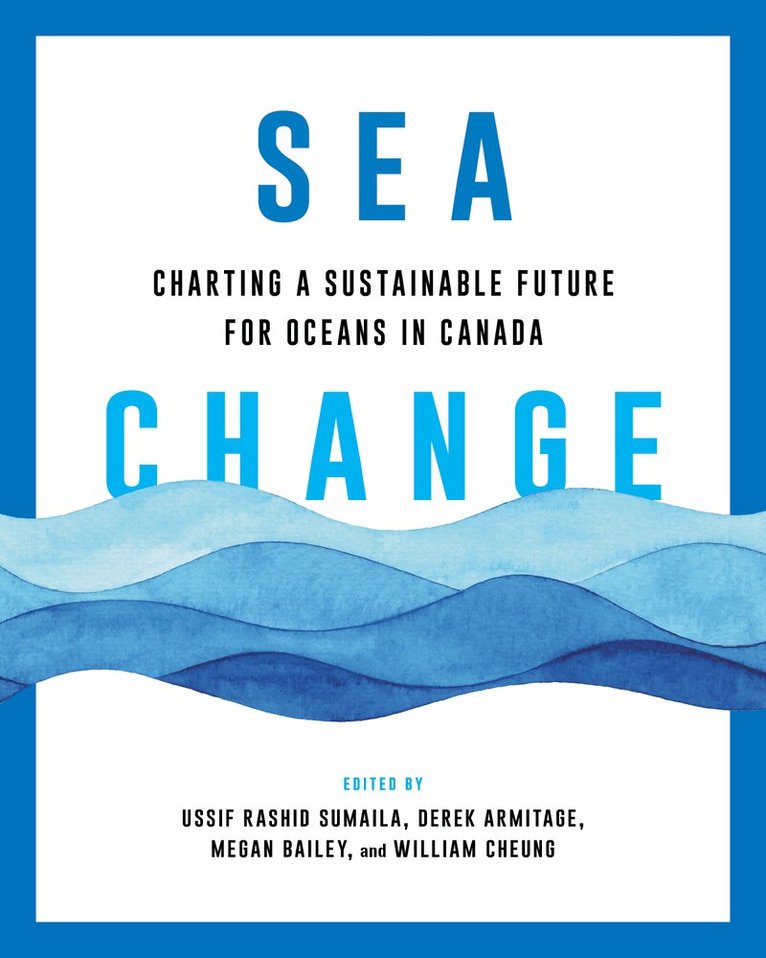
As climate change, resource overexploitation, and pollution leave ever more visible marks, ocean ecosystems, economies, and people are all affected. With coasts on the Atlantic, Pacific, and Arctic, Canada faces a formidable challenge in building resilient, sustainable oceans and supporting the communities that rely on them. Sea Change reports on the OceanCanada Partnership, a multidisciplinary project to take stock of what we know about Canada's oceans, construct possible scenarios for coastal regions, and create a national dialogue and vision. Three themes emerge from this impressive synthesis of social, cultural, economic, and environmental research: ocean change, access to ocean resources, and ocean governance. Indigenous and non-Indigenous scholars and practitioners focus on finding solutions to rapid environmental and social transformation, outlining the implications for legislation and offering policy recommendations. Increasingly, civil society will have to advocate for oceans, and Sea Change will empower the voices of those who take up that task.
2 088 kr
Skickas inom 10-15 vardagar
Coastal communities depend on the marine environment for their livelihoods, but the common property nature of marine resources poses major challenges for the governance of such resources. Through detailed cases and consideration of broader global trends, this volume examines how coastal communities are adapting to environmental change, and the attributes of governance that foster deliberate transformations and help to build resilience of social and ecological systems. Governance here reflects how communities, societies and organisations (e.g. fisher cooperatives, government agencies) choose to organise themselves to make decisions about important issues, such as the use and protection of coastal commons (e.g. fishery resources). The book shows how a governance approach generates insights into the specific forms and arrangements that enable coastal communities to steer away from unsustainable pathways. It also provides an analytical lens to consider important questions of power, knowledge and legitimacy in linked social-ecological systems. Chapters highlight examples in which communities are engaging in deliberative transformations to build resilience and enhance their well-being. These transformations and efforts to build resilience are emerging through multi-level collaboration, shared learning, innovative policies and institutional arrangements (such as new property rights regimes and co-management), methodologies that engage with indigenous cultural practices, and entrepreneurial activities, including income and livelihood diversification. Case studies are included from a range of countries including Canada, Japan, Brazil, Indonesia, Mexico, South Africa, Thailand, the South Pacific and Europe. The authors integrate theory with practical examples to improve coastal marine policy and governance, and draw upon emerging concepts from social-ecological resilience and transformations, adaptive governance and the scholarship on the commons.
807 kr
Skickas inom 10-15 vardagar
Coastal communities depend on the marine environment for their livelihoods, but the common property nature of marine resources poses major challenges for the governance of such resources. Through detailed cases and consideration of broader global trends, this volume examines how coastal communities are adapting to environmental change, and the attributes of governance that foster deliberate transformations and help to build resilience of social and ecological systems. Governance here reflects how communities, societies and organisations (e.g. fisher cooperatives, government agencies) choose to organise themselves to make decisions about important issues, such as the use and protection of coastal commons (e.g. fishery resources). The book shows how a governance approach generates insights into the specific forms and arrangements that enable coastal communities to steer away from unsustainable pathways. It also provides an analytical lens to consider important questions of power, knowledge and legitimacy in linked social-ecological systems. Chapters highlight examples in which communities are engaging in deliberative transformations to build resilience and enhance their well-being. These transformations and efforts to build resilience are emerging through multi-level collaboration, shared learning, innovative policies and institutional arrangements (such as new property rights regimes and co-management), methodologies that engage with indigenous cultural practices, and entrepreneurial activities, including income and livelihood diversification. Case studies are included from a range of countries including Canada, Japan, Brazil, Indonesia, Mexico, South Africa, Thailand, the South Pacific and Europe. The authors integrate theory with practical examples to improve coastal marine policy and governance, and draw upon emerging concepts from social-ecological resilience and transformations, adaptive governance and the scholarship on the commons.
1 578 kr
Skickas inom 10-15 vardagar
Rapid environmental change calls for individuals and societies with an ability to transform our interactions with each other and the ecosystems upon which we depend. Adaptive capacity - the ability of a social-ecological system (or the components of that system) to be robust to disturbances and capable of responding to changes - is increasingly recognized as a critical attribute of multi-level environmental governance. This unique volume offers the first interdisciplinary and integrative perspective on an emerging area of applied scholarship, with contributions from internationally recognized researchers and practitioners. It demonstrates how adaptive capacity makes environmental governance possible in complex social-ecological systems. Cutting-edge theoretical developments are explored and empirical case studies offered from a wide range of geographic settings and natural resource contexts, such as water, climate, fisheries and forestry.•Of interest to researchers, policymakers and resource managers seeking to navigate and understand social-ecological change in diverse geographic settings and resource contexts
1 578 kr
Skickas inom 10-15 vardagar
Rapid environmental change calls for individuals and societies with an ability to transform our interactions with each other and the ecosystems upon which we depend. Adaptive capacity - the ability of a social-ecological system (or the components of that system) to be robust to disturbances and capable of responding to changes - is increasingly recognized as a critical attribute of multi-level environmental governance. This unique volume offers the first interdisciplinary and integrative perspective on an emerging area of applied scholarship, with contributions from internationally recognized researchers and practitioners. It demonstrates how adaptive capacity makes environmental governance possible in complex social-ecological systems. Cutting-edge theoretical developments are explored and empirical case studies offered from a wide range of geographic settings and natural resource contexts, such as water, climate, fisheries and forestry.•Of interest to researchers, policymakers and resource managers seeking to navigate and understand social-ecological change in diverse geographic settings and resource contexts