Diane Atnally Conlin – författare
Visar alla böcker från författaren Diane Atnally Conlin. Handla med fri frakt och snabb leverans.
5 produkter
Artists of the Ara Pacis
The Process of Hellenization in Roman Relief Sculpture
Häftad, 2011
703 kr
Lägg i varukorg
The Ara Pacis Augustae, or Altar of Augustan Peace, was built to commemorate the return to Rome of the emperor Augustus and his general Agrippa, who had been away for many years on military campaigns. Dedicated in 9 B.C., the monument consists of an altar and surrounding wall, both decorated with a …
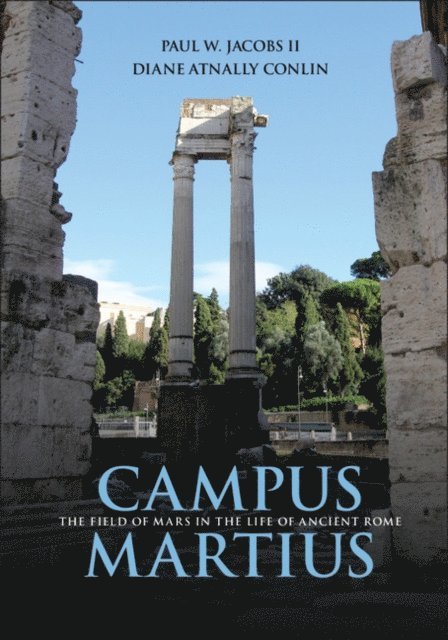
Campus Martius
The Field of Mars in the Life of Ancient Rome
Av Paul W. Jacobs, II, Diane Atnally Conlin
Inbunden, 2015
1693 kr
Lägg i varukorg
A mosquito-infested and swampy plain lying north of the city walls, Rome's Campus Martius, or Field of Mars, was used for much of the period of the Republic as a military training ground and as a site for celebratory rituals and occasional political assemblies. Initially punctuated with temples …
Campus Martius
The Field of Mars in the Life of Ancient Rome
Av Paul W. Jacobs, II, Diane Atnally Conlin
Häftad, 2015
687 kr
Lägg i varukorg
A mosquito-infested and swampy plain lying north of the city walls, Rome's Campus Martius, or Field of Mars, was used for much of the period of the Republic as a military training ground and as a site for celebratory rituals and occasional political assemblies. Initially punctuated with temples …
Campus Martius
The Field of Mars in the Life of Ancient Rome
Av Diane Atnally Conlin, II Paul W. Jacobs
E-bok, 2015
672 kr
Lägg i varukorg
A mosquito-infested and swampy plain lying north of the city walls, Rome''s Campus Martius, or Field of Mars, was used for much of the period of the Republic as a military training ground and as a site for celebratory rituals and occasional political assemblies. Initially punctuated with temples …
Campus Martius
The Field of Mars in the Life of Ancient Rome
Av Diane Atnally Conlin, II Paul W. Jacobs
E-bok, 2015
672 kr
Lägg i varukorg
A mosquito-infested and swampy plain lying north of the city walls, Rome''s Campus Martius, or Field of Mars, was used for much of the period of the Republic as a military training ground and as a site for celebratory rituals and occasional political assemblies. Initially punctuated with temples …