Paul W. Jacobs, II – författare
Visar alla böcker från författaren Paul W. Jacobs, II. Handla med fri frakt och snabb leverans.
3 produkter
3 produkter
1 295 kr
Skickas inom 7-10 vardagar
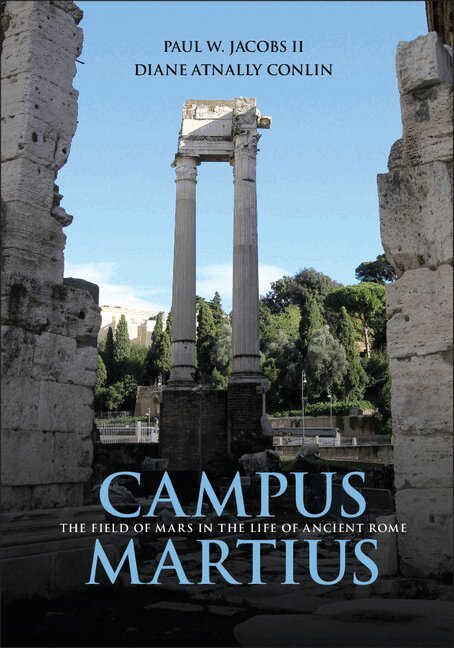
A mosquito-infested and swampy plain lying north of the city walls, Rome's Campus Martius, or Field of Mars, was used for much of the period of the Republic as a military training ground and as a site for celebratory rituals and occasional political assemblies. Initially punctuated with temples vowed by victorious generals, during the imperial era it became filled with extraordinary baths, theaters, porticoes, aqueducts, and other structures - many of which were architectural firsts for the capitol. This book explores the myriad factors that contributed to the transformation of the Campus Martius from an occasionally visited space to a crowded center of daily activity. It presents a case study of the repurposing of urban landscape in the Roman world and explores how existing topographical features that fit well with the Republic's needs ultimately attracted architecture that forever transformed those features but still resonated with the area's original military and ceremonial traditions.
500 kr
Skickas inom 7-10 vardagar
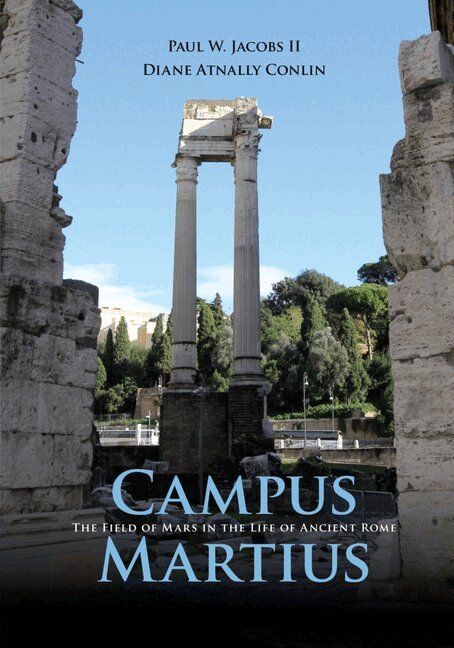
A mosquito-infested and swampy plain lying north of the city walls, Rome's Campus Martius, or Field of Mars, was used for much of the period of the Republic as a military training ground and as a site for celebratory rituals and occasional political assemblies. Initially punctuated with temples vowed by victorious generals, during the imperial era it became filled with extraordinary baths, theaters, porticoes, aqueducts, and other structures - many of which were architectural firsts for the capitol. This book explores the myriad factors that contributed to the transformation of the Campus Martius from an occasionally visited space to a crowded center of daily activity. It presents a case study of the repurposing of urban landscape in the Roman world and explores how existing topographical features that fit well with the Republic's needs ultimately attracted architecture that forever transformed those features but still resonated with the area's original military and ceremonial traditions.
The Lives of a Roman Neighborhood
Tracing the Imprint of the Past, from 500 BCE to the Present
Inbunden, Engelska, 2022
1 065 kr
Skickas inom 7-10 vardagar
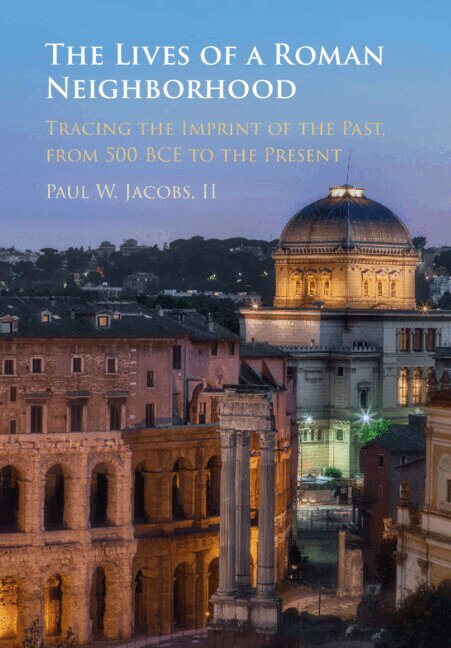
In this book, Paul Jacobs traces the history of a neighborhood situated in the heart of Rome over twenty-five centuries. Here, he considers how topography and location influenced its long urban development. During antiquity, the forty-plus acre, flood-prone site on the Tiber's edge was transformed from a meadow near a crossroads into the imperial Circus Flaminius, with its temples, colonnades, and a massive theater. Later, it evolved into a bustling medieval and early modern residential and commercial district known as the Sant'Angelo rione. Subsequently, the neighborhood enclosed Rome's Ghetto. Today, it features an archaeological park and tourist venues, and it is still the heart of Rome's Jewish community. Jacobs' study explores the impact of physical alterations on the memory of lost topographical features. He also posits how earlier development may be imprinted upon the landscape, or preserved to influence future changes.