• Fri frakt över 249 kr
  • •
  • Snabba leveranser
  • •
  • Billiga böcker
Kundservice

Du är på sajten för privatpersoner.

Företag, bibliotek eller offentlig verksamhet?

Du handlar på classic.bokus.com, där alla dina funktioner finns intakta.
Till classic.bokus.com
Bokus logotyp. Gå till startsidan.
  • Erbjudanden
  • Nyheter
  • Student
  • Topplistor
  • Barn & ungdom
  • Bokus Play
  • E-böcker
  • Pocketböcker
  • Spel & pussel

10% studentrabatt med kod TERM26

Sidfot

Mina sidor

    Hjälp

    • Kundservice
    • Vanliga frågor och svar
    • Frakt och leverans
    • Retur vid ångerrätt
    • Reklamera vara
    • Betalning
    • Köpvillkor
    • Allmänna villkor
    • Information om webbplatsens tillgänglighet

    Om Bokus

    • Om oss
    • Pressrum
    • För studenter
    • För företag
    • För bibliotek och offentlig verksamhet
    • För leverantörer
    • Hållbarhet

    Populärt

    • Aktuella erbjudanden
    • Presentkort
    • Studentlitteratur
    • Nya böcker
    • Topplistor
    • Signerade böcker
    • Engelska böcker

    Inspiration

    • Boktips
    • BookTok
    • Populära bokserier
    • Barnbokskaraktärer
    • Populära författare
    Logotyp för Bokus
    Följ oss på Facebook (extern länk)Följ oss på Instagram (extern länk)Följ oss på YouTube (extern länk)Följ oss på TikTok (extern länk)
    bokus @ CookiesAnpassa cookiesIntegritetspolicyKöpvillkor
    Till Citymail hemsida (extern länk)Till Budbee hemsida (extern länk)Till Postnord hemsida (extern länk)Till Schenker hemsida (extern länk)Till Early Bird hemsida (extern länk)Till Walleys hemsida (extern länk)
    1. Historia och arkeologi
    2. Arkeologi
    3. Arkeologiska perioder och områden

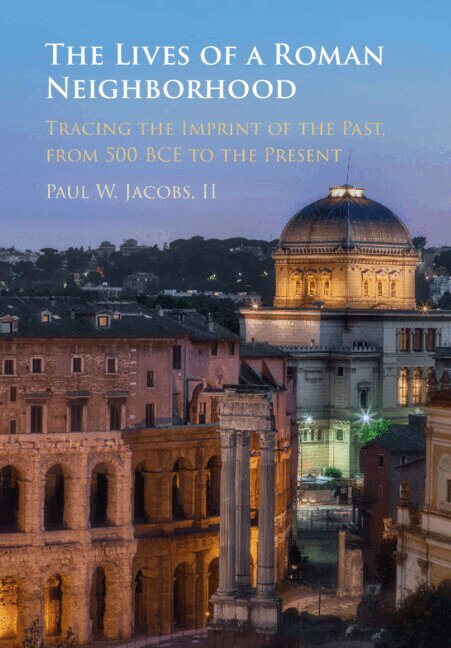
    The Lives of a Roman Neighborhood

    Tracing the Imprint of the Past, from 500 BCE to the Present

    AvPaul W. Jacobs, II

    Inbunden, Engelska, 2022

    1 143 kr

    Beställningsvara. Skickas inom 10-15 vardagar. Fri frakt över 249 kr.

    Beskrivning

    In this book, Paul Jacobs traces the history of a neighborhood situated in the heart of Rome over twenty-five centuries. Here, he considers how topography and location influenced its long urban development. During antiquity, the forty-plus acre, flood-prone site on the Tiber's edge was transformed from a meadow near a crossroads into the imperial Circus Flaminius, with its temples, colonnades, and a massive theater. Later, it evolved into a bustling medieval and early modern residential and commercial district known as the Sant'Angelo rione. Subsequently, the neighborhood enclosed Rome's Ghetto. Today, it features an archaeological park and tourist venues, and it is still the heart of Rome's Jewish community. Jacobs' study explores the impact of physical alterations on the memory of lost topographical features. He also posits how earlier development may be imprinted upon the landscape, or preserved to influence future changes.

    Produktinformation

    • Utgivningsdatum:2022-12-01
    • Mått:182 x 260 x 17 mm
    • Vikt:720 g
    • Format:Inbunden
    • Språk:Engelska
    • Antal sidor:256
    • Förlag:Cambridge University Press
    • ISBN:9781316512630

    Utforska kategorier

    • Arkeologiska perioder och områden inom Historia och arkeologi

    Mer om författaren

    Paul Jacobs, II, an independent scholar, has spent extensive time in Rome and focuses on Rome's topographical development. He is the co-author of Campus Martius – The Field of Mars in the Life of Ancient Rome (2014). His article on Cola di Rienzo, Renaissance Studies (2018), is set in the Sant'Angelo rione, the subject of this study.

    Recensioner i media

    '… Jacobs traces, over the course of 2,500 years, the “tenacious life on the Tiber's edge” of a compact, low-lying area on the river's east bank … In its impressive chronological sweep and relentless problem-solving approach, [his] book offers the most ambitious case study yet of urban process in Rome.' T. Corey Brennan, Times Literary Supplement

    Innehållsförteckning

    • 1. Remembering the meadowlands: The Prata Flaminia and the circus of Gaius Flaminius, circa 500–217 BCE; 2. Setting out line: The republican circus, 217–44 BCE; 3. Fit for an emperor: Creating the Augustan circus, 44 BCE–14 CE; 4. The long show ends: The imperial circus through the gothic war, 14–554 CE; 5. Repurposing space in the early medieval era, 554–circa 1000; 6. Filling in the blanks: Developing Sant'Angelo Rione, circa 1000–1347; 7. Growth and decline along a commercial corridor, 1347–1555; 8. Two Rioni in one:Sant'Angelo and its ghetto, 1555–1800; 9. Old walls razed, new walls built: Urban renewal on the Tiber's edge, 1800–1908; 10. Travertine and Stolpersteine: Remembering the past at different levels, 1908–present.