Dinesh Kumar Saini - Böcker
Visar alla böcker från författaren Dinesh Kumar Saini. Handla med fri frakt och snabb leverans.
17 produkter
17 produkter
2 704 kr
Skickas inom 10-15 vardagar
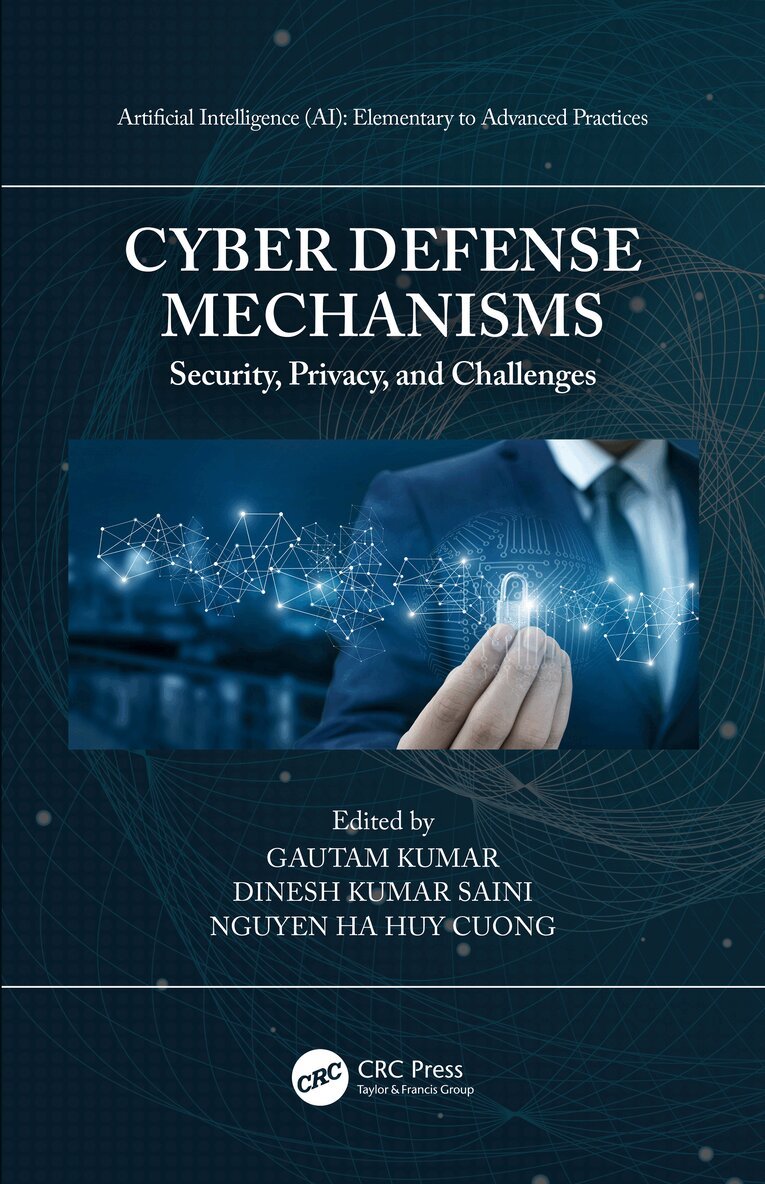
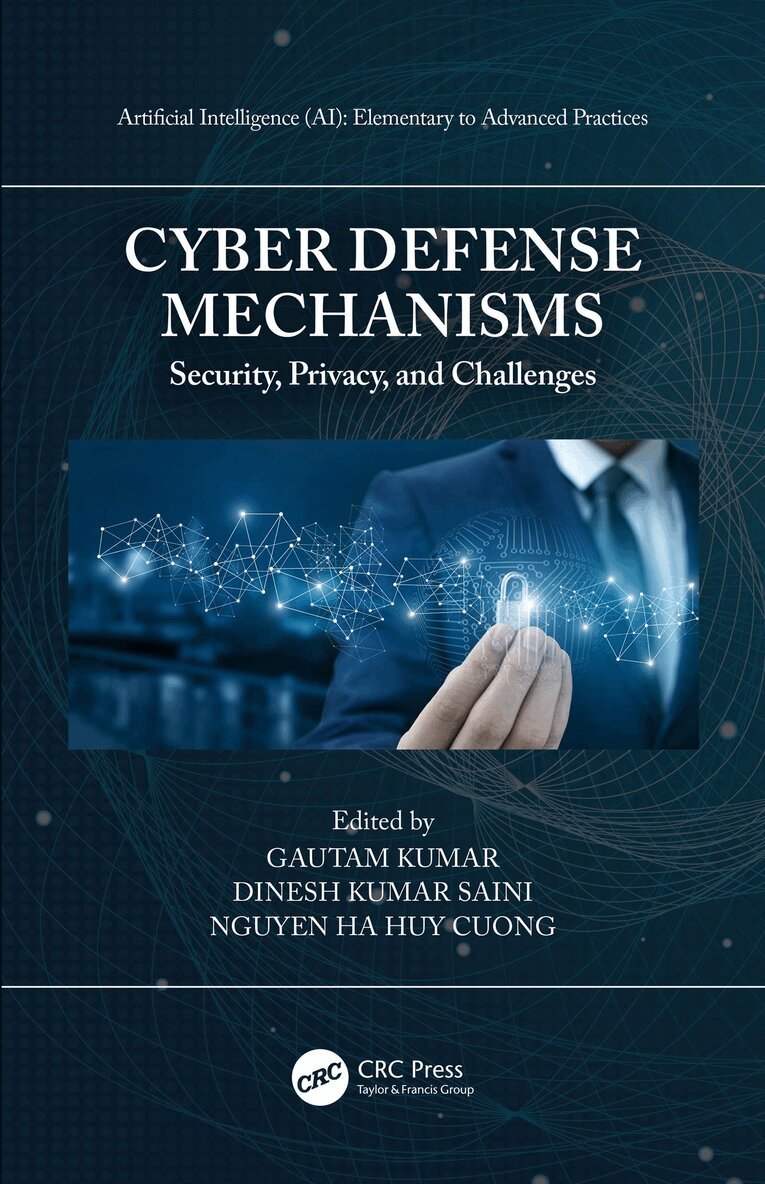
This book discusses the evolution of security and privacy issues and brings related technological tools, techniques, and solutions into one single source. The book will take readers on a journey to understanding the security issues and possible solutions involving various threats, attacks, and defense mechanisms, which include IoT, cloud computing, Big Data, lightweight cryptography for blockchain, and data-intensive techniques, and how it can be applied to various applications for general and specific use. Graduate and postgraduate students, researchers, and those working in this industry will find this book easy to understand and use for security applications and privacy issues.
691 kr
Skickas inom 10-15 vardagar
This book discusses the evolution of security and privacy issues and brings related technological tools, techniques, and solutions into one single source. The book will take readers on a journey to understanding the security issues and possible solutions involving various threats, attacks, and defense mechanisms, which include IoT, cloud computing, Big Data, lightweight cryptography for blockchain, and data-intensive techniques, and how it can be applied to various applications for general and specific use. Graduate and postgraduate students, researchers, and those working in this industry will find this book easy to understand and use for security applications and privacy issues.
1 333 kr
Skickas inom 10-15 vardagar
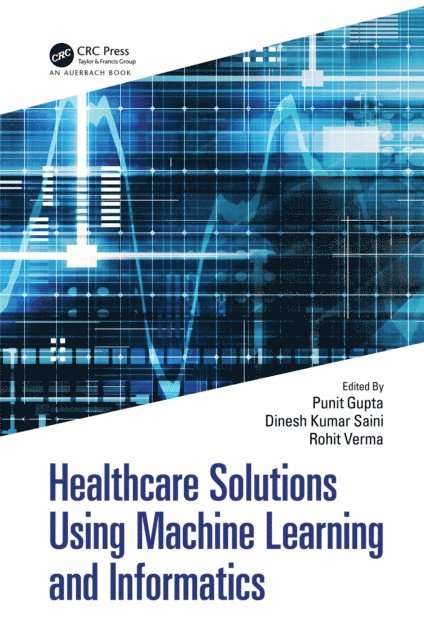
Healthcare Solutions Using Machine Learning and Informatics covers novel and innovative solutions for healthcare that apply machine learning and biomedical informatics technology. The healthcare sector is one of the most critical in society. This book presents a series of artificial intelligence, machine learning, and intelligent IoT-based solutions for medical image analysis, medical big-data processing, and disease predictions. Machine learning and artificial intelligence use cases in healthcare presented in the book give researchers, practitioners, and students a wide range of practical examples of cross-domain convergence.The wide variety of topics covered include:Artificial Intelligence in healthcareMachine learning solutions for such disease as diabetes, arthritis, cardiovascular disease, and COVID-19Big data analytics solutions for healthcare data processingReliable biomedical applications using AI modelsIntelligent IoT in healthcareThe book explains fundamental concepts as well as the advanced use cases, illustrating how to apply emerging technologies such as machine learning, AI models, and data informatics into practice to tackle challenges in the field of healthcare with real-world scenarios. Chapters contributed by noted academicians and professionals examine various solutions, frameworks, applications, case studies, and best practices in the healthcare domain.
Bio-Inspired Optimization in Fog and Edge Computing Environments
Principles, Algorithms, and Systems
Inbunden, Engelska, 2023
1 686 kr
Skickas inom 10-15 vardagar
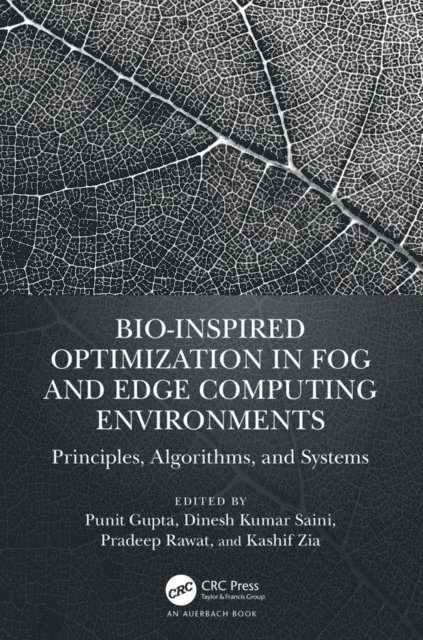
A new era of complexity science is emerging, in which nature- and bio-inspired principles are being applied to provide solutions. At the same time, the complexity of systems is increasing due to such models like the Internet of Things (IoT) and fog computing. Will complexity science, applying the principles of nature, be able to tackle the challenges posed by highly complex networked systems?Bio-Inspired Optimization in Fog and Edge Computing: Principles, Algorithms, and Systems is an attempt to answer this question. It presents innovative, bio-inspired solutions for fog and edge computing and highlights the role of machine learning and informatics. Nature- or biological-inspired techniques are successful tools to understand and analyze a collective behavior. As this book demonstrates, algorithms, and mechanisms of self-organization of complex natural systems have been used to solve optimization problems, particularly in complex systems that are adaptive, ever-evolving, and distributed in nature.The chapters look at ways of enhancingto enhance the performance of fog networks in real-world applications using nature-based optimization techniques. They discuss challenges and provide solutions to the concerns of security, privacy, and power consumption in cloud data center nodes and fog computing networks. The book also examines how:The existing fog and edge architecture is used to provide solutions to future challenges.A geographical information system (GIS) can be used with fog computing to help users in an urban region access prime healthcare.An optimization framework helps in cloud resource management.Fog computing can improve the quality, quantity, long-term viability, and cost-effectiveness in agricultural production.Virtualization can support fog computing, increase resources to be allocated, and be applied to different network layers.The combination of fog computing and IoT or cloud computing can help healthcare workers predict and analyze diseases in patients.
663 kr
Skickas inom 10-15 vardagar
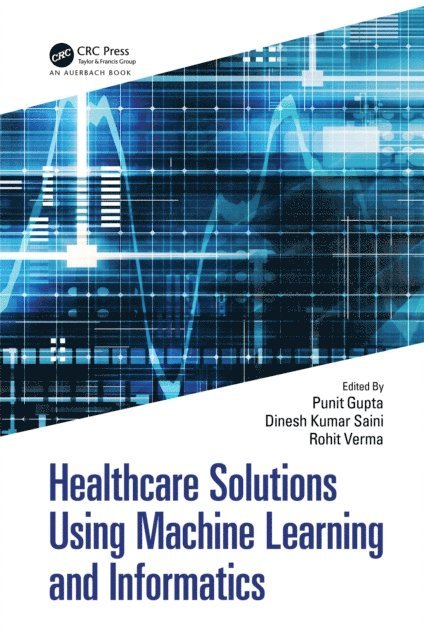
Healthcare Solutions Using Machine Learning and Informatics covers novel and innovative solutions for healthcare that apply machine learning and biomedical informatics technology. The healthcare sector is one of the most critical in society. This book presents a series of artificial intelligence, machine learning, and intelligent IoT-based solutions for medical image analysis, medical big-data processing, and disease predictions. Machine learning and artificial intelligence use cases in healthcare presented in the book give researchers, practitioners, and students a wide range of practical examples of cross-domain convergence.The wide variety of topics covered include:Artificial Intelligence in healthcareMachine learning solutions for such disease as diabetes, arthritis, cardiovascular disease, and COVID-19Big data analytics solutions for healthcare data processingReliable biomedical applications using AI modelsIntelligent IoT in healthcareThe book explains fundamental concepts as well as the advanced use cases, illustrating how to apply emerging technologies such as machine learning, AI models, and data informatics into practice to tackle challenges in the field of healthcare with real-world scenarios. Chapters contributed by noted academicians and professionals examine various solutions, frameworks, applications, case studies, and best practices in the healthcare domain.
Bio-Inspired Optimization in Fog and Edge Computing Environments
Principles, Algorithms, and Systems
Häftad, Engelska, 2024
705 kr
Skickas inom 10-15 vardagar
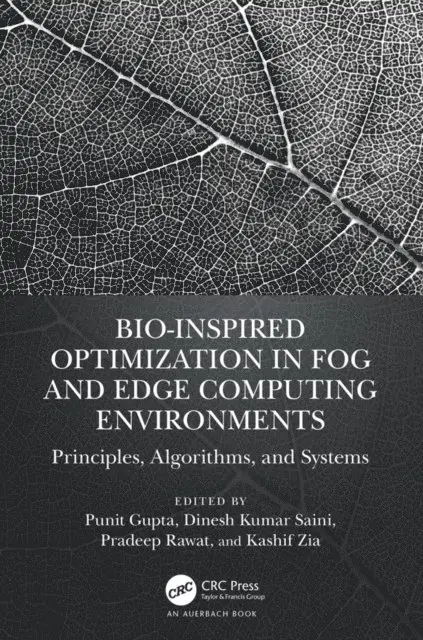
A new era of complexity science is emerging, in which nature- and bio-inspired principles are being applied to provide solutions. At the same time, the complexity of systems is increasing due to such models like the Internet of Things (IoT) and fog computing. Will complexity science, applying the principles of nature, be able to tackle the challenges posed by highly complex networked systems?Bio-Inspired Optimization in Fog and Edge Computing: Principles, Algorithms, and Systems is an attempt to answer this question. It presents innovative, bio-inspired solutions for fog and edge computing and highlights the role of machine learning and informatics. Nature- or biological-inspired techniques are successful tools to understand and analyze a collective behavior. As this book demonstrates, algorithms, and mechanisms of self-organization of complex natural systems have been used to solve optimization problems, particularly in complex systems that are adaptive, ever-evolving, and distributed in nature.The chapters look at ways of enhancingto enhance the performance of fog networks in real-world applications using nature-based optimization techniques. They discuss challenges and provide solutions to the concerns of security, privacy, and power consumption in cloud data center nodes and fog computing networks. The book also examines how:The existing fog and edge architecture is used to provide solutions to future challenges.A geographical information system (GIS) can be used with fog computing to help users in an urban region access prime healthcare.An optimization framework helps in cloud resource management.Fog computing can improve the quality, quantity, long-term viability, and cost-effectiveness in agricultural production.Virtualization can support fog computing, increase resources to be allocated, and be applied to different network layers.The combination of fog computing and IoT or cloud computing can help healthcare workers predict and analyze diseases in patients.
Soft Computing Principles and Integration for Real-Time Service-Oriented Computing
Inbunden, Engelska, 2024
2 491 kr
Skickas inom 10-15 vardagar
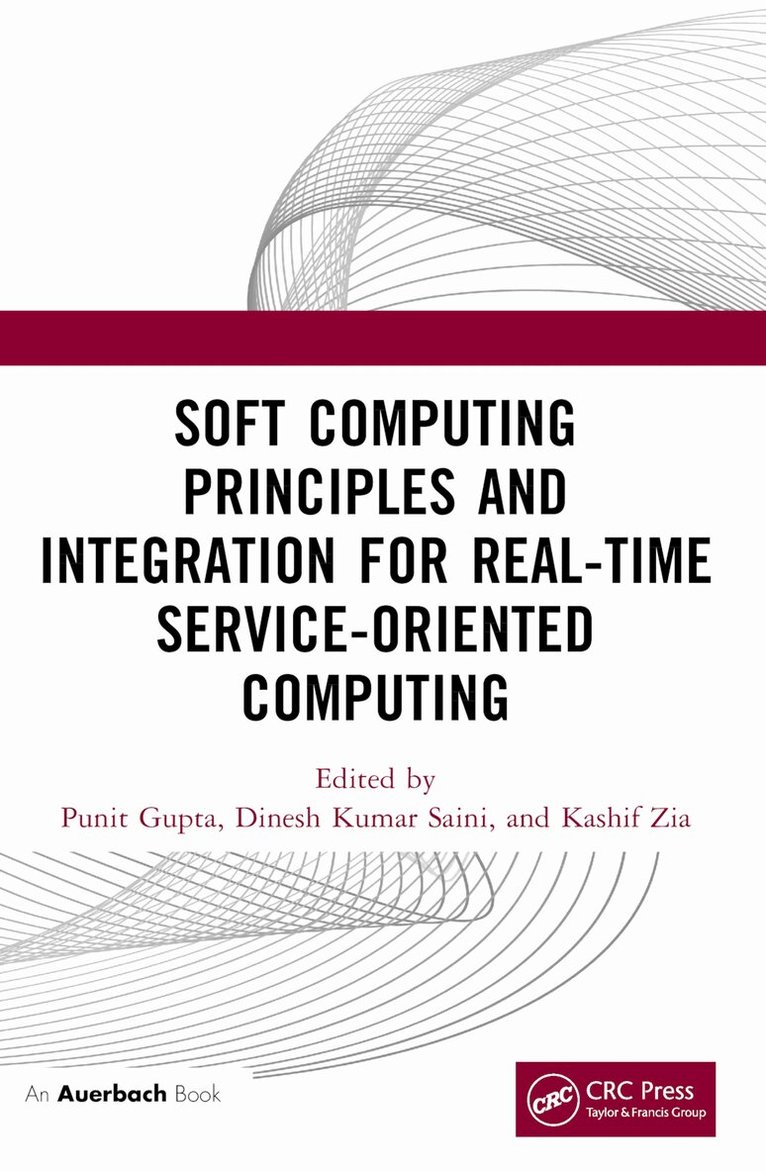
In recent years, soft computing techniques have emerged as a successful tool to understand and analyze the collective behavior of service- oriented computing software. Algorithms and mechanisms of self- organization of complex natural systems have been used to solve problems, particularly in complex systems, which are adaptive, ever- evolving, and distributed in nature across the globe. What fits more perfectly into this scenario other than the rapidly developing era of Fog, IoT, and Edge computing environment? Service- oriented computing can be enhanced with soft computing techniques embedded inside the Cloud, Fog, and IoT systems.Soft Computing Principles and Integration for Real-Time Service-Oriented Computing explores soft computing techniques that have wide application in interdisciplinary areas. These soft computing techniques provide an optimal solution to the optimization problem using single or multiple objectives.The book focuses on basic design principles and analysis of soft computing techniques. It discusses how soft computing techniques can be used to improve quality-of-service in serviceoriented architectures. The book also covers applications and integration of soft computing techniques with a service- oriented computing paradigm. Highlights of the book include:A general introduction to soft computingAn extensive literature study of soft computing techniques and emerging trends Soft computing techniques based on the principles of artificial intelligence, fuzzy logic, and neural networks The implementation of SOC with a focus on service composition and orchestration, quality of service (QoS) considerations, security and privacy concerns, governance challenges, and the integration of legacy systemsThe applications of soft computing in adaptive service composition, intelligent service recommendation, fault detection and diagnosis, SLA management, and securitySuch principles underlying SOC as loose coupling, reusability, interoperability, and abstractionAn IoT based framework for real time data collection and analysis using soft computing
Reliable and Intelligent Optimization in Multi-Layered Cloud Computing Architectures
Inbunden, Engelska, 2024
2 357 kr
Skickas inom 10-15 vardagar
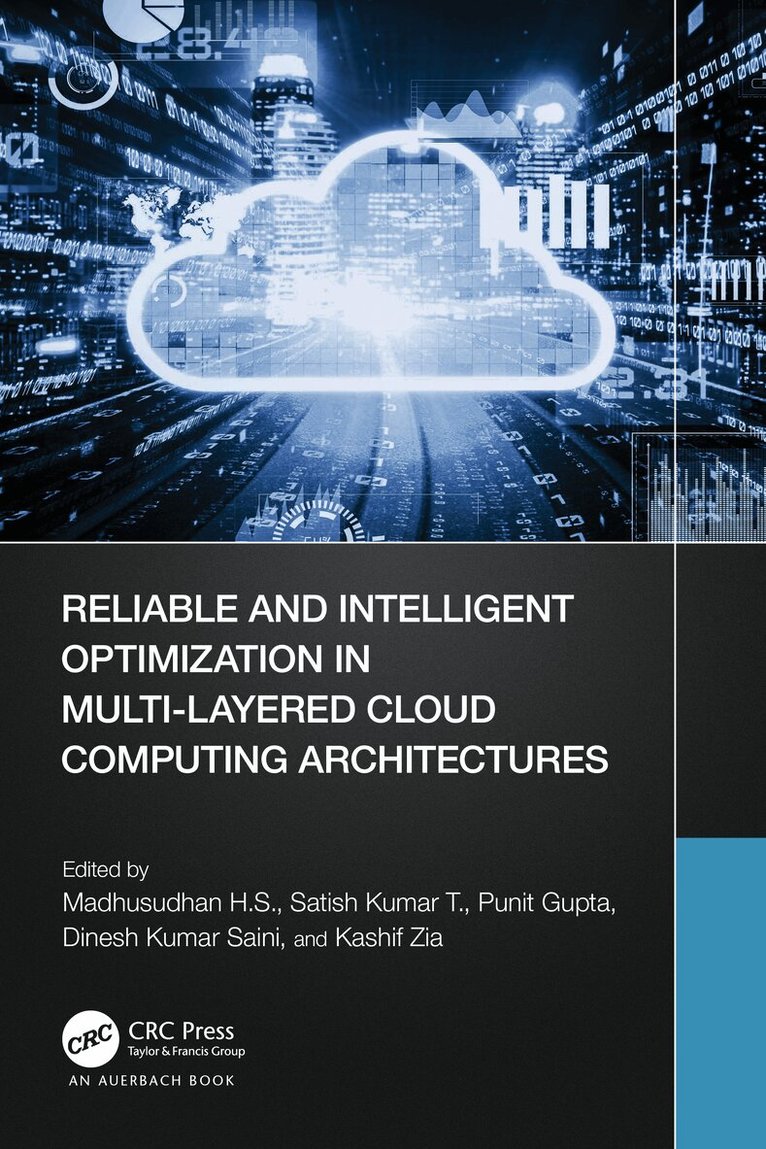
One of the major developments in the computing field has been cloud computing, which enables users to do complicated computations that local devices are unable to handle. The computing power and flexibility that have made the cloud so popular do not come without challenges. It is particularly challenging to decide which resources to use, even when they have the same configuration but different levels of performance because of the variable structure of the available resources. Cloud data centers can host millions of virtual machines, and where to locate these machines in the cloud is a difficult problem. Additionally, fulfilling optimization needs is a complex problem.Reliable and Intelligent Optimization in Multi-Layered Cloud Computing Architectures examines ways to meet these challenges. It discusses virtual machine placement techniques and task scheduling techniques that optimize resource utilization and minimize energy consumption of cloud data centers. Placement techniques presented can provide an optimal solution to the optimization problem using multiple objectives. The book focuses on basic design principles and analysis of virtual machine placement techniques and task allocation techniques. It also looks at virtual machine placement techniques that can improve quality-of-service (QoS) in service-oriented architecture (SOA) computing. The aims of virtual machine placement include minimizing energy usage, network traffic, economical cost, maximizing performance, and maximizing resource utilization. Other highlights of the book include:Improving QoS and resource efficiencyFault-tolerant and reliable resource optimization modelsA reactive fault tolerance method using checkpointing restartCost and network-aware metaheuristics.Virtual machine scheduling and placementElectricity consumption in cloud data centersWritten by leading experts and researchers, this book provides insights and techniques to those dedicated to improving cloud computing and its services.
Reliable and Intelligent Optimization in Multi-Layered Cloud Computing Architectures
Häftad, Engelska, 2024
807 kr
Skickas inom 10-15 vardagar
One of the major developments in the computing field has been cloud computing, which enables users to do complicated computations that local devices are unable to handle. The computing power and flexibility that have made the cloud so popular do not come without challenges. It is particularly challenging to decide which resources to use, even when they have the same configuration but different levels of performance because of the variable structure of the available resources. Cloud data centers can host millions of virtual machines, and where to locate these machines in the cloud is a difficult problem. Additionally, fulfilling optimization needs is a complex problem.Reliable and Intelligent Optimization in Multi-Layered Cloud Computing Architectures examines ways to meet these challenges. It discusses virtual machine placement techniques and task scheduling techniques that optimize resource utilization and minimize energy consumption of cloud data centers. Placement techniques presented can provide an optimal solution to the optimization problem using multiple objectives. The book focuses on basic design principles and analysis of virtual machine placement techniques and task allocation techniques. It also looks at virtual machine placement techniques that can improve quality-of-service (QoS) in service-oriented architecture (SOA) computing. The aims of virtual machine placement include minimizing energy usage, network traffic, economical cost, maximizing performance, and maximizing resource utilization. Other highlights of the book include:Improving QoS and resource efficiencyFault-tolerant and reliable resource optimization modelsA reactive fault tolerance method using checkpointing restartCost and network-aware metaheuristics.Virtual machine scheduling and placementElectricity consumption in cloud data centersWritten by leading experts and researchers, this book provides insights and techniques to those dedicated to improving cloud computing and its services.
2 021 kr
Skickas inom 10-15 vardagar
The book explores the available omics resources, the integration of multi-omics data, and systems biology methods, focusing on their applications in cereals breeding and research. It highlights current and innovative strategies to understand complex traits, to improve yield, and to enhance resistance to biotic and abiotic stresses. It also addresses the challenges and opportunities associated with modeling multi-omics data and analyzing systems-level information. By leveraging systems biology and integrated omics research, this book aims to redefine the future research agenda for cereal improvement.
Soft Computing Principles and Integration for Real-Time Service-Oriented Computing
Häftad, Engelska, 2025
861 kr
Skickas inom 10-15 vardagar
In recent years, soft computing techniques have emerged as a successful tool to understand and analyze the collective behavior of service- oriented computing software. Algorithms and mechanisms of self- organization of complex natural systems have been used to solve problems, particularly in complex systems, which are adaptive, ever- evolving, and distributed in nature across the globe. What fits more perfectly into this scenario other than the rapidly developing era of Fog, IoT, and Edge computing environment? Service- oriented computing can be enhanced with soft computing techniques embedded inside the Cloud, Fog, and IoT systems.Soft Computing Principles and Integration for Real-Time Service-Oriented Computing explores soft computing techniques that have wide application in interdisciplinary areas. These soft computing techniques provide an optimal solution to the optimization problem using single or multiple objectives.The book focuses on basic design principles and analysis of soft computing techniques. It discusses how soft computing techniques can be used to improve quality-of-service in serviceoriented architectures. The book also covers applications and integration of soft computing techniques with a service- oriented computing paradigm. Highlights of the book include:A general introduction to soft computingAn extensive literature study of soft computing techniques and emerging trends Soft computing techniques based on the principles of artificial intelligence, fuzzy logic, and neural networks The implementation of SOC with a focus on service composition and orchestration, quality of service (QoS) considerations, security and privacy concerns, governance challenges, and the integration of legacy systemsThe applications of soft computing in adaptive service composition, intelligent service recommendation, fault detection and diagnosis, SLA management, and securitySuch principles underlying SOC as loose coupling, reusability, interoperability, and abstractionAn IoT based framework for real time data collection and analysis using soft computing
Optimizing Edge and Fog Computing Applications with AI and Metaheuristic Algorithms
Inbunden, Engelska, 2025
1 887 kr
Skickas inom 10-15 vardagar
Fog and edge computing are two paradigms that have emerged to address the challenges associated with processing and managing data in the era of the Internet of Things (IoT). Both models involve moving computation and data storage closer to the source of data generation, but they have subtle differences in their architectures and scopes. These differences are one of the subjects covered in Optimizing Edge and Fog Computing Applications with AI and Metaheuristic Algorithms. Other subjects covered in the book include:Designing machine learning (ML) algorithms that are aware of the resource constraints at the edge and fog layers ensures efficient use of computational resourcesResource-aware models using ML and deep leaning models that can adapt their complexity based on available resources and balancing the load, allowing for better scalabilityImplementing secure ML algorithms and models to prevent adversarial attacks and ensure data privacySecuring the communication channels between edge devices, fog nodes, and the cloud to protect model updates and inferencesKubernetes container orchestration for fog computingFederated learning that enables model training across multiple edge devices without the need to share raw dataThe book discusses how resource optimization in fog and edge computing is crucial for achieving efficient and effective processing of data close to the source. It explains how both fog and edge computing aim to enhance system performance, reduce latency, and improve overall resource utilization. It examines the combination of intelligent algorithms, effective communication protocols, and dynamic management strategies required to adapt to changing conditions and workload demands. The book explains how security in fog and edge computing requires a combination of technological measures, advanced techniques, user awareness, and organizational policies to effectively protect data and systems from evolving security threats. Finally, it looks forward with coverage of ongoing research and development, which are essential for refining optimization techniques and ensuring the scalability and sustainability of fog and edge computing environments.
Artificial Intelligence and Cloud Computing Applications in Biomedical Engineering
Inbunden, Engelska, 2025
1 874 kr
Skickas inom 10-15 vardagar
Biomedical engineering is undergoing a transformation because of AI, which is allowing creative solutions that enhance patient outcomes, diagnosis, treatment planning, and healthcare delivery. Artificial Intelligence and Cloud Computing Applications in Biomedical Engineering examines the salient characteristics of AI in biomedical engineering, highlighting its practical applications and new directions. Highlights of the book include:Genome sequence and visualizationThe role of AI and cloud in detection of diseasesNature-inspired algorithms for disease detectionFrameworks for disease classificationWith a focus on designing AI techniques for disease detection, the book explores the role of AI in biomedical engineering. It discusses how machine learning (ML) and deep learning (DL) are at the heart of AI applications in biomedical engineering. ML algorithms, particularly those based on neural networks, enable computers to learn from large datasets, identify patterns, and make predictions or decisions without explicit programming, and implementing ML algorithms is a focus of the book. Another focus is on DL, a subset of ML, and how it uses multi-layered neural networks to achieve high accuracy in such complex tasks as image and speech recognition. Biomedical engineering generates massive amounts of data from medical imaging, genomic sequencing, wearable devices, electronic health records (EHR), and other sources. This book also discusses AI-driven big data analytics, which allows researchers and clinicians to derive from data meaningful insights, aiding in early disease detection, personalized treatment plans, and patient monitoring.
Artificial Intelligence and Cloud Computing Applications in Biomedical Engineering
Häftad, Engelska, 2025
761 kr
Skickas inom 10-15 vardagar
Biomedical engineering is undergoing a transformation because of AI, which is allowing creative solutions that enhance patient outcomes, diagnosis, treatment planning, and healthcare delivery. Artificial Intelligence and Cloud Computing Applications in Biomedical Engineering examines the salient characteristics of AI in biomedical engineering, highlighting its practical applications and new directions. Highlights of the book include:Genome sequence and visualizationThe role of AI and cloud in detection of diseasesNature-inspired algorithms for disease detectionFrameworks for disease classificationWith a focus on designing AI techniques for disease detection, the book explores the role of AI in biomedical engineering. It discusses how machine learning (ML) and deep learning (DL) are at the heart of AI applications in biomedical engineering. ML algorithms, particularly those based on neural networks, enable computers to learn from large datasets, identify patterns, and make predictions or decisions without explicit programming, and implementing ML algorithms is a focus of the book. Another focus is on DL, a subset of ML, and how it uses multi-layered neural networks to achieve high accuracy in such complex tasks as image and speech recognition. Biomedical engineering generates massive amounts of data from medical imaging, genomic sequencing, wearable devices, electronic health records (EHR), and other sources. This book also discusses AI-driven big data analytics, which allows researchers and clinicians to derive from data meaningful insights, aiding in early disease detection, personalized treatment plans, and patient monitoring.
1 618 kr
Skickas inom 10-15 vardagar
With increasing global food demand and changing climatic conditions, sorghum is an important crop for sustainable agriculture. Its inherent resilience to drought, heat, and poor soils makes it a promising solution for enhancing food security and climate adaptation. To further harness its potential, Designing Sorghum Genome for NextGen Agriculture, authored by leading researchers and experts, explores the latest advancements aimed at improving sorghum’s resilience and productivity. This comprehensive resource provides cutting-edge insights into how modern scientific tools and methods are being leveraged to design the sorghum genome for enhanced yield, stress tolerance, and nutritional value.This book takes a multidisciplinary approach, integrating diverse strategies to enhance sorghum’s resilience. It highlights current achievements and outlines future directions to harness sorghum’s genetic potential as a climate-resilient crop for next-generation agriculture.Key Features:Examines sorghum’s global agricultural significance and its role in addressing future climatic challengesCovers genomics, pan-genomics, mutagenesis, and targeted gene editing for sorghum improvementHighlights physiological, molecular, and microbiome-based strategies to enhance sorghum’s abiotic stress toleranceExplores the synergy between genomic selection and phenomics for accelerated genetic gainDiscusses omics approaches and systems biology for advancing sorghum researchShowcases artificial intelligence and crop simulation modeling as tools for sorghum breeding for enhanced stress tolerance and yield potentialThis book serves as a valuable resource for researchers, breeders, agronomists, and students working in sorghum genetics, genomics, crop improvement, and sustainable agriculture. By bridging fundamental research with translational breeding strategies, it offers a forward-looking perspective on leveraging genomics for the future of sorghum production.
3 205 kr
Skickas inom 5-8 vardagar
Advances in Cancer Detection, Prediction, and Prognosis Using Artificial Intelligence and Machine Learning
Inbunden, Engelska, 2025
2 163 kr
Skickas inom 10-15 vardagar
This book covers all aspects of computational biology in studying cancer diagnosis and prognosis, including newer applications involving infection and inflammation, as well as basic information on advanced simulation techniques. It describes the different tools, risk-based modeling techniques, early prediction algorithms and the biomarkers of different cancers that help in their early and better diagnosis in routine clinical practice involving multiple organs and systems.Early cancer diagnosis and artificial intelligence (AI) are rapidly evolving fields, with the UK's National Health Service aiming to improve early diagnosis rates to 75% by 2028. Screening can improve early cancer detection and mortality, but patient selection and risk stratification are key challenges. AI algorithms can facilitate cancer diagnosis by triggering investigation in screened individuals according to clinical parameters and automating clinical workflows where capacity is limited. Machine learning, which learns complex data patterns to make predictions has the potential to revolutionize early cancer diagnosis and support capacity concerns through automation.The chapters present the advances in diagnosing different types of cancer including bladder cancer, breast cancer, colorectal cancer, kidney (renal cell) cancer, lung cancer, lymphoma, pancreatic cancer, prostate cancer, skin cancer, uterine and metastatic cancers. The chapters also cover recurrent cancer, advanced cancer treatment, and the management of cancer in adolescents and young adults. The pan-cancer analyses presented in the book cover all aspects of early diagnosis, supplemented by numerous illustrations and figures to offer a fresh perspective and lucid understanding of computer-based approaches in cancer management.This book simplifies computational methods in medical diagnosis and highlights the benefits of early detection compared to other methods. It is targeted at biomedical scientists and clinical practitioners who conduct artificial intelligence-based research.