Dmitry Shlapentokh – författare
Visar alla böcker från författaren Dmitry Shlapentokh. Handla med fri frakt och snabb leverans.
16 produkter
16 produkter
638 kr
Skickas inom 10-15 vardagar
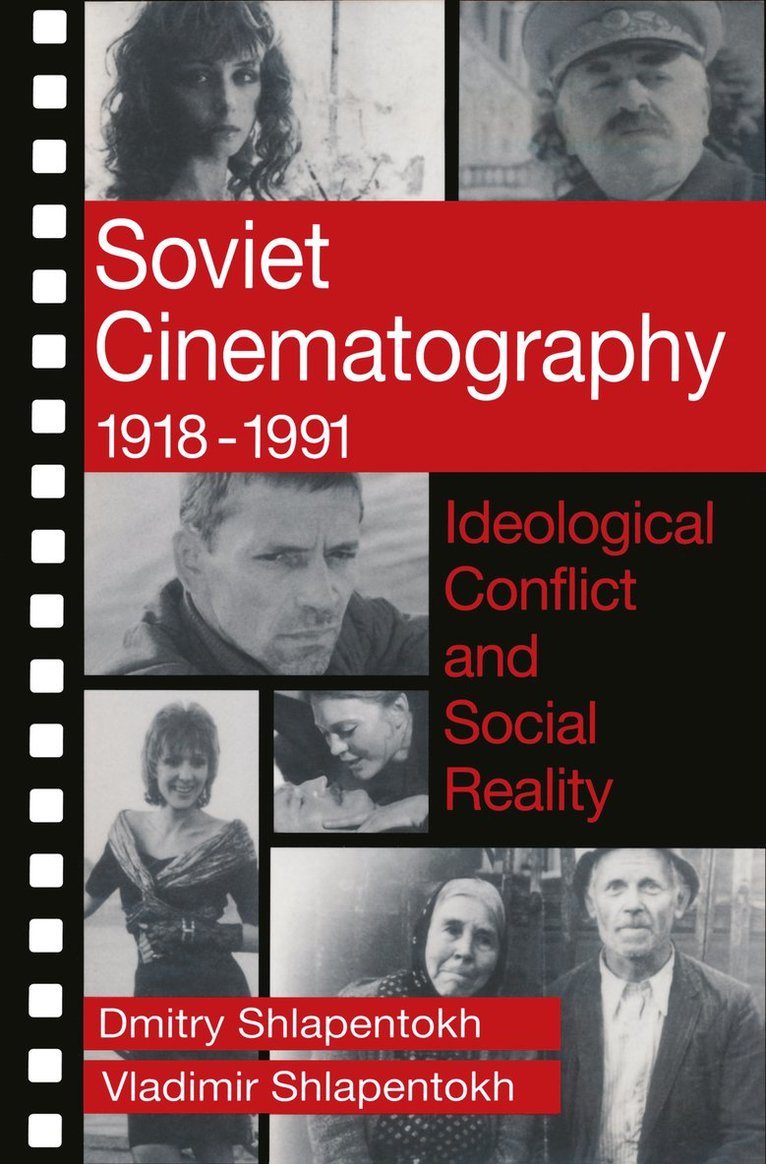
With a historical sweep that recent events have made definitive, the authors examine the influence of Soviet ideology on the presentation of social reality in films produced in the Soviet Union between the October Revolution and the final days of glasnost. Within the framework of an introduction that lays out the conceptual terminology used to describe that shifting ideological landscape, the authors analyze both the social groups appearing in the films and the relations of film directors and other film makers to state censorship and ideological control.
1 050 kr
Skickas inom 10-15 vardagar
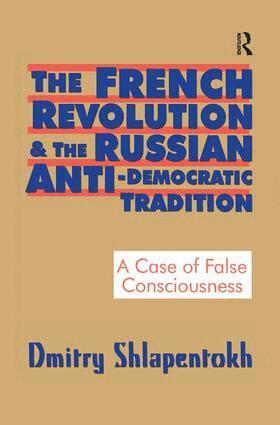
The interest of Russian intellectuals in the French Revolution demonstrates that some Russian thinkers of the 19th century had begun to question the concept of Russia's uniqueness. Yet most of them came to believe that the French Revolution (which they tended to equate with the Western experience) was irrelevant not only to Russia but to the rest of the world as well. They saw, perhaps correctly, that the Western experience, with the French Revolution as its symbol, was foreign to Russian destiny. Most of the Russian intellectuals of that time had rightly foreseen Russia, and to some degree the rest of the world's future, as following an authoritarian/totalitarian model of development.
2 134 kr
Skickas inom 10-15 vardagar
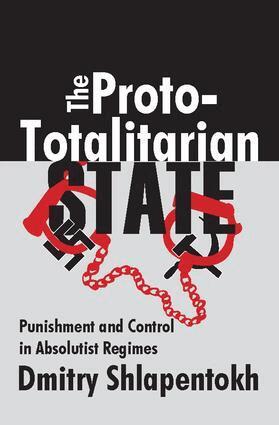
Totalitarian rule is commonly thought to derive from spe- cific ideologies that justify the complete control by the state of social, cultural, and political institutions. The major goal of this volume is to demonstrate that in some cases brutal forms of state control have been the only way to maintain basic social order.Dmitry Shlapentokh seeks to show that totalitarian or semi-totalitarian regimes have their roots in a fear of disorder that may overtake both rulers and the society at large. Although ideology has played an important role in many totalitarian regimes, it has not always been the chief reason for repression. In many cases, the desire to establish order led to internal terror and intrusiveness in all aspects of human life.Shlapentokh seeks the roots of this phenomenon in France in the fourteenth to sixteenth centuries, when asocial processes in the wake of the Hundred Years War led to the emergence of a brutal absolutist state whose features and policies bore a striking resemblance to totalitarian regimes in the Soviet Union and China. State punishment and control allowed for relentless drive to "normalize" society with the state actively engaged in the regulation of social life. There were attempts to regulate the economy and instances of social engineering, attempts to populate emerging colonial empires with exiles and produce "new men and women" through reeducation. This increased harshness in dealing with the populace, in fact, the emergence of a new sort of bondage, was combined with a twisted form of humanitarianism and the creation of a rudimentary safety net. Some of these elements can be found in the democratic societies of the modern West, although in their aggregation these attributes are essential features of totalitarian regimes of the modem era.
348 kr
Skickas inom 5-8 vardagar
181 kr
Skickas inom 5-8 vardagar
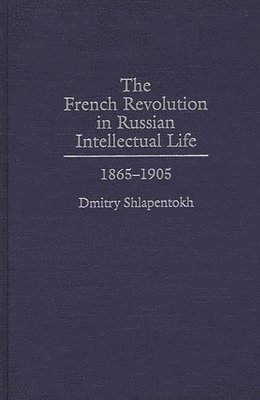
French Revolution and the Russian Anti-Democratic Tradition
A Case of False Consciousness
Häftad, Engelska, 2018
446 kr
Skickas inom 10-15 vardagar
The political uncertainty following the collapse of the Soviet Union and the rejection of the revolutionary model has brought Russian political thought full circle as democratic forces contend with authoritarian nationalism. This volume is essential to understanding the antidemocratic tradition in Russia and the persistent danger of totalitarianism.
679 kr
Skickas inom 10-15 vardagar
Totalitarian rule is commonly thought to derive from spe- cific ideologies that justify the complete control by the state of social, cultural, and political institutions. The major goal of this volume is to demonstrate that in some cases brutal forms of state control have been the only way to maintain basic social order.Dmitry Shlapentokh seeks to show that totalitarian or semi-totalitarian regimes have their roots in a fear of disorder that may overtake both rulers and the society at large. Although ideology has played an important role in many totalitarian regimes, it has not always been the chief reason for repression. In many cases, the desire to establish order led to internal terror and intrusiveness in all aspects of human life.Shlapentokh seeks the roots of this phenomenon in France in the fourteenth to sixteenth centuries, when asocial processes in the wake of the Hundred Years War led to the emergence of a brutal absolutist state whose features and policies bore a striking resemblance to totalitarian regimes in the Soviet Union and China. State punishment and control allowed for relentless drive to "normalize" society with the state actively engaged in the regulation of social life. There were attempts to regulate the economy and instances of social engineering, attempts to populate emerging colonial empires with exiles and produce "new men and women" through reeducation. This increased harshness in dealing with the populace, in fact, the emergence of a new sort of bondage, was combined with a twisted form of humanitarianism and the creation of a rudimentary safety net. Some of these elements can be found in the democratic societies of the modern West, although in their aggregation these attributes are essential features of totalitarian regimes of the modem era.
1 722 kr
Skickas inom 10-15 vardagar
With a historical sweep that recent events have made definitive, the authors examine the influence of Soviet ideology on the presentation of social reality in films produced in the Soviet Union between the October Revolution and the final days of glasnost. Within the framework of an introduction that lays out the conceptual terminology used to describe that shifting ideological landscape, the authors analyze both the social groups appearing in the films and the relations of film directors and other film makers to state censorship and ideological control.
2 197 kr
Skickas inom 10-15 vardagar
Sandwiched between the East and West, Russian intellectuals have for centuries been divided geographically, politically, and culturally into two distinct groups: the Slavophiles, who rejected Western-style democracy, preferring a more holistic and abstract vision, and the more rational and scientific-minded Westernizers. These two ideologies cut across the political spectrum of late nineteenth-century Russia and competed for dominance in the country's intellectual life. The tension created between these two opposing groups caused the feeling that violent upheaval was Russia's future. In turn, many began to think that Russia was possibly following the path of France and that a French-style revolution might be possible on Russian soil. In The French Revolution in Russian Intellectual Life, Dmitry Shlapentokh describes the role that the French democratic revolution played in Russia's intellectual development by the end of the nineteenth century.The revolutionary upheaval in Russia at the beginning of twentieth century and the continuous expansion of the West convinced most Russian intellectuals that the French Revolution in its democratic reading was indeed the pathway of history. Yet the rise of totalitarian regimes and their expansion proved the validity of the sober vision of nineteenth-century Russian intellectuals. Some conservative Russian intellectuals believed that not only would Russia preserve its authoritarian regime but it would spread this regime all over the world. In this context, Shlapentokh argues the French Revolution with its democratic tradition was only a phenomenon of Western civilization and hence transitory.The flirtation with Western ideology, with its democratic polity and market economy that followed in the wake of the collapse of the communist regime, culminated in an increasing push for corporate authoritarianism and nationalism. This work helps explain why Russia turned away from democratic to autocratic stylesi?1/2economic pulls to capitalism notwithstanding. It has insight which helps to explain why Russia moved towards an authoritarian regime instead of democracy.
300 kr
Skickas inom 3-6 vardagar
742 kr
Skickas inom 10-15 vardagar
Sandwiched between the East and West, Russian intellectuals have for centuries been divided geographically, politically, and culturally into two distinct groups: the Slavophiles, who rejected Western-style democracy, preferring a more holistic and abstract vision, and the more rational and scientific-minded Westernizers. These two ideologies cut across the political spectrum of late nineteenth-century Russia and competed for dominance in the country's intellectual life. The tension created between these two opposing groups caused the feeling that violent upheaval was Russia's future. In turn, many began to think that Russia was possibly following the path of France and that a French-style revolution might be possible on Russian soil. In The French Revolution in Russian Intellectual Life, Dmitry Shlapentokh describes the role that the French democratic revolution played in Russia's intellectual development by the end of the nineteenth century.The revolutionary upheaval in Russia at the beginning of twentieth century and the continuous expansion of the West convinced most Russian intellectuals that the French Revolution in its democratic reading was indeed the pathway of history. Yet the rise of totalitarian regimes and their expansion proved the validity of the sober vision of nineteenth-century Russian intellectuals. Some conservative Russian intellectuals believed that not only would Russia preserve its authoritarian regime but it would spread this regime all over the world. In this context, Shlapentokh argues the French Revolution with its democratic tradition was only a phenomenon of Western civilization and hence transitory.The flirtation with Western ideology, with its democratic polity and market economy that followed in the wake of the collapse of the communist regime, culminated in an increasing push for corporate authoritarianism and nationalism. This work helps explain why Russia turned away from democratic to autocratic stylesi?1/2economic pulls to capitalism notwithstanding. It has insight which helps to explain why Russia moved towards an authoritarian regime instead of democracy.
French Revolution and the Russian Anti-Democratic Tradition
A Case of False Consciousness
Inbunden, Engelska, 1996
1 053 kr
Skickas inom 10-15 vardagar
The political uncertainty following the collapse of the Soviet Union and the rejection of the revolutionary model has brought Russian political thought full circle as democratic forces contend with authoritarian nationalism. This volume is essential to understanding the antidemocratic tradition in Russia and the persistent danger of totalitarianism.
1 178 kr
Skickas inom 10-15 vardagar
This book examines the interplay between key rulers and intellectuals in creating and sustaining popular discourses that often help keep rulers in power.
1 178 kr
Skickas inom 10-15 vardagar
This book examines the interplay between key rulers and intellectuals in creating and sustaining popular discourses that often help keep rulers in power.
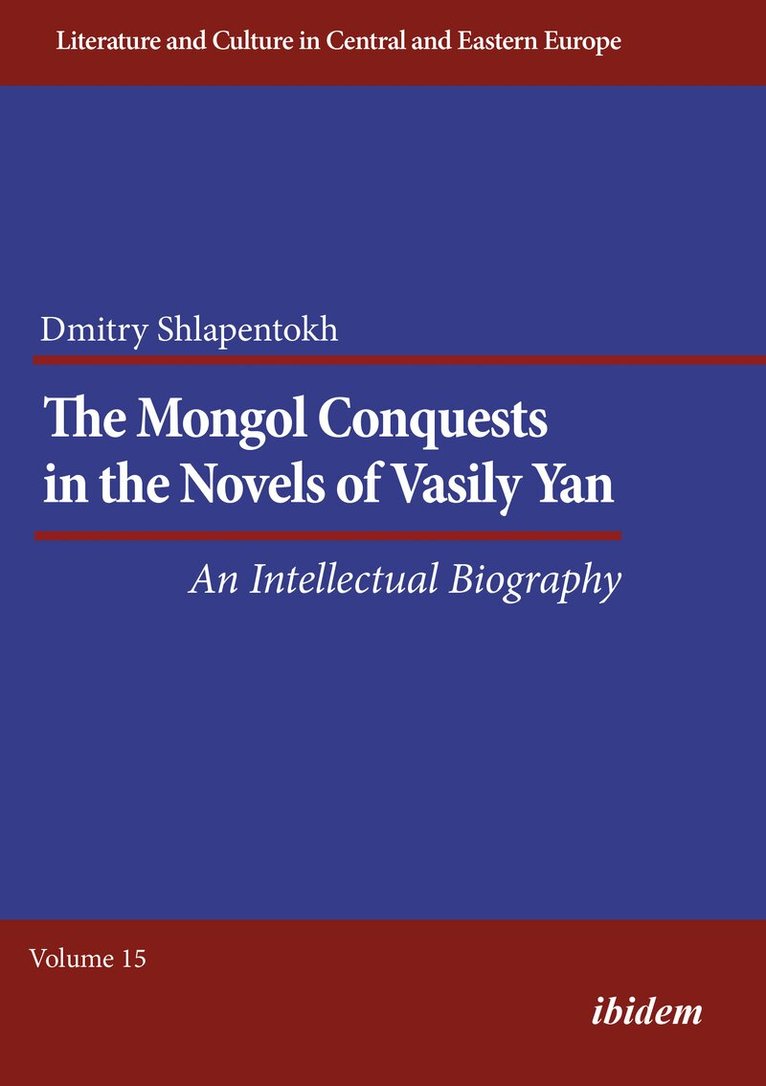
Del 15 - Literatur und Kultur im mittleren und östlichen Europa
Mongol Conquests in the Novels of Vasily Yan
An Intellectual Biography
Häftad, Engelska, 2017
587 kr
Skickas inom 5-8 vardagar
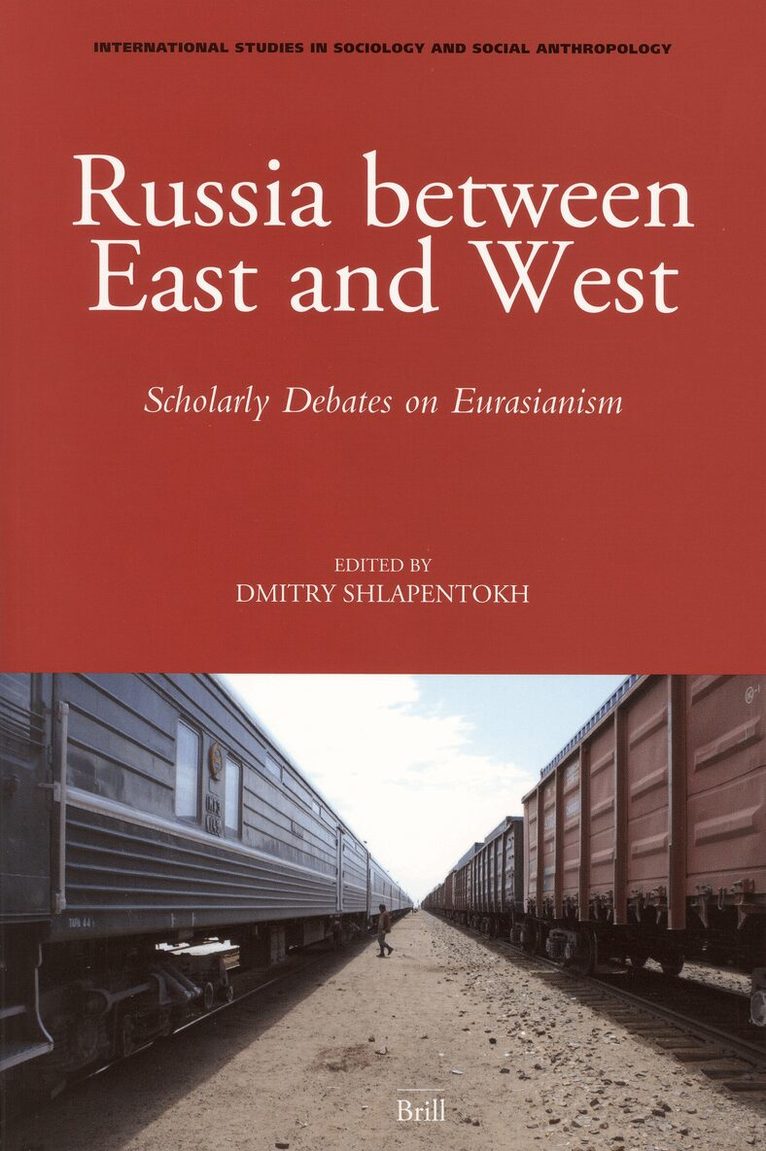
Del 102 - International Studies in Sociology and Social Anthropology
Russia between East and West
Scholarly Debates on Eurasianism
Häftad, Engelska, 2007
2 013 kr
Skickas inom 5-8 vardagar
Throughout most of Russian history, two views of who the Russians are have dominated the minds of Russian intellectuals. Westerners assumed that Russia was part of the West, whilst Slavophiles saw Russia as part of a Slavic civilization. At present, it is Eurasianism that has emerged as the paradigm that has made attempts to place Russia in a broad civilizational context and it has recently become the only viable doctrine that is able to provide the very ideological justification for Russia’s existence as a multiethnic state. Eurasians assert that Russia is a civilization in its own right, a unique blend of Slavic and non-Slavic, mostly Turkic, people.While it is one of the important ideological trends in present-day Russia, Eurasianism, with its origins among Russian emigrants in the 1920s, has a long history. Placing Eurasianism in a broad context, this book covers the origins of Eurasianism, dwells on Eurasianism’s major philosophical paradigms, and places Eurasianism in the context of the development of Polish and Turkish thought. The final part deals with the modern modification of Eurasianism. The book is of great relevance to those who are interested in Russian/European and Asian history area studies.