Dominique Janicaud - Böcker
Visar alla böcker från författaren Dominique Janicaud. Handla med fri frakt och snabb leverans.
11 produkter
11 produkter
901 kr
Skickas inom 7-10 vardagar
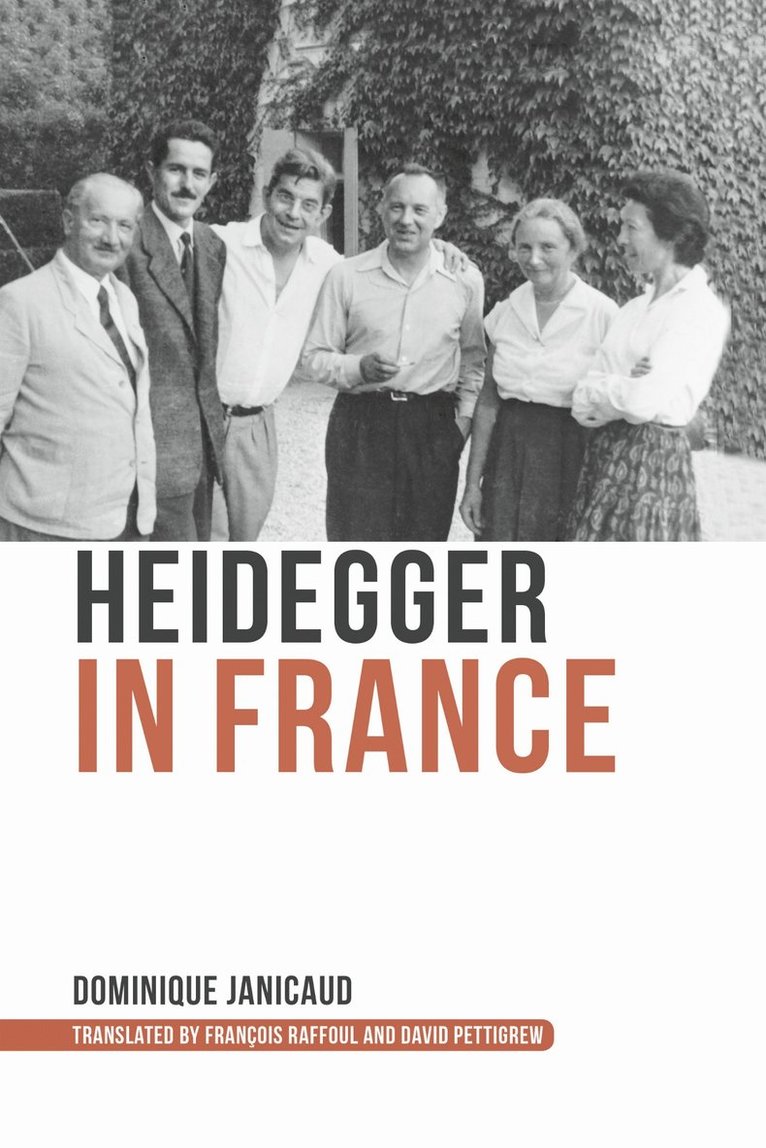
Dominique Janicaud claimed that every French intellectual movement—from existentialism to psychoanalysis—was influenced by Martin Heidegger. This translation of Janicaud's landmark work, Heidegger en France, details Heidegger's reception in philosophy and other humanistic and social science disciplines. Interviews with key French thinkers such as Françoise Dastur, Jacques Derrida, Éliane Escoubas, Jean Greisch, Philippe Lacoue-Labarthe, Jean-Luc Marion, and Jean-Luc Nancy are included and provide further reflection on Heidegger's relationship to French philosophy. An intellectual undertaking of authoritative scope, this work furnishes a thorough history of the French reception of Heidegger's thought.
2 088 kr
Skickas inom 10-15 vardagar
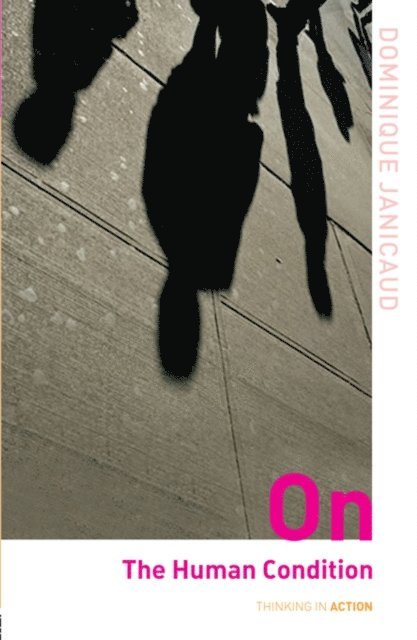
The potential to clone, augment, and repair human beings is pushing the very concept of the human to its limit. Fantasies and metaphors of a supposedly monstrous and inhuman future increasingly dominate films, art and popular culture. On the Human Condition is an invigorating and fascinating exploration of where the idea of the human stands today. Given the damage human beings have inflicted on each other and their environment throughout history, should we embrace humanism or try and overcome it?Dominique Janicaud explores these urgent questions and more. He argues that whilst we need to avoid apocalyptic talk of a post human condition, as embodied in technology such as cloning, we should neither fall back on a conservative humanism nor become technophobic. Drawing on illuminating examples such as genetic engineering, the novel Frankenstein, the legendary debate between Sartre and Heidegger over humanism, and the work of Primo Levi, Domnique Janicaud also explores the role of fantasy in understanding the human condition and asks where the line lies between the human, inhuman and the superhuman.
359 kr
Skickas inom 10-15 vardagar
The potential to clone, augment, and repair human beings is pushing the very concept of the human to its limit. Fantasies and metaphors of a supposedly monstrous and inhuman future increasingly dominate films, art and popular culture. On the Human Condition is an invigorating and fascinating exploration of where the idea of the human stands today. Given the damage human beings have inflicted on each other and their environment throughout history, should we embrace humanism or try and overcome it?Dominique Janicaud explores these urgent questions and more. He argues that whilst we need to avoid apocalyptic talk of a post human condition, as embodied in technology such as cloning, we should neither fall back on a conservative humanism nor become technophobic. Drawing on illuminating examples such as genetic engineering, the novel Frankenstein, the legendary debate between Sartre and Heidegger over humanism, and the work of Primo Levi, Domnique Janicaud also explores the role of fantasy in understanding the human condition and asks where the line lies between the human, inhuman and the superhuman.
1 057 kr
Tillfälligt slut
Janicaud clarifies the project of "overcoming" metaphysics, a project that Heidegger himself recognized as open to innumerable misunderstandings, and Mattei inquires into the major Heideggerian texts produced between 1935 and 1969 to detect the cosmic figure of the Geviert, the initial Fourfold where "earth and sky, the divine ones and the mortals" gather."Philosophy has come to an end" claimed Heidegger in the final posthumously published interview he granted to Der Spiegel. The goal of Janicaud's chapters ("Overcoming Metaphysics?," "Heideggeriana," "Metamorphosis of the Undecidable," and the dialogue "Heidegger in New York") first of all is to clarify the project of "overcoming" metaphysics, a project that Heidegger himself recognized as open to innumerable misunderstandings. Is it really possible to surmount metaphysics, not by transgressing it, but by means of a patient elucidation of its key concepts? In the effort to underscore the originality of his own enterprise, doesn't Heidegger tend to project too harsh a dichotomy between the forgetfulness of Being and its authentic recollection? By raising these questions, Janicaud suggests that Heidegger himself does not elude the objections that he directs toward the great metaphysical thinkers.The final recourse to dialogue in the midst of twentieth-century New York—a landscape intentionally "different" from one expectedly Heideggerian—intends to hint at another possibility than the indefinite deconstruction of metaphysical texts. It suggests new ways for thoughtful meditation and a new cast for action.At the center of the book, Mattei evokes the "Heideggerian Chiasmus or the Setting-apart of Philosophy." Through an inquiry into the major Heideggerian texts produced between 1935 and 1969 and inspired by Holderlin's poetry, Mattei gradually detects the cosmic figure of the Geviert, the initial Fourfold where "earth and sky, the divine ones and the mortals" gather. Such a community, whose meaning Heidegger is the only one to decipher in our times, silently conforms to an archaic philosophy. The cosmic game of the Geviert also evokes, for Heidegger, the path of the Tao in the Chinese tradition. In this epoch characterized by the destruction of ontology, the two paths in which East and West meet may grant us moderns the hope one day of "dwelling" in the world.
441 kr
Skickas inom 5-8 vardagar
Janicaud clarifies the project of "overcoming" metaphysics, a project that Heidegger himself recognized as open to innumerable misunderstandings, and Mattei inquires into the major Heideggerian texts produced between 1935 and 1969 to detect the cosmic figure of the Geviert, the initial Fourfold where "earth and sky, the divine ones and the mortals" gather."Philosophy has come to an end" claimed Heidegger in the final posthumously published interview he granted to Der Spiegel. The goal of Janicaud's chapters ("Overcoming Metaphysics?," "Heideggeriana," "Metamorphosis of the Undecidable," and the dialogue "Heidegger in New York") first of all is to clarify the project of "overcoming" metaphysics, a project that Heidegger himself recognized as open to innumerable misunderstandings. Is it really possible to surmount metaphysics, not by transgressing it, but by means of a patient elucidation of its key concepts? In the effort to underscore the originality of his own enterprise, doesn't Heidegger tend to project too harsh a dichotomy between the forgetfulness of Being and its authentic recollection? By raising these questions, Janicaud suggests that Heidegger himself does not elude the objections that he directs toward the great metaphysical thinkers.The final recourse to dialogue in the midst of twentieth-century New York—a landscape intentionally "different" from one expectedly Heideggerian—intends to hint at another possibility than the indefinite deconstruction of metaphysical texts. It suggests new ways for thoughtful meditation and a new cast for action.At the center of the book, Mattei evokes the "Heideggerian Chiasmus or the Setting-apart of Philosophy." Through an inquiry into the major Heideggerian texts produced between 1935 and 1969 and inspired by Holderlin's poetry, Mattei gradually detects the cosmic figure of the Geviert, the initial Fourfold where "earth and sky, the divine ones and the mortals" gather. Such a community, whose meaning Heidegger is the only one to decipher in our times, silently conforms to an archaic philosophy. The cosmic game of the Geviert also evokes, for Heidegger, the path of the Tao in the Chinese tradition. In this epoch characterized by the destruction of ontology, the two paths in which East and West meet may grant us moderns the hope one day of "dwelling" in the world.
367 kr
Skickas inom 10-15 vardagar
Phenomenology and the "Theological Turn" brings together the debate over Janicaud's critique of the "theological turn" represented by the works of Emmanuel Levinas, Paul Ricœur, Jean-Luc Marion, Jean-François Courtine, Jean-Louis Chrétien, and Michel Henry.
861 kr
Skickas inom 10-15 vardagar
This book follows up the developments in phenomenology discussed in Phenomenology and the "Theological Turn": The French Debate, attempting to establish what potentialities in the phenomenological method exist at present.
367 kr
Skickas inom 10-15 vardagar
This book follows up the developments in phenomenology discussed in Phenomenology and the "Theological Turn": The French Debate, attempting to establish what potentialities in the phenomenological method exist at present.
244 kr
Skickas inom 3-6 vardagar
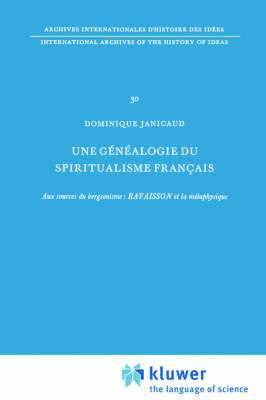
Une généalogie du spiritualisme français
Aux sources du bergsonisme: Ravaisson et la métaphysique
Inbunden, Franska, 1970
1 577 kr
Skickas inom 10-15 vardagar
1 577 kr
Skickas inom 10-15 vardagar