Donald Morris - Böcker
Visar alla böcker från författaren Donald Morris. Handla med fri frakt och snabb leverans.
7 produkter
7 produkter
294 kr
Skickas inom 5-8 vardagar
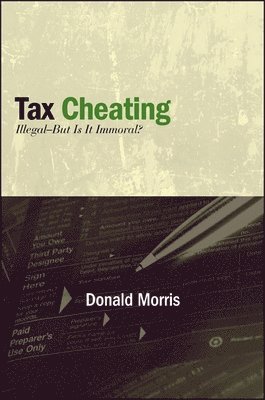
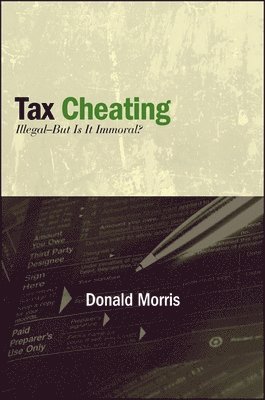
An examination of the ethical issues surrounding tax cheating and implications for public policy.Silver Winner, ForeWord Book of the Year in the Political Science CategoryFinalist for the 2013 Eric Hoffer Book Awards presented by Hopewell Publications From unreported gambling winnings and inflated claims of the value of clothing donated to charity to money hidden in Swiss bank accounts and high-profile tax schemes plotted by celebrities and business leaders, the range of tax cheating opportunities is wide and the boundaries and moral status can be hazy. Considering the behavior of individuals and small businesses as well as the involvement of congress and the IRS, Donald Morris combines insights from law, psychology, sociology, criminology, accounting, economics, and philosophy to examine the ethical issues surrounding tax cheating and implications for tax policy.
1 057 kr
Tillfälligt slut
An examination of the ethical issues surrounding tax cheating and implications for public policy.Silver Winner, ForeWord Book of the Year in the Political Science CategoryFinalist for the 2013 Eric Hoffer Book Awards presented by Hopewell Publications From unreported gambling winnings and inflated claims of the value of clothing donated to charity to money hidden in Swiss bank accounts and high-profile tax schemes plotted by celebrities and business leaders, the range of tax cheating opportunities is wide and the boundaries and moral status can be hazy. Considering the behavior of individuals and small businesses as well as the involvement of congress and the IRS, Donald Morris combines insights from law, psychology, sociology, criminology, accounting, economics, and philosophy to examine the ethical issues surrounding tax cheating and implications for tax policy.
1 456 kr
Skickas inom 3-6 vardagar
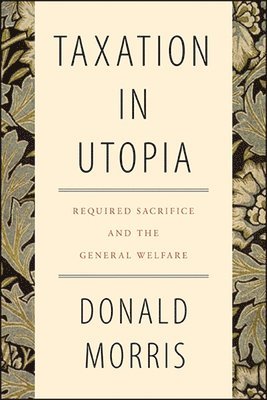
An interdisciplinary exploration of utopian political philosophy from the neglected perspective of taxation.Taxation in Utopia explores utopian political philosophy from the neglected perspective of taxation. At its core, taxation is an ethical question. It requires people to sacrifice for the benefit of others, whether or not they also benefit themselves. Donald Morris refers to this broader, nonmonetary context as constructive taxation, which includes restrictions on privacy and access to information, constraints on marriage and child-rearing, and conventions restricting the proprietorship of land. Morris examines this in the context of various utopian writings, such as More's Utopia, as well as literary treatments of these issues, such as Bellamy's Looking Backward. This interdisciplinary exploration of utopian taxation provides a novel approach to examining relations between a state's view of the general welfare and the sacrifices this view requires of its citizens.
594 kr
Skickas inom 3-6 vardagar
An interdisciplinary exploration of utopian political philosophy from the neglected perspective of taxation.Taxation in Utopia explores utopian political philosophy from the neglected perspective of taxation. At its core, taxation is an ethical question. It requires people to sacrifice for the benefit of others, whether or not they also benefit themselves. Donald Morris refers to this broader, nonmonetary context as constructive taxation, which includes restrictions on privacy and access to information, constraints on marriage and child-rearing, and conventions restricting the proprietorship of land. Morris examines this in the context of various utopian writings, such as More's Utopia, as well as literary treatments of these issues, such as Bellamy's Looking Backward. This interdisciplinary exploration of utopian taxation provides a novel approach to examining relations between a state's view of the general welfare and the sacrifices this view requires of its citizens.
875 kr
Skickas inom 10-15 vardagar
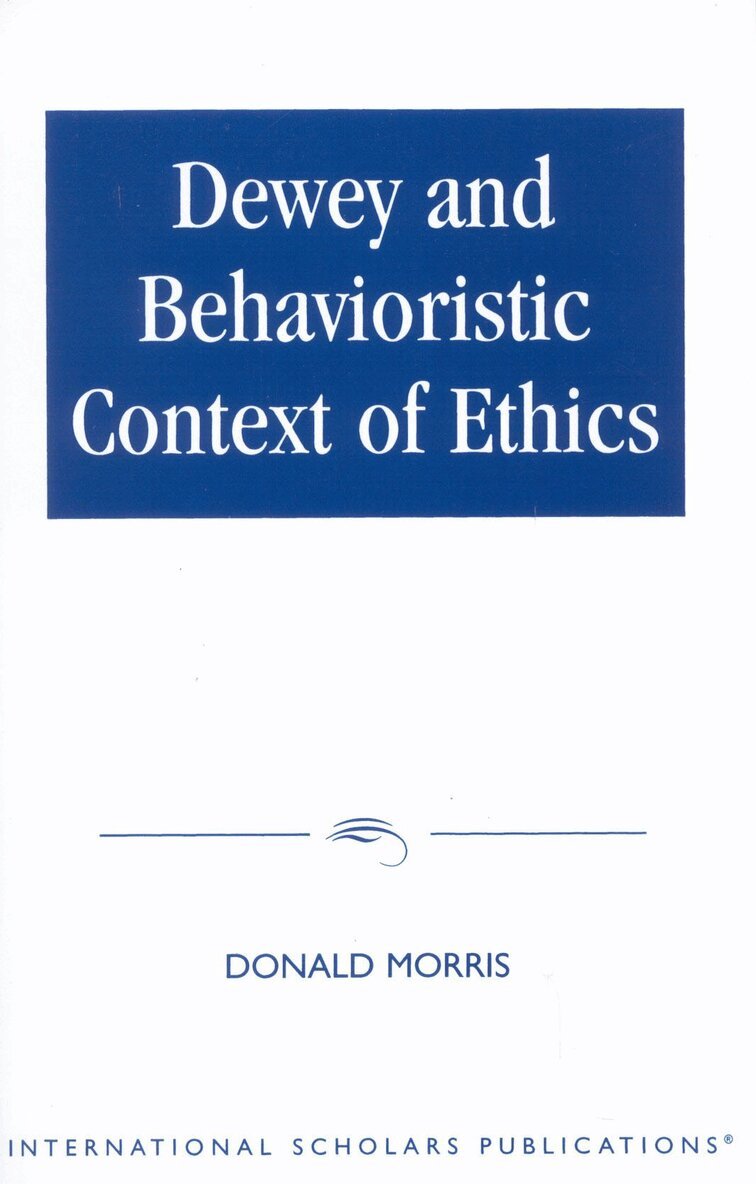
The work presents a thorough and engaging overview of a pernnial problem in philosophy —the relation between moral theory and human limitations — which is examined in an interdisciplinary context. This treatment emphasizes the character of the problem and focuses on proposed methods for dealing with it which lie outside the normal philosophical path of discourse but are nonetheless at the core of 20th-century American philosophy. Dr. Morris's monograph presents an examination of the constraints placed upon ethical theory by certain aspects of contemporary psychological theory, specifically behaviorism. These constraints were outlined in many of the writings of John Dewey. The present text culs and organizes Dewey's thougth regarding the issue. It traces the development of Dewey's thoughts regarding the interrelations between ethics and psychology from his early papers to his last works. For contrast and dimension, a parallel discussion is presented for B.F.Skinner. The book focuses on Dewey's insistence that an adequate ethical theory must be modeled within the context of the most current psychological theories; among the latter Dewey saw behaviorism as most promising. Skinner's behaviorism is outlined and extra-psychological views are presented regarding ethical matters and ethical outcomes.
314 kr
Skickas inom 5-8 vardagar
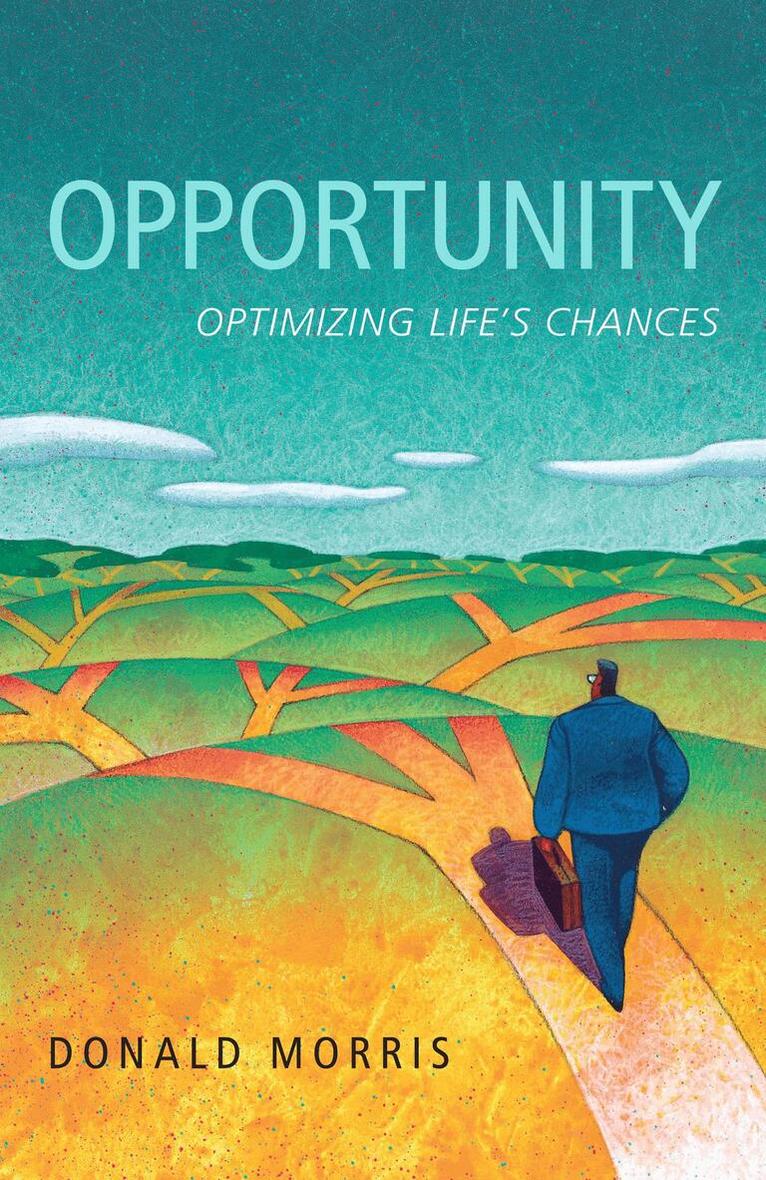
Can you recognise an opportunity when it comes your way? Even though the concept seems fairly basic, most people harbour regrets about missed opportunities that in retrospect might have significantly improved their lives. This book will give you the critical tools to sort through the complexities that often obscure the perception of an opportunity and help you take full advantage of what author Donald Morris calls 'high-end opportunities' - pivotal situations that can change your life for the better. Morris begins by developing a model of opportunity in the abstract, analysing its elements and the contexts and frameworks that affect our recognition of opportunities. Drawing from a wide range of applications, including investing, business, law, criminology, gambling, and even religion, he shows how opportunities can be defined in various contexts. He also examines highly undesirable situations, where opportunity is lacking, such as poverty and historical instances of slavery, to further illustrate, by way of contrast, the defining characteristics of opportunity. How does a significant opportunity differ from a simple option?How does taking advantage of opportunities differ from being an opportunist? Does our ability to predict the future affect our opportunities? What do we mean by equality of opportunity? By addressing these and other probing questions, Morris shows how to develop more critical perceptions of real opportunities.
640 kr
Skickas inom 5-8 vardagar
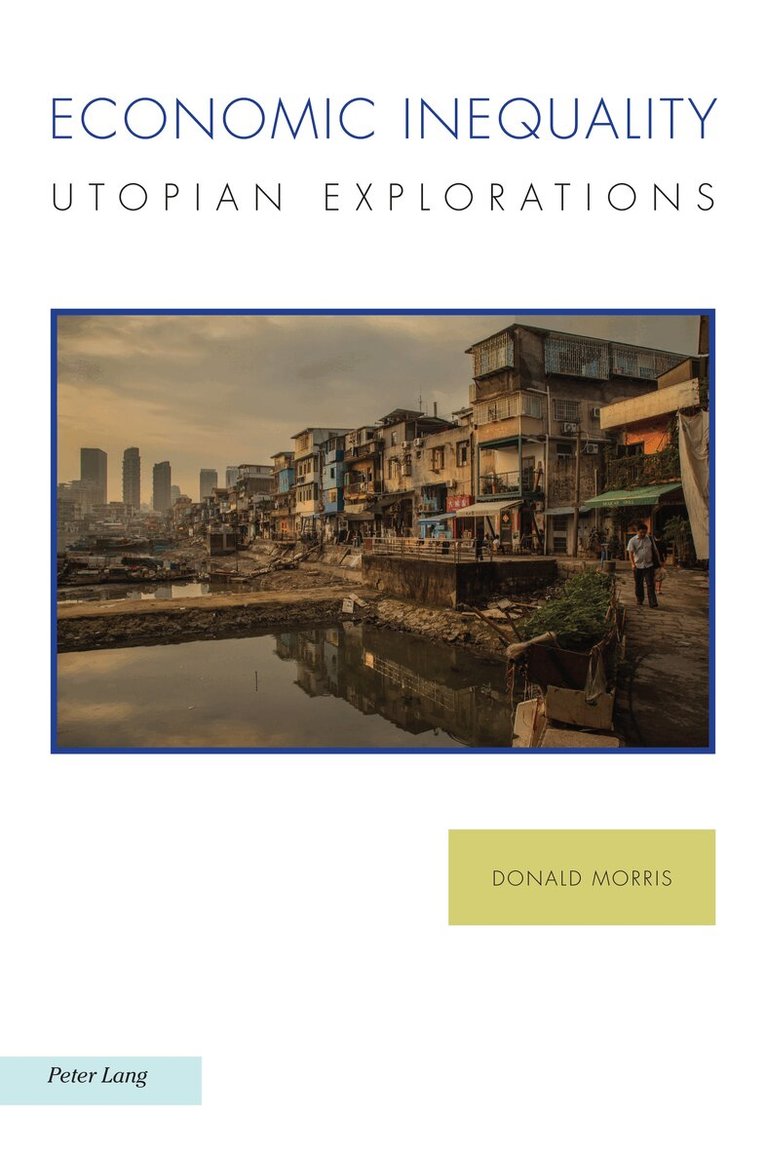
«This relevant, clearly defined study isn’t constricted by its primary focus on late nineteenth-century American utopias, written when inequality flourished. Morris enriches this focus with chronological comparisons to well-known and lesser-known American utopias in other periods; international contexts from non-American authors; and interpretive perspectives by utopian specialists, political scientists, philosophers, and sociologists. But the book’s most striking quality is the variety of reforms identified and discussed. This variety greatly enhances our understanding of utopists’ war on inequality.»(Kenneth M. Roemer, Emeritus Fellow, University of Texas System Academy of Distinguished Teachers. Author of The Obsolete Necessity, Utopian Audiences, and (ed.) America as Utopia«Utopian alternatives to current, persistent and increasing inequality matter: as William Blake said, ‘What is now proved was once, only imagin’d’, and so Donald Morris examines a wealth of possibilities, some outlandish, but all conceivable, and many eminently feasible, from a tradition of literary and imaginative forms of political and social theory. A hopeful and invigorating read.»(Tom Boland, Senior Lecturer in Sociology, University College Cork)This work explores what utopian writers have said about economic inequality. Its transdisciplinary focus is literary utopias—novels of social theory—by authors seeking solutions to the problems of economic inequality. The work challenges our moral assumptions about economic inequality—its potential for resolution—or its inevitability and the ultimate bifurcation of society. It is not an economic treatise but an exploration in social philosophy in its utopian expressions. Economic inequality sets arbitrary limits on whose contributions will benefit society, thereby squandering talent, limiting opportunities, and stifling competition—capriciously restricting the pool of competitors—by class or gender or race. As utopian writers envision a future where the extremes of poverty and wealth have been tempered, it is instructive to explore the instruments they employ; by what measures have they defeated poverty or diminished the threats boundless fortunes pose, thereby revitalizing society?