• Fri frakt över 249 kr
  • •
  • Snabba leveranser
  • •
  • Billiga böcker
Kundservice

Du är på sajten för privatpersoner.

Företag, bibliotek eller offentlig verksamhet?

Du handlar på classic.bokus.com, där alla dina funktioner finns intakta.
Till classic.bokus.com
Bokus logotyp. Gå till startsidan.
  • Erbjudanden
  • Student
  • Topplistor
  • Barn & ungdom
  • Bokus Play
  • E-böcker
  • Ljudböcker
  • Pocketböcker
  • Spel & pussel

Upp till 25% på utvalda nyheter →

Sidfot

Mina sidor

    Hjälp

    • Kundservice
    • Vanliga frågor och svar
    • Frakt och leverans
    • Retur vid ångerrätt
    • Reklamera vara
    • Betalning
    • Köpvillkor
    • Allmänna villkor
    • Information om webbplatsens tillgänglighet

    Om Bokus

    • Om oss
    • Pressrum
    • För studenter
    • För företag
    • För bibliotek och offentlig verksamhet
    • För leverantörer
    • Hållbarhet

    Populärt

    • Aktuella erbjudanden
    • Presentkort
    • Studentlitteratur
    • Nya böcker
    • Topplistor
    • Signerade böcker
    • Engelska böcker

    Inspiration

    • Boktips
    • BookTok
    • Populära bokserier
    • Barnbokskaraktärer
    • Populära författare
    Logotyp för Bokus
    Följ oss på Facebook (extern länk)Följ oss på Instagram (extern länk)Följ oss på YouTube (extern länk)Följ oss på TikTok (extern länk)
    bokus @ CookiesAnpassa cookiesIntegritetspolicyKöpvillkor
    Till Citymail hemsida (extern länk)Till Budbee hemsida (extern länk)Till Postnord hemsida (extern länk)Till Schenker hemsida (extern länk)Till Early Bird hemsida (extern länk)Till Walleys hemsida (extern länk)
    1. Samhälle och politik
    2. Social välfärd och brottslighet
    3. Brottslighet och kriminologi

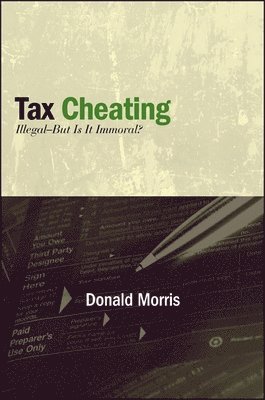
    Tax Cheating

    Illegal--But Is It Immoral?

    AvDonald Morris

    Häftad, Engelska, 2012

    Del i serien Excelsior Editions

    307 kr

    Beställningsvara. Skickas inom 5-8 vardagar. Fri frakt över 249 kr.

    Fler format och utgåvor

    Inbunden

    Tillf. slut

    Beskrivning

    An examination of the ethical issues surrounding tax cheating and implications for public policy.Silver Winner, ForeWord Book of the Year in the Political Science CategoryFinalist for the 2013 Eric Hoffer Book Awards presented by Hopewell Publications From unreported gambling winnings and inflated claims of the value of clothing donated to charity to money hidden in Swiss bank accounts and high-profile tax schemes plotted by celebrities and business leaders, the range of tax cheating opportunities is wide and the boundaries and moral status can be hazy. Considering the behavior of individuals and small businesses as well as the involvement of congress and the IRS, Donald Morris combines insights from law, psychology, sociology, criminology, accounting, economics, and philosophy to examine the ethical issues surrounding tax cheating and implications for tax policy.

    Produktinformation

    • Utgivningsdatum:2012-06-01
    • Mått:152 x 229 x 17 mm
    • Vikt:408 g
    • Format:Häftad
    • Språk:Engelska
    • Serie:Excelsior Editions
    • Antal sidor:290
    • Förlag:State University of New York Press
    • ISBN:9781438442709
    • Utmärkelser:Commended for IndieFab awards (Political Science) 2012

    Utforska kategorier

    • Brottslighet och kriminologi inom Samhälle och politik
    • Finansiering inom Ekonomi och Ledarskap
    • Affärsetik inom Ekonomi och Ledarskap

    Mer om författaren

    Donald Morris is Associate Professor of Accounting at the University of Illinois Springfield. He is a CPA, Certified Fraud Examiner, and a former tax practitioner with eighteen years of experience, including ten years as owner of his own firm in the Chicago area. He is the coauthor (with Lois Ruffner Plank, Bryan R. Plank, and Christie Plank Ciraulo) of Accounting Desk Book: The Accountant's Everyday Instant Answer Book, 2011 Edition, and the author of Opportunity: Optimizing Life's Chances and Dewey and the Behavioristic Context of Ethics.

    Recensioner i media

    "…a unique perspective on the federal tax system in the US … While many readers will disagree with [Morris's] conclusion … the value of the book lies in the journey." — CHOICE"This is not a how-to guide for tax cheaters, nor is it a green light to cheat. The author defines tax cheating as paying less than the law says we owe, whether this is done deliberately or not. His point is that Congress has the obligation to revise the Tax Code to make it simple, transparent, and equitable, so that all taxpayers should know what constitutes their fair share. Morris draws on a large pool of tax cases, experts, and moral philosophers to make his case, and he is grounded in the experience of ten years as a small business owner and tax preparer." — Richard P. Mullin, author of The Soul of Classical American Philosophy: The Ethical and Spiritual Insights of William James, Josiah Royce, and Charles Sanders Pierce"Morris gives us a thorough collection of thoughts and quotations about a sensitive subject—how do morals and ethics affect the completion of a tax return? Who is more unethical, Congress in writing the current tax law or the taxpayer in paying 'too little' tax? What motivates a citizen to 'volunteer' to pay a tax bill? Does Congress really want to close the tax gap? Should a court apply only the letter of the law in a tax case, or should a higher moral principle also apply? By approaching the term 'cheating' in a morally neutral manner, Morris removes much of the baggage that restricts the usual talk about taxes—the book allows for a more fruitful review of the economics of the deal between the citizen and the government, that we call taxation. Intriguing, fresh, accessible, up to date." — William A. Raabe, coauthor of Federal Tax Research, Ninth Edition

    Innehållsförteckning

    • AcknowledgmentsPreface1. Tax Cheating—The ProblemIntroductionTax CheatingTax FairnessThe Meaning of Cheating in TaxTax FraudPenalties and DeterrenceCheating—Specific Characteristics2. The Tax Gap, Tax Protestors, and Small BusinessThe Voluntary Tax SystemThe World of Tax ProtestorsThe Gaping Tax GapSmall Business and the Tax GapThe Broken Window of Opportunity3. Tax ComplexityThe Complexity ProblemIs Complexity to Blame?The Moral DilemmaNonvoluntary TaxationComplexity and MoralsIs There Ever a Time for Draconian Measures?4. The Moral Duty to Obey the LawMorality and LegalityEthical Relativism and AbsolutismThe Role of Morality in the LawMoral Obedience to the LawThe Ethics of Tax EvasionJustifying a Moral Duty5. Cheating, Competition, and FairnessCheating and CompetitionHand-to-Hand CombatFairness and EqualityGetting What You Pay ForWhat If Everyone Cheated?The Uneven Playing Field6. Unintentional CheatingA Fork in the RoadFair Share ArgumentUnintended CheatingThe Meaning of Cheating in FootballBlaming the Messenger7. The Courts, Equity, and Taxes DueTaxes and EquityRules and PrinciplesThe Innocent Spouse RulesThe Courts and EquityEquity, Subjectivity, and NegligenceThe Bankrupt TaxpayerInterpreting the Law—Transparency8. Compliance, Complexity, Conscience, and FairnessThe Moral Dimension of Tax ComplianceThe Matthew EffectOur Vision of a Fair ShareThe Moral Quality of ActionsEnlisting Conscience in Reducing Tax CheatingConscientious ObjectorsCivil DisobedienceNotesSelected Bibliography Excluding Public Documents