Donald Weinstein - Böcker
Visar alla böcker från författaren Donald Weinstein. Handla med fri frakt och snabb leverans.
4 produkter
4 produkter
298 kr
Skickas inom 7-10 vardagar
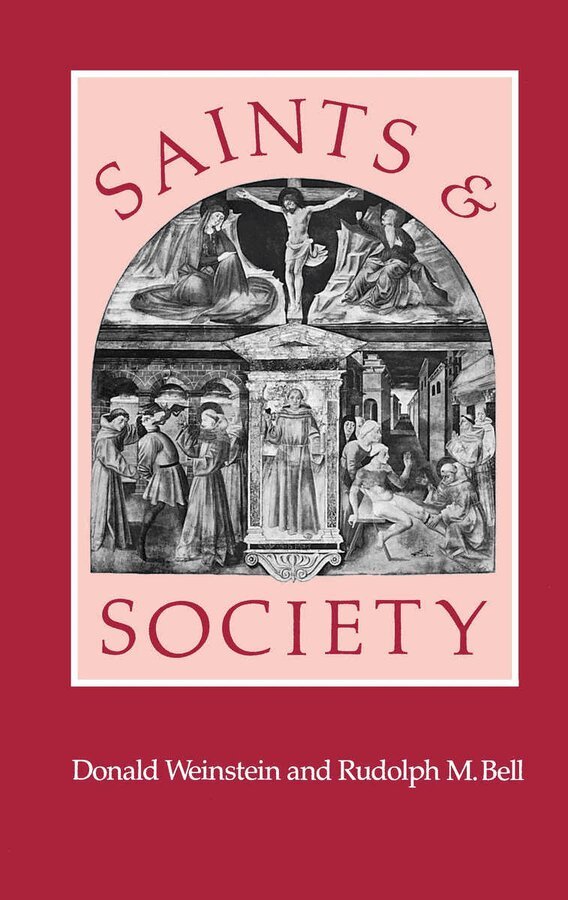
In Saints and Society, Donald Weinstein and Rudolph M. Bell examine the lives of 864 saints who lived between 1000 and 1700 and the perceptions of sanctity prevalent in late medieval and early modern Europe. They also provide a substantial body of information on the people among whom the saints lived and by whom they came to be venerated. In the first part, the authors give close consideration to what the saints' lives reveal about childhood, adolescence, and adulthood; the impact of religious inspiration upon family bonds; and family influences upon religious behavior. The second part provides a composite picture of piety and its changing configuration in Latin Christendom. With the assistance of statistical analysis, the authors answer questions involving the popular perception of holiness, social class, and gender.
886 kr
Skickas inom 5-8 vardagar
In this last collection of his vital, controversial, and accessible writings, Heiko A. Oberman seeks to liberate and broaden our understanding of the European Reformation, from its origins in medieval philosophy and theology through the Puritan settlers who brought Calvin’s vision to the New World. Ranging over many topics, Oberman finds fascinating connections between aspects of the Reformation and twentieth-century history and thought—most notably the connection to Nazism and the Holocaust. He revisits his earlier work on the history of anti-Semitism, rejects the notion of an unbroken line from Luther to Hitler to the Holocaust, and offers a new perspective on the Christian legacy of anti-Semitism and its murderous result in the twentieth century. Oberman demonstrates how the simplifications and rigidities of modern historiography have obscured the existential spirits of such great figures as Luther and Calvin. He explores the debt of both Luther and Calvin to medieval religious thought and the impact of diverse features of “the long fifteenth century”—including the Black Death, nominalism, humanism, and the Conciliar Movement—on the Reformation.
1 218 kr
Skickas inom 5-8 vardagar
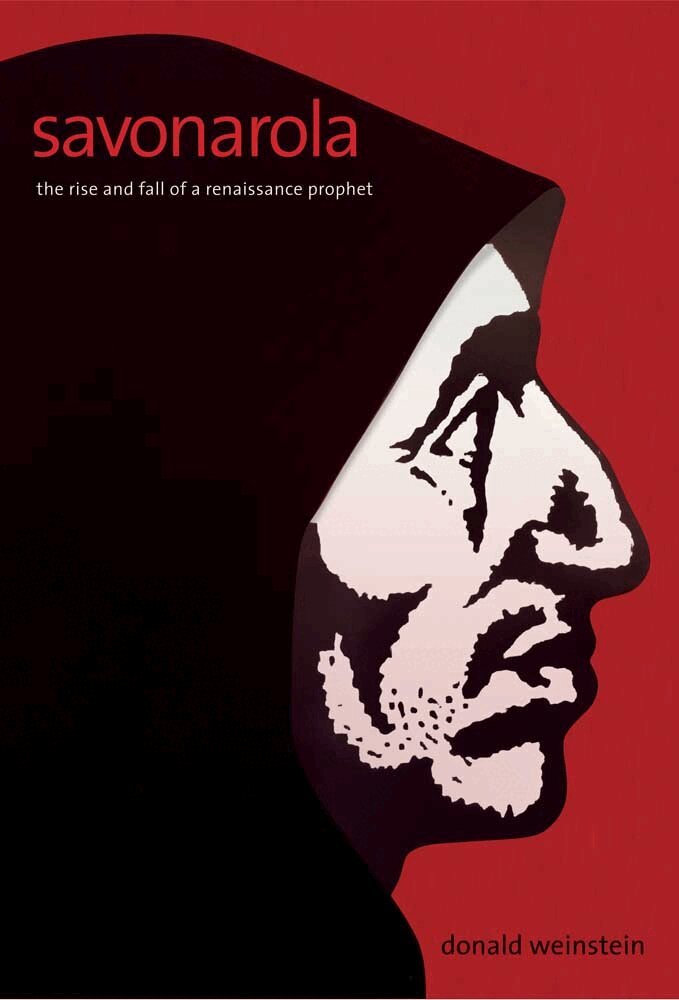
A deeply considered new biography of the visionary Dominican by a leading Renaissance scholarGirolamo Savonarola, the fifteenth-century doom-saying friar, embraced the revolution of the Florentine republic and prophesied that it would become the center of a New Age of Christian renewal and world domination. This new biography, the culmination of many decades of study, presents an original interpretation of Savonarola's prophetic career and a highly nuanced assessment of his vision and motivations.Weinstein sorts out the multiple strands that connect Savonarola to his time and place, following him from his youthful rejection of a world he regarded as corrupt, to his engagement with that world to save it from itself, to his shattering confession—an admission that he had invented his prophesies and faked his visions. Was his confession sincere? A forgery circulated by his inquisitors? Or an attempt to escape bone-breaking torture? Weinstein offers a highly innovative analysis of the testimony to provide the first truly satisfying account of Savonarola and his fate as a failed prophet.
564 kr
Tillfälligt slut
On March 21, 1578, Holy Thursday, cavalier Fabrizio Bracciolini charged that he had been ambushed, slashed, stoned, and left bleeding in a Pistoia street by fellow cavalier Mariotto Cellesi and four accomplices. In The Captain's Concubine: Love, Honor, and Violence in Renaissance Tuscany, Donald Weinstein studies the lengthy investigation of the incident, bares the motives of the actors, and follows the ensuing trial. Weinstein examines the roles of the patricians, merchants, shopkeepers, weavers, priests, and prostitutes who served as audience, bit players, and chorus in this Renaissance street-theater drama. When Fabrizio is revealed to be the lover of Chiara, the concubine of Mariotto's father, questioning moves away from the street fight itself to the right of the defendants to take revenge for violated family honor: accuser becomes accused, and a simple case of assault turns into a community's discussion of its most tenacious values. Lurching from comedy to tragedy and neglected even by local chroniclers, the Holy Thursday incident involved issues of honor, family, religion, gender relations, and power familiar to social historians of late medieval and early modern Europe.For the Medici ruler of the Grand Duchy of Tuscany, the Holy Thursday affair presented a dilemma: bound to regard duels and street fights as threats to an all too fragile public order and a challenge to his sovereignty, Francesco I nevertheless respected and fostered the aristocratic code of honor, family loyalty, and chivalric valor to which the Cellesi appealed. How these contradictions were accommodated is a crucial part of the story Weinstein tells.