Rudolph M. Bell - Böcker
Visar alla böcker från författaren Rudolph M. Bell. Handla med fri frakt och snabb leverans.
8 produkter
8 produkter
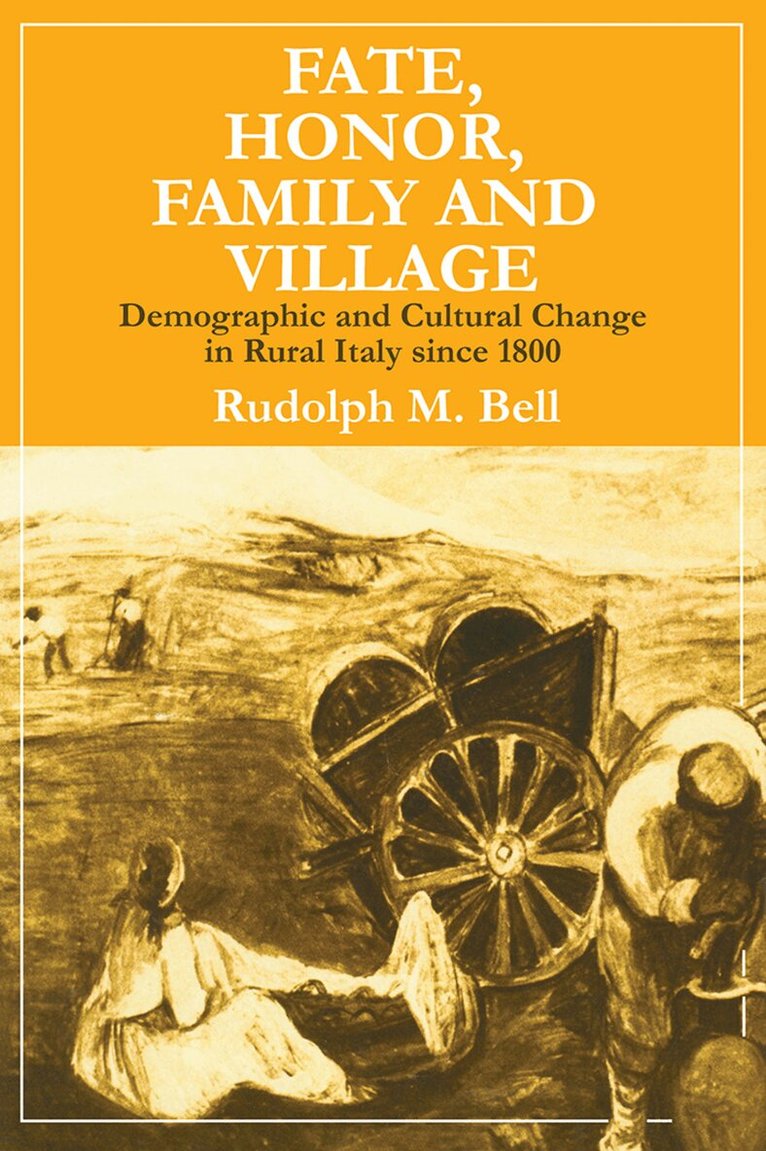
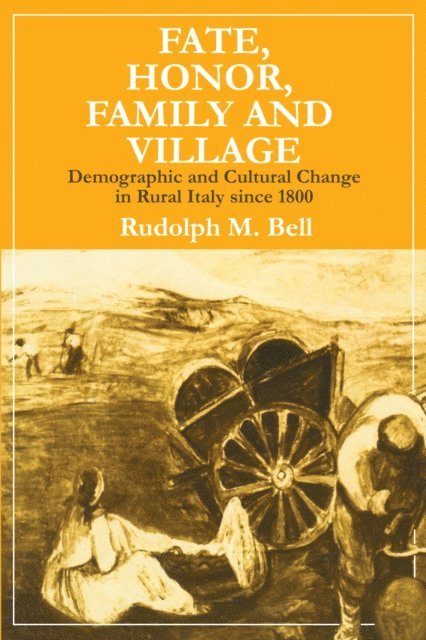
Fate, Honor, Family and Village
Demographic and Cultural Change in Rural Italy Since 1800
Häftad, Engelska, 2007
705 kr
Skickas inom 10-15 vardagar
The Italian peasantry has often been described as tragic, backward, hopeless, downtrodden, static, and passive. In Fate and Honor, Family and Village, Rudolph Bell argues against this characterization by reconstructing the complete demographic history of four country villages since 1800. He analyzes births, marriages, and deaths in terms of four concepts that capture more accurately and sympathetically the essence of the Italian peasant's life: Fortuna (fate), onore (honor, dignity), famiglia (family), and campanilismo (village).Fortuna is the cultural wellspring of Italian peasant society, the worldview from which all social life flows. The concept of Fortuna does not refer to philosophical questions, predestination, or value judgments. Rather, Fortuna is the sum total of all explanations of outcomes perceived to be beyond human control. Thus, in Bell's view, high mortality does not lead peasants to a resigned acceptance of their fate; instead, they rely on honor, reciprocal exchanges of favors, and marriage to forge new links in their familial and social networks. With thorough documentation in graphs and tables, the author evaluates peasant reactions to time, work, family, space, migration, and protest to portray rural Italians as active, flexible, and shrewd, participating fully in shaping their destinies.Bell asserts that the real problem of the Mezzogiorno is not one of resistance to technology, of high birth rates, or even of illiteracy. It is one of solving technical questions in ways that foster dependency. The historical and sociological practice of treating peasant culture as backward, secondary, and circumscribed only encourages disruption and ultimately blocks the road to economic and political justice in a post-modern world.
234 kr
Skickas inom 7-10 vardagar
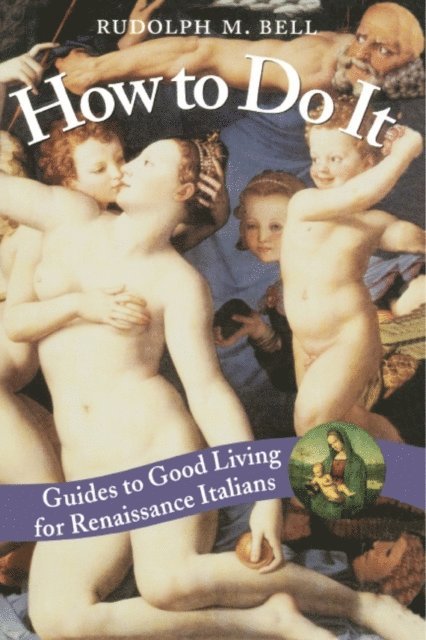
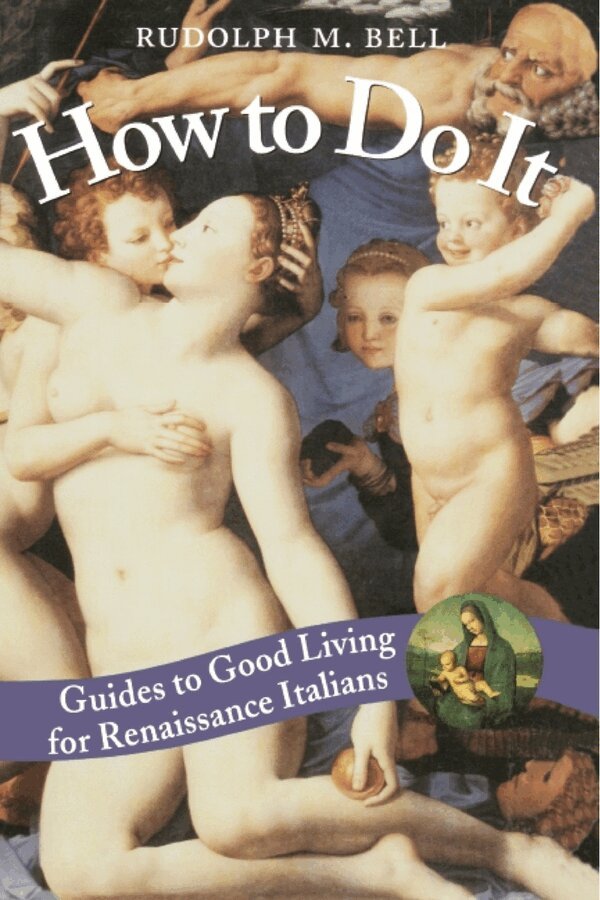
Hope to conceive a boy? Tie a tourniquet around your husband's left testicle. Pregnant and fear a weak or malformed baby? Frequent hearty laughter should reduce the risk. And if you're a teenager of good repute, avoid dancing at all costs and stay away from wine, cosmetics, and flashy dress. What may seem quirky to today's readers certainly wasn't to its original audience - Renaissance Italians. They read advice manuals prodigiously, seeking guidance from the latest books by best-selling alchemists and snake-oil peddlers like Mrs. Isabella Cortese and Dr. Leonardo Fioravanti with an avidity not bestowed even on a Dante or a Machiavelli. This work shows 16th-century Italy from an alternative perspective: through manuals which were staples in the households of middlebrow Italians just trying to lead a better life. Rudolph M. Bell uncovers a culture much like our own in which people sought advice for everything from reining in a wayward spouse to running an efficient household.Italians who faced such timeless challenges turned to these books, which were written specifically for families of moderate means, complete with indexes, tables of contents, and marginal summaries making them easy to consult as problems arose.
443 kr
Tillfälligt slut
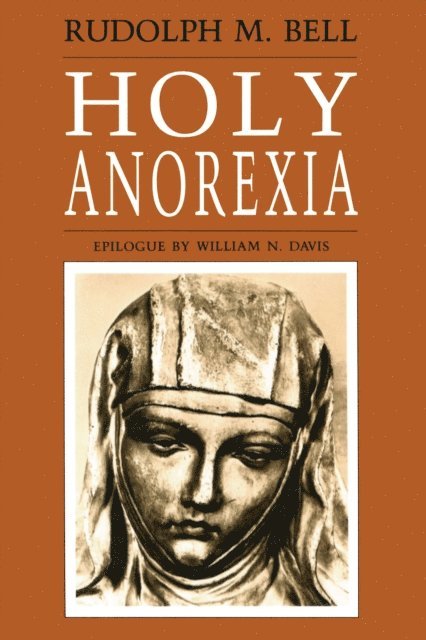
Is there a resemblance between the contemporary anorexic teenager counting every calorie in her single-minded pursuit of thinness, and an ascetic medieval saint examining her every desire? Rudolph M. Bell suggests that the answer is yes. "Everyone interested in anorexia nervosa ...should skim this book or study it. It will make you realize how dependent upon culture the definition of disease is. I will never look at an anorexic patient in the same way again."--Howard Spiro, M.D., Gastroenterology "[This] book is a first-class social history and is well-documented both in its historical and scientific portions."--Vern L. Bullough, American Historical Review
Fate and Honor, Family and Village
Demographic and Cultural Change in Rural Italy Since 1800
Inbunden, Engelska, 1979
785 kr
Skickas inom 11-20 vardagar
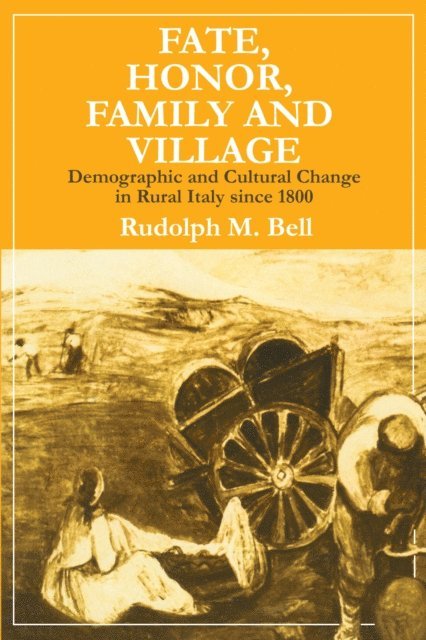
The Italian peasantry has often been described as tragic, backward, hopeless, downtrodden, static, and passive. In Fate and Honor, Family and Village, Rudolph Bell argues against the characterizationmore by reconstructing the complete demographic history of four country villages since 1800. He analyzes births, marriages, and deaths in terms of four concepts that capture mroe accurately and sympathetically the essence of the Italian peasant life: fortuna (fate), onore (honor, dignity), famiglia (family), and campanilismo (village). Fortuna is the cultural wellspring of Italian peasant society, the world view from which all social life flows. The concept of fortuna does not refer to philosophical questions, predestination, or value judgments. Rather, fortuna is the sum total of all explanations of outcomes perceived to be beyond human control. Thus, in Bell's view, high mortality does not lead peasants to a resigned acceptance of their fate; instead, they rely on honor, reciprocal exchanges of favors, and marriage to forge new links in their familial and social networks. With thorough documentation in graphs and tables, the author evaluates peasant reactions to time, work, family, space, migration, and protest to portray rural Italians as active, flexible, and shrewd, participating fully in shaping their destinies. Bell asserts that the real problem of the Mezzogiorno is not one of resistance to technology, of high birth rates, or even of illiteracy. It is one of solving technical questions in ways that foster dependency. The historical and sociological practice of treating peasant culture as backward, secondary, and circumscribed only encourages disruption and ultimately blocks the road to economic and political justice in a postmodern world.
809 kr
Skickas inom 7-10 vardagar
Hope to conceive a boy? Tie a tourniquet around your husband's left testicle. Pregnant and fear a weak or malformed baby? Frequent hearty laughter should reduce the risk. And if you're a teenager of good repute, avoid dancing at all costs and stay away from wine, cosmetics, and flashy dress. What may seem quirky to today's readers certainly wasn't to its original audience - Renaissance Italians. They read advice manuals prodigiously, seeking guidance from the latest books by best-selling alchemists and snake-oil peddlers like Mrs. Isabella Cortese and Dr. Leonardo Fioravanti with an avidity not bestowed even on a Dante or a Machiavelli. This work shows 16th-century Italy from an alternative perspective: through manuals which were staples in the households of middlebrow Italians just trying to lead a better life. Rudolph M. Bell uncovers a culture much like our own in which people sought advice for everything from reining in a wayward spouse to running an efficient household.Italians who faced such timeless challenges turned to these books, which were written specifically for families of moderate means, complete with indexes, tables of contents, and marginal summaries making them easy to consult as problems arose.
298 kr
Skickas inom 7-10 vardagar
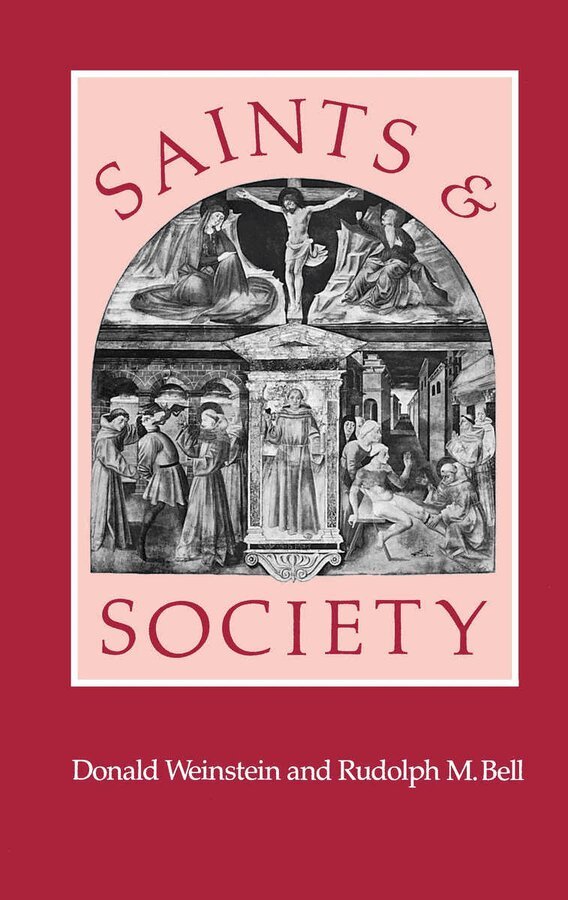
In Saints and Society, Donald Weinstein and Rudolph M. Bell examine the lives of 864 saints who lived between 1000 and 1700 and the perceptions of sanctity prevalent in late medieval and early modern Europe. They also provide a substantial body of information on the people among whom the saints lived and by whom they came to be venerated. In the first part, the authors give close consideration to what the saints' lives reveal about childhood, adolescence, and adulthood; the impact of religious inspiration upon family bonds; and family influences upon religious behavior. The second part provides a composite picture of piety and its changing configuration in Latin Christendom. With the assistance of statistical analysis, the authors answer questions involving the popular perception of holiness, social class, and gender.
Fate, Honor, Family and Village
Demographic and Cultural Change in Rural Italy Since 1800
Inbunden, Engelska, 2017
2 088 kr
Skickas inom 10-15 vardagar
The Italian peasantry has often been described as tragic, backward, hopeless, downtrodden, static, and passive. In Fate and Honor, Family and Village, Rudolph Bell argues against this characterization by reconstructing the complete demographic history of four country villages since 1800. He analyzes births, marriages, and deaths in terms of four concepts that capture more accurately and sympathetically the essence of the Italian peasant's life: Fortuna (fate), onore (honor, dignity), famiglia (family), and campanilismo (village).Fortuna is the cultural wellspring of Italian peasant society, the worldview from which all social life flows. The concept of Fortuna does not refer to philosophical questions, predestination, or value judgments. Rather, Fortuna is the sum total of all explanations of outcomes perceived to be beyond human control. Thus, in Bell's view, high mortality does not lead peasants to a resigned acceptance of their fate; instead, they rely on honor, reciprocal exchanges of favors, and marriage to forge new links in their familial and social networks. With thorough documentation in graphs and tables, the author evaluates peasant reactions to time, work, family, space, migration, and protest to portray rural Italians as active, flexible, and shrewd, participating fully in shaping their destinies.Bell asserts that the real problem of the Mezzogiorno is not one of resistance to technology, of high birth rates, or even of illiteracy. It is one of solving technical questions in ways that foster dependency. The historical and sociological practice of treating peasant culture as backward, secondary, and circumscribed only encourages disruption and ultimately blocks the road to economic and political justice in a post-modern world.
1 626 kr
Skickas inom 5-8 vardagar