• Fri frakt över 249 kr
  • •
  • Snabba leveranser
  • •
  • Billiga böcker
Kundservice

Du är på sajten för privatpersoner.

Företag, bibliotek eller offentlig verksamhet?

Du handlar på classic.bokus.com, där alla dina funktioner finns intakta.
Till classic.bokus.com
Bokus logotyp. Gå till startsidan.
  • Erbjudanden
  • Nyheter
  • Student
  • Topplistor
  • Barn & ungdom
  • Bokus Play
  • E-böcker
  • Pocketböcker
  • Spel & pussel

10% rabatt på allt med kod: NYSTART10 →

Sidfot

Mina sidor

    Hjälp

    • Kundservice
    • Vanliga frågor och svar
    • Frakt och leverans
    • Retur vid ångerrätt
    • Reklamera vara
    • Betalning
    • Köpvillkor
    • Allmänna villkor
    • Information om webbplatsens tillgänglighet

    Om Bokus

    • Om oss
    • Pressrum
    • För studenter
    • För företag
    • För bibliotek och offentlig verksamhet
    • För leverantörer
    • Hållbarhet

    Populärt

    • Aktuella erbjudanden
    • Presentkort
    • Studentlitteratur
    • Nya böcker
    • Topplistor
    • Signerade böcker
    • Engelska böcker

    Inspiration

    • Boktips
    • BookTok
    • Populära bokserier
    • Barnbokskaraktärer
    • Populära författare
    Logotyp för Bokus
    Följ oss på Facebook (extern länk)Följ oss på Instagram (extern länk)Följ oss på YouTube (extern länk)Följ oss på TikTok (extern länk)
    bokus @ CookiesAnpassa cookiesIntegritetspolicyKöpvillkor
    Till Citymail hemsida (extern länk)Till Budbee hemsida (extern länk)Till Postnord hemsida (extern länk)Till Schenker hemsida (extern länk)Till Early Bird hemsida (extern länk)Till Walleys hemsida (extern länk)
    1. Filosofi och religion
    2. Religion och tro
    3. Religion: allmänt

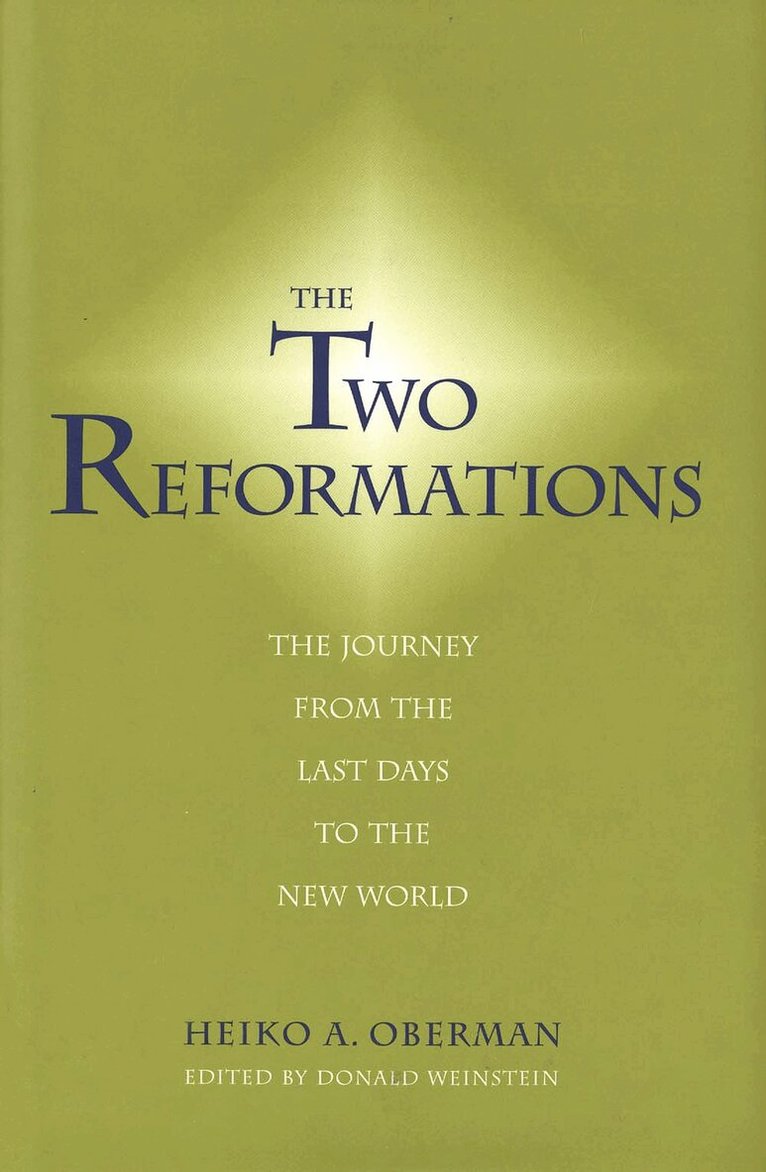
    Two Reformations

    The Journey from the Last Days to the New World

    AvHeiko A. Oberman,Donald Weinstein

    Inbunden, Engelska, 2003

    902 kr

    Beställningsvara. Skickas inom 5-8 vardagar. Fri frakt över 249 kr.

    Beskrivning

    In this last collection of his vital, controversial, and accessible writings, Heiko A. Oberman seeks to liberate and broaden our understanding of the European Reformation, from its origins in medieval philosophy and theology through the Puritan settlers who brought Calvin’s vision to the New World. Ranging over many topics, Oberman finds fascinating connections between aspects of the Reformation and twentieth-century history and thought—most notably the connection to Nazism and the Holocaust. He revisits his earlier work on the history of anti-Semitism, rejects the notion of an unbroken line from Luther to Hitler to the Holocaust, and offers a new perspective on the Christian legacy of anti-Semitism and its murderous result in the twentieth century. Oberman demonstrates how the simplifications and rigidities of modern historiography have obscured the existential spirits of such great figures as Luther and Calvin. He explores the debt of both Luther and Calvin to medieval religious thought and the impact of diverse features of “the long fifteenth century”—including the Black Death, nominalism, humanism, and the Conciliar Movement—on the Reformation.

    Produktinformation

    • Utgivningsdatum:2003-08-01
    • Mått:140 x 210 x 23 mm
    • Vikt:472 g
    • Format:Inbunden
    • Språk:Engelska
    • Antal sidor:256
    • Förlag:Yale University Press
    • ISBN:9780300098686

    Utforska kategorier

    • Religion: allmänt inom Filosofi och religion
    • Kristendom inom Filosofi och religion
    • Medeltiden inom Historia och arkeologi

    Mer om författaren

    The late Heiko A. Oberman, one of the twentieth century’s great historians of the Reformation, was at the time of his death Regents’ Professor of History at the University of Arizona. He was the author of many books, including the definitive biography of Martin Luther, Luther: Man Between God and the Devil. Donald Weinstein is professor emeritus of the Department of History at the University of Arizona.

    Recensioner i media

    "Oberman is bracing, fresh, and daring. In this book he continued his lifelong assault upon modern complacency and our overweening sense of superiority to the past." H. C. Erik Midelfort, University of Virginia