Dora C. Y. Ching - Böcker
Visar alla böcker från författaren Dora C. Y. Ching. Handla med fri frakt och snabb leverans.
8 produkter
8 produkter
307 kr
Skickas inom 7-10 vardagar
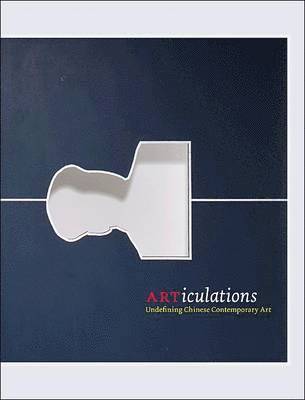
What does it mean to say that some of the best Chinese contemporary art is made in America, by Americans? Through words and images, this book challenges the artificial and narrowly conceived definitions of Chinese contemporary art that dominate current discussion, revealing the great diversity of Chinese art today and showing just how complex and uncertain the labels "contemporary," "Chinese," and "American" have become. This volume features contributions from six artists and eight scholars who participated in a 2009 symposium held in conjunction with the Princeton University Art Museum exhibition Outside In: Chinese ? American ? Contemporary Art. These ethnically Chinese and non-Chinese artists work or have worked in America--indeed, all of them are U.S. citizens--but they are steeped in Chinese artistic traditions in terms of style, subject matter, and philosophical outlook. Here they discuss their art and careers with rare depth and candor, addressing diversity, ethnicity, identity, and other issues.The academic contributors bring a variety of perspectives--Chinese and American, art historical and political--to bear on the common, limiting practice of classifying such art and artists as "Chinese," "American," or "Chinese American." Revealing and celebrating the fluidity of who can be considered a Chinese artist and what Chinese art might be, these artists and scholars broaden and enrich our understanding of Chinese contemporary art.
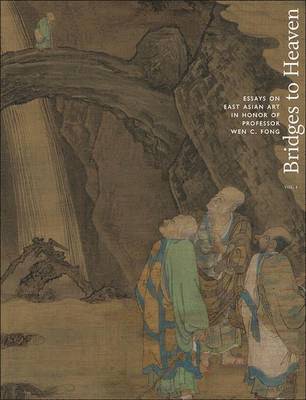
Bridges to Heaven
Essays on East Asian Art in Honor of Professor Wen C. Fong (Two-Volume Set)
Inbunden, Engelska, 2011
1 692 kr
Skickas inom 7-10 vardagar
Wen C. Fong established America's first program in East Asian art history at Princeton University, where he taught Chinese art from 1954 to 1999. During this time, he supervised more than thirty PhD students, most of whom have gone on to hold professorships or museum positions throughout the United States, East Asia, and Europe. This two-volume book honors Professor Fong's extraordinary half-century career at Princeton and the Metropolitan Museum of Art by gathering almost forty essays on Chinese, Japanese, and Korean art history, written by his students and by some of his lifelong colleagues in this field of study. These full-length essays address a wide range of subjects, building bridges in many directions, from early jades and bronzes through traditional painting and prints, to photography, cinema, and modern museum practice. The diversity, depth, and originality of these essays make this work a monumental contribution to the study of the arts of East Asia. The book includes an interview of Professor Fong, conducted by Jerome Silbergeld, and a bibliography of Fong's work.
826 kr
Skickas inom 7-10 vardagar
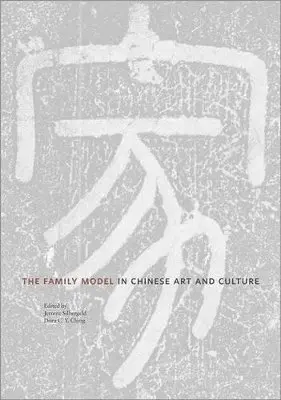
The family model has been central to patterns of social organization and cultural articulation throughout Chinese history, influencing all facets of the content and style of Chinese art. With contributors drawn from the disciplines of art history, anthropology, psychiatry, history, and literature, this volume explores the Chinese concept of family and its impact upon artistic production. In essays ranging from the depiction of children to adult portraiture, through literary constructions of gender and the psychodynamics of cinema, these authors consider the historical foundations of the family--both real and ideal--in ancient China, discuss the perpetuation of this model in later Chinese history and modern times, and analyze how family paradigms informed and intersected with art and literature.
1 020 kr
Skickas inom 7-10 vardagar
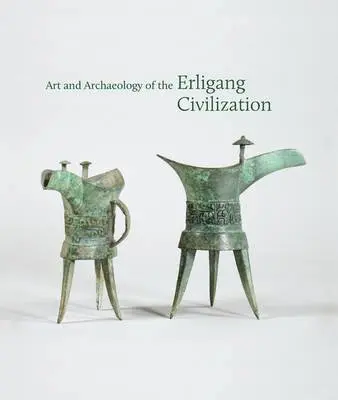
Named after an archaeological site discovered in 1951 in Zhengzhou, China, the Erligang civilization arose in the Yellow River valley around the middle of the second millennium BCE. Shortly thereafter, its distinctive elite material culture spread to a large part of China's Central Plain, in the south reaching as far as the banks of the Yangzi River. The Erligang culture is best known for the remains of an immense walled city at Zhengzhou, a smaller site at Panlongcheng in Hubei, and a large-scale bronze industry of remarkable artistic and technological sophistication. This richly illustrated book is the first in a western language devoted to the Erligang culture. It brings together scholars from a variety of disciplines, including art history and archaeology, to explore what is known about the culture and its spectacular bronze industry. The opening chapters introduce the history of the discovery of the culture and its most important archaeological sites.Subsequent essays address a variety of important methodological issues related to the study of Erligang, including how to define the culture, the usefulness of cross-cultural comparative study, and the difficulty of reconciling traditional Chinese historiography with archaeological discoveries. The book closes by examining the role the Erligang civilization played in the emergence of the first bronze-using societies in south China and the importance of bronze studies in the training of Chinese art historians. The contributors are Robert Bagley, John Baines, Maggie Bickford, Rod Campbell, Li Yung-ti, Robin McNeal, Kyle Steinke, Wang Haicheng, and Zhang Changping.
534 kr
Skickas inom 7-10 vardagar
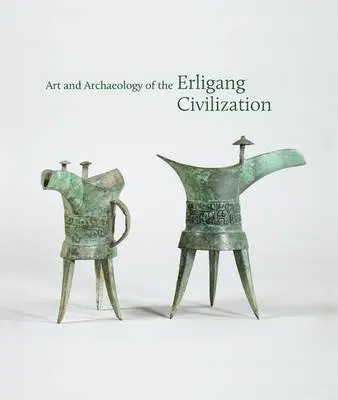
Named after an archaeological site discovered in 1951 in Zhengzhou, China, the Erligang civilization arose in the Yellow River valley around the middle of the second millennium BCE. Shortly thereafter, its distinctive elite material culture spread to a large part of China's Central Plain, in the south reaching as far as the banks of the Yangzi River. The Erligang culture is best known for the remains of an immense walled city at Zhengzhou, a smaller site at Panlongcheng in Hubei, and a large-scale bronze industry of remarkable artistic and technological sophistication. This richly illustrated book is the first in a western language devoted to the Erligang culture. It brings together scholars from a variety of disciplines, including art history and archaeology, to explore what is known about the culture and its spectacular bronze industry. The opening chapters introduce the history of the discovery of the culture and its most important archaeological sites.Subsequent essays address a variety of important methodological issues related to the study of Erligang, including how to define the culture, the usefulness of cross-cultural comparative study, and the difficulty of reconciling traditional Chinese historiography with archaeological discoveries. The book closes by examining the role the Erligang civilization played in the emergence of the first bronze-using societies in south China and the importance of bronze studies in the training of Chinese art historians. The contributors are Robert Bagley, John Baines, Maggie Bickford, Rod Campbell, Li Yung-ti, Robin McNeal, Kyle Steinke, Wang Haicheng, and Zhang Changping.
761 kr
Skickas inom 7-10 vardagar
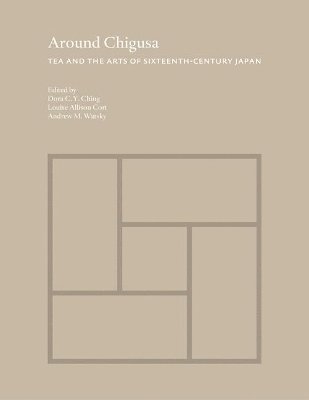
An in-depth look at the dynamic cultural world of tea in Japan during its formative period Around Chigusa investigates the cultural and artistic milieu in which a humble jar of Chinese origin dating to the thirteenth or fourteenth century became Chigusa, a revered, named object in the practice of formalized tea presentation (chanoyu) in sixteenth-century Japan. This tea-leaf storage jar lies at the nexus of interlocking personal networks, cultural values, and aesthetic idioms in the practice and appreciation of tea, poetry, painting, calligraphy, and Noh theater during this formative period of tea culture. The book's essays set tea in dialogue with other cultural practices, revealing larger cultural paradigms that informed the production, circulation, and reception of the artifacts used and displayed in tea. Key themes include the centrality of tea to the social life of and interaction among warriors, merchants, and the courtly elite; the multifaceted relationship between things wa (Japanese) and kan (Chinese) and between tea and poetry; the rise of new formats for display of the visual and calligraphic arts; and collecting and display as an expression of political power.
18 457 kr
Skickas inom 7-10 vardagar
Available in a limited print run of 1,000 sets—the stunning nine-volume presentation of the incredible Buddhist caves at Dunhuang in northwestern ChinaSituated at an important juncture within the network of silk routes from China through central Asia, the oasis city of Dunhuang was an ancient site of Buddhist religious activity. Southeast of the city, the Mogao Caves, also known as the Caves of the Thousand Buddhas, are an astonishing group of hundreds of caves—carved in the cliffs between the fourth and fourteenth centuries—containing sculptures and paintings. Further east sit the Yulin Caves, another critical and richly decorated site. Featuring some of the finest examples of Buddhist imagery to be found anywhere in the world, these caves have enticed explorers, archaeologists, artists, scholars, and photographers since the early twentieth century.Visualizing Dunhuang: The Lo Archive Photographs of the Mogao and Yulin Caves presents for the first time in print the comprehensive photographic archive—created in the 1940s by James C. M. Lo (1902–1987) and his wife, Lucy L. Lo (b. 1920)—of the remarkable Buddhist caves at Dunhuang. This extraordinary nine-volume set features more than 3,000 of the original black-and-white photographs that provide an indispensable historical record. Invaluable for their documentary worth and artistic quality, and thorough in their coverage and clarity, the images represent a rare perspective on significant monuments, many now irretrievably changed. The Lo Archive serves as a treasure trove of historical, cultural, and artistic information for researchers, art historians, and conservators.The introductory volume includes an essay about the formation and history of the Lo Archive, as well as maps, diagrams, photographs of the Mogao site, and concordances. The central volumes contain photographs of the Mogao and Yulin Caves, collaged photographs, several hundred newly created diagrammatic plans, and English and Chinese captions. The final volume is a collection of essays that addresses the complexity and richness of the Lo Archive, and how Dunhuang has been viewed from ancient times to the present. Contributors include Neville Agnew, Dora Ching, Jun Hu, Annette Juliano, Richard Kent, Wei-Cheng Lin, Cary Liu, Maria Menshikova, Jerome Silbergeld, Roderick Whitfield, and Zhao Shengliang.Exquisitely produced, this monumental set’s abundant photographs have been lavishly printed as tritones, allowing for the closest possible match to James Lo’s original black-and-white photographs, and for the clearest, richest images possible. With numerous silk-screened pages and an eight-page double-sided gatefold, Visualizing Dunhuang stands as a definitive reference for scholars, collectors, and libraries in art history and Asian studies.Published in association with the Tang Center for East Asian Art, Princeton University
597 kr
Skickas inom 7-10 vardagar
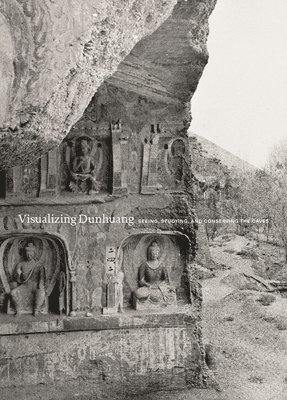
A beautifully illustrated study of the caves at Dunhuang, exploring how this important Buddhist site has been visualized from its creation to todaySituated at the crossroads of the northern and southern routes of the ancient silk routes in western China, Dunhuang is one of the richest Buddhist sites in the world, with more than 500 richly decorated cave temples constructed between the fourth and fourteenth centuries. The sculptures, murals, portable paintings, and manuscripts found in the Mogao and Yulin Caves at Dunhuang represent every aspect of Buddhism. From its earliest construction to the present, this location has been visualized by many individuals, from the architects, builders, and artists who built the caves to twentieth-century explorers, photographers, and conservators, as well as contemporary artists.Visualizing Dunhuang: Seeing, Studying, and Conserving the Caves is a paperback edition of the ninth volume of the magnificent nine-volume hardback set, and examines how the Lo Archive, a vast collection of photographs taken in the 1940s of the Mogao and Yulin Caves, inspires a broad range of scholarship. Lavishly illustrated with selected Lo Archive and modern photographs, the essays address three main areas—Dunhuang as historical record, as site, and as art and art history. Leading experts across three continents examine a wealth of topics, including expeditionary photography and cave architecture, to demonstrate the intellectual richness of Dunhuang. Diverse as they are in their subjects and methodologies, the essays represent only a fraction of what can be researched about Dunhuang. The high concentration of caves at Mogao and Yulin and their exceptional contents chronicle centuries of artistic styles, shifts in Buddhist doctrine, and patterns of political and private patronage—providing an endless source of material for future work.Contributors include Neville Agnew, Dora Ching, Jun Hu, Annette Juliano, Richard Kent, Wei-Cheng Lin, Cary Liu, Maria Menshikova, Jerome Silbergeld, Roderick Whitfield, and Zhao Shengliang.Published in association with the Tang Center for East Asian Art, Princeton University