E-bok
Engelska, 2021216 kr
Läs direkt efter köp
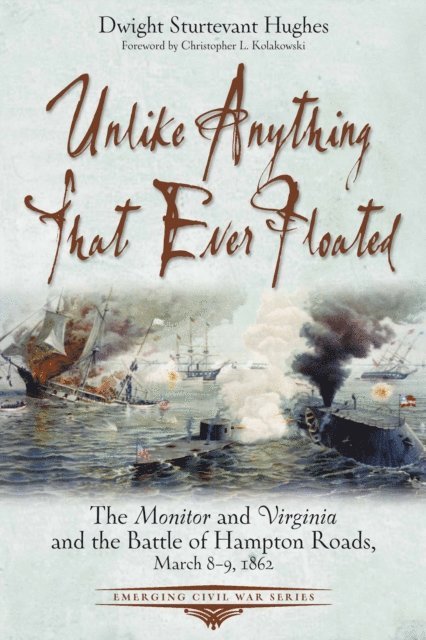
A history of the American Civil War naval battle, the first confrontation between two Ironclads, featuring accounts from men who lived through it."Ironclad against ironclad, we maneuvered about the bay here and went at each other with mutual fierceness," reported Chief Engineer Alban Stimers following that momentous engagement between the USS Monitor and the CSS Virginia (ex USS Merrimack) in Hampton Roads, Sunday, March 9, 1862.The day before, the Rebel ram had obliterated two powerful Union warships and was poised to destroy more. That night, the revolutionary—not to say bizarre—Monitor slipped into harbor after hurrying down from New York through fierce gales that almost sank her. These metal monstrosities dueled in the morning, pounding away for hours with little damage to either. Who won is still debated.One Vermont reporter could hardly find words for Monitor: "It is in fact unlike anything that ever floated on Neptune''s bosom." The little vessel became an icon of American industrial ingenuity and strength. She redefined the relationship between men and machines in war. But beforehand, many feared she would not float. Captain John L. Worden: "Here was an unknown, untried vessel . . . an iron coffin-like ship of which the gloomiest predictions were made."The CSSVirginia was a paradigm of Confederate strategy and execution—the brainchild of innovative, dedicated, and courageous men, but the victim of hurried design, untested technology, poor planning and coordination, and a dearth of critical resources. Nevertheless, she obsolesced the entire U.S. Navy, threatened the strategically vital blockade, and disrupted General McClellan''s plans to take Richmond.From flaming, bloody decks of sinking ships, to the dim confines of the first rotating armored turret, to the smoky depths of a Rebel gundeck—with shells screaming, clanging, booming, and splashing all around—to the office of a worried president with his cabinet peering down the Potomac for a Rebel monster, this dramatic story unfolds through the accounts of men who lived it in Unlike Anything That Ever Floated.Praise for Unlike Anything That Ever Floated"Hughes''s blow-by-blow account of the March 8–9 fighting at Hampton Roads can be considered among the finest short-form narrative treatments of those events. . . . [It] resides in the top rank of ECW series volumes." —Civil War Books and Authors"What makes Hughes''s account so engrossing is that it is written in much the way as a novel." —Civil War News