Eckhard Kessler – författare
Visar alla böcker från författaren Eckhard Kessler. Handla med fri frakt och snabb leverans.
6 produkter
The Cambridge History of Renaissance Philosophy
Av C. B. Schmitt, Quentin Skinner m. fl.
Inbunden, 1988
4023 kr
Lägg i varukorg
The Cambridge History of Renaissance Philosophy, published in 1988, offers a balanced and comprehensive account of philosophical thought from the middle of the fourteenth century to the emergence of modern philosophy. This was the first volume in English to synthesise for a wider audience the …
The Cambridge History of Renaissance Philosophy
Av C. B. Schmitt, Quentin Skinner m. fl.
Häftad, 1990
1449 kr
Lägg i varukorg
The Cambridge History of Renaissance Philosophy, published in 1988, offers a balanced and comprehensive account of philosophical thought from the middle of the fourteenth century to the emergence of modern philosophy. This was the first volume in English to synthesise for a wider audience the …
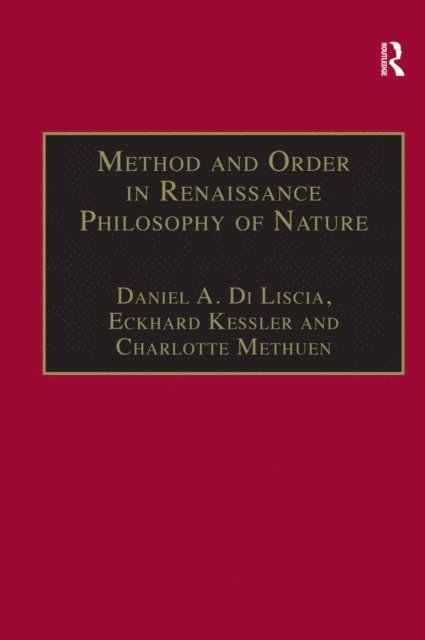
Method and Order in Renaissance Philosophy of Nature
The Aristotle Commentary Tradition
Av Daniel A. Di Liscia, Eckhard Kessler
Inbunden, 1998
3643 kr
Lägg i varukorg
The volume results from a seminar sponsored by the ’Foundation for Intellectual History’ at the Herzog August Bibliothek, Wolfenbüttel, in 1992. Starting with the theory of regressus as displayed in its most developed form by William Wallace, these papers enter the vast field of the Renaissance …
Method and Order in Renaissance Philosophy of Nature
The Aristotle Commentary Tradition
Av Eckhard Kessler, Daniel A. Di Liscia
E-bok, 2016
831 kr
Lägg i varukorg
The volume results from a seminar sponsored by the ’Foundation for Intellectual History’ at the Herzog August Bibliothek, Wolfenbüttel, in 1992. Starting with the theory of regressus as displayed in its most developed form by William Wallace, these papers enter the vast field of the …
Method and Order in Renaissance Philosophy of Nature
The Aristotle Commentary Tradition
Av Eckhard Kessler, Daniel A. Di Liscia
E-bok, 2016
831 kr
Lägg i varukorg
The volume results from a seminar sponsored by the ’Foundation for Intellectual History’ at the Herzog August Bibliothek, Wolfenbüttel, in 1992. Starting with the theory of regressus as displayed in its most developed form by William Wallace, these papers enter the vast field of the …
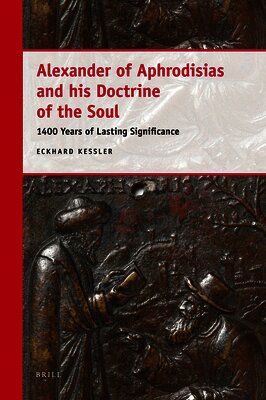
Alexander of Aphrodisias and his Doctrine of the Soul
1400 Years of Lasting Significance
Inbunden, 2011
1609 kr
Lägg i varukorg
This book describes the doctrine and impact of Alexander of Aphrodisias, the second-century commentator on Aristotle, through the centuries and up to his sixteenth-century role as the clandestine prompter of a new philosophy of nature. In the millennium after his death, Alexander first served the …