Daniel A. Di Liscia – författare
Visar alla böcker från författaren Daniel A. Di Liscia. Handla med fri frakt och snabb leverans.
5 produkter
Method and Order in Renaissance Philosophy of Nature
The Aristotle Commentary Tradition
Av Daniel A. Di Liscia, Eckhard Kessler
Inbunden, 1998
3643 kr
Lägg i varukorg
The volume results from a seminar sponsored by the ’Foundation for Intellectual History’ at the Herzog August Bibliothek, Wolfenbüttel, in 1992. Starting with the theory of regressus as displayed in its most developed form by William Wallace, these papers enter the vast field of the Renaissance …
Method and Order in Renaissance Philosophy of Nature
The Aristotle Commentary Tradition
Av Eckhard Kessler, Daniel A. Di Liscia
E-bok, 2016
831 kr
Lägg i varukorg
The volume results from a seminar sponsored by the ’Foundation for Intellectual History’ at the Herzog August Bibliothek, Wolfenbüttel, in 1992. Starting with the theory of regressus as displayed in its most developed form by William Wallace, these papers enter the vast field of the …
Method and Order in Renaissance Philosophy of Nature
The Aristotle Commentary Tradition
Av Eckhard Kessler, Daniel A. Di Liscia
E-bok, 2016
831 kr
Lägg i varukorg
The volume results from a seminar sponsored by the ’Foundation for Intellectual History’ at the Herzog August Bibliothek, Wolfenbüttel, in 1992. Starting with the theory of regressus as displayed in its most developed form by William Wallace, these papers enter the vast field of the …
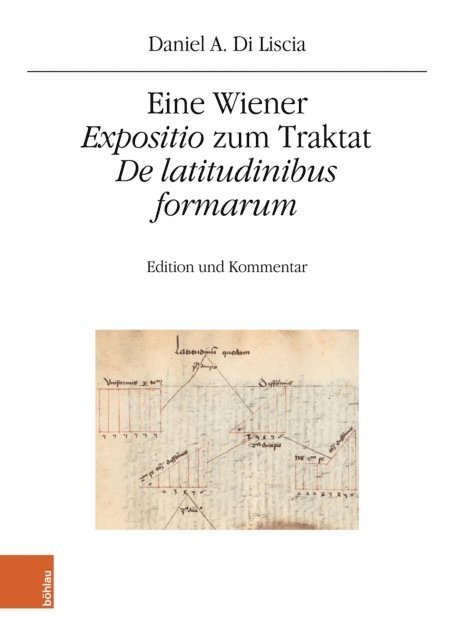
Eine Wiener "Expositio" zum Traktat "De latitudinibus formarum"
Edition und Kommentar
E-bok, 2023
755 kr
Lägg i varukorg
Der Band behandelt eine im 15. Jahrhundert an der Wiener Universität entstandene Auslegung zum weitverbreiteten Tractatus de latitudinibus formarum. Diese Formlatitudenlehre sucht die Vielfalt der intensiven Variationen der Qualitäten in den Griff zu bekommen. Der anonyme Autor des hier edierten …
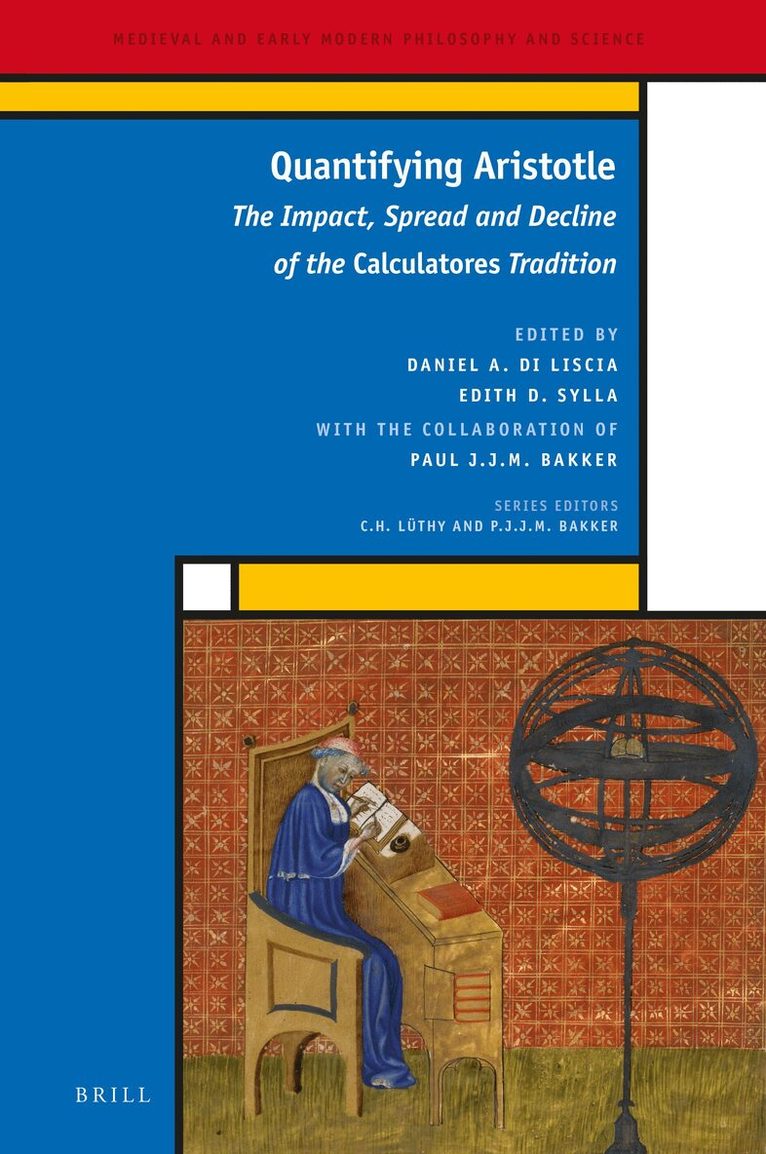
Quantifying Aristotle
The Impact, Spread and Decline of the Calculatores Tradition
Inbunden, 2022
2765 kr
Lägg i varukorg
Aristotelian philosophy is generally regarded as incompatible with the mathematical methods and principles that form the basis of modern science. This book offers an entirely new perspective on this presumed incompatibility. It surveys the tradition of the Oxford Calculators from its beginnings in …