Edoardo Gaffeo - Böcker
Visar alla böcker från författaren Edoardo Gaffeo. Handla med fri frakt och snabb leverans.
4 produkter
4 produkter
554 kr
Skickas inom 10-15 vardagar
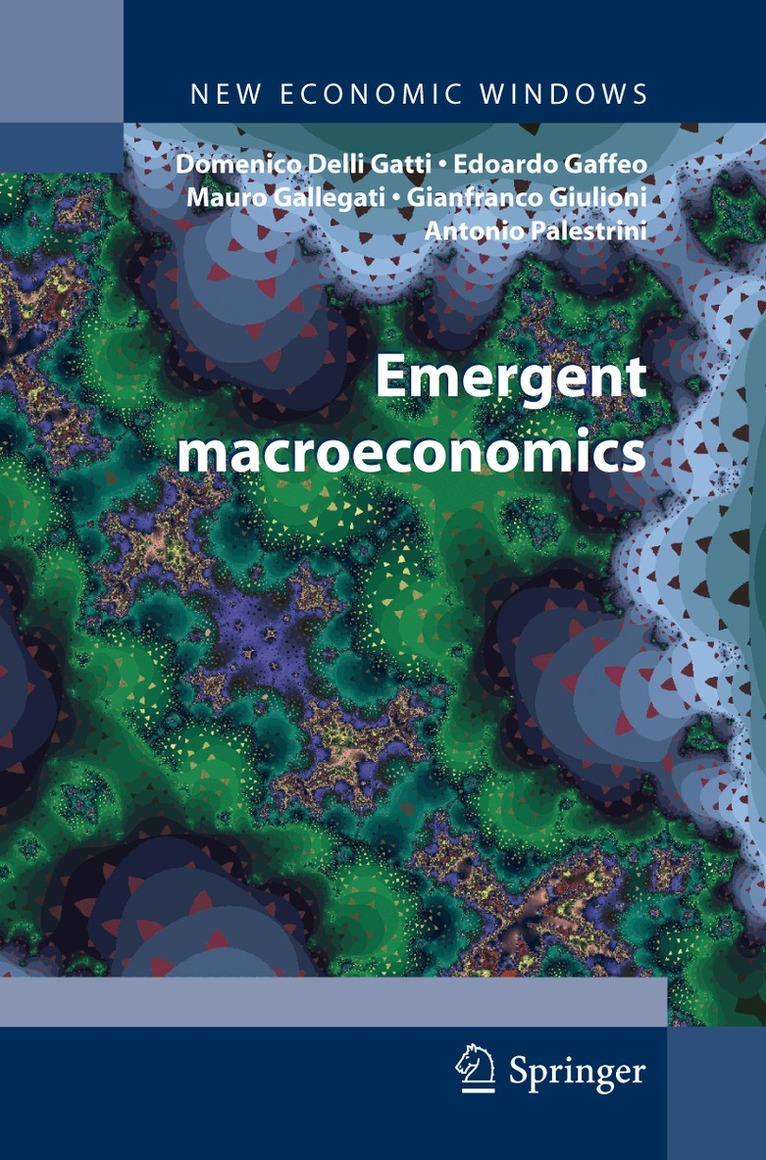
by exploiting the disequilibrium and non linear relationships among economic aggregates. Prom an empirical point of view, this approach resemblaces the old NBER view, according to which: "the business cycle [. . . ] consists of - pansions occurring at about the same time in many economic activities, f- lowed by similairly general recessions, contractions, and revivals which merge into the expansion phase of the next cyxle" (Burns and Mitchell, 1946). They add that the movement, although recurrent, is not periodic, lasting from 1 to 12 years, and it is not divisible into shorter cycles. Of course, both approaches are not free from limits and inconsistencies. In spite of the equilibrium approach having nowadays became the workhorse of modern macroeconomics, for example, their users still find enormous d- ficulties in explaining why small shocks produce large fluctuations. A well known argument in multi sector real business cycle models (see e. g. Long and Plosser, 1983) is that as the number of sectors or industries considered in the analysis becomes large, aggregate volatility must tend to zero very quickly. This result, which follows directly from the Law of Large Numbers (LLN), rests on the hypothesis that each sector is periodically buffeted with idiosyncratic, identically and independently distributed shocks to Total F- tor Productivity (TFP).
554 kr
Skickas inom 10-15 vardagar
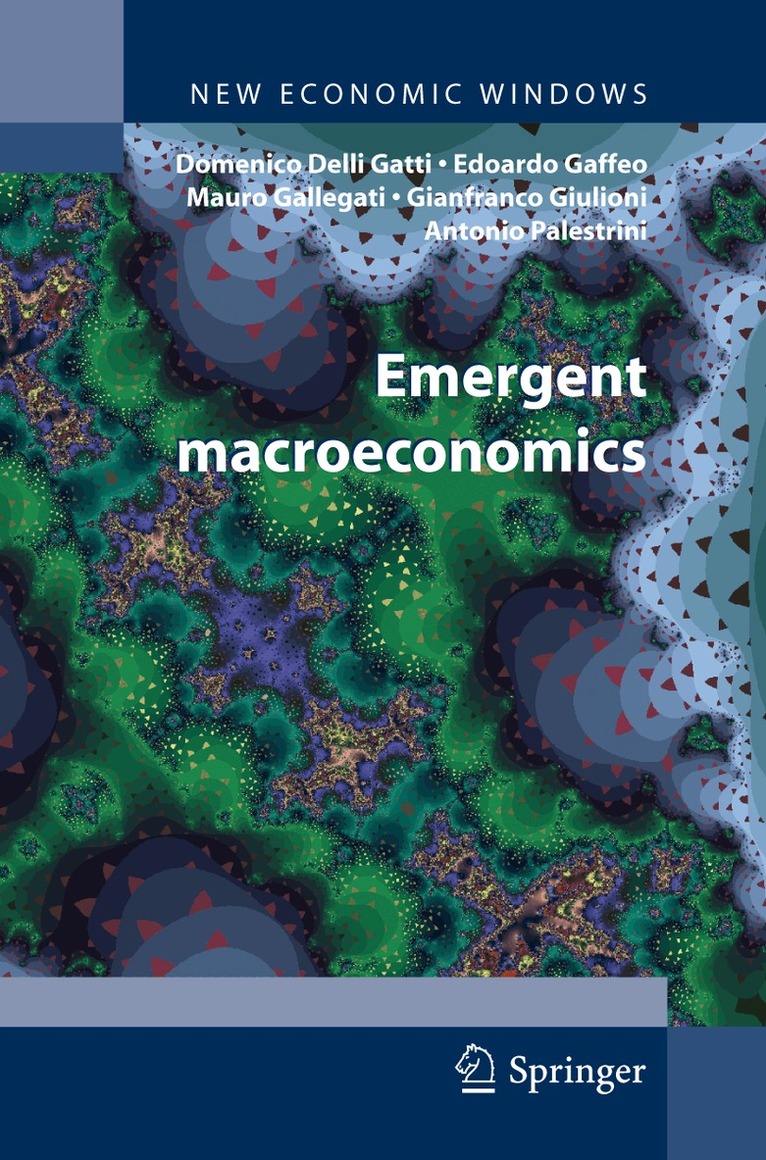
by exploiting the disequilibrium and non linear relationships among economic aggregates. Prom an empirical point of view, this approach resemblaces the old NBER view, according to which: "the business cycle [. . . ] consists of - pansions occurring at about the same time in many economic activities, f- lowed by similairly general recessions, contractions, and revivals which merge into the expansion phase of the next cyxle" (Burns and Mitchell, 1946). They add that the movement, although recurrent, is not periodic, lasting from 1 to 12 years, and it is not divisible into shorter cycles. Of course, both approaches are not free from limits and inconsistencies. In spite of the equilibrium approach having nowadays became the workhorse of modern macroeconomics, for example, their users still find enormous d- ficulties in explaining why small shocks produce large fluctuations. A well known argument in multi sector real business cycle models (see e. g. Long and Plosser, 1983) is that as the number of sectors or industries considered in the analysis becomes large, aggregate volatility must tend to zero very quickly. This result, which follows directly from the Law of Large Numbers (LLN), rests on the hypothesis that each sector is periodically buffeted with idiosyncratic, identically and independently distributed shocks to Total F- tor Productivity (TFP).
554 kr
Skickas inom 10-15 vardagar
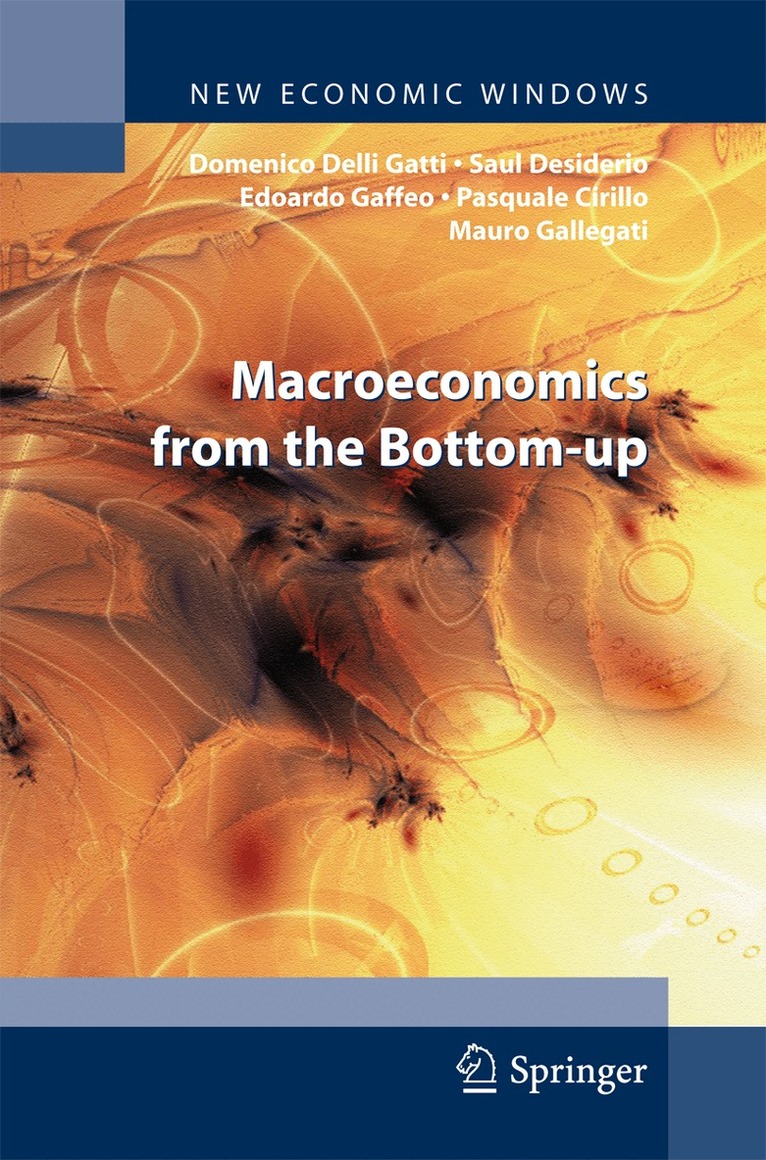
This book arose from our conviction that the NNS-DSGE approach to the analysis of aggregate market outcomes is fundamentally flawed. The practice of overcoming the SMD result by recurring to a fictitious RA leads to insurmountable methodological problems and lies at the root of DSGE models’ failure to satisfactorily explain real world features, like exchange rate and banking crises, bubbles and herding in financial markets, swings in the sentiment of consumers and entrepreneurs, asymmetries and persistence in aggregate variables, and so on. At odds with this view, our critique rests on the premise that any modern macroeconomy should be modeled instead as a complex system of heterogeneous interacting individuals, acting adaptively and autonomously according to simple and empirically validated rules of thumb.We call our proposed approach Bottom-up Adaptive Macroeconomics (BAM). The reason why we claim that the contents of this book can be inscribed in the realm of macroeconomics is threefold:i) We are looking for a framework that helps us to think coherently about the interrelationships among two or more markets. In what follows, in particular, three markets will be considered: the markets for goods, labor and loanable funds. In this respect, real time matters: what happens in one market depends on what has happened, on what is happening, or on what will happen in other markets. This implies that intertemporal coordination issues cannot be ignored.ii) Eventually, it’s all about prices and quantities. However, we are mostly interested in aggregate prices and quantities, that is indexes built from the dispersed outcomes of the decentralized transactions of a large population of heterogeneous individuals. Each individual acts purposefully, but she knows anything about the levels of prices and quantities which clear markets in the aggregate.iii) In the hope of being allowed to purport scientific claims, BAM relies on the assumption that individual purposefulbehaviours aggregates into regularities. Macro behaviour, however, can depart radically from what the individual units are trying to accomplish. It is in this sense that aggregate outcomes emerge from individual actions and interactions.
554 kr
Skickas inom 10-15 vardagar
This book arose from our conviction that the NNS-DSGE approach to the analysis of aggregate market outcomes is fundamentally flawed. The practice of overcoming the SMD result by recurring to a fictitious RA leads to insurmountable methodological problems and lies at the root of DSGE models’ failure to satisfactorily explain real world features, like exchange rate and banking crises, bubbles and herding in financial markets, swings in the sentiment of consumers and entrepreneurs, asymmetries and persistence in aggregate variables, and so on. At odds with this view, our critique rests on the premise that any modern macroeconomy should be modeled instead as a complex system of heterogeneous interacting individuals, acting adaptively and autonomously according to simple and empirically validated rules of thumb.We call our proposed approach Bottom-up Adaptive Macroeconomics (BAM). The reason why we claim that the contents of this book can be inscribed in the realm of macroeconomics is threefold:i) We are looking for a framework that helps us to think coherently about the interrelationships among two or more markets. In what follows, in particular, three markets will be considered: the markets for goods, labor and loanable funds. In this respect, real time matters: what happens in one market depends on what has happened, on what is happening, or on what will happen in other markets. This implies that intertemporal coordination issues cannot be ignored.ii) Eventually, it’s all about prices and quantities. However, we are mostly interested in aggregate prices and quantities, that is indexes built from the dispersed outcomes of the decentralized transactions of a large population of heterogeneous individuals. Each individual acts purposefully, but she knows anything about the levels of prices and quantities which clear markets in the aggregate.iii) In the hope of being allowed to purport scientific claims, BAM relies on the assumption that individual purposefulbehaviours aggregates into regularities. Macro behaviour, however, can depart radically from what the individual units are trying to accomplish. It is in this sense that aggregate outcomes emerge from individual actions and interactions.