Elizabeth A. Bohls - Böcker
Visar alla böcker från författaren Elizabeth A. Bohls. Handla med fri frakt och snabb leverans.
5 produkter
5 produkter
158 kr
Skickas
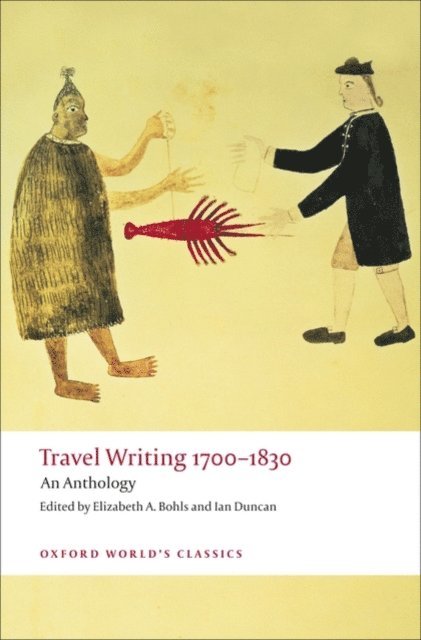
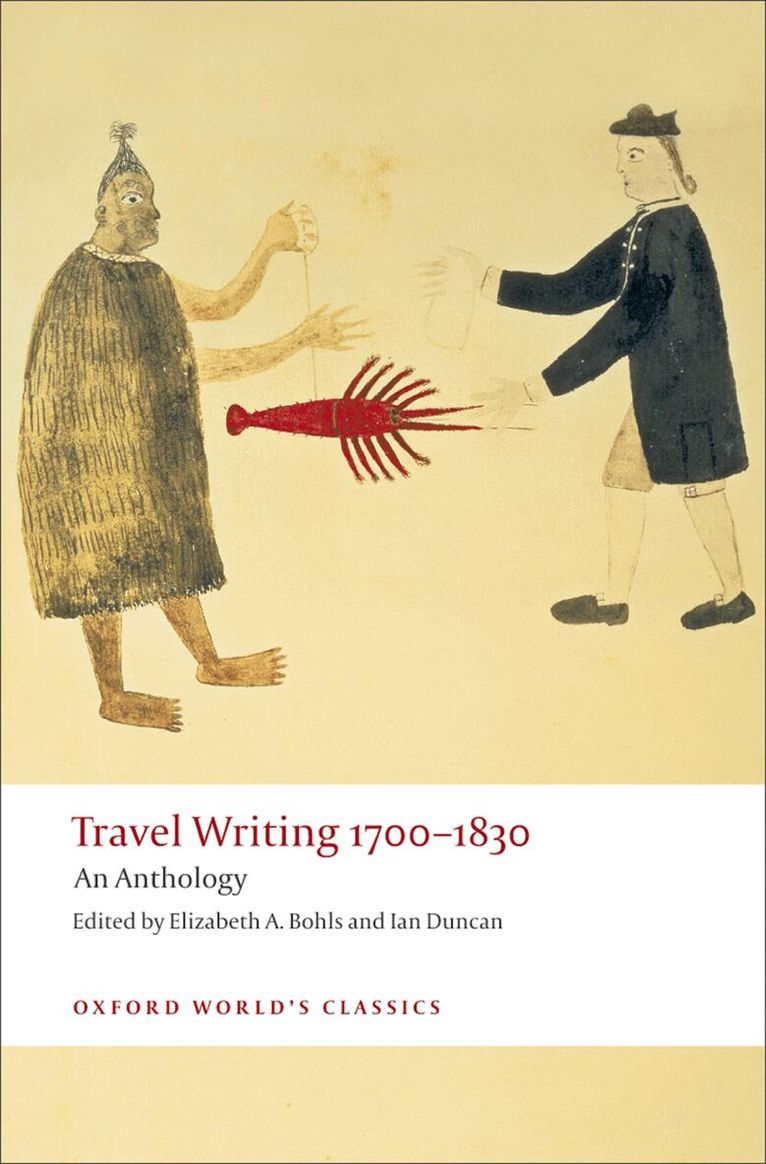
'How is the mind agitated and bewildered, at being thus, as it were, placed on the borders of a new world!' - William Bartram'Thus you see, dear sister, the manners of mankind do not differ so widely as our voyage writers would have us believe.' - Mary Wortley MontaguWith widely varied motives - scientific curiosity, commerce, colonization, diplomacy, exploration, and tourism - British travellers fanned out to every corner of the world in the period the Critical Review labelled the 'Age of Peregrination'. The Empire, already established in the Caribbean and North America, was expanding in India and Africa and founding new outposts in the Pacific in the wake of Captain Cook's voyages. In letters, journals, and books, travellers wrote at first-hand of exotic lands and beautiful scenery, and encounters with strange peoples and dangerous wildlife. They conducted philosophical and political debates in print about slavery and the French Revolution, and their writing often affords unexpected insights into the writers themselves. This anthology brings together the best writing from authors such as Daniel Defoe, Celia Fiennes, Mary Wollstonecraft, Olaudah Equiano, Mungo Park, and many others, to provide a comprehensive selection from this emerging literary genre. ABOUT THE SERIES: For over 100 years Oxford World's Classics has made available the widest range of literature from around the globe. Each affordable volume reflects Oxford's commitment to scholarship, providing the most accurate text plus a wealth of other valuable features, including expert introductions by leading authorities, helpful notes to clarify the text, up-to-date bibliographies for further study, and much more.
Del 13 - Cambridge Studies in Romanticism
Women Travel Writers and the Language of Aesthetics, 1716-1818
Häftad, Engelska, 2004
644 kr
Skickas inom 7-10 vardagar
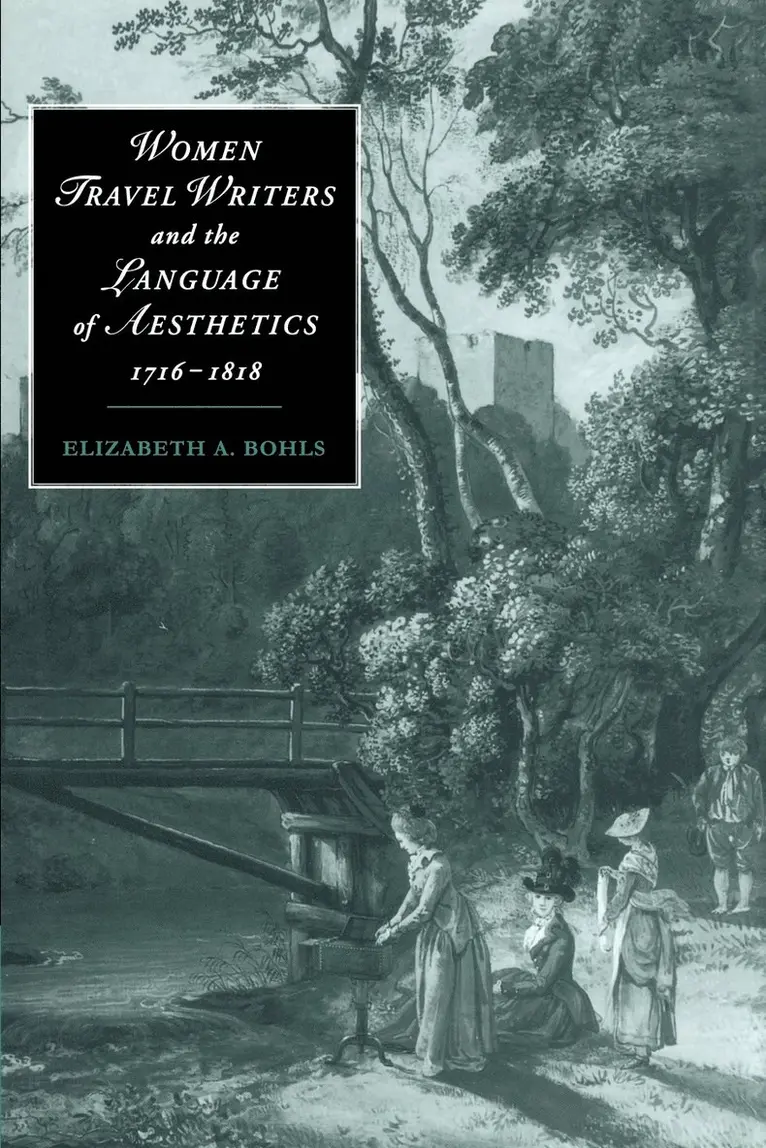
British readers of the eighteenth and early nineteenth centuries eagerly consumed books of travel in an age of imperial expansion that was also the formative period of modern aesthetics. Beauty, sublimity, sensuous surfaces, and scenic views became conventions of travel writing as Britons applied familiar terms to unfamiliar places around the globe. The social logic of aesthetics, argues Elizabeth Bohls, constructed women, the labouring classes, and non-Europeans as foils against which to define the 'man of taste' as an educated, property-owning gentleman. Women writers from Mary Wortley Montagu to Mary Shelley resisted this exclusion from gentlemanly privilege, and their writings re-examine and question aesthetic conventions such as the concept of disinterested contemplation, subtly but insistently exposing its vested interests. Bohls' study expands our awareness of women's intellectual presence in Romantic literature, and suggests Romanticism's sources at the peripheries of empire rather than at its centre.
635 kr
Skickas inom 3-6 vardagar
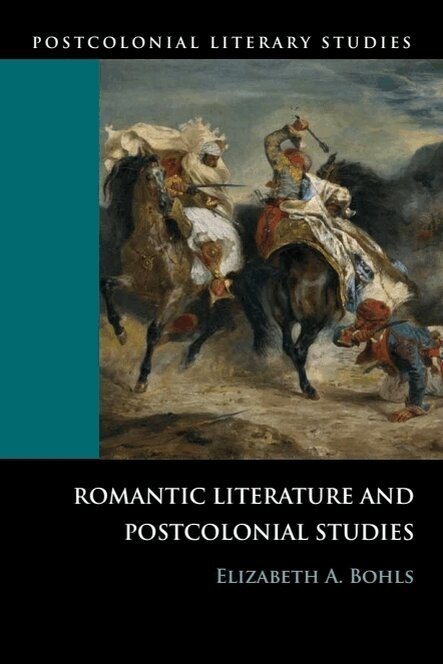
Examines the relationship between Romantic writing and the rapidly expanding British EmpireLiterature played a crucial role in constructing and contesting the modern culture of empire that was fully in place by the start of the Victorian period. Postcolonial criticism's concern with issues of geopolitics, race and gender, subalternity and exoticism shape discussions of works by major authors such as Blake, Coleridge, Percy and Mary Shelley, Austen and Scott, as well as their less familiar contemporaries.Key Features:Explains how key theoretical concerns of postcolonial studies - imaginary geography, Otherness & difference and cultural hybridity - have dramatically changed our understanding of Romantic literatureDemonstrates how selected texts, in a range of genres, are illuminated by postcolonial criticismIncludes a bibliographical essay along with an up-to-date bibliography of criticism, editions of primary works and selected historical materials
Del 108 - Cambridge Studies in Romanticism
Slavery and the Politics of Place
Representing the Colonial Caribbean, 1770-1833
Inbunden, Engelska, 2014
1 371 kr
Skickas inom 7-10 vardagar
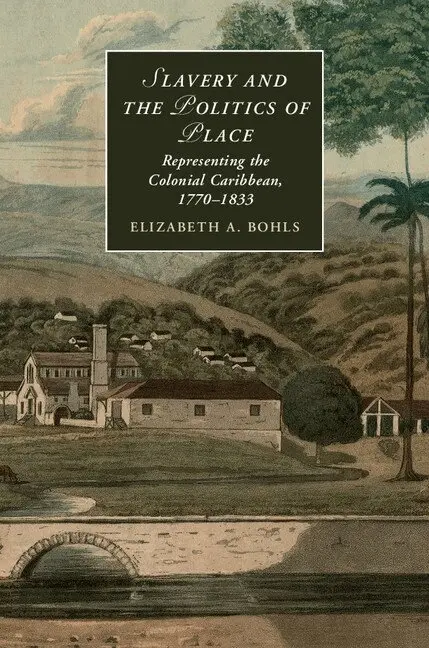
Geography played a key role in Britain's long national debate over slavery. Writers on both sides of the question represented the sites of slavery - Africa, the Caribbean, and the British Isles - as fully imagined places and the basis for a pro- or anti-slavery political agenda. With the help of twenty-first-century theories of space and place, Elizabeth A. Bohls examines the writings of planters, slaves, soldiers, sailors, and travellers whose diverse geographical and social locations inflect their representations of slavery. She shows how these writers use discourses of aesthetics, natural history, cultural geography, and gendered domesticity to engage with the slavery debate. Six interlinked case studies, including Scottish mercenary John Stedman and domestic slave Mary Prince, examine the power of these discourses to represent the places of slavery, setting slaves' narratives in dialogue with pro-slavery texts, and highlighting in the latter previously unnoticed traces of the enslaved.
Del 108 - Cambridge Studies in Romanticism
Slavery and the Politics of Place
Representing the Colonial Caribbean, 1770-1833
Häftad, Engelska, 2017
493 kr
Skickas inom 7-10 vardagar
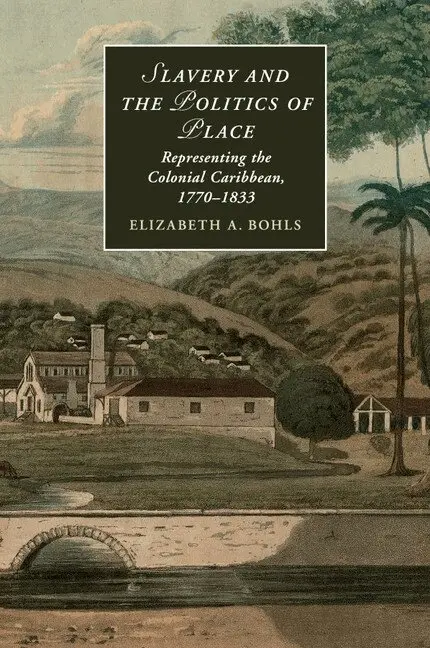
Geography played a key role in Britain's long national debate over slavery. Writers on both sides of the question represented the sites of slavery - Africa, the Caribbean, and the British Isles - as fully imagined places and the basis for a pro- or anti-slavery political agenda. With the help of twenty-first-century theories of space and place, Elizabeth A. Bohls examines the writings of planters, slaves, soldiers, sailors, and travellers whose diverse geographical and social locations inflect their representations of slavery. She shows how these writers use discourses of aesthetics, natural history, cultural geography, and gendered domesticity to engage with the slavery debate. Six interlinked case studies, including Scottish mercenary John Stedman and domestic slave Mary Prince, examine the power of these discourses to represent the places of slavery, setting slaves' narratives in dialogue with pro-slavery texts, and highlighting in the latter previously unnoticed traces of the enslaved.