Ellen C. Garland – författare
Visar alla böcker från författaren Ellen C. Garland. Handla med fri frakt och snabb leverans.
4 produkter
4 produkter
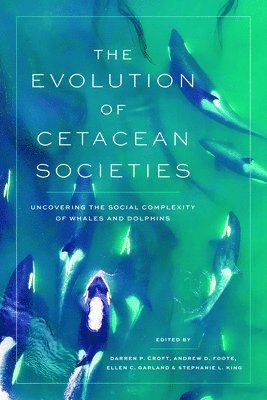
Evolution of Cetacean Societies
Uncovering the Social Complexity of Whales and Dolphins
Inbunden, Engelska, 2026
1 075 kr
Skickas inom 7-10 vardagar
From leading cetacean biologists, an up-to-date, comprehensive collection exploring advancements in our understanding of cetacean ecology, behavior, and societies. Cetaceans—whales, dolphins, and porpoises—represent an evolutionary peak with respect to their advanced cognitive capacities; flexible communication systems; and structured, multilevel societies. Indeed, the social lives of whales and dolphins have long fascinated scientists and the public alike. The Evolution of Cetacean Societies provides a comprehensive overview of the significant advancements made in studying cetacean behavior and ecology over the last twenty-five years, focusing on our growing understanding of these animals’ complex social lives. Bringing together scientists from multiple disciplines, the volume summarizes key innovations and progress related to studying cetacean societies’ cultural and genetic basis, their complex social structures, their use of cooperation and patterns of social conflict, and their significant interactions with humans. Each chapter provides an in-depth account of the social lives of whales and dolphins, incorporating the latest cutting-edge research from genomics, communication, network analysis, and animal culture to explain how these animals form societies, maintain relationships, and share information. The final chapters focus on the existential threats facing these diverse and charismatic species, how human-cetacean interactions have shaped our perceptions, and what scientists can learn from their diverse social lives by championing researcher diversity in marine mammal science. The result is an essential and forward-looking book that both contextualizes the lessons of the past two decades and questions the challenges these enigmatic species might face in the future. Published in 2000 by Chicago, Cetacean Societies: Field Studies of Dolphins and Whales, edited by Janet Mann, Richard C. Connor, Peter Tyack, and Hal Whitehead, inspired a generation of marine biologists. In this new volume, Darren P. Croft, Andrew D. Foote, Ellen C. Garland, and Stephanie L. King—all respected cetacean researchers—offer a worthy successor.
Evolution of Cetacean Societies
Uncovering the Social Complexity of Whales and Dolphins
Häftad, Engelska, 2026
402 kr
Skickas inom 7-10 vardagar
From leading cetacean biologists, an up-to-date, comprehensive collection exploring advancements in our understanding of cetacean ecology, behavior, and societies. Cetaceans—whales, dolphins, and porpoises—represent an evolutionary peak with respect to their advanced cognitive capacities; flexible communication systems; and structured, multilevel societies. Indeed, the social lives of whales and dolphins have long fascinated scientists and the public alike. The Evolution of Cetacean Societies provides a comprehensive overview of the significant advancements made in studying cetacean behavior and ecology over the last twenty-five years, focusing on our growing understanding of these animals’ complex social lives. Bringing together scientists from multiple disciplines, the volume summarizes key innovations and progress related to studying cetacean societies’ cultural and genetic basis, their complex social structures, their use of cooperation and patterns of social conflict, and their significant interactions with humans. Each chapter provides an in-depth account of the social lives of whales and dolphins, incorporating the latest cutting-edge research from genomics, communication, network analysis, and animal culture to explain how these animals form societies, maintain relationships, and share information. The final chapters focus on the existential threats facing these diverse and charismatic species, how human-cetacean interactions have shaped our perceptions, and what scientists can learn from their diverse social lives by championing researcher diversity in marine mammal science. The result is an essential and forward-looking book that both contextualizes the lessons of the past two decades and questions the challenges these enigmatic species might face in the future. Published in 2000 by Chicago, Cetacean Societies: Field Studies of Dolphins and Whales, edited by Janet Mann, Richard C. Connor, Peter Tyack, and Hal Whitehead, inspired a generation of marine biologists. In this new volume, Darren P. Croft, Andrew D. Foote, Ellen C. Garland, and Stephanie L. King—all respected cetacean researchers—offer a worthy successor.
1 021 kr
Skickas inom 5-8 vardagar
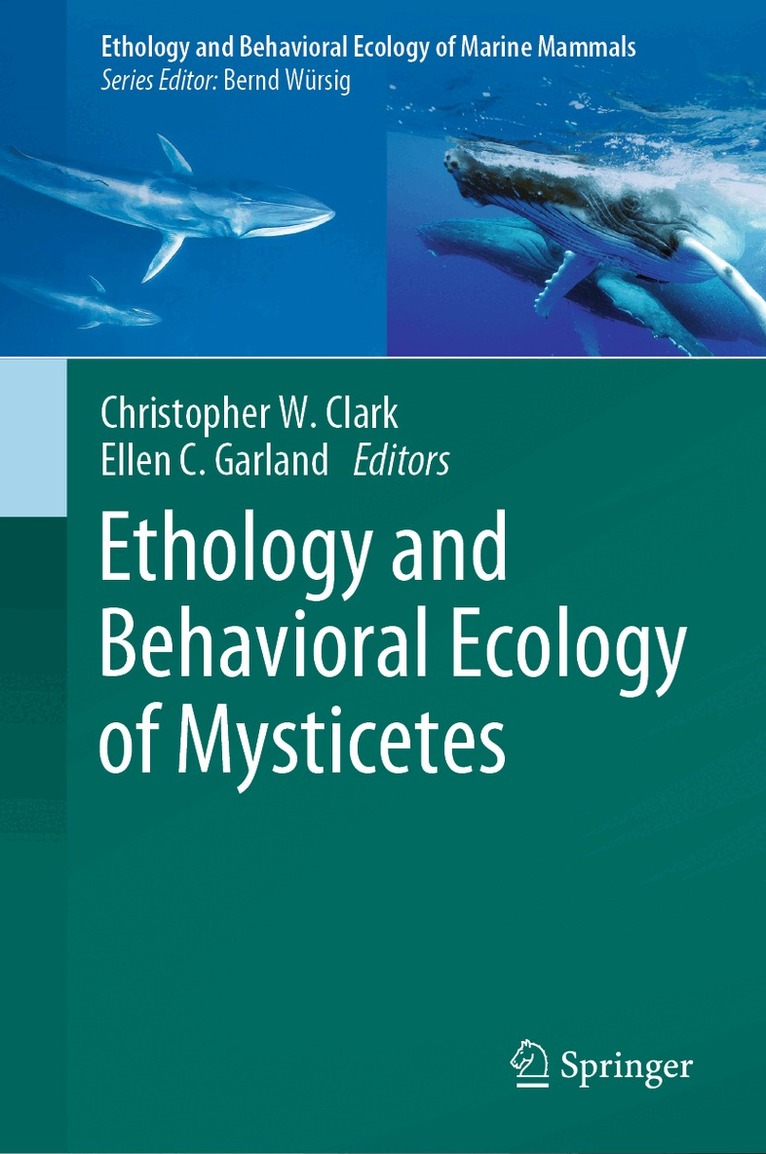
In this book, an international team of leading marine mammal scientists, with a remarkably diverse set of backgrounds and areas of expertise, lead you through a synthesis of current knowledge on baleen whales.
1 021 kr
Skickas inom 5-8 vardagar
In this book, an international team of leading marine mammal scientists, with a remarkably diverse set of backgrounds and areas of expertise, lead you through a synthesis of current knowledge on baleen whales. Baleen whales are the largest animals ever to have lived on this planet. They also have the lowest and most intense voices on Earth, most likely evolved to take advantage of ocean acoustic transmission conditions so as to be detectable across ocean basins. Some baleen whales can live to be 150-200 years old. They migrate many thousands of kilometers between feeding and breeding areas. They produce songs and calls that serve as behavioral foundations for establishing, maintaining and expanding their cultural identities. To conclude that we know the behavioral limits of these large brained, long-lived animals would be naïve. As baleen whale scientists, we are still beginning to comprehend the enormous complexities and natural histories of these remarkable animals.Today, the fact that whales sing is known throughout much of the world. This awareness started 50 years ago with the publication and popularization of a collection of humpback song recordings that motivated research into baleen whale behavioral ethology. In this book’s chapters, a reader’s experiences will stretch from learning about baleen whale laryngeal anatomy associated with their different voices to learning about the vast ocean areas over which their voices can be heard and the emerging complexities of their culturally defined societies. These are accompanied by chapters on the fundamental ethological contexts of socializing, migrating, and foraging. Two common themes permeate the book. One theme highlights the phenomenal increase in scientific knowledge achieved through technological advancements. The other theme recognizes the impacts of human-made activities on ocean acoustic environments and the resultant influences on the health and survival of individual whales and their populations. Although the book is intentionally ambitious in its scope, as scientists, we fully recognize that baleen whale science is still in its infancy. Many profound revelations await discovery by cohorts of young, multi-talented explorers, some of whom are stretching their wings in this volume and some of whom are reading these scientific stories for the first time.