Emma Rich - Böcker
Visar alla böcker från författaren Emma Rich. Handla med fri frakt och snabb leverans.
10 produkter
10 produkter
621 kr
Skickas inom 10-15 vardagar
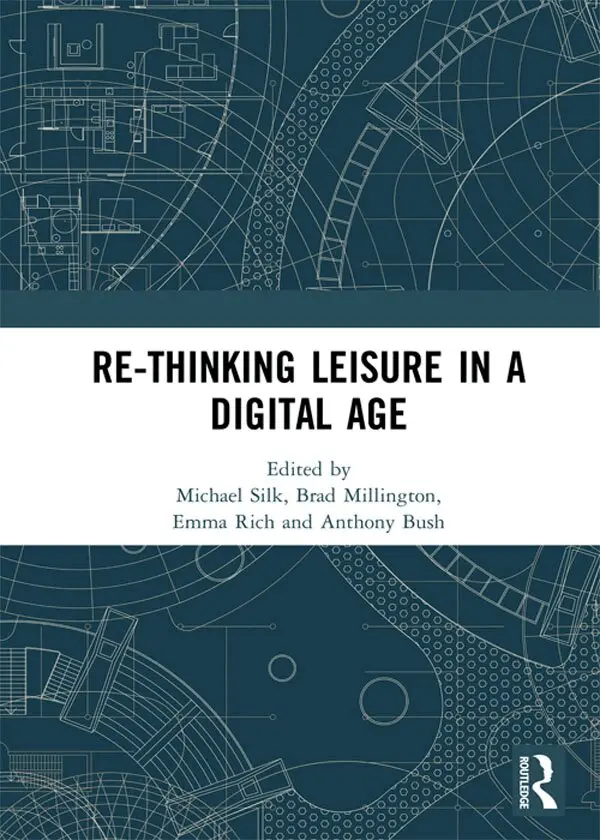
Digital worlds and cultures—social media, web 2.0, youtube, wearable technologies, health and fitness apps—dominate, if not order, our everyday lives. We are no longer ‘just’ consumers or readers of digital culture but active producers through facebook, twitter, Instagram, youtube and other emerging technologies. This book is predicated on the assumption that out understanding of our everyday lives should be informed by what is taking place in and through emerging technologies given these (virtual) environments provide a crucial context where traditional, categorical assumptions about the body, identity and leisure may be contested. Far from being ‘virtual’, the body is constituted within and through emerging technologies in material ways. Recent ‘moral panics’ over the role of digital cultures in teen suicide, digital drinking games, an endless array of homoerotic images of young bodies being linked with steroid use, disordered eating and body dissatisfaction, facebook games/fundraising campaigns (e.g. for breast cancer), movements devoted to exposing ‘everyday sexism’ / metoo, twitter abuse (of feminists, of athletes, of racist nature to name but a few), speak to the need for critical engagement with digital cultures. While some of the earlier techno-utopian visions offered the promise of digitality to give rise to participatory, user generator collaborations, within this book we provide critical engagement with digital technologies and what this means for our understandings of leisure cultures. The chapters originally published in a special issue in Leisure Studies.
2 103 kr
Skickas inom 10-15 vardagar
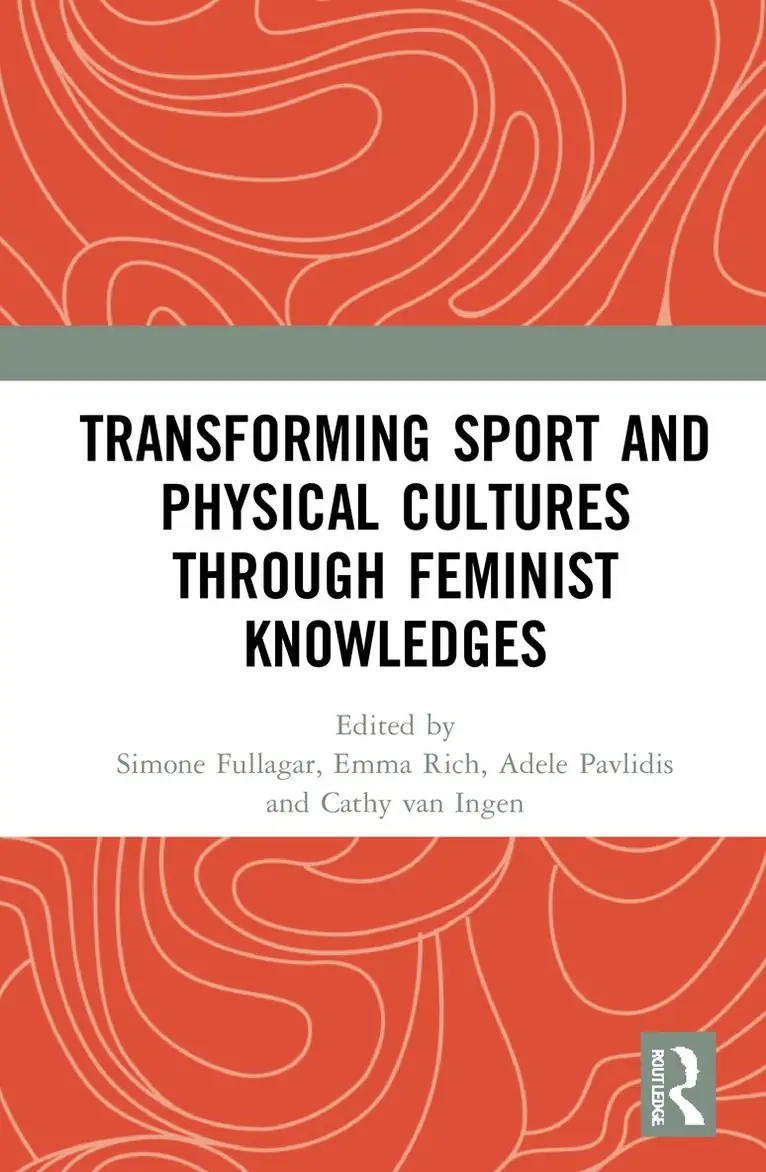
Transforming Sport and Physical Cultures through Feminist Knowledges contributes new perspectives on the entanglement of digital and physical cultures, more-than-human relations, post and decolonial ways of knowing, and how onto-epistemologies of sport come to matter. These perspectives are explored through a diverse array of topics, including, the embodiment of netball through Feminist Physical Cultural Studies; pregnant embodiment and implications of the postgenomic turn; posthumanist perspectives on women’s negotiation of affective body work and an autoethnographic account of how masculinity materialises through football; the mediation of gendered subjectivity through the digital-physical cultures of cycling; as well as how decolonial and postcolonial approaches identify the gendered and racialised relations of power in sport for development and football campaigns aimed at women’s empowerment. The thread that connects these chapters is the ‘doing’ of feminism as a generative knowledge practice that can transform ways of imagining, knowing, and affecting more equitable futures. This feminist collection contributes to the movement of ideas and transformation of knowledge within and across sport and physical cultures. Authors explore the power relations implicated in the gendered formation of physical cultures (across leisure, sport, the arts, tourism, well-being, and various embodied practices) from a range of disciplinary perspectives and theory-method approaches. The chapters in this book were originally published as a special issue of Leisure Sciences.
621 kr
Skickas inom 10-15 vardagar
Transforming Sport and Physical Cultures through Feminist Knowledges contributes new perspectives on the entanglement of digital and physical cultures, more-than-human relations, post and decolonial ways of knowing, and how onto-epistemologies of sport come to matter. These perspectives are explored through a diverse array of topics, including, the embodiment of netball through Feminist Physical Cultural Studies; pregnant embodiment and implications of the postgenomic turn; posthumanist perspectives on women’s negotiation of affective body work and an autoethnographic account of how masculinity materialises through football; the mediation of gendered subjectivity through the digital-physical cultures of cycling; as well as how decolonial and postcolonial approaches identify the gendered and racialised relations of power in sport for development and football campaigns aimed at women’s empowerment. The thread that connects these chapters is the ‘doing’ of feminism as a generative knowledge practice that can transform ways of imagining, knowing, and affecting more equitable futures. This feminist collection contributes to the movement of ideas and transformation of knowledge within and across sport and physical cultures. Authors explore the power relations implicated in the gendered formation of physical cultures (across leisure, sport, the arts, tourism, well-being, and various embodied practices) from a range of disciplinary perspectives and theory-method approaches. The chapters in this book were originally published as a special issue of Leisure Sciences.
2 166 kr
Skickas inom 10-15 vardagar
The entire infrastructure and culture of medicine is being transformed by digital technology, the Internet and mobile devices. Cyberspace is now regularly used to provide medical advice and medication, with great numbers of sufferers immersing themselves within virtual communities. What are the implications of this medicalization of cyberspace for how people make sense of health and identity? The Medicalization of Cyberspace is the first book to explore the relationship between digital culture and medical sociology. It examines how technology is redefining expectations of and relationships with medical culture, addressing the following questions: How will the rise of digital communities affect traditional notions of medical expertise? What will the medicalization of cyberspace mean in a new era of posthuman enhancements? How should we regard hype and exaggeration about science in the media and how can this encourage public engagement with bioethics?This book looks at the complex interactions between health, medicalization, cyberculture, the body and identity. It addresses topical issues, such as medical governance, reproductive rights, eating disorders, Web 2.0, and perspectives on posthumanism. It is essential reading for healthcare professionals and social, philosophical and cultural theorists of health.
569 kr
Skickas inom 10-15 vardagar
The entire infrastructure and culture of medicine is being transformed by digital technology, the Internet and mobile devices. Cyberspace is now regularly used to provide medical advice and medication, with great numbers of sufferers immersing themselves within virtual communities. What are the implications of this medicalization of cyberspace for how people make sense of health and identity? The Medicalization of Cyberspace is the first book to explore the relationship between digital culture and medical sociology. It examines how technology is redefining expectations of and relationships with medical culture, addressing the following questions: How will the rise of digital communities affect traditional notions of medical expertise? What will the medicalization of cyberspace mean in a new era of posthuman enhancements? How should we regard hype and exaggeration about science in the media and how can this encourage public engagement with bioethics?This book looks at the complex interactions between health, medicalization, cyberculture, the body and identity. It addresses topical issues, such as medical governance, reproductive rights, eating disorders, Web 2.0, and perspectives on posthumanism. It is essential reading for healthcare professionals and social, philosophical and cultural theorists of health.
2 044 kr
Skickas inom 10-15 vardagar
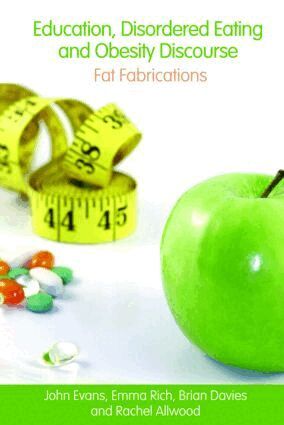
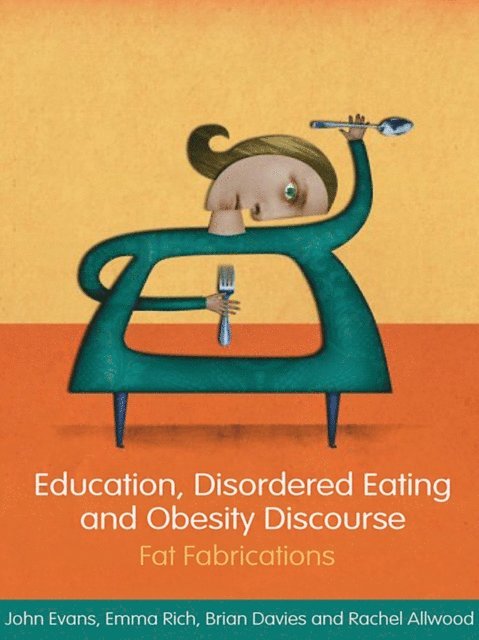
Eating less, exercising more and losing weight seem the obvious solution for the oncoming 'obesity epidemic'. Rarely, however, is thought given to how these messages are interpreted and whether they are in fact inherently healthy. Education, Disordered Eating and Obesity Discourse investigates how 'body centred talk' about weight, fat, food and exercise is recycled in schools, enters educational processes, and impacts on the identities and health of young people. Drawing on the experiences of young women who have developed eating disorders and research on international school curricula and the media, the authors challenge the veracity, substance and merits of contemporary 'obesity discourse'. By concentrating on previously unexplored aspects of the debate around weight and health, it is revealed how well-meaning advice can propel some children toward behaviour that seriously damages their health. This book is not only about 'eating disorders' and the people affected, but the effects of obesity discourse on everyone’s health as it enters public policy, educational practice and the cultural fabric of our lives. It will interest students, teachers, doctors, health professionals and researchers concerned with obesity and weight issues.
604 kr
Skickas inom 10-15 vardagar
Eating less, exercising more and losing weight seem the obvious solution for the oncoming 'obesity epidemic'. Rarely, however, is thought given to how these messages are interpreted and whether they are in fact inherently healthy. Education, Disordered Eating and Obesity Discourse investigates how 'body centred talk' about weight, fat, food and exercise is recycled in schools, enters educational processes, and impacts on the identities and health of young people. Drawing on the experiences of young women who have developed eating disorders and research on international school curricula and the media, the authors challenge the veracity, substance and merits of contemporary 'obesity discourse'. By concentrating on previously unexplored aspects of the debate around weight and health, it is revealed how well-meaning advice can propel some children toward behaviour that seriously damages their health. This book is not only about 'eating disorders' and the people affected, but the effects of obesity discourse on everyone’s health as it enters public policy, educational practice and the cultural fabric of our lives. It will interest students, teachers, doctors, health professionals and researchers concerned with obesity and weight issues.
2 103 kr
Skickas inom 10-15 vardagar
Digital worlds and cultures—social media, web 2.0, youtube, wearable technologies, health and fitness apps—dominate, if not order, our everyday lives. We are no longer ‘just’ consumers or readers of digital culture but active producers through facebook, twitter, Instagram, youtube and other emerging technologies. This book is predicated on the assumption that out understanding of our everyday lives should be informed by what is taking place in and through emerging technologies given these (virtual) environments provide a crucial context where traditional, categorical assumptions about the body, identity and leisure may be contested. Far from being ‘virtual’, the body is constituted within and through emerging technologies in material ways. Recent ‘moral panics’ over the role of digital cultures in teen suicide, digital drinking games, an endless array of homoerotic images of young bodies being linked with steroid use, disordered eating and body dissatisfaction, facebook games/fundraising campaigns (e.g. for breast cancer), movements devoted to exposing ‘everyday sexism’ / metoo, twitter abuse (of feminists, of athletes, of racist nature to name but a few), speak to the need for critical engagement with digital cultures. While some of the earlier techno-utopian visions offered the promise of digitality to give rise to participatory, user generator collaborations, within this book we provide critical engagement with digital technologies and what this means for our understandings of leisure cultures. The chapters originally published in a special issue in Leisure Studies.
2 166 kr
Skickas inom 10-15 vardagar
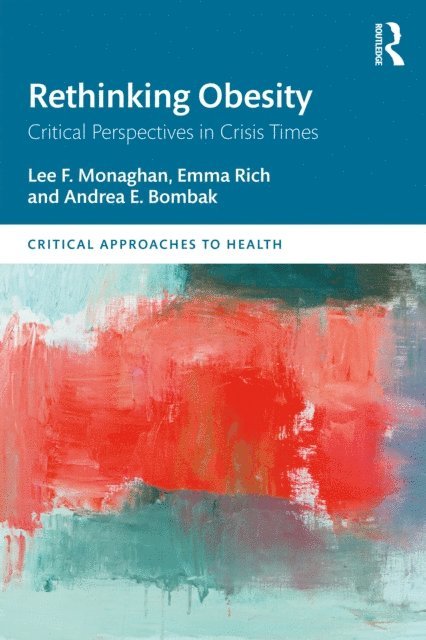
Theoretically informed and empirically grounded, Rethinking Obesity invites readers to reconsider the medical and public health framing of population weight (gain) as a massive global problem, epidemic or crisis. Attentive to social values, scientific uncertainty and possible harms, the book furthers critique of the weight-centred health paradigm and world war on obesity. Building upon existing international literature from critical weight studies, fat studies and critical obesity research, the book advances scholarship with reference to body politics and health policy, epidemiology and obesity science, media reporting and weight-related stigma.The authors resist the common moralised narrative that ‘the overweight majority’ are lazy, gluttonous, and personally responsible for their actual or potential ills and the solution ultimately necessitates individual lifestyle change. Critique is also extended to seemingly compassionate public health interventions that putatively avoid victim-blaming through an appeal to ‘the obesogenic environment’, a consequence of modern living. Empirical case studies are grounded in women’s repeated and often frustrating experiences of dieting and schoolgirls’ encounters with fat pedagogy, which challenges dominant obesity discourse. Recognising that declared public health crises may become layered and cascade through society, this book also includes timely research on the COVID-19 pandemic response amidst concerns about lockdown weight-gain, heightened risk of infection and death among people deemed overweight and obese.Rethinking Obesity interrogates how social injustice is reproduced not only through cruelty but also through seemingly benevolent representations, pedagogies and policies. Alternative approaches and action, ranging from weight-inclusive health paradigms to broader social change, are also considered when seeking to foster collective hope in crisis times. This is valuable reading for students and researchers in medical sociology, social and population health sciences, physical education, critical weight and fat studies, and the social dimensions of the body.
584 kr
Skickas inom 10-15 vardagar
Theoretically informed and empirically grounded, Rethinking Obesity invites readers to reconsider the medical and public health framing of population weight (gain) as a massive global problem, epidemic or crisis. Attentive to social values, scientific uncertainty and possible harms, the book furthers critique of the weight-centred health paradigm and world war on obesity. Building upon existing international literature from critical weight studies, fat studies and critical obesity research, the book advances scholarship with reference to body politics and health policy, epidemiology and obesity science, media reporting and weight-related stigma.The authors resist the common moralised narrative that ‘the overweight majority’ are lazy, gluttonous, and personally responsible for their actual or potential ills and the solution ultimately necessitates individual lifestyle change. Critique is also extended to seemingly compassionate public health interventions that putatively avoid victim-blaming through an appeal to ‘the obesogenic environment’, a consequence of modern living. Empirical case studies are grounded in women’s repeated and often frustrating experiences of dieting and schoolgirls’ encounters with fat pedagogy, which challenges dominant obesity discourse. Recognising that declared public health crises may become layered and cascade through society, this book also includes timely research on the COVID-19 pandemic response amidst concerns about lockdown weight-gain, heightened risk of infection and death among people deemed overweight and obese.Rethinking Obesity interrogates how social injustice is reproduced not only through cruelty but also through seemingly benevolent representations, pedagogies and policies. Alternative approaches and action, ranging from weight-inclusive health paradigms to broader social change, are also considered when seeking to foster collective hope in crisis times. This is valuable reading for students and researchers in medical sociology, social and population health sciences, physical education, critical weight and fat studies, and the social dimensions of the body.