Lee F. Monaghan – författare
418 kr
Skickas inom 5-8 vardagar
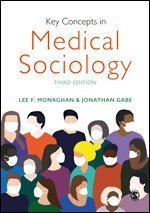
How do we understand health in relation to society? What role do social processes, structures and culture play in shaping our experiences of health and illness? How do we understand medicine and healthcare within a sociological framework? Drawing on international literature and examples, this new edition of Key Concepts in Medical Sociology: · Systematically explains the concepts that have preoccupied medical sociology from its inception, and which have shaped the field as it exists today. · Includes new entries, such as pandemics and epidemics, the environment, intersectionality, pharmaceuticalization, medical tourism and sexuality. · Begins each entry with a definition of the concept then examines its origins, development, strengths and weaknesses, and concludes with suggested further reading for independent learning. Key Concepts in Medical Sociology is essential reading for students in medical sociology as well as those undertaking professional training in health-related disciplines.
2 639 kr
Skickas inom 3-6 vardagar
567 kr
Skickas inom 10-15 vardagar
668 kr
Läs direkt efter köp
Is obesity really a public health problem and what does the construction of obesity as a health problem mean for men?
According to official statistics, the majority of men in nations such as England and the USA are overweight or obese. Public health officials, researchers, governments and various agencies are alarmed and have issued dire warnings about a global ‘obesity epidemic’. This perceived threat to public health seemingly legitimates declarations of war against what one US Surgeon General called ‘the terror within’. Yet, little is known about weight-related issues among everyday men in this context of symbolic or communicated violence.
Men and the War on Obesity is an original, timely and controversial study. Using observations from a mixed-sex slimming club, interviews with men whom medicine might label overweight or obese and other sources, this study urges a rethink of weight or fat as a public health issue and sometimes private trouble. Recognizing the sociological wisdom that things are not as they seem, it challenges obesity warmongering and the many battles it mandates or incites. This important book could therefore help to change current thinking and practices not only in relation to men but also women and children who are defined as overweight, obese or too fat. It will be of interest to students and researchers of gender and the body within sociology, gender studies and cultural studies as well as public health researchers, policymakers and practitioners.
668 kr
Läs direkt efter köp
Is obesity really a public health problem and what does the construction of obesity as a health problem mean for men?
According to official statistics, the majority of men in nations such as England and the USA are overweight or obese. Public health officials, researchers, governments and various agencies are alarmed and have issued dire warnings about a global ‘obesity epidemic’. This perceived threat to public health seemingly legitimates declarations of war against what one US Surgeon General called ‘the terror within’. Yet, little is known about weight-related issues among everyday men in this context of symbolic or communicated violence.
Men and the War on Obesity is an original, timely and controversial study. Using observations from a mixed-sex slimming club, interviews with men whom medicine might label overweight or obese and other sources, this study urges a rethink of weight or fat as a public health issue and sometimes private trouble. Recognizing the sociological wisdom that things are not as they seem, it challenges obesity warmongering and the many battles it mandates or incites. This important book could therefore help to change current thinking and practices not only in relation to men but also women and children who are defined as overweight, obese or too fat. It will be of interest to students and researchers of gender and the body within sociology, gender studies and cultural studies as well as public health researchers, policymakers and practitioners.
826 kr
Skickas inom 10-15 vardagar
2 222 kr
Skickas inom 10-15 vardagar
593 kr
Skickas inom 10-15 vardagar
957 kr
Läs direkt efter köp
957 kr
Läs direkt efter köp
647 kr
Läs direkt efter köp
Theoretically informed and empirically grounded, Rethinking Obesity invites readers to reconsider the medical and public health framing of population weight (gain) as a massive global problem, epidemic or crisis. Attentive to social values, scientific uncertainty and possible harms, the book furthers critique of the weight-centred health paradigm and world war on obesity. Building upon existing international literature from critical weight studies, fat studies and critical obesity research, the book advances scholarship with reference to body politics and health policy, epidemiology and obesity science, media reporting and weight-related stigma.
The authors resist the common moralised narrative that ‘the overweight majority’ are lazy, gluttonous, and personally responsible for their actual or potential ills and the solution ultimately necessitates individual lifestyle change. Critique is also extended to seemingly compassionate public health interventions that putatively avoid victim-blaming through an appeal to ‘the obesogenic environment’, a consequence of modern living. Empirical case studies are grounded in women’s repeated and often frustrating experiences of dieting and schoolgirls’ encounters with fat pedagogy, which challenges dominant obesity discourse. Recognising that declared public health crises may become layered and cascade through society, this book also includes timely research on the COVID-19 pandemic response amidst concerns about lockdown weight-gain, heightened risk of infection and death among people deemed overweight and obese.
Rethinking Obesity interrogates how social injustice is reproduced not only through cruelty but also through seemingly benevolent representations, pedagogies and policies. Alternative approaches and action, ranging from weight-inclusive health paradigms to broader social change, are also considered when seeking to foster collective hope in crisis times. This is valuable reading for students and researchers in medical sociology, social and population health sciences, physical education, critical weight and fat studies, and the social dimensions of the body.
647 kr
Läs direkt efter köp
Theoretically informed and empirically grounded, Rethinking Obesity invites readers to reconsider the medical and public health framing of population weight (gain) as a massive global problem, epidemic or crisis. Attentive to social values, scientific uncertainty and possible harms, the book furthers critique of the weight-centred health paradigm and world war on obesity. Building upon existing international literature from critical weight studies, fat studies and critical obesity research, the book advances scholarship with reference to body politics and health policy, epidemiology and obesity science, media reporting and weight-related stigma.
The authors resist the common moralised narrative that ‘the overweight majority’ are lazy, gluttonous, and personally responsible for their actual or potential ills and the solution ultimately necessitates individual lifestyle change. Critique is also extended to seemingly compassionate public health interventions that putatively avoid victim-blaming through an appeal to ‘the obesogenic environment’, a consequence of modern living. Empirical case studies are grounded in women’s repeated and often frustrating experiences of dieting and schoolgirls’ encounters with fat pedagogy, which challenges dominant obesity discourse. Recognising that declared public health crises may become layered and cascade through society, this book also includes timely research on the COVID-19 pandemic response amidst concerns about lockdown weight-gain, heightened risk of infection and death among people deemed overweight and obese.
Rethinking Obesity interrogates how social injustice is reproduced not only through cruelty but also through seemingly benevolent representations, pedagogies and policies. Alternative approaches and action, ranging from weight-inclusive health paradigms to broader social change, are also considered when seeking to foster collective hope in crisis times. This is valuable reading for students and researchers in medical sociology, social and population health sciences, physical education, critical weight and fat studies, and the social dimensions of the body.
2 246 kr
Skickas inom 10-15 vardagar
1 424 kr
Skickas
How do we understand health in relation to society? What role do social processes, structures and culture play in shaping our experiences of health and illness? How do we understand medicine and healthcare within a sociological framework? Drawing on international literature and examples, this new edition of Key Concepts in Medical Sociology: · Systematically explains the concepts that have preoccupied medical sociology from its inception, and which have shaped the field as it exists today. · Includes new entries, such as pandemics and epidemics, the environment, intersectionality, pharmaceuticalization, medical tourism and sexuality. · Begins each entry with a definition of the concept then examines its origins, development, strengths and weaknesses, and concludes with suggested further reading for independent learning. Key Concepts in Medical Sociology is essential reading for students in medical sociology as well as those undertaking professional training in health-related disciplines.
486 kr
Skickas
How do we understand health in relation to society? What role do social processes, structures and culture play in shaping our experiences of health and illness? How do we understand medicine and healthcare within a sociological framework? Drawing on international literature and examples, this new edition of Key Concepts in Medical Sociology: · Systematically explains the concepts that have preoccupied medical sociology from its inception, and which have shaped the field as it exists today. · Includes new entries, such as pandemics and epidemics, the environment, intersectionality, pharmaceuticalization, medical tourism and sexuality. · Begins each entry with a definition of the concept then examines its origins, development, strengths and weaknesses, and concludes with suggested further reading for independent learning. Key Concepts in Medical Sociology is essential reading for students in medical sociology as well as those undertaking professional training in health-related disciplines.