Eric Heinze - Böcker
Visar alla böcker från författaren Eric Heinze. Handla med fri frakt och snabb leverans.
20 produkter
20 produkter
1 601 kr
Skickas inom 5-8 vardagar
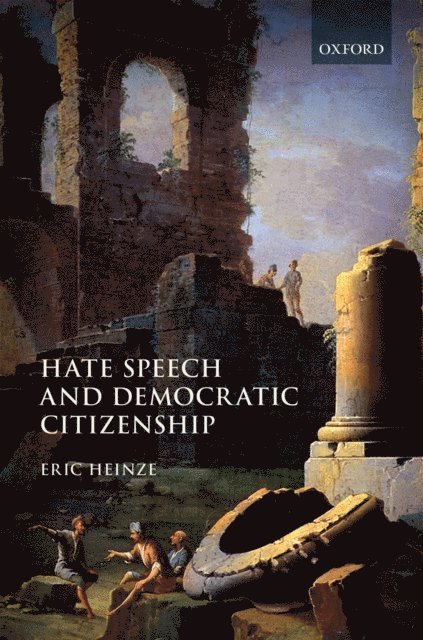
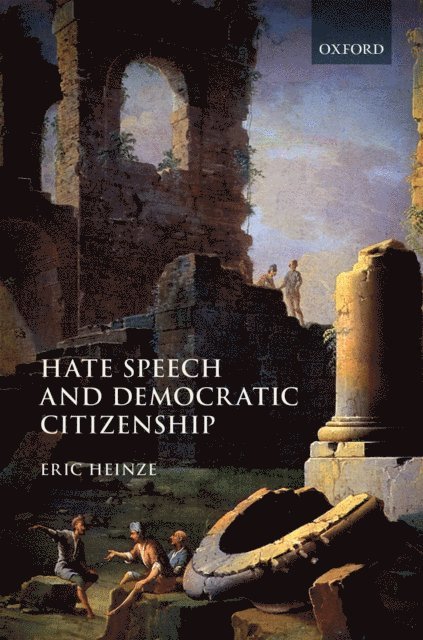
Most modern democracies punish hate speech. Less freedom for some, they claim, guarantees greater freedom for others. Heinze rejects that approach, arguing that democracies have better ways of combatting violence and discrimination against vulnerable groups without having to censor speakers. Critiquing dominant free speech theories, Heinze explains that free expression must be safeguarded not just as an individual right, but as an essential attribute of democratic citizenship. The book challenges contemporary state regulation of public discourse by promoting a stronger theory of what democracy is and what it demands. Examining US, European and international approaches, Heinze offers a new vision of free speech within Western democracies.
487 kr
Skickas inom 7-10 vardagar
Most modern democracies punish hate speech. Less freedom for some, they claim, guarantees greater freedom for others. Heinze rejects that approach, arguing that democracies have better ways of combatting violence and discrimination against vulnerable groups without having to censor speakers. Critiquing dominant free speech theories, Heinze explains that free expression must be safeguarded not just as an individual right, but as an essential attribute of democratic citizenship. The book challenges contemporary state regulation of public discourse by promoting a stronger theory of what democracy is and what it demands. Examining US, European, and international approaches, Heinze offers a new vision of free speech within Western democracies.
274 kr
Skickas
274 kr
Skickas
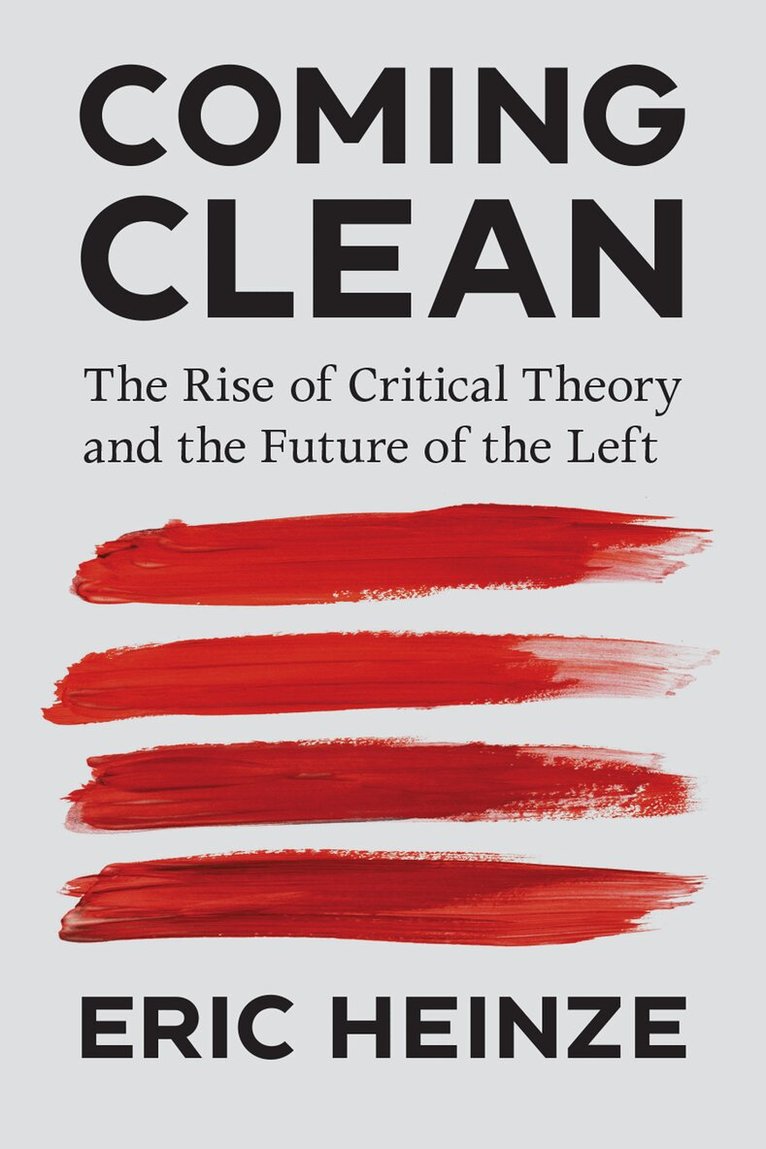
What has gone wrong with the left and what leftists must do if they want to change politics, ethics, and minds. Leftists have long taught that people in the West must take responsibility for centuries of classism, racism, colonialism, patriarchy, and other gross injustices. Of course, right-wingers constantly ridicule this claim for its 'wokeness.' In Coming Clean, Eric Heinze rejects the idea that we should be less woke. In fact, we need more wokeness, but of a new kind. Yes, we must teach about these bleak pasts, but we must also educate the public about the left s own support for regimes that damaged and destroyed millions of lives for over a century Stalin in the Soviet Union, Mao Zedong in China, Pol Pot in Cambodia, or the Kim dynasty in North Korea. Criticisms of Western wrongdoing are certainly important, yet Heinze explains that leftists have rarely engaged in the kinds of open and public self-scrutiny that they demand from others. Citing examples as different as the Ukraine war, LGBTQ+ people in Cuba, the concept of 'hatred,' and the problem of leftwing antisemitism, Heinze explains why and how the left must change its memory politics if it is to claim any ethical high ground.
223 kr
Skickas
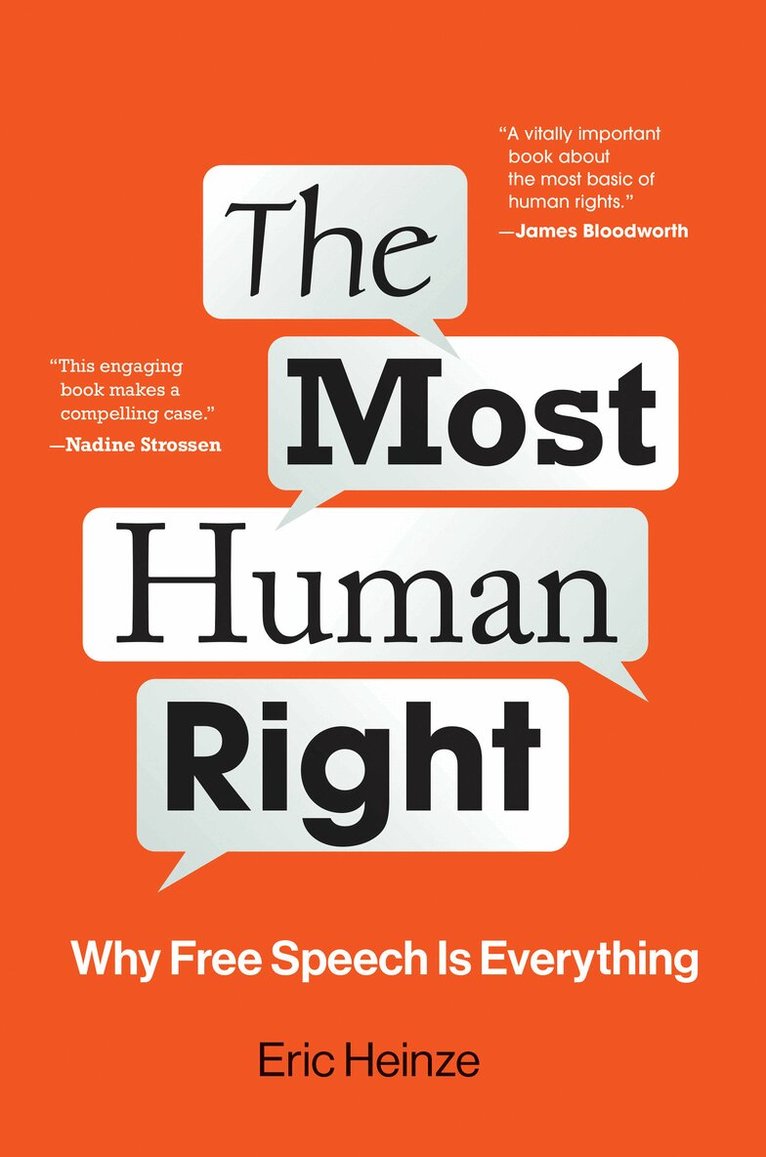
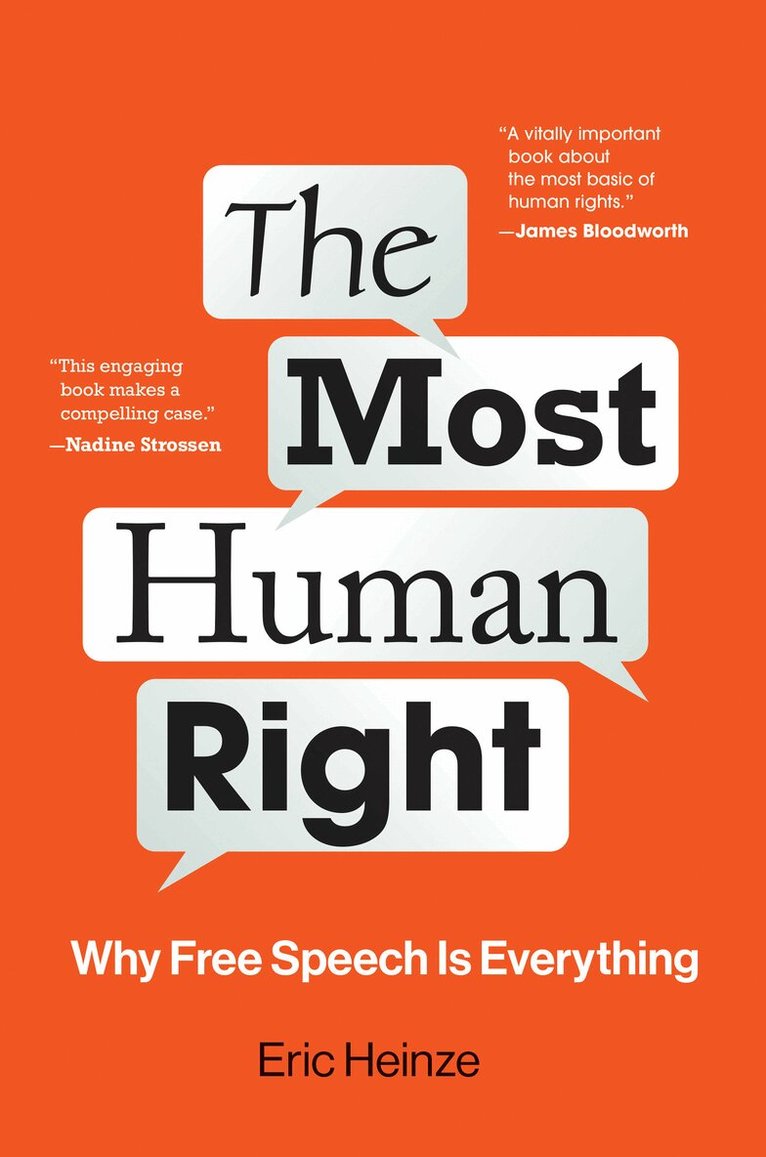
A bold, groundbreaking argument by a world-renowned expert that unless we treat free speech as the fundamental human right, there can be no others.What are human rights? Are they laid out definitively in the UN’s Universal Declaration of Human Rights or the US Bill of Rights? Are they items on a checklist—dignity, justice, progress, standard of living, health care, housing? In The Most Human Right, Eric Heinze explains why global human rights systems have failed. International organizations constantly report on how governments manage human goods, such as fair trials, humane conditions of detention, healthcare, or housing. But to appease autocratic regimes, experts have ignored the primacy of free speech. Heinze argues that goods become rights only when citizens can claim them publicly and fearlessly: free speech is the fundamental right, without which the very concept of a “right” makes no sense. Heinze argues that throughout history countless systems of justice have promised human goods. What, then, makes human rights different? What must human rights have that other systems have lacked? Heinze revisits the origins of the concept, exploring what it means for a nation to protect human rights, and what a citizen needs in order to pursue them. He explains how free speech distinguishes human rights from other ideas about justice, past and present.
671 kr
Skickas inom 10-15 vardagar
Ethics and international Relations (IR), once considered along the margins of the IR field, has emerged as one of the most eclectic and interdisciplinary research areas today. Yet the same diversity that enriches this field also makes it a difficult one to characterize. Is it, or should it only be, the social-scientific pursuit of explaining and understanding how ethics influences the behaviours of actors in international relations? Or, should it be a field characterized by what the world should be like, based on philosophical, normative and policy-based arguments? This Handbook suggests that it can actually be both, as the contributions contained therein demonstrate how those two conceptions of ethics and international relations are inherently linked. Seeking to both provide an overview of the field and to drive debates forward, this Handbook is framed by an opening chapter providing a concise and accessible overview of the complex history of the field of ethics and IR, and a conclusion that discusses how the field may progress in the future and what subjects are likely to rise to prominence. Within are forty-four distinct and original contributions from scholars teaching and researching in the field, which are structured around eight key thematic sections: philosophical foundationsinternational relations theoryinternational security and just warjustice, rights and global governanceinternational interventionenvironment, health and migrationglobal economicsreligion and ethics Drawing together a diverse range of scholars, the Routledge Handbook of Ethics and International Relations provides a cutting-edge overview of the field by bringing together these eclectic, albeit dynamic, themes and topics. It will be an essential resource for students and scholars alike.
644 kr
Skickas inom 10-15 vardagar
The Logic of Liberal Rights uses basic logic to develop a model of argument presupposed in all disputes about civil rights and liberties. No prior training in logic is required, as each step is explained. This analysis does not merely apply general logic to legal arguments but is also specifically tailored to the issues of civil rights and liberties. It shows that all arguments about civil rights and liberties presuppose one fixed structure and that there can be no original argument in rights disputes, except within the confines of that structure. Concepts arising in disputes about rights, like 'liberal' or 'democratic', are not mere abstractions but have a fixed and precise character.This book integrates themes in legal theory, political science and moral philosophy, as well as the philosophy of logic and language. For the advanced scholar, the book provides a model presupposed by leading theoretical schools (liberal and critical, positivist and naturalist). For the student it provides a systematic theory of civil rights and liberties. Examples are drawn from the European Convention in Human Rights but no special knowledge of the Convention is assumed, as the issues analysed arise throughout the world. Such issues include problems of free speech, religious freedom, privacy, torture, unlawful detention and private property.
1 982 kr
Skickas inom 10-15 vardagar
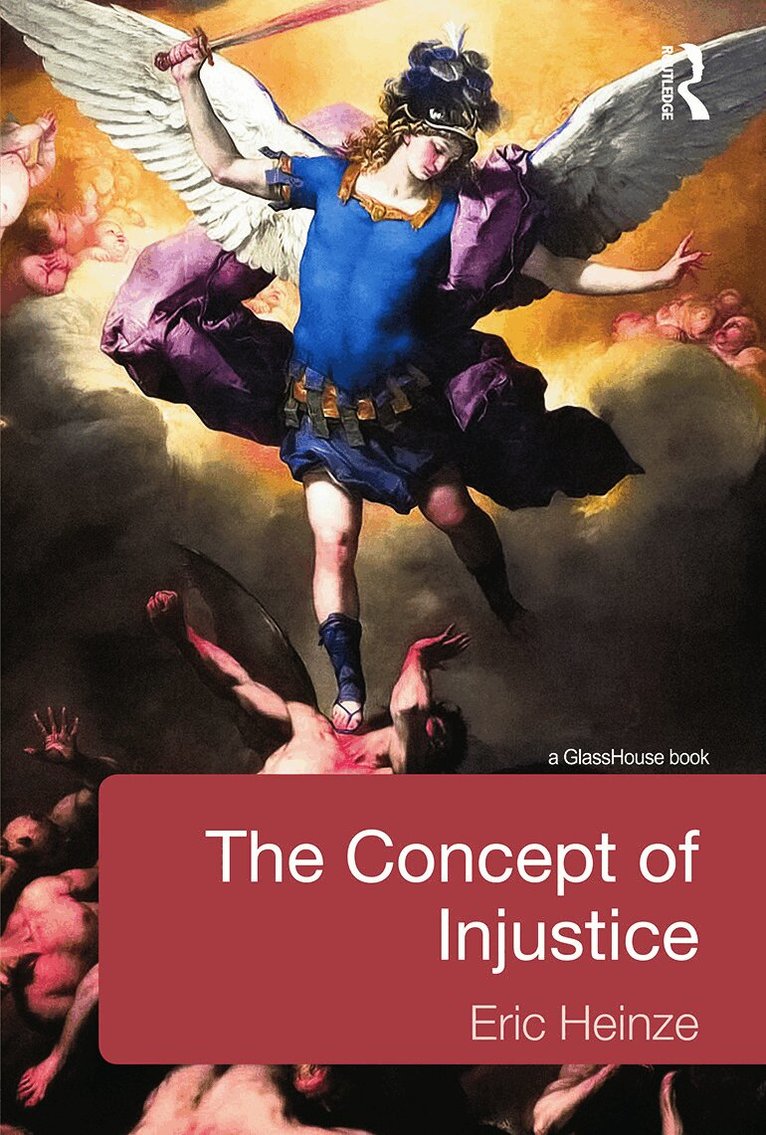
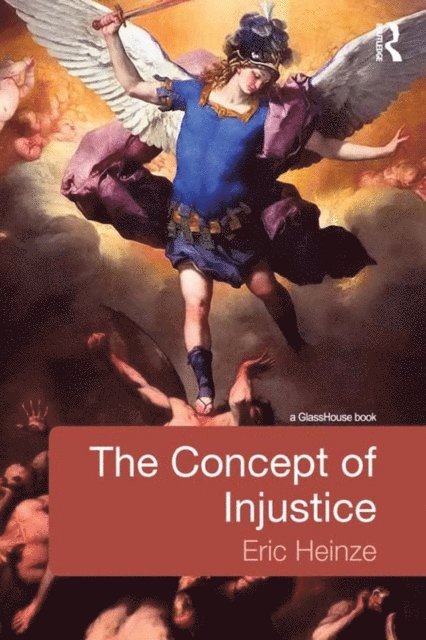
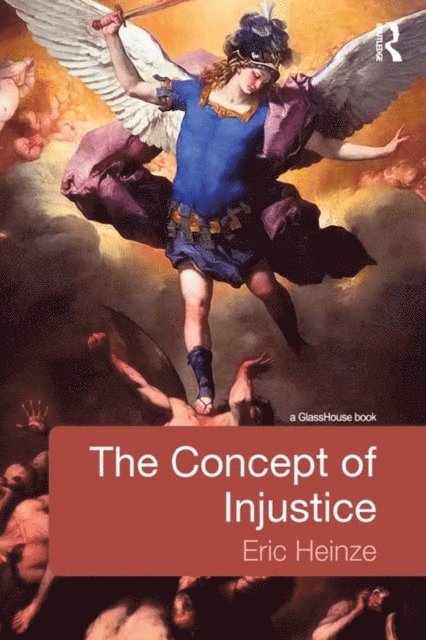
The Concept of Injustice challenges traditional Western justice theory. Thinkers from Plato and Aristotle through to Kant, Hegel, Marx and Rawls have subordinated the idea of injustice to the idea of justice. Misled by the word’s etymology, political theorists have assumed injustice to be the sheer, logical opposite of justice. Heinze summons ancient and early modern texts, philosophical and literary, with special attention to Shakespeare, to argue that injustice is not primarily the negation, failure or absence of justice. It is the constant product of regimes and norms of justice. Justice is not always the cure for injustice, and is often its cause.
927 kr
Skickas inom 10-15 vardagar
This book insists upon a re-thinking of Western theories of Justice. For 2500 years, philosophers have subordinated the concept of injustice to the concept of justice, as if injustice were only a secondary, derivative notion. This book summons literary classics, notably Shakespeare, to argue that injustice, not justice, should be the focus of our attention. A long line of thinkers, from Plato and Aristotle through to Kant, Hegel, Marx and Rawls, have overlooked the central problems of injustice. The book identifies two elements – unity and measurement – that are constantly assumed to be essential to justice. It shows how, in landmark literary classics, it is precisely those two elements that end up generating injustice. Western justice theory, it is concluded, cannot advance until it takes a new approach to the concept and the realities of injustice.
1 921 kr
Skickas inom 10-15 vardagar
Individual rights raise endless conflicts and spawn intricate standards and policies. Increasing involvement by courts has added still greater complexity. It would seem that few meaningful principles can unite an area of law plagued by such uncertainty. In this book the author argues that a fixed structure underlies that complexity, determining the kinds of arguments that can be made about individual rights. Examples are drawn from the world's oldest and most intricate body of law on civil rights and liberties: the case law of the United States Supreme Court. Yet the model is designed to account for any legal system that recognizes civil rights and liberties. The author applies techniques of logical analysis (although no prior knowledge of logic is required) to identify a deeper discursive structure. He shows how simple concepts of harm and consent, which do not ordinarily appear to be relevant in all cases, provide unity within and across regimes of individual rights.
617 kr
Skickas inom 10-15 vardagar
Individual rights raise endless conflicts and spawn intricate standards and policies. Increasing involvement by courts has added still greater complexity. It would seem that few meaningful principles can unite an area of law plagued by such uncertainty. In this book the author argues that a fixed structure underlies that complexity, determining the kinds of arguments that can be made about individual rights. Examples are drawn from the world's oldest and most intricate body of law on civil rights and liberties: the case law of the United States Supreme Court. Yet the model is designed to account for any legal system that recognizes civil rights and liberties. The author applies techniques of logical analysis (although no prior knowledge of logic is required) to identify a deeper discursive structure. He shows how simple concepts of harm and consent, which do not ordinarily appear to be relevant in all cases, provide unity within and across regimes of individual rights.
495 kr
Skickas inom 10-15 vardagar
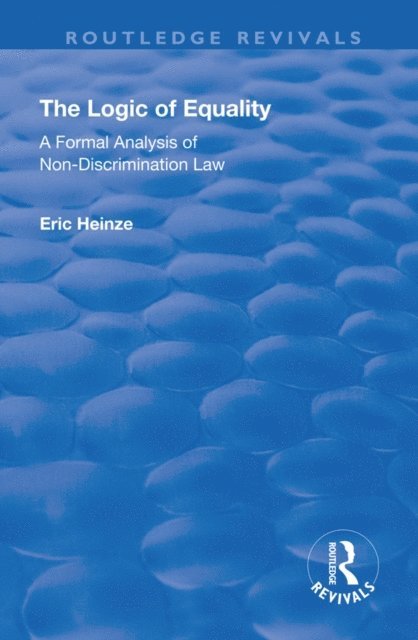
This title was first published in 2003. The Logic of Equality proposes a formal-logical method for examining the indeterminacy of legal discourse, using the example of the non-discrimination norm. It shows that the indeterminacy of a legal concept does not mean that it is completely chaotic - the indeterminacy of the non-discrimination norm arises out of, and presupposes, a determinate formal structure, which remains fixed and constant both within and across jurisdictions, regardless of institutional or doctrinal differences. To illustrate the argument, cases are presented from a variety of jurisdictions including the United States Supreme Court, the European Court of Human Rights, the European Court of Justice, and the German Constitutional Court. The book is aimed at theorists who are interested in the analysis of legal discourse, including comparative legal scholars and those who specialise in human rights and/or discrimination law.
1 488 kr
Skickas inom 10-15 vardagar
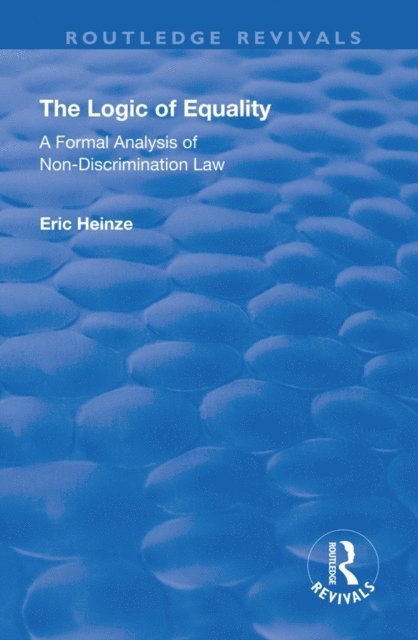
This title was first published in 2003. The Logic of Equality proposes a formal-logical method for examining the indeterminacy of legal discourse, using the example of the non-discrimination norm. It shows that the indeterminacy of a legal concept does not mean that it is completely chaotic - the indeterminacy of the non-discrimination norm arises out of, and presupposes, a determinate formal structure, which remains fixed and constant both within and across jurisdictions, regardless of institutional or doctrinal differences. To illustrate the argument, cases are presented from a variety of jurisdictions including the United States Supreme Court, the European Court of Human Rights, the European Court of Justice, and the German Constitutional Court. The book is aimed at theorists who are interested in the analysis of legal discourse, including comparative legal scholars and those who specialise in human rights and/or discrimination law.
468 kr
Skickas inom 10-15 vardagar
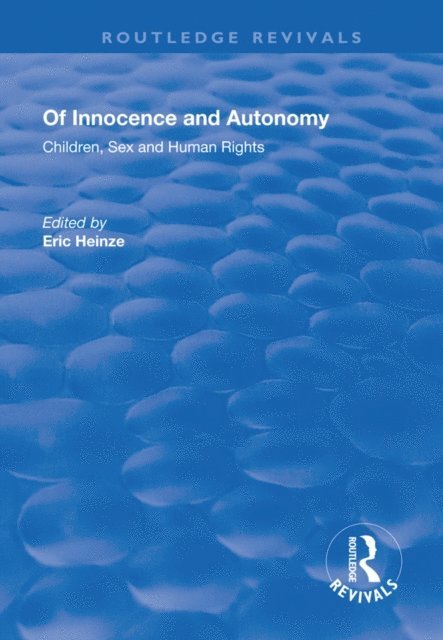
This title was first published in 2000: This anthology of essays focuses on the human rights of children in the area of sexuality. Looking at the theoretical aspects, essays examine the history and construction of concepts of childhood and child sexuality, while other essays take an interdisciplinary approach, examining anthropological, sociological, psychological and economic perspectives on law and childhood sexuality. Specific problems that arise in litigation and judicial practice are looked at in more detail, and in some cases, comparative and international approaches are taken to the examination of law reform and initiatives in selected countries and in international organizations.
1 054 kr
Skickas inom 10-15 vardagar
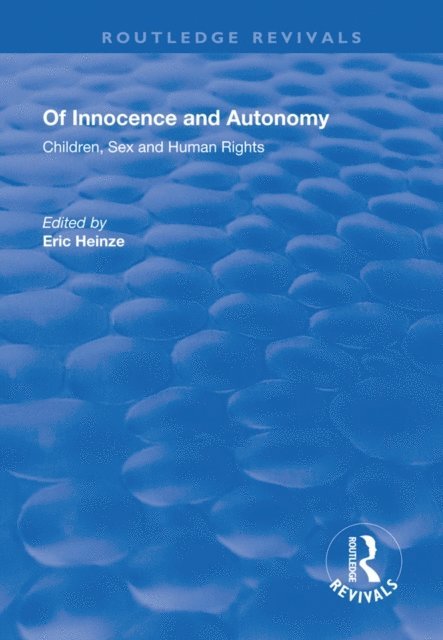
This title was first published in 2000: This anthology of essays focuses on the human rights of children in the area of sexuality. Looking at the theoretical aspects, essays examine the history and construction of concepts of childhood and child sexuality, while other essays take an interdisciplinary approach, examining anthropological, sociological, psychological and economic perspectives on law and childhood sexuality. Specific problems that arise in litigation and judicial practice are looked at in more detail, and in some cases, comparative and international approaches are taken to the examination of law reform and initiatives in selected countries and in international organizations.
3 161 kr
Skickas inom 10-15 vardagar
Ethics and international Relations (IR), once considered along the margins of the IR field, has emerged as one of the most eclectic and interdisciplinary research areas today. Yet the same diversity that enriches this field also makes it a difficult one to characterize. Is it, or should it only be, the social-scientific pursuit of explaining and understanding how ethics influences the behaviours of actors in international relations? Or, should it be a field characterized by what the world should be like, based on philosophical, normative and policy-based arguments? This Handbook suggests that it can actually be both, as the contributions contained therein demonstrate how those two conceptions of ethics and international relations are inherently linked. Seeking to both provide an overview of the field and to drive debates forward, this Handbook is framed by an opening chapter providing a concise and accessible overview of the complex history of the field of ethics and IR, and a conclusion that discusses how the field may progress in the future and what subjects are likely to rise to prominence. Within are forty-four distinct and original contributions from scholars teaching and researching in the field, which are structured around eight key thematic sections: philosophical foundationsinternational relations theoryinternational security and just warjustice, rights and global governanceinternational interventionenvironment, health and migrationglobal economicsreligion and ethicsDrawing together a diverse range of scholars, the Routledge Handbook of Ethics and International Relations provides a cutting-edge overview of the field by bringing together these eclectic, albeit dynamic, themes and topics. It will be an essential resource for students and scholars alike.
2 088 kr
Skickas inom 10-15 vardagar
What does it mean to say that a particular war is just or unjust, that terrorism is always wrong, or that torture can sometimes be morally justified? What are the moral bases for the possession or use of nuclear weapons, intervening in other countries’ civil wars, or being a bystander to genocide? Such questions take us to the heart of what is morally right and wrong behaviour in our world. Global Violence: Ethical and Political Issues provides readers with the analytical tools to better understand the suppositions that underlie the debates about such questions, as well as advances its own reasoned and informed ethical analyses of these topics. The book engages different normative approaches from the fields of ethics, political theory, and international relations and uses them to examine a set of case studies on the subjects of inter-state and civil war, nuclear weapons, terrorism, torture and genocide.
367 kr
Kommande
Does hate speech undermine democracy, by attacking its most vulnerable members? Does it threaten the equal dignity of all citizens? Or are democracy and equality degraded not by hateful expression, but by censorship? Do hate speech bans give governments too much control over thought and ideas, or do bans secure the conditions for ideas to be meaningfully debated? Should each society choose its own rules? Or are some principles of free expression universal? Whom should hate speech bans protect: racial and ethnic groups, religious communities, women, sexual minorities, the disabled? Should we ban hateful words and images in public spaces but not on the internet? Heinze and Phillipson draw on law, politics, philosophy and ethics to debate these questions. For Phillipson, narrowly drawn hate speech bans are essential to the social contract – a prerequisite for democratic deliberation, and a symbolic protection of every citizen’s basic dignity. Heinze replies that punitive rules imposed to silence hateful views damage democracy, and governments have more legitimate and effective means of combating harmful speech. Drawing upon European, American and Commonwealth perspectives, this book will be of interest not only to lawyers, but also to readers in philosophy, politics and journalism.
1 741 kr
Skickas inom 10-15 vardagar
Never in history have crises surrounding free speech raged with greater ferocity than we are witnessing today. This is the world’s first book to gather detailed, country-by-country studies devoted entirely to the problem of hate speech, spanning more than twenty nations. The introductory chapter summarises various key concepts, followed by a composite of the questions that were originally put to each of the Special Rapporteurs. The chapters then provide the Rapporteurs’ detailed analyses of each country, with several of the authors supplementing these with additional helpful insights. In particular, the abundance of case studies will help to dramatize the controversies that have been sparked by hateful expression in ways that continue to be relevant far beyond the borders of any one nation.The chapters explain national legislation and case law, tracking the challenges posed by growing extremism and social polarisation, which is now more acute than ever before in our age of electronic media. The authors also align these national developments with norms and procedures of leading international human rights bodies such as the UN Committee on Racial Discrimination, the UN Human Rights Committee, and the European Court of Human Rights. This collection will be invaluable for beginners, as no prior knowledge is required. At the same time, given the chapters’ depth and breadth, it will supply a research tool for advanced scholars, lecturers, and researchers in the areas of free speech, human rights, comparative law, criminal law, constitutional law, and political theory, as well as media and communications studies.Eric Heinze is Professor of Law and Humanities at Queen Mary University of London. He is currently a Trustee of the London-based Media Diversity Institute, and recently served as General Rapporteur on the Criminalisation of Hate Speech for the Académie Internationale de Droit Comparé.
1 741 kr
Skickas inom 10-15 vardagar
Never in history have crises surrounding free speech raged with greater ferocity than we are witnessing today. This is the world’s first book to gather detailed, country-by-country studies devoted entirely to the problem of hate speech, spanning more than twenty nations. The introductory chapter summarises various key concepts, followed by a composite of the questions that were originally put to each of the Special Rapporteurs. The chapters then provide the Rapporteurs’ detailed analyses of each country, with several of the authors supplementing these with additional helpful insights. In particular, the abundance of case studies will help to dramatize the controversies that have been sparked by hateful expression in ways that continue to be relevant far beyond the borders of any one nation.The chapters explain national legislation and case law, tracking the challenges posed by growing extremism and social polarisation, which is now more acute than ever before in our age of electronic media. The authors also align these national developments with norms and procedures of leading international human rights bodies such as the UN Committee on Racial Discrimination, the UN Human Rights Committee, and the European Court of Human Rights. This collection will be invaluable for beginners, as no prior knowledge is required. At the same time, given the chapters’ depth and breadth, it will supply a research tool for advanced scholars, lecturers, and researchers in the areas of free speech, human rights, comparative law, criminal law, constitutional law, and political theory, as well as media and communications studies.Eric Heinze is Professor of Law and Humanities at Queen Mary University of London. He is currently a Trustee of the London-based Media Diversity Institute, and recently served as General Rapporteur on the Criminalisation of Hate Speech for the Académie Internationale de Droit Comparé.