Brent J. Steele – författare
839 kr
Skickas inom 5-8 vardagar
911 kr
Läs direkt efter köp
911 kr
Läs direkt efter köp
695 kr
Skickas inom 10-15 vardagar
2 182 kr
Skickas inom 10-15 vardagar
723 kr
Skickas inom 10-15 vardagar
835 kr
Skickas inom 10-15 vardagar
2 323 kr
Skickas inom 10-15 vardagar
795 kr
Läs direkt efter köp
Ethics and International Relations (IR), once considered along the margins of the IR field, has emerged as one of the most eclectic and interdisciplinary research areas today. Yet the same diversity that enriches this field also makes it a difficult one to characterize. Is it, or should it only be, the social-scientific pursuit of explaining and understanding how ethics influences the behaviours of actors in international relations? Or, should it be a field characterized by what the world should be like, based on philosophical, normative and policy-based arguments? This Handbook suggests that it can actually be both, as the contributions contained therein demonstrate how those two conceptions of Ethics and International Relations are inherently linked.
Seeking to both provide an overview of the field and to drive debates forward, this Handbook is framed by an opening chapter providing a concise and accessible overview of the complex history of the field of Ethics and IR, and a conclusion that discusses how the field may progress in the future and what subjects are likely to rise to prominence. Within are 44 distinct and original contributions from scholars teaching and researching in the field, which are structured around 8 key thematic sections:
Philosophical Resources
International Relations Theory
Religious Traditions
International Security and Just War
Justice, Rights and Global Governance
International Intervention
Global Economics
Environment, Health and Migration
Drawing together a diverse range of scholars, the Routledge Handbook of Ethics and International Relations provides a cutting-edge overview of the field by bringing together these eclectic, albeit dynamic, themes and topics. It will be an essential resource for students and scholars alike.
388 kr
Skickas inom 5-8 vardagar
682 kr
Läs direkt efter köp
This book explores contemporary populist politics through the lens of ontological security theory. It shows that the ''divisionary politics of populism'' is fostered by narratives of crisis and insecurity surrounding the imagined Self that gives shape to ''the people'' that populism claims to represent.
The loss of faith in mainstream political parties and moderate electoral candidates seems characteristic of the Zeitgeist in much of the Western world and beyond. Politicians and agendas propped up by a discourse that antagonizes established political elites on behalf of a reified, and homogenized people has become a trend in the politics of several countries. This book has brought together a team of worldwide renowned specialists on ontological security to grapple with the contemporary populist challenge through the conceptual lens of ontological security theory. From crises of democracy in the West, to backlashes against democratization in the Global South, this collection not only unveils fundamental structures underpinning these significant and current phenomena. It also provides us with the analytical tools to understand other occurrences of populist politics that are gaining traction across the globe.
This book will be of great interest to upper-level students, researchers, and academics in Politics, International Relations and Security. The chapters in this book were originally published as a special issue of Cambridge Review of International Affairs.
688 kr
Läs direkt efter köp
This book explores contemporary populist politics through the lens of ontological security theory. It shows that the ''divisionary politics of populism'' is fostered by narratives of crisis and insecurity surrounding the imagined Self that gives shape to ''the people'' that populism claims to represent.
The loss of faith in mainstream political parties and moderate electoral candidates seems characteristic of the Zeitgeist in much of the Western world and beyond. Politicians and agendas propped up by a discourse that antagonizes established political elites on behalf of a reified, and homogenized people has become a trend in the politics of several countries. This book has brought together a team of worldwide renowned specialists on ontological security to grapple with the contemporary populist challenge through the conceptual lens of ontological security theory. From crises of democracy in the West, to backlashes against democratization in the Global South, this collection not only unveils fundamental structures underpinning these significant and current phenomena. It also provides us with the analytical tools to understand other occurrences of populist politics that are gaining traction across the globe.
This book will be of great interest to upper-level students, researchers, and academics in Politics, International Relations and Security. The chapters in this book were originally published as a special issue of Cambridge Review of International Affairs.
2 182 kr
Skickas inom 10-15 vardagar
596 kr
Skickas inom 10-15 vardagar
Restraint in International Politics
1 292 kr
Skickas inom 7-10 vardagar
1 512 kr
Läs direkt efter köp
957 kr
Läs direkt efter köp
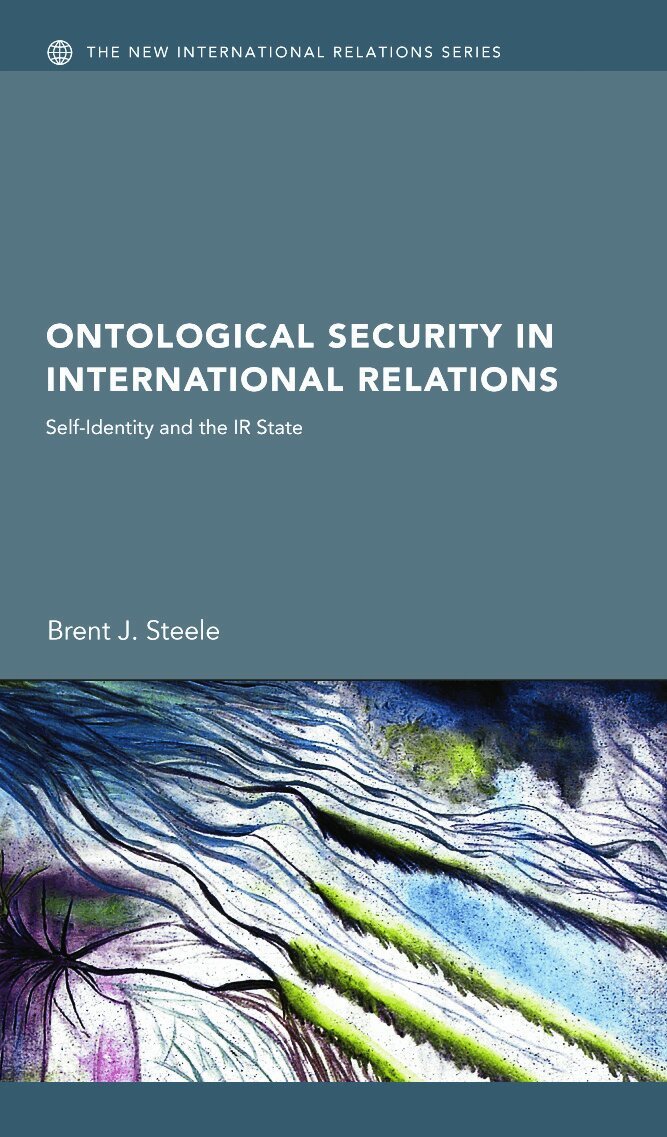
The central assertion of this book is that states pursue social actions to serve self-identity needs, even when these actions compromise their physical existence. Three forms of social action, sometimes referred to as ‘motives’ of state behaviour (moral, humanitarian, and honour-driven) are analyzed here through an ontological security approach.
Brent J. Steele develops an account of social action which interprets these behaviours as fulfilling a nation-state''s drive to secure self-identity through time. The anxiety which consumes all social agents motivates them to secure their sense of being, and thus he posits that transformational possibilities exist in the ‘Self’ of a nation-state. The volume consequently both challenges and complements realist, liberal, constructivist and post-structural accounts to international politics.
Using ontological security to interpret three cases - British neutrality during the American Civil War (1861-1865), Belgium’s decision to fight Germany in 1914, and NATO’s (1999) Kosovo intervention - the book concludes by discussing the importance for self-interrogation in both the study and practice of international relations.
Ontological Security in International Relations will be of particular interest to students and researchers of international politics, international ethics, international relations and security studies.
957 kr
Läs direkt efter köp
The central assertion of this book is that states pursue social actions to serve self-identity needs, even when these actions compromise their physical existence. Three forms of social action, sometimes referred to as ‘motives’ of state behaviour (moral, humanitarian, and honour-driven) are analyzed here through an ontological security approach.
Brent J. Steele develops an account of social action which interprets these behaviours as fulfilling a nation-state''s drive to secure self-identity through time. The anxiety which consumes all social agents motivates them to secure their sense of being, and thus he posits that transformational possibilities exist in the ‘Self’ of a nation-state. The volume consequently both challenges and complements realist, liberal, constructivist and post-structural accounts to international politics.
Using ontological security to interpret three cases - British neutrality during the American Civil War (1861-1865), Belgium’s decision to fight Germany in 1914, and NATO’s (1999) Kosovo intervention - the book concludes by discussing the importance for self-interrogation in both the study and practice of international relations.
Ontological Security in International Relations will be of particular interest to students and researchers of international politics, international ethics, international relations and security studies.
828 kr
Läs direkt efter köp
In fields such as politics, international relations, public administration and international law, there is a rapidly growing interest in the topic of ‘accountability’. In this innovative new work, Steele shows how we might recognize how an alternative form of accountability in global politics has been present for some time, and that, furthermore, this form’s continued presence remains one of the most politically powerful, if not endurable, possibilities for resistance in the near future.
This book argues that the physical and visually shocking outcomes of violence found on the bodies of humans, as well as the buildings and landscapes which surround us, specifically the scars they leave behind, remain one of our most compelling forms of accountability. Steele develops the theoretical argument on scars and exteriority utilizing insights from several philosophical and theoretical resources including Hannah Arendt, Erving Goffmann, and Richard Rorty. The work examines scars and their effects through several illustrations, including the accounts of Emmett Till, Iranian protestor Neda Agha-Soltan, the Syrian boy Hamza al-Khateeb, the massacre in WWII and then memorializing throughout the 20th century of the Lidice children in the modern-day Czech Republic, the particular architecturally destructive outcomes of the 2008-9 Gaza War, the loss of the Twin Towers in New York, as well as a variety of violent scars found on the landscapes of Europe and Southeast Asia.
Emphasizing the importance of the space and ‘time’ of scars, the book illustrates how an alternative form of accountability in the scar can be a useful, disruptive, spontaneous, but also creative practice to challenge the discourses of violence which remain with us today.
835 kr
Läs direkt efter köp
In fields such as politics, international relations, public administration and international law, there is a rapidly growing interest in the topic of ‘accountability’. In this innovative new work, Steele shows how we might recognize how an alternative form of accountability in global politics has been present for some time, and that, furthermore, this form’s continued presence remains one of the most politically powerful, if not endurable, possibilities for resistance in the near future.
This book argues that the physical and visually shocking outcomes of violence found on the bodies of humans, as well as the buildings and landscapes which surround us, specifically the scars they leave behind, remain one of our most compelling forms of accountability. Steele develops the theoretical argument on scars and exteriority utilizing insights from several philosophical and theoretical resources including Hannah Arendt, Erving Goffmann, and Richard Rorty. The work examines scars and their effects through several illustrations, including the accounts of Emmett Till, Iranian protestor Neda Agha-Soltan, the Syrian boy Hamza al-Khateeb, the massacre in WWII and then memorializing throughout the 20th century of the Lidice children in the modern-day Czech Republic, the particular architecturally destructive outcomes of the 2008-9 Gaza War, the loss of the Twin Towers in New York, as well as a variety of violent scars found on the landscapes of Europe and Southeast Asia.
Emphasizing the importance of the space and ‘time’ of scars, the book illustrates how an alternative form of accountability in the scar can be a useful, disruptive, spontaneous, but also creative practice to challenge the discourses of violence which remain with us today.
2 182 kr
Skickas inom 10-15 vardagar
751 kr
Skickas inom 10-15 vardagar
3 305 kr
Skickas inom 10-15 vardagar
1 512 kr
Läs direkt efter köp
795 kr
Läs direkt efter köp
Ethics and International Relations (IR), once considered along the margins of the IR field, has emerged as one of the most eclectic and interdisciplinary research areas today. Yet the same diversity that enriches this field also makes it a difficult one to characterize. Is it, or should it only be, the social-scientific pursuit of explaining and understanding how ethics influences the behaviours of actors in international relations? Or, should it be a field characterized by what the world should be like, based on philosophical, normative and policy-based arguments? This Handbook suggests that it can actually be both, as the contributions contained therein demonstrate how those two conceptions of Ethics and International Relations are inherently linked.
Seeking to both provide an overview of the field and to drive debates forward, this Handbook is framed by an opening chapter providing a concise and accessible overview of the complex history of the field of Ethics and IR, and a conclusion that discusses how the field may progress in the future and what subjects are likely to rise to prominence. Within are 44 distinct and original contributions from scholars teaching and researching in the field, which are structured around 8 key thematic sections:
Philosophical Resources
International Relations Theory
Religious Traditions
International Security and Just War
Justice, Rights and Global Governance
International Intervention
Global Economics
Environment, Health and Migration
Drawing together a diverse range of scholars, the Routledge Handbook of Ethics and International Relations provides a cutting-edge overview of the field by bringing together these eclectic, albeit dynamic, themes and topics. It will be an essential resource for students and scholars alike.
860 kr
Läs direkt efter köp
Reflexivity has become a common term in IR scholarship with a variety of uses and meanings. Yet for such an important concept and referent, understandings of reflexivity have been more assumed rather than developed by those who use it, from realists and constructivists to feminists and post-structuralists.
This volume seeks to provide the first overview of reflexivity in international relations theory, offering students and scholars a text that :
provides a comprehensive and systematic overview of the current reflexivity literature develops important insights into how reflexivity can play a broader role in IR theory pushes reflexivity in new, productive directions, and offers more nuanced and concrete specifications of reflexivity moves reflexivity beyond the scholar and the scholarly field to political practice Formulates practices of reflexivityDrawing together the work of many of the key scholars in the field into one volume, this work will be essential reading for all students of international relations theory.
860 kr
Läs direkt efter köp
Reflexivity has become a common term in IR scholarship with a variety of uses and meanings. Yet for such an important concept and referent, understandings of reflexivity have been more assumed rather than developed by those who use it, from realists and constructivists to feminists and post-structuralists.
This volume seeks to provide the first overview of reflexivity in international relations theory, offering students and scholars a text that :
provides a comprehensive and systematic overview of the current reflexivity literature develops important insights into how reflexivity can play a broader role in IR theory pushes reflexivity in new, productive directions, and offers more nuanced and concrete specifications of reflexivity moves reflexivity beyond the scholar and the scholarly field to political practice Formulates practices of reflexivityDrawing together the work of many of the key scholars in the field into one volume, this work will be essential reading for all students of international relations theory.