Eric Kurlander – författare
Visar alla böcker från författaren Eric Kurlander. Handla med fri frakt och snabb leverans.
16 produkter
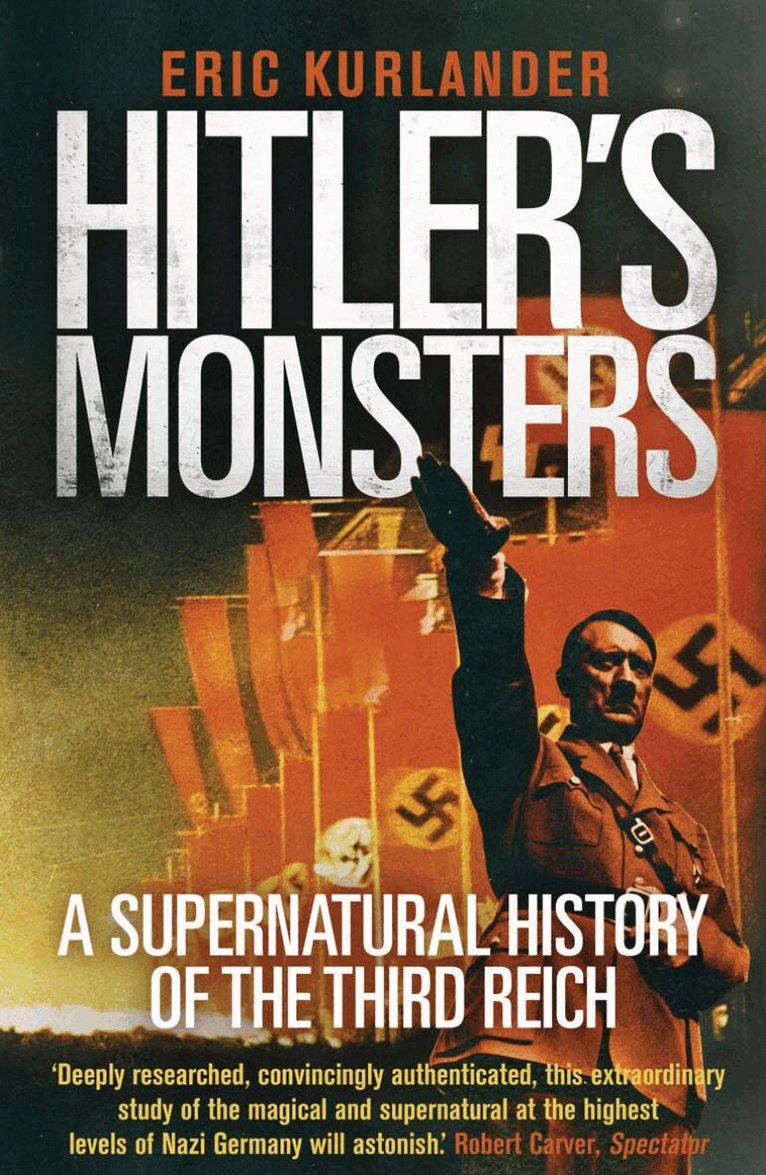
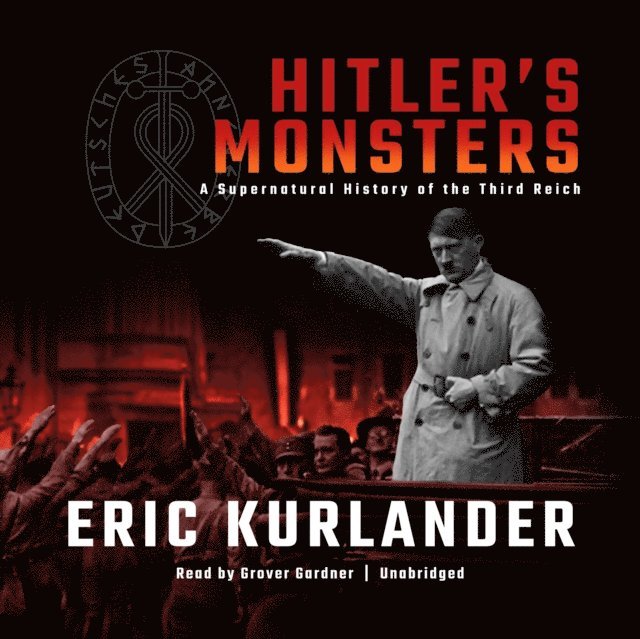
Hitler's Monsters
A Supernatural History of the Third Reich
Häftad, 2018
214 kr
Lägg i varukorg
The definitive history of the supernatural in Nazi Germany—the occult ideas, esoteric sciences, and pagan religions touted by the Third Reich in the service of power“[Kurlander] shows how swiftly irrational ideas can take hold, even in an age before social media.”—Michael Dirda, The Washington …
Modern Germany
A Global History
Av Eric Kurlander, Douglas T. McGetchin m. fl.
Häftad, 2023
772 kr
Lägg i varukorg
Modern Germany: A Global History places Germany in a global and transnational context, while offering a broad scope of chronological and thematic coverage. The authors present German-speaking lands in relation to the rest of the world, rather than as discrete entities, bringing global and …
Modern Germany
A Global History
Av Bernd-Stefan Grewe, Douglas T. McGetchin m. fl.
E-bok, 2022
594 kr
Lägg i varukorg
Modern Germany: A Global History places Germany in a global and transnational context, while offering a broad scope of chronological and thematic coverage. The authors present German-speaking lands in relation to the rest of the world, rather than as discrete entities, bringing global and …
Transcultural Encounters between Germany and India
Kindred Spirits in the 19th and 20th Centuries
Av Joanne Cho, Eric Kurlander m. fl.
Inbunden, 2013
2818 kr
Lägg i varukorg
Providing a comprehensive survey of cutting edge scholarship in the field of German--Indian and South Asian Studies, the book looks at the history of German--Indian relations in the spheres of culture, politics, and intellectual life. Combining transnational, post-colonial, and comparative …
German-Speaking Jewish Refugees in Asia, 1930–1950
Shelter from the Storm?
Av Joanne Miyang Cho, Eric Kurlander m. fl.
Inbunden, 2025
2586 kr
Lägg i varukorg
Although most perished, hundreds of thousands of Central European Jews escaped the Holocaust; tens of thousands of these Jewish refugees ended up in East Asia, Southeast Asia, or South Asia. Taking a global and transnational approach, this volume examines the cultural, political, and socioeconomic …
German-Speaking Jewish Refugees in Asia, 1930–1950
Shelter from the Storm?
Av Joanne Miyang Cho, Eric Kurlander m. fl.
Häftad, 2026
727 kr
Lägg i varukorg
Although most perished, hundreds of thousands of Central European Jews escaped the Holocaust; tens of thousands of these Jewish refugees ended up in East Asia, Southeast Asia, or South Asia. Taking a global and transnational approach, this volume examines the cultural, political, and socioeconomic …
German-Speaking Jewish Refugees in Asia, 1930-1950
Shelter from the Storm?
Av Douglas McGetchin, Eric Kurlander m. fl.
E-bok, 2025
838 kr
Lägg i varukorg
Although most perished, hundreds of thousands of Central European Jews escaped the Holocaust; tens of thousands of these Jewish refugees ended up in East Asia, Southeast Asia, or South Asia. Taking a global and transnational approach, this volume examines the cultural, political, and socioeconomic …
German-Speaking Jewish Refugees in Asia, 1930-1950
Shelter from the Storm?
Av Douglas McGetchin, Eric Kurlander m. fl.
E-bok, 2025
856 kr
Lägg i varukorg
Although most perished, hundreds of thousands of Central European Jews escaped the Holocaust; tens of thousands of these Jewish refugees ended up in East Asia, Southeast Asia, or South Asia. Taking a global and transnational approach, this volume examines the cultural, political, and socioeconomic …
Transcultural Encounters between Germany and India
Kindred Spirits in the 19th and 20th Centuries
Av Joanne Cho, Eric Kurlander m. fl.
Häftad, 2018
847 kr
Lägg i varukorg
Providing a comprehensive survey of cutting edge scholarship in the field of German--Indian and South Asian Studies, the book looks at the history of German--Indian relations in the spheres of culture, politics, and intellectual life. Combining transnational, post-colonial, and comparative …
Transcultural Encounters between Germany and India
Kindred Spirits in the 19th and 20th Centuries
Av Joanne Cho, Eric Kurlander m. fl.
E-bok, 2013
999 kr
Lägg i varukorg
Providing a comprehensive survey of cutting edge scholarship in the field of German--Indian and South Asian Studies, the book looks at the history of German--Indian relations in the spheres of culture, politics, and intellectual life. Combining transnational, post-colonial, and comparative …
Transcultural Encounters between Germany and India
Kindred Spirits in the 19th and 20th Centuries
Av Joanne Cho, Eric Kurlander m. fl.
E-bok, 2013
999 kr
Lägg i varukorg
Providing a comprehensive survey of cutting edge scholarship in the field of German--Indian and South Asian Studies, the book looks at the history of German--Indian relations in the spheres of culture, politics, and intellectual life. Combining transnational, post-colonial, and comparative …
Hitler's Monsters
A Supernatural History of the Third Reich
Ljudbok, 2017
359 kr
Lägg i varukorg
The Nazi fascination with the occult is legendary, yet today it is often dismissed as Himmler’s personal obsession or wildly overstated for its novelty. Preposterous though it was, however, supernatural thinking was inextricable from the Nazi project. The regime enlisted astrology and the …
Revisiting the "Nazi Occult"
Histories, Realities, Legacies
Av Monica Black, Eric Kurlander
Inbunden, 2015
1307 kr
Lägg i varukorg
New collection of essays promising to re-energize the debate on Nazism's occult roots and legacies and thus our understanding of German cultural and intellectual history over the past century.Scholars have debated the role of the occult in Nazism since it first appeared on the German political …
Revisiting the "Nazi Occult"
Histories, Realities, Legacies
Av Monica Black, Eric Kurlander m. fl.
Häftad, 2019
397 kr
Lägg i varukorg
New collection of essays promising to re-energize the debate on Nazism's occult roots and legacies and thus our understanding of German cultural and intellectual history over the past century.Scholars have debated the role of the occult in Nazism since it first appeared on the German political …
Price of Exclusion
Ethnicity, National Identity, and the Decline of German Liberalism, 1898-1933
Inbunden, 2006
2186 kr
Lägg i varukorg
"The failure of Liberalism" in Germany and its responsibility for the rise of Nazism has been widely discussed among scholars inside and outside Germany. This author argues that German liberalism failed because of the irreconcilable conflict between two competing visions of German identity. In …
Living with Hitler
Liberal Democrats in the Third Reich
Inbunden, 2009
342 kr
Tillfälligt slut
This book addresses key questions about liberal democrats and their activities in Germany from 1933 to the end of the Nazi regime. While it is commonly assumed that liberals fled their homeland at the first sign of jackboots, in reality most stayed. Some even thrived under Hitler, personally as …