Monica Black - Böcker
Visar alla böcker från författaren Monica Black. Handla med fri frakt och snabb leverans.
6 produkter
6 produkter
1 282 kr
Skickas inom 7-10 vardagar
We tend to think of death as a basic and immutable fact of life. Yet death, too, has a history. Death in Berlin traces the rituals, practices, perceptions, and sensibilities surrounding death in the context of Berlin's multiple transformations over the decades between Germany's defeat in World War I and the construction of the Berlin Wall. Evocatively illustrated and drawing on a rich collection of sources, Monica Black reveals the centrality of death to the evolving moral and social life of one metropolitan community. In doing so, she connects the intimacies of everyday life and death to events on the grand historical stage that changed the lives of millions - all in a city that stood at the center of some of the twentieth century's most transformative events.
231 kr
Skickas inom 3-6 vardagar
370 kr
Skickas inom 7-10 vardagar
We tend to think of death as a basic and immutable fact of life. Yet death, too, has a history. Death in Berlin traces the rituals, practices, perceptions, and sensibilities surrounding death in the context of Berlin's multiple transformations over the decades between Germany's defeat in World War I and the construction of the Berlin Wall. Evocatively illustrated and drawing on a rich collection of sources, Monica Black reveals the centrality of death to the evolving moral and social life of one metropolitan community. In doing so, she connects the intimacies of everyday life and death to events on the grand historical stage that changed the lives of millions - all in a city that stood at the center of some of the twentieth century's most transformative events.
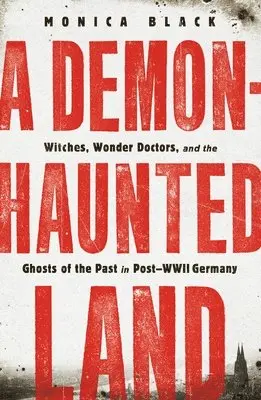
A Demon-Haunted Land
Witches, Wonder Doctors, and the Ghosts of the Past in Post-WWII Germany
Häftad, Engelska, 2022
163 kr
Skickas inom 5-8 vardagar
Del 4 - German History in Context
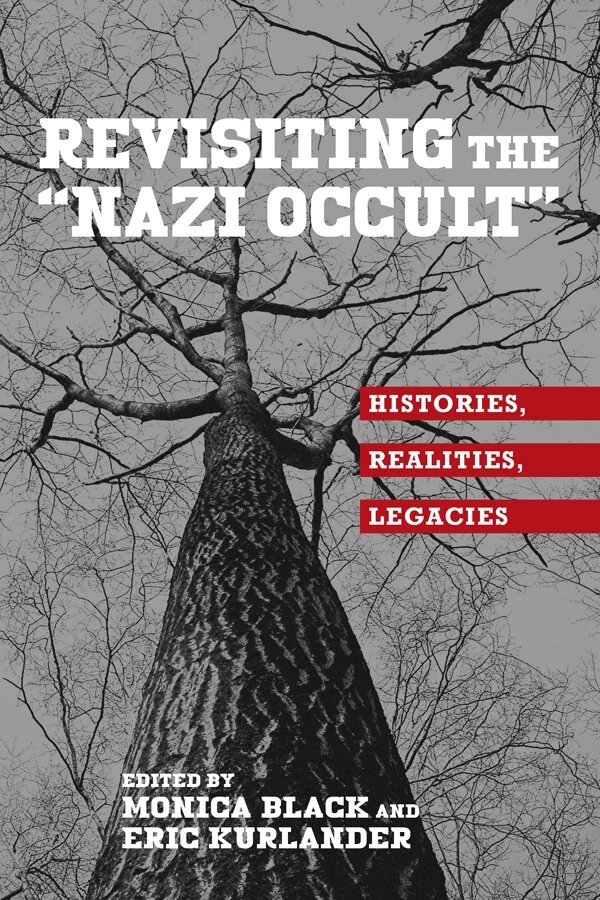
Revisiting the "Nazi Occult"
Histories, Realities, Legacies
Inbunden, Engelska, 2015
1 176 kr
Skickas inom 10-15 vardagar
New collection of essays promising to re-energize the debate on Nazism's occult roots and legacies and thus our understanding of German cultural and intellectual history over the past century.Scholars have debated the role of the occult in Nazism since it first appeared on the German political landscape in the 1920s. After 1945, a consensus held that occultism - an ostensibly anti-modern, irrational blend of pseudo-religious and -scientific practices and ideas - had directly facilitated Nazism's rise. More recently, scholarly debate has denied the occult a role in shaping the Third Reich, emphasizing the Nazis' hostility to esoteric religion and alternative forms of knowledge. Bringing together cutting-edge scholarship on the topic, this volume calls for a fundamental reappraisal of these positions.The book is divided into three chronological sections. The first,on the period 1890 to 1933, looks at the esoteric philosophies and occult movements that influenced both the leaders of the Nazi movement and ordinary Germans who became its adherents. The second, on the Third Reich in power, explores how the occult and alternative religious belief informed Nazism as an ideological, political, and cultural system. The third looks at Nazism's occult legacies. In emphasizing both continuities and disjunctures, this book promises to re-open and re-energize debate on the occult roots and legacies of Nazism, and with it our understanding of German cultural and intellectual history over the past century.Contributors: Monica Black; Jeff Hayton; Oded Heilbronner; Eric Kurlander; Fabian Link and J. Laurence Hare; Anna Lux; Perry Myers; John Ondrovcik; Michael E. O'Sullivan; Jared Poley; Uwe Schellinger, Andreas Anton, and Michael T. Schetsche; Peter Staudenmaier.Monica Black is Associate Professor and Associate Head of the Department of History at the University of Tennessee, Knoxville. Eric Kurlander is J. Ollie Edmunds Chair and Professor of Modern European History at Stetson University.
Del 4 - German History in Context
Revisiting the "Nazi Occult"
Histories, Realities, Legacies
Häftad, Engelska, 2019
339 kr
Skickas inom 10-15 vardagar
New collection of essays promising to re-energize the debate on Nazism's occult roots and legacies and thus our understanding of German cultural and intellectual history over the past century.Scholars have debated the role of the occult in Nazism since it first appeared on the German political landscape in the 1920s. After 1945, a consensus held that occultism - an ostensibly anti-modern, irrational blend of pseudo-religious and -scientific practices and ideas - had directly facilitated Nazism's rise. More recently, scholarly debate has denied the occult a role in shaping the Third Reich, emphasizing the Nazis' hostility to esoteric religion and alternative forms of knowledge. Bringing together cutting-edge scholarship on the topic, this volume calls for a fundamental reappraisal of these positions.The book is divided into three chronological sections. The first,on the period 1890 to 1933, looks at the esoteric philosophies and occult movements that influenced both the leaders of the Nazi movement and ordinary Germans who became its adherents. The second, on the Third Reich in power, explores how the occult and alternative religious belief informed Nazism as an ideological, political, and cultural system. The third looks at Nazism's occult legacies. In emphasizing both continuities and disjunctures, this book promises to re-open and re-energize debate on the occult roots and legacies of Nazism, and with it our understanding of German cultural and intellectual history over the past century.Contributors: Monica Black; Jeff Hayton; Oded Heilbronner; Eric Kurlander; Fabian Link and J. Laurence Hare; Anna Lux; Perry Myers; John Ondrovcik; Michael E. O'Sullivan; Jared Poley; Uwe Schellinger, Andreas Anton, and Michael T. Schetsche; Peter Staudenmaier.Monica Black is Associate Professor and Associate Head of the Department of History at the University of Tennessee, Knoxville. Eric Kurlander is J. Ollie Edmunds Chair and Professor of Modern European History at Stetson University.