Éric Rebillard - Böcker
Visar alla böcker från författaren Éric Rebillard. Handla med fri frakt och snabb leverans.
11 produkter
11 produkter
3 524 kr
Skickas inom 5-8 vardagar
Greek and Latin Narratives about the Ancient Martyrs provides a collection, with facing-page translations, of Greek and Latin Christian martyr narratives dating from the first four centuries CE. While Herbert Musurillo's authoritative collection The Acts of the Martyrs (1972) aimed to gather the most 'authentic' and 'reliable' accounts of early Christian martyrdom, Éric Rebillard argues that modern scholarship instead calls for texts which attest to the contexts in which the memories of the martyrs were constructed. As such, this extensive volume provides a textual basis for the study of martyr narratives without making assumptions about their date of composition or their authenticity. It focuses on the ancient martyrs executed before 260, and examines which of their texts was known to Eusebius or to Augustine. Introductions describe the hagiographical dossier of each martyr with crucial information about the manuscript tradition of the different texts and provide a terminus ante quem for their composition based only on external evidence.
792 kr
Skickas inom 7-10 vardagar
Greek and Latin Narratives about the Ancient Martyrs provides a collection, with facing-page translations, of Greek and Latin Christian martyr narratives dating from the first four centuries CE. While Herbert Musurillo's authoritative collection The Acts of the Martyrs (1972) aimed to gather the most 'authentic' and 'reliable' accounts of early Christian martyrdom, Éric Rebillard argues that modern scholarship instead calls for texts which attest to the contexts in which the memories of the martyrs were constructed. As such, this extensive volume provides a textual basis for the study of martyr narratives without making assumptions about their date of composition or their authenticity. It focuses on the ancient martyrs executed before 260, and examines which of their texts was known to Eusebius or to Augustine. Introductions describe the hagiographical dossier of each martyr with crucial information about the manuscript tradition of the different texts and provide a terminus ante quem for their composition based only on external evidence.
1 611 kr
Skickas inom 7-10 vardagar
This book is the first major study of a French silent cinema star. It focuses on Pierre Batcheff, a prominent popular cinema star in the 1920s, the French Valentino, best-known to modern audiences for his role as the protagonist of the avant-garde film classic Un chien andalou. Unlike other stars, he was linked to intellectual circles, especially the Surrealists. The book places Batcheff in the context of 1920s popular cinema, with specific reference to male stars of the period. It analyses the tensions he exemplifies between the ‘popular’ and the ‘intellectual’ during the 1920s, as cinema - the subject of intense intellectual interest across Europe - was racked between commercialism and ‘art’. A number of the major films are studied in detail: Le Double amour (Epstein, 1925), Feu Mathias Pascal (L'Herbier, 1925), Éducation de prince (Diamant-Berger, 1927), Le Joueur d'échecs (Bernard, 1927), La Sirène des tropiques (Etiévant and Nalpas, 1927), Les Deux timides (Clair, 1928), Un chien andalou (Buñuel, 1929), Monte-Cristo (Fescourt, 1929), and Baroud (Ingram, 1932).Key features:*The first major study of a French silent cinema star.*Provides an in-depth analysis of star performance.*Includes extensive appendices of documents from popular cinema magazines of the period.
677 kr
Skickas inom 10-15 vardagar
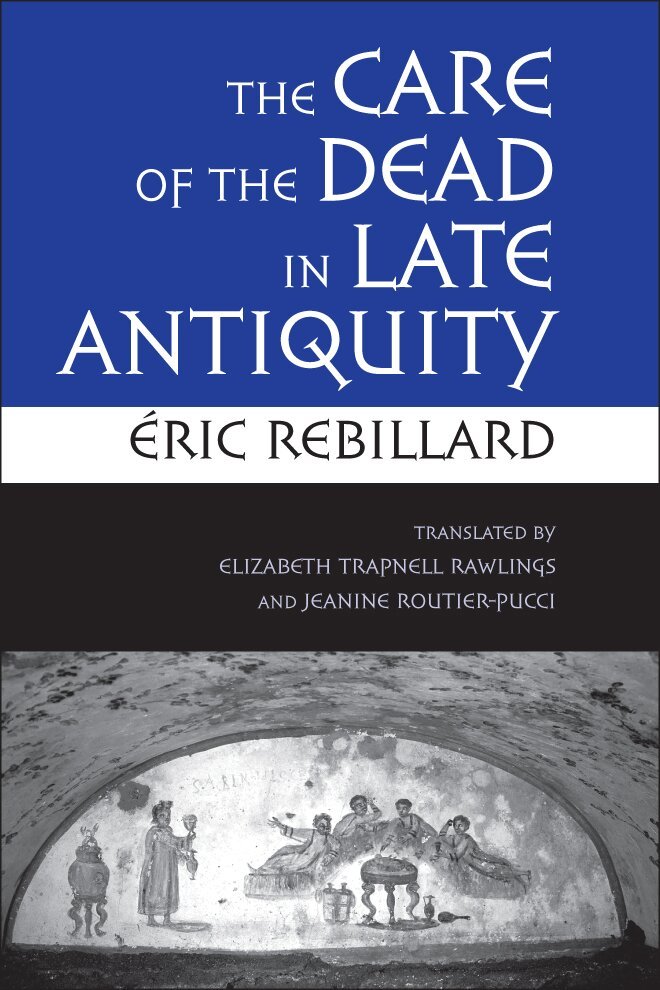
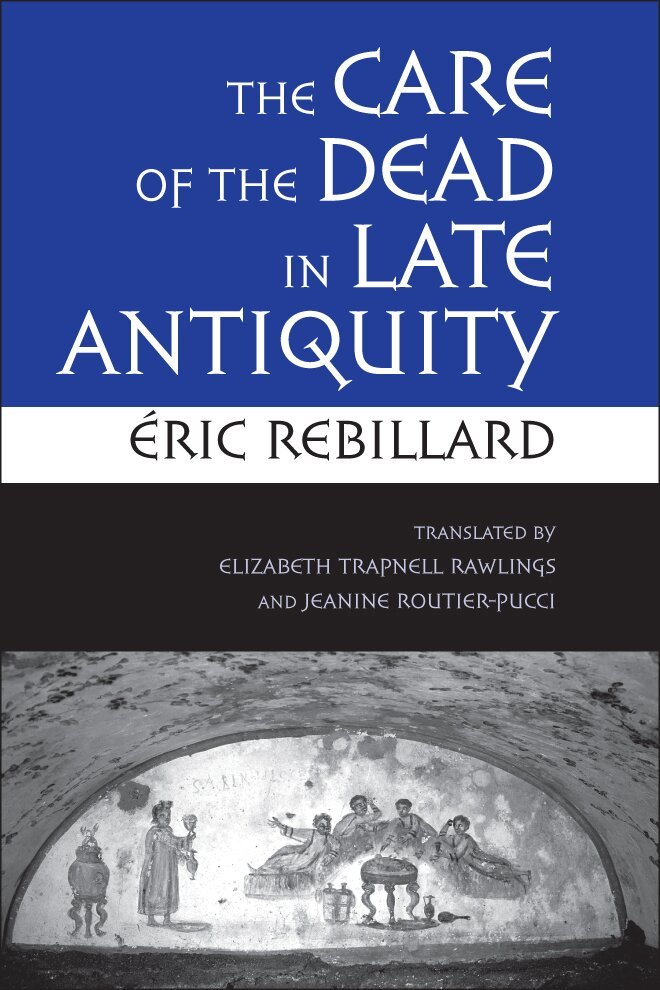
In this provocative book Éric Rebillard challenges many long-held assumptions about early Christian burial customs. For decades scholars of early Christianity have argued that the Church owned and operated burial grounds for Christians as early as the third century. Through a careful reading of primary sources including legal codes, theological works, epigraphical inscriptions, and sermons, Rebillard shows that there is little evidence to suggest that Christians occupied exclusive or isolated burial grounds in this early period. In fact, as late as the fourth and fifth centuries the Church did not impose on the faithful specific rituals for laying the dead to rest. In the preparation of Christians for burial, it was usually next of kin and not representatives of the Church who were responsible for what form of rite would be celebrated, and evidence from inscriptions and tombstones shows that for the most part Christians didn't separate themselves from non-Christians when burying their dead. According to Rebillard it would not be until the early Middle Ages that the Church gained control over burial practices and that "Christian cemeteries" became common.In this translation of Religion et Sépulture: L'église, les vivants et les morts dans l'Antiquité tardive, Rebillard fundamentally changes our understanding of early Christianity. The Care of the Dead in Late Antiquity will force scholars of the period to rethink their assumptions about early Christians as separate from their pagan contemporaries in daily life and ritual practice.
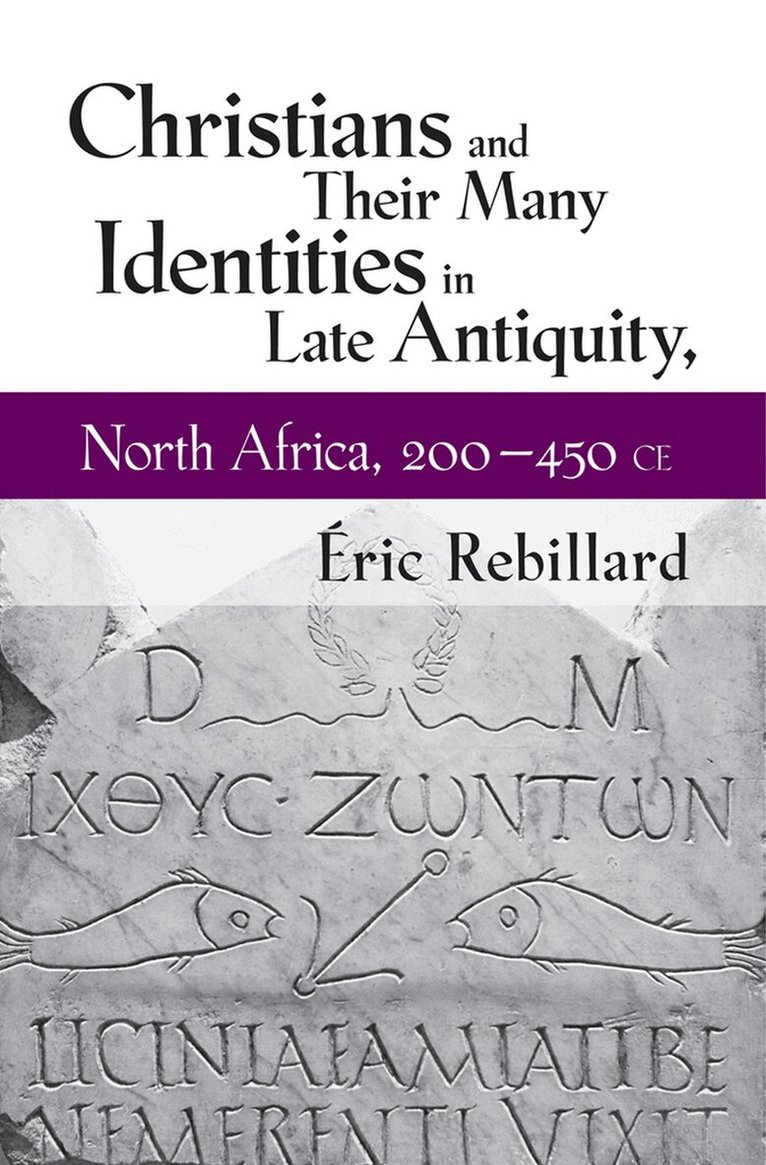
Christians and Their Many Identities in Late Antiquity, North Africa, 200-450 CE
Inbunden, Engelska, 2012
1 525 kr
Skickas inom 10-15 vardagar
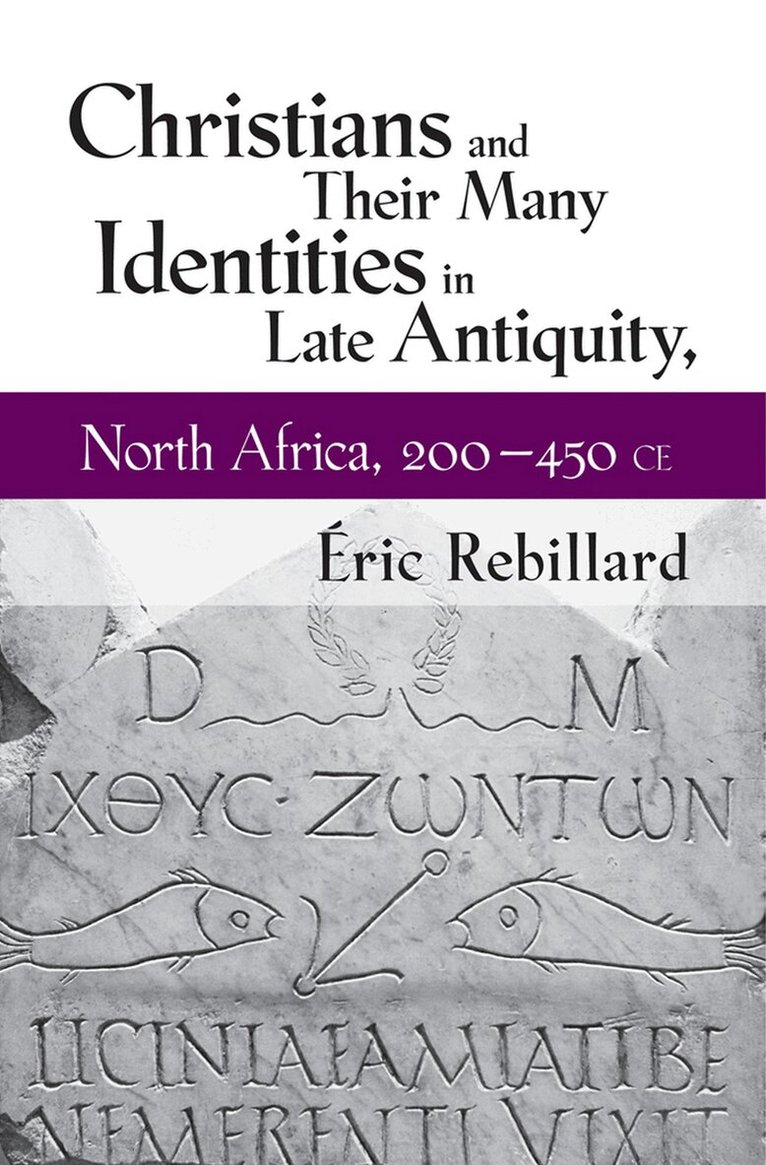
For too long, the study of religious life in Late Antiquity has relied on the premise that Jews, pagans, and Christians were largely discrete groups divided by clear markers of belief, ritual, and social practice. More recently, however, a growing body of scholarship is revealing the degree to which identities in the late Roman world were fluid, blurred by ethnic, social, and gender differences. Christianness, for example, was only one of a plurality of identities available to Christians in this period. In Christians and Their Many Identities in Late Antiquity, North Africa, 200–450 CE, Éric Rebillard explores how Christians in North Africa between the age of Tertullian and the age of Augustine were selective in identifying as Christian, giving salience to their religious identity only intermittently. By shifting the focus from groups to individuals, Rebillard more broadly questions the existence of bounded, stable, and homogeneous groups based on Christianness. In emphasizing that the intermittency of Christianness is structurally consistent in the everyday life of Christians from the end of the second to the middle of the fifth century, this book opens a whole range of new questions for the understanding of a crucial period in the history of Christianity.
288 kr
Skickas inom 10-15 vardagar
In this provocative book Éric Rebillard challenges many long-held assumptions about early Christian burial customs. For decades scholars of early Christianity have argued that the Church owned and operated burial grounds for Christians as early as the third century. Through a careful reading of primary sources including legal codes, theological works, epigraphical inscriptions, and sermons, Rebillard shows that there is little evidence to suggest that Christians occupied exclusive or isolated burial grounds in this early period. In fact, as late as the fourth and fifth centuries the Church did not impose on the faithful specific rituals for laying the dead to rest. In the preparation of Christians for burial, it was usually next of kin and not representatives of the Church who were responsible for what form of rite would be celebrated, and evidence from inscriptions and tombstones shows that for the most part Christians didn't separate themselves from non-Christians when burying their dead. According to Rebillard it would not be until the early Middle Ages that the Church gained control over burial practices and that "Christian cemeteries" became common.In this translation of Religion et Sépulture: L'église, les vivants et les morts dans l'Antiquité tardive, Rebillard fundamentally changes our understanding of early Christianity. The Care of the Dead in Late Antiquity will force scholars of the period to rethink their assumptions about early Christians as separate from their pagan contemporaries in daily life and ritual practice.
650 kr
Skickas inom 10-15 vardagar
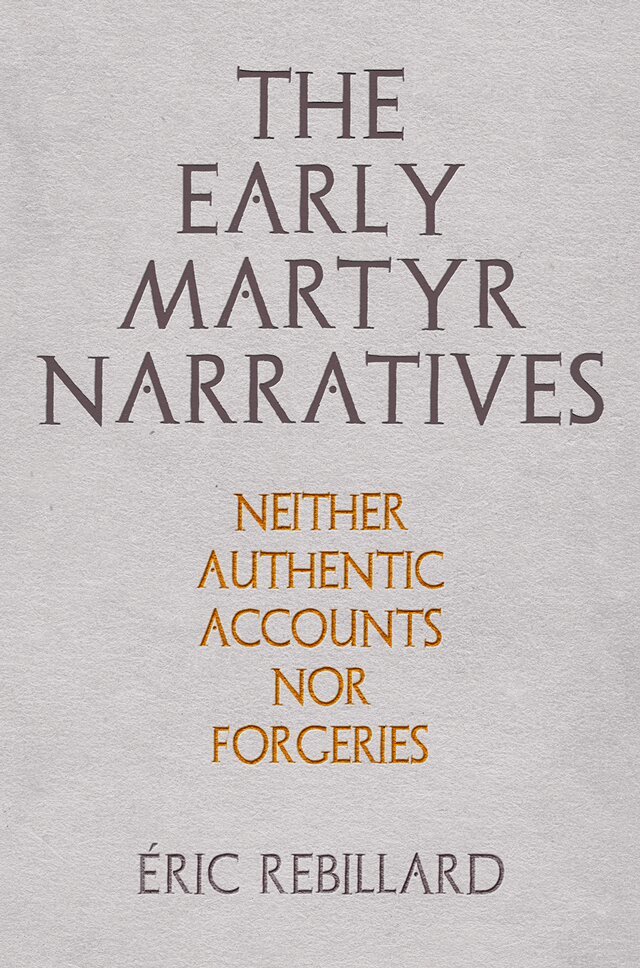
From Eusebius of Caesarea, who first compiled a collection of martyr narratives around 300, to Thierry Ruinart, whose Acta primorum martyrum sincera et selecta was published in 1689, the selection and study of early hagiographic narratives has been founded on an assumption that there existed documents written at the time of martyrdom, or very close to it. As a result, a search for authenticity has been and continues to be central, even in the context of today's secular scholarship. But, as Éric Rebillard contends, the alternative approach, to set aside entirely the question of the historical reliability of martyr narratives, is not satisfactory either. Instead, he argues that martyr narratives should be consider as fluid "living texts," written anonymously and received by audiences not as precise historical reports but as versions of the story. In other words, the form these texts took, between fact and fiction, made it possible for audiences to readily accept the historicity of the martyr while at the same time not expect to hear or read a truthful account.In The Early Martyr Narratives, Rebillard considers only accounts of Christian martyrs supposed to have been executed before 260, and only those whose existence is attested in sources that can be dated to before 300. The resulting small corpus contains no texts in the form of legal protocols, traditionally viewed as the earliest, most official and authentic records, nor does it include any that can be dated to a period during which persecution of Christians is known to have taken place. Rather than deduce from this that they are forgeries written for the sake of polemic or apologetic, Rebillard demonstrates how the literariness of the narratives creates a fictional complicity that challenges and complicates any claims of these narratives to be truthful.
712 kr
Skickas inom 11-20 vardagar
To understand the past, we necessarily group people together and, consequently, frequently assume that all of its members share the same attributes. In this ground-breaking volume, Éric Rebillard and Jörg Rüpke bring renowned scholars together to challenge this norm by seeking to rediscover the individual and to explore the dynamics between individuals and the groups to which they belong.Instead of taking religious groups as their point of departure, the authors in Group Identity and Religious Individuality in Late Antiquity address the methodological challenges attached to a rescaling of the analysis at the level of the individual. In particular, they explore the tension between looking for evidence about individuals and taking individuals into account when looking at evidence. Too often, the lack of direct evidence on individuals is used as a justification for taking the group as the unit of analysis. However, evidence on group life can be read with individuals as the focal point. What it reveals is how complex is the interaction of group identity and religious individuality.The questions examined by these authors include the complex relationships between institutional religions and religious individuals, the possibility of finding evidence on individual religiosity and exploring the multiplicity of roles and identities that characterizes every individual. Shifting the attention towards individuals also calls into question the assumption of groups and invites the study of group-making process. The result is a picture that makes room for dynamic tension between group identity and religious individuality.
2 098 kr
Skickas inom 10-15 vardagar
The eighteen papers collected in this volume - fifteen of which are published in English for the first time - explore the transformations of religious practices between the third and the fifth centuries in the Western part of the Roman Empire. They share an approach that privileges the study of processes and interactions and does not take for granted the categories and roles traditionally ascribed to social actors. A first group of papers focuses on the sermons and letters of Augustine of Hippo. These texts are precious evidence for balancing the clerical perspective that characterizes most of our sources and can thus shed a different light on the problem of Christianization. The second group collects papers that propose to shift attention from the construction of heresies to that of orthodoxy through the case-study of the controversy of Augustine against Pelagius and Julian of Eclanum. A last group present studies that look at the complex relation between burial and religion, with a particular focus on the role played by the church in the organization of the burial of Christians in Late Antiquity.
Christians and Their Many Identities in Late Antiquity, North Africa, 200-450 CE
Häftad, Engelska, 2017
369 kr
Skickas inom 10-15 vardagar
For too long, the study of religious life in Late Antiquity has relied on the premise that Jews, pagans, and Christians were largely discrete groups divided by clear markers of belief, ritual, and social practice. More recently, however, a growing body of scholarship is revealing the degree to which identities in the late Roman world were fluid, blurred by ethnic, social, and gender differences. Christianness, for example, was only one of a plurality of identities available to Christians in this period. In Christians and Their Many Identities in Late Antiquity, North Africa, 200–450 CE, Éric Rebillard explores how Christians in North Africa between the age of Tertullian and the age of Augustine were selective in identifying as Christian, giving salience to their religious identity only intermittently. By shifting the focus from groups to individuals, Rebillard more broadly questions the existence of bounded, stable, and homogeneous groups based on Christianness. In emphasizing that the intermittency of Christianness is structurally consistent in the everyday life of Christians from the end of the second to the middle of the fifth century, this book opens a whole range of new questions for the understanding of a crucial period in the history of Christianity.
884 kr
Skickas inom 3-6 vardagar
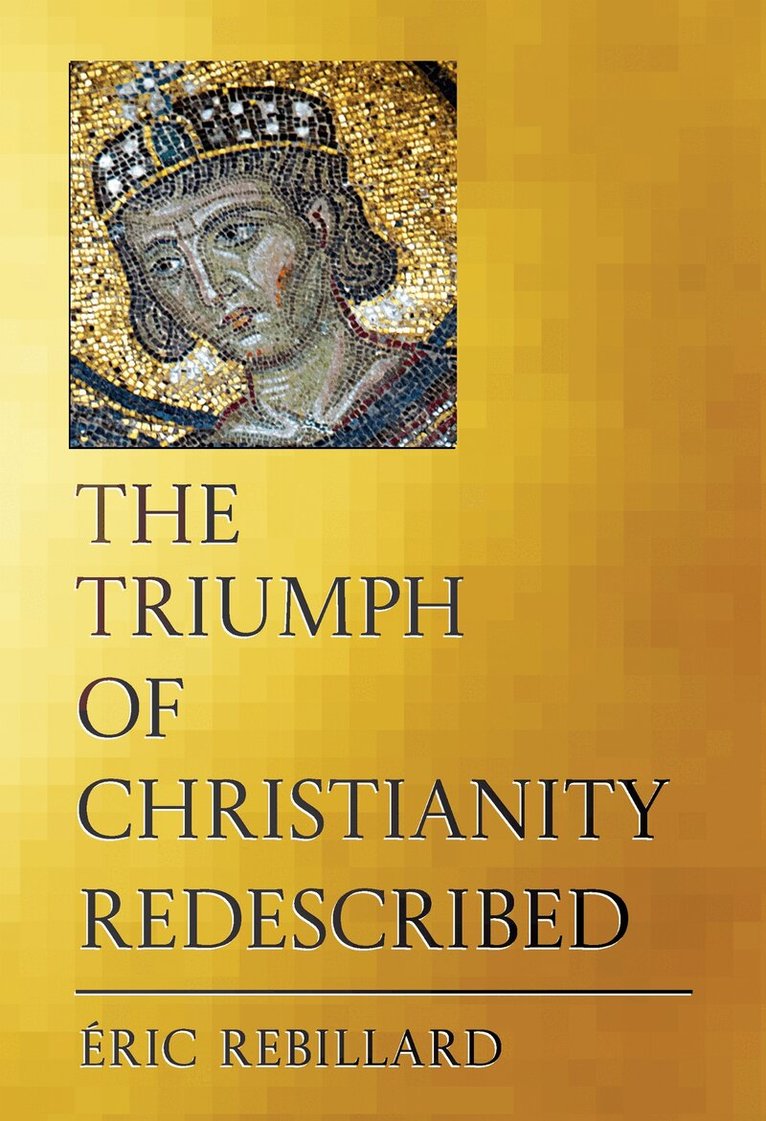
In The Triumph of Christianity Redescribed, Éric Rebillard argues that the appearance of Christian signs and practices in the Roman Empire has long been misunderstood. Rather than marking a rapid wave of conversions or the triumph of belief, the spread of Christian signs reflected a more complex and fluid religious landscape.Rebillard offers a striking new account of how Christianity took hold, not through adherence to doctrine or formal membership in a church, but through a gradual diffusion of signs and practices. Drawing on cognitive science, anthropology, and theories of religious mobility, he shows how individuals across the ancient Mediterranean experimented with religious symbols: adopting some, abandoning others, and often blending them without concern for consistency. Rebillard maps out a world where religious affiliation was provisional, situational, and rarely exclusive.The Triumph of Christianity Redescribed challenges the idea that Christianity's rise was a straightforward story of growth, mission, or hegemony. By replacing a triumphalist narrative with one attuned to ambiguity, resilience, and the everyday realities of religious life in late antiquity, Rebillard offers scholars and general readers alike a richer, more accurate account of how Christianity spread—and what that spread actually meant.