Evelyn Tribble – författare
Visar alla böcker från författaren Evelyn Tribble. Handla med fri frakt och snabb leverans.
5 produkter
5 produkter
727 kr
Skickas inom 10-15 vardagar
This collection considers issues that have emerged in Early Modern Studies in the past fifteen years relating to understandings of mind and body in Shakespeare’s world. Informed by The Body in Parts, the essays in this book respond also to the notion of an early modern ‘body-mind’ in which Shakespeare and his contemporaries are understood in terms of bodily parts and cognitive processes. What might the impact of such understandings be on our picture of Shakespeare’s theatre or on our histories of the early modern period, broadly speaking? This book provides a wide range of approaches to this challenge, covering histories of cognition, studies of early modern stage practices, textual studies, and historical phenomenology, as well as new cultural histories by some of the key proponents of this approach at the present time. Because of the breadth of material covered, full weight is given to issues that are hotly debated at the present time within Shakespeare Studies: presentist scholarship is presented alongside more historically-focused studies, for example, and phenomenological studies of material culture are included along with close readings of texts. What the contributors have in common is a refusal to read the work of Shakespeare and his contemporaries either psychologically or materially; instead, these essays address a willingness to study early modern phenomena (like the Elizabethan stage) as manifesting an early modern belief in the embodiment of cognition.
3 405 kr
Skickas inom 10-15 vardagar
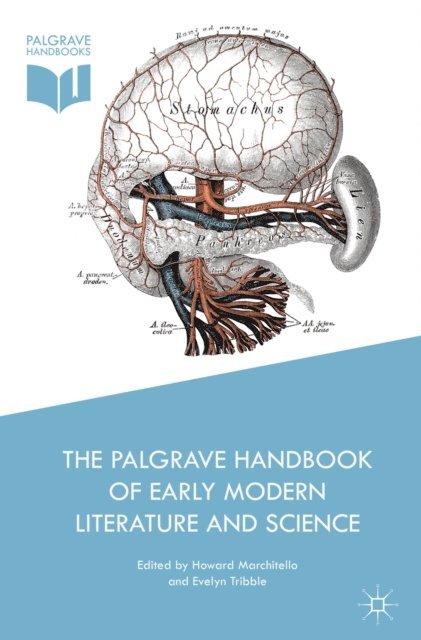
It does not cast the literary and the scientific as distinct, but rather as productively in-distinct cultural practices: for the two dozen new essays collected here, the presiding concern is no longer to ask how literary writers react to scientific writers, but rather to study how literary and scientific practices are imbricated.
2 508 kr
Skickas inom 10-15 vardagar
This collection considers issues that have emerged in Early Modern Studies in the past fifteen years relating to understandings of mind and body in Shakespeare’s world. Informed by The Body in Parts, the essays in this book respond also to the notion of an early modern ‘body-mind’ in which Shakespeare and his contemporaries are understood in terms of bodily parts and cognitive processes. What might the impact of such understandings be on our picture of Shakespeare’s theatre or on our histories of the early modern period, broadly speaking? This book provides a wide range of approaches to this challenge, covering histories of cognition, studies of early modern stage practices, textual studies, and historical phenomenology, as well as new cultural histories by some of the key proponents of this approach at the present time. Because of the breadth of material covered, full weight is given to issues that are hotly debated at the present time within Shakespeare Studies: presentist scholarship is presented alongside more historically-focused studies, for example, and phenomenological studies of material culture are included along with close readings of texts. What the contributors have in common is a refusal to read the work of Shakespeare and his contemporaries either psychologically or materially; instead, these essays address a willingness to study early modern phenomena (like the Elizabethan stage) as manifesting an early modern belief in the embodiment of cognition.
423 kr
Skickas inom 10-15 vardagar
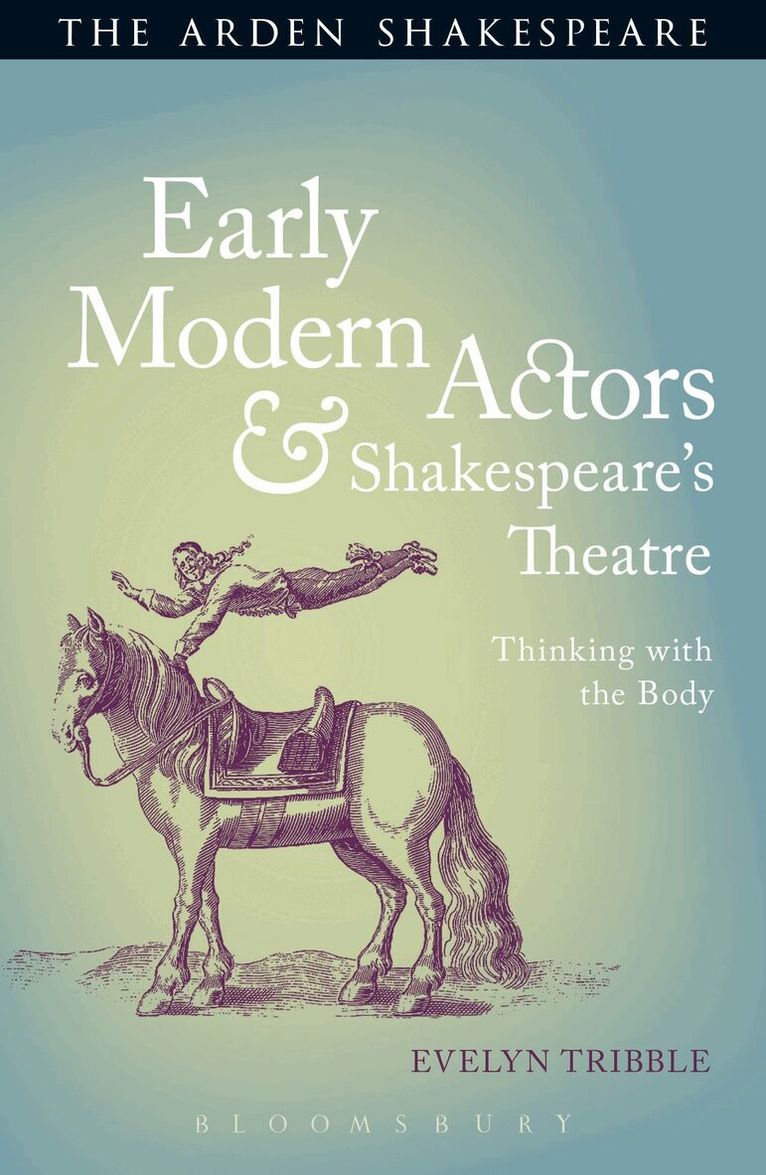
What skills did Shakespeare’s actors bring to their craft? How do these skills differ from those of contemporary actors? Early Modern Actors and Shakespeare's Theatre: Thinking with the Body examines the ‘toolkit’ of the early modern player and suggests new readings of the plays of Shakespeare and his contemporaries through the lens of their many skills.Theatre is an ephemeral medium. Little remains to us of the plays of Shakespeare and his contemporaries: some printed texts, scattered documents and records, and a few scraps of description, praise, and detraction. Because most of what survives are printed playbooks, students of English theatre find it easy to forget that much of what happened on the early modern stage took place within the gaps of written language: the implicit or explicit calls for fights, dances, military formations, feats of physical skill, song, and clowning. Theatre historians and textual editors have often ignored or denigrated such moments, seeing them merely as extraneous amusements or signs that the text has been ‘corrupted’ by actors. This book argues that recapturing a positive account of the skills and expertise of the early modern players will result in a more capacious understanding of the nature of theatricality in the period.
1 808 kr
Skickas inom 10-15 vardagar
What skills did Shakespeare’s actors bring to their craft? How do these skills differ from those of contemporary actors? Early Modern Actors and Shakespeare's Theatre: Thinking with the Body examines the ‘toolkit’ of the early modern player and suggests new readings of the plays of Shakespeare and his contemporaries through the lens of their many skills.Theatre is an ephemeral medium. Little remains to us of the plays of Shakespeare and his contemporaries: some printed texts, scattered documents and records, and a few scraps of description, praise, and detraction. Because most of what survives are printed playbooks, students of English theatre find it easy to forget that much of what happened on the early modern stage took place within the gaps of written language: the implicit or explicit calls for fights, dances, military formations, feats of physical skill, song, and clowning. Theatre historians and textual editors have often ignored or denigrated such moments, seeing them merely as extraneous amusements or signs that the text has been ‘corrupted’ by actors. This book argues that recapturing a positive account of the skills and expertise of the early modern players will result in a more capacious understanding of the nature of theatricality in the period.