Fani Kountouri - Böcker
Visar alla böcker från författaren Fani Kountouri. Handla med fri frakt och snabb leverans.
4 produkter
4 produkter
1 484 kr
Skickas inom 10-15 vardagar
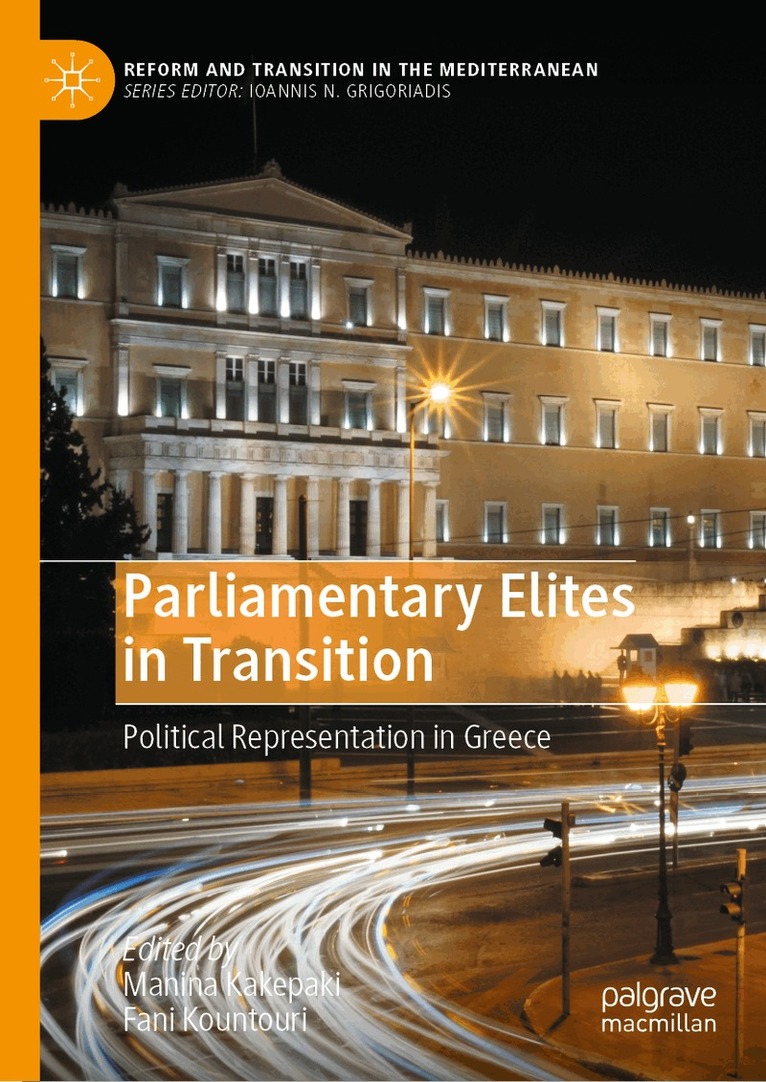
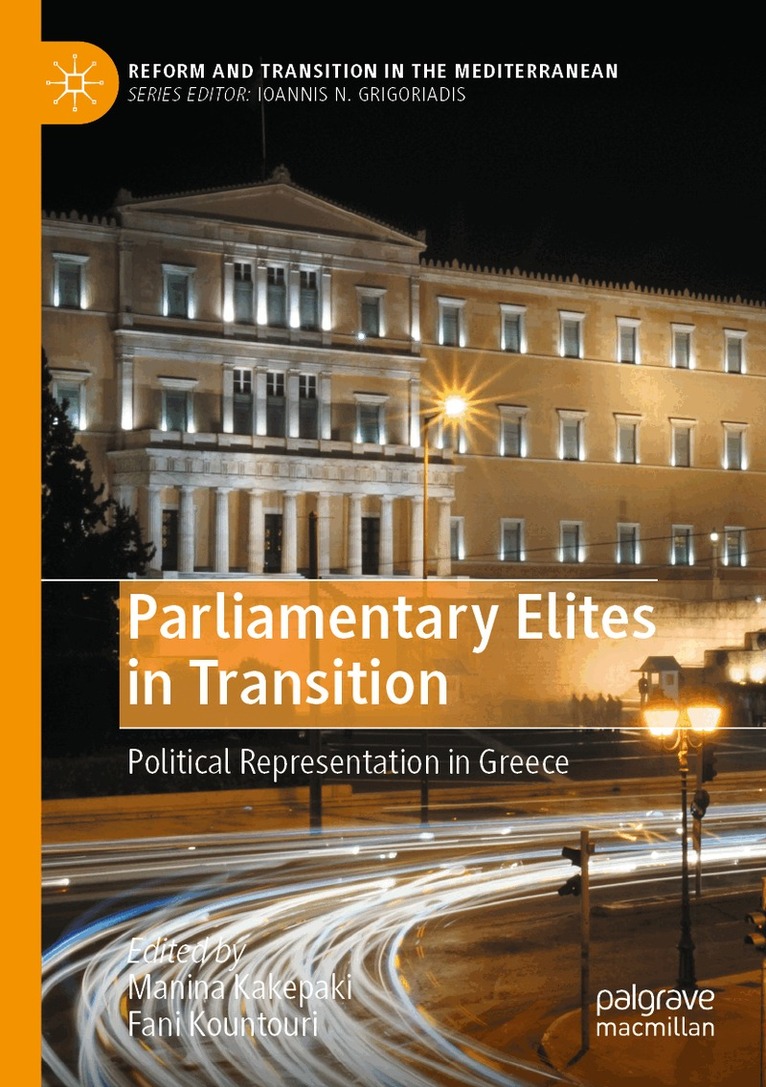
This edited volume contributes to a better understanding of parliamentary changes in times of political transition, and, specifically, the composition of the Greek Parliament before and after the debt crisis.
634 kr
Skickas inom 5-8 vardagar
1 484 kr
Skickas inom 10-15 vardagar
This edited volume contributes to a better understanding of parliamentary changes in times of political transition, and, specifically, the composition of the Greek Parliament before and after the debt crisis. It discusses the profiles of Greek MPs through the lens of continuity and renewal, starting with the first major political crisis after the Metapolitefsi in 1989 and ending with the last legislative elections of 2019. Greece attracted scholarly and international interest due to the transformations that the sovereign debt crisis provoked to its political and partisan system. It is one of the countries of the European periphery most severely hit during the great recession. However, no work so far has been devoted exclusively to the study of Greek parliamentary elites, their cultural and political characteristics, and the factors that shape their selection and election. The book is a multifaceted source of information for all those interested in understanding forms of political representation during normal times and times of crisis. Its distinctive advantage is that it offers an up to date and complete elite study in Greece comparable to similar European studies. Moreover, it is a useful tool for students, scholars and researchers interested in the study of political representation across Europe.
534 kr
Skickas inom 10-15 vardagar
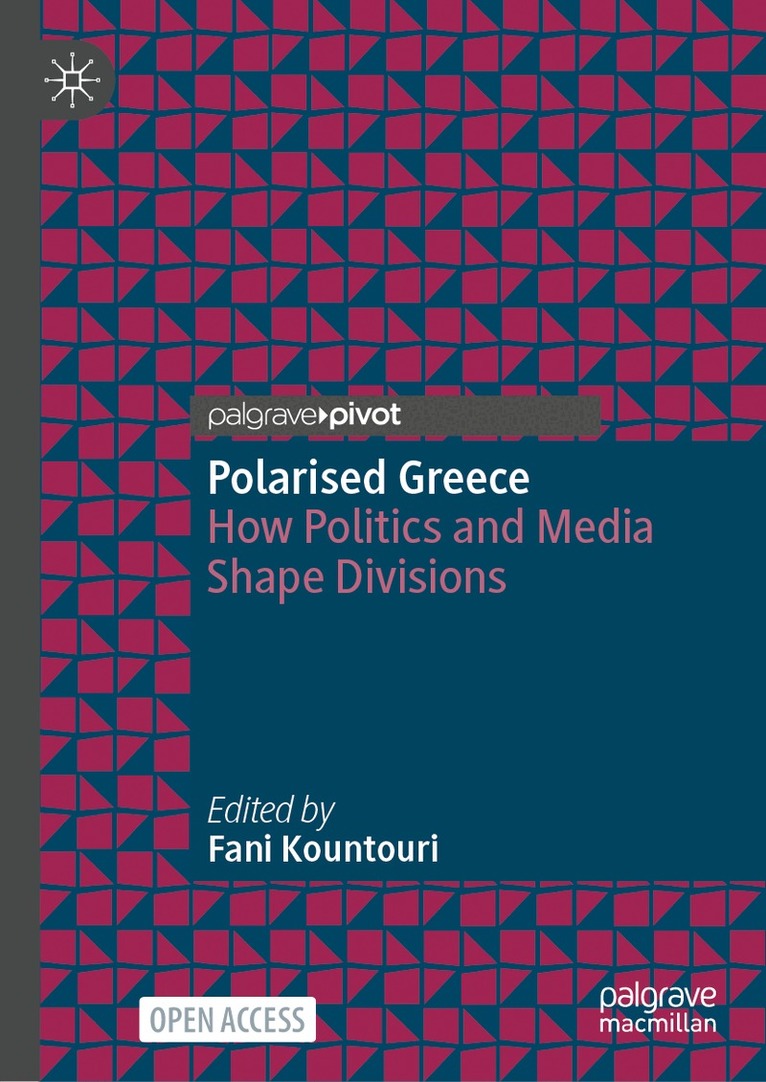
This open access book of a collective volume offers a comprehensive understanding of political polarization and its implications for democracy. The recent revival of the concept in political debates and academic literature reflects growing concerns about how polarized societies affect democratic norms. In increasingly divided environments, opposing camps express mutual distrust or even hostility, fuelling the rise of extremist parties, hate speech, and anti-political sentiment. Based on a funded research project (Hellenic Foundation for Research and Innovation (H.F.R.I.) Project No 4527) the volume develops a theoretical and methodological framework to explore how oppositions are constructed across different actors and levels, contributing to an integrated and comprehensive approach of political polarization enriching the study of political competition and cleavages in Greece, while also offering insights of broader comparative and international significance.Internationally, studies on political polarization are reviving but remain fragmented across disciplines. In Greece, systematic interdisciplinary research has been scarce. This volume bridges that gap by integrating political science, sociology, and communication, analyzing the shift from issue-based to affective polarization through mixed qualitative and quantitative methods. Focusing on the profoundly polarizing decade between 2010 and 2020, the book situates polarization within multiple overlapping crises—the debt crisis, the refugee crisis, democratic backsliding, the COVID-19 pandemic, and the Prespa Agreement. These crises redefined the socio-political landscape intensifying existing divisions and generating new lines of conflict: memorandum versus anti-memorandum, pro versus anti-immigration, pro versus anti Europe and nationalist versus cosmopolitan identities. By analyzing how antagonistic narratives construct enemies—political opponents, minorities, or external actors like the EU—as threats to national, economic, or cultural stability, the volume demonstrates how such rhetoric fuels polarization. This process solidifies in-group and out-group dynamics deepening affective polarization. This book addresses scholars, policymakers, and engaged citizens seeking to understand how historical, cultural, and institutional dynamics shape contemporary political conflicts in Greece and comparable contexts.