Fareed Zakaria - Böcker
Visar alla böcker från författaren Fareed Zakaria. Handla med fri frakt och snabb leverans.
20 produkter
20 produkter
177 kr
Skickas inom 7-10 vardagar
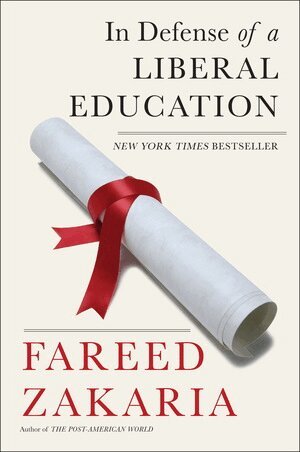
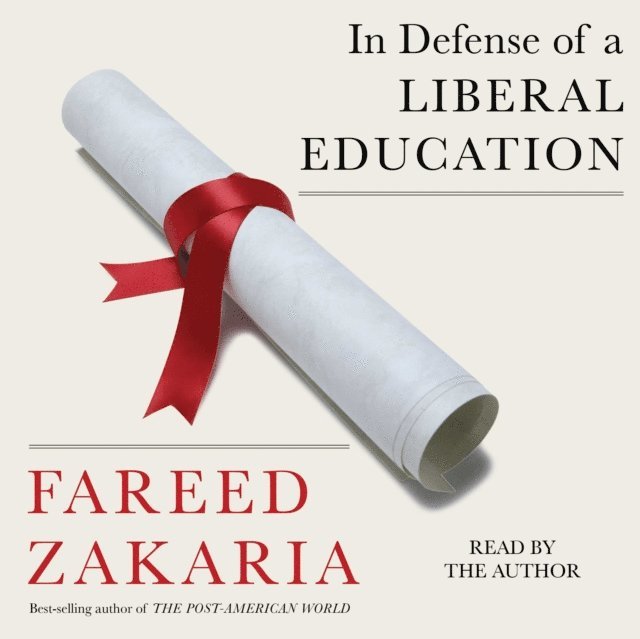
The liberal arts are under attack. Degree courses like English and history, once very popular and highly respected, are in steep decline. In the US President Obama recently urged students to keep in mind that technical training could be more valuable than a degree in art history.In this urgently needed book, Fareed Zakaria argues that this turn away from the liberal arts is a mistake. A liberal education teaches you how to write, how to speak your mind and how to learn—immensely valuable tools no matter what your profession. Technology and globalisation are actually making these skills even more valuable as routine mechanical and even computing tasks can be done by machines or workers in low-wage countries. More than just a path to a career, a liberal education is an exercise in freedom. Above all, it is an expression of the most basic urge of the human spirit—to know.
111 kr
Skickas
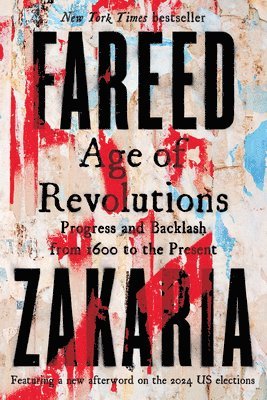
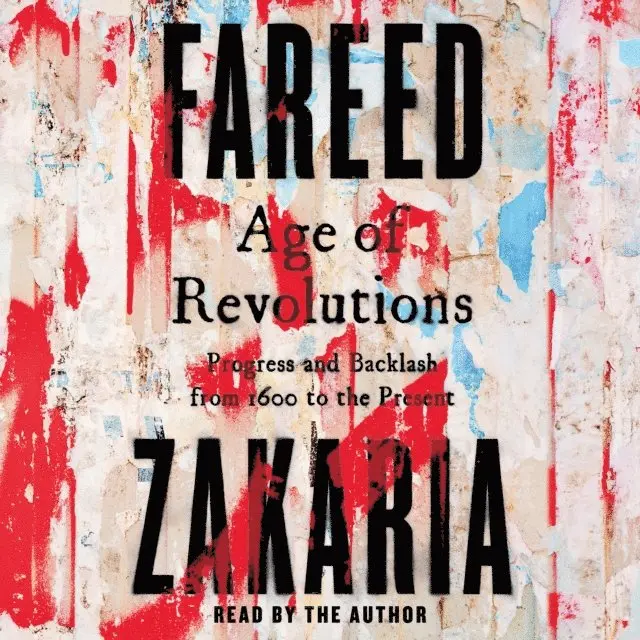
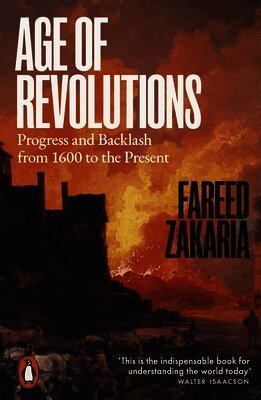
Populist rage, ideological fracture, economic and technological shocks, war, and an international system studded with catastrophic risk—the early decades of the twenty-first century may be the most revolutionary period in modern history. But it is not the first. Humans have lived, and thrived, through more than one great realignment. What are these revolutions, and how can they help us to understand our fraught world?In this major work, Fareed Zakaria masterfully investigates the eras and movements that have shaken norms while shaping the modern world. Three such periods hold profound lessons for today. First, in the seventeenth-century Netherlands, a fascinating series of transformations made that tiny land the richest in the world—and created politics as we know it today. Next, the French Revolution, an explosive era that devoured its ideological children and left a bloody legacy that haunts us today. Finally, the mother of all revolutions, the Industrial Revolution, which catapulted Great Britain and the US to global dominance and created the modern world.Alongside these paradigm-shifting historical events, Zakaria probes four present-day revolutions: globalization, technology, identity, and geopolitics. For all their benefits, the globalization and technology revolutions have produced profound disruptions and pervasive anxiety and our identity. And increasingly, identity is the battlefield on which the twenty-first century’s polarized politics are fought. All this is set against a geopolitical revolution as great as the one that catapulted the United States to world power in the late nineteenth century. Now we are entering a world in which the US is no longer the dominant power. As we find ourselves at the nexus of four seismic revolutions, we can easily imagine a dark future. But Zakaria proves that pessimism is premature. If we act wisely, the liberal international order can be revived and populism relegated to the ash heap of history.As few public intellectuals can, Zakaria combines intellectual range, deep historical insight, and uncanny prescience to once again reframe and illuminate our turbulent present. His bold, compelling arguments make this book essential reading in our age of revolutions.
116 kr
Skickas
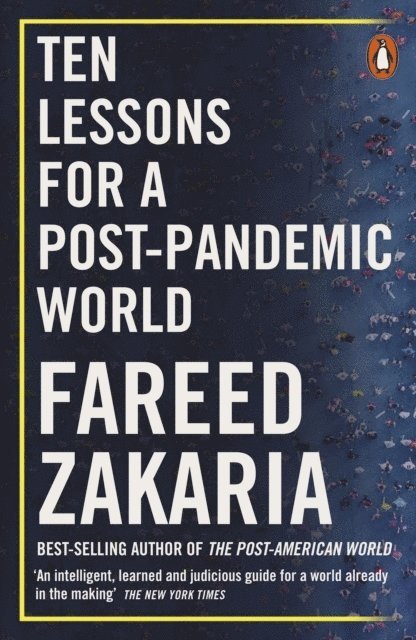
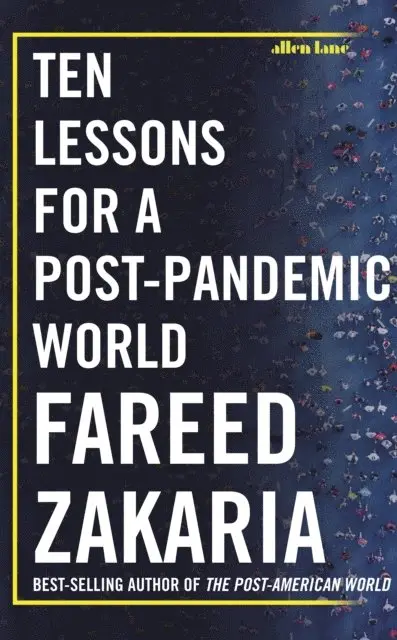
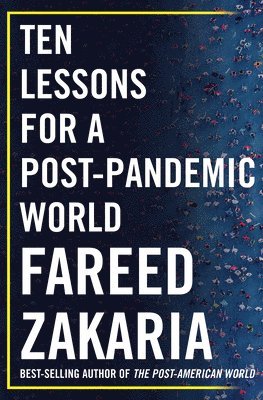
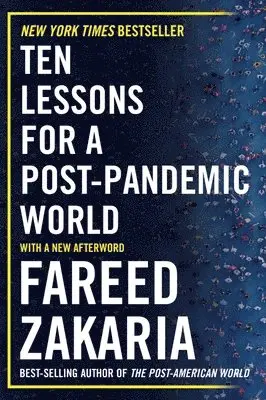
From the international bestselling author of The Post-American World 'An intelligent, learned and judicious guide for a world already in the making' The New York TimesSince the end of the Cold War, the world has been shaken to its core three times. 11 September 2001, the financial collapse of 2008 and - most of all - Covid-19. Each was an asymmetric threat, set in motion by something seemingly small, and different from anything the world had experienced before. Lenin is supposed to have said, 'There are decades when nothing happens and weeks when decades happen.' This is one of those times when history has sped up.In this urgent and timely book, Fareed Zakaria, one of the 'top ten global thinkers of the last decade' (Foreign Policy), foresees the nature of a post-pandemic world: the political, social, technological and economic consequences that may take years to unfold. In ten surprising, hopeful 'lessons', he writes about the acceleration of natural and biological risks, the obsolescence of the old political categories of right and left, the rise of 'digital life', the future of globalization and an emerging world order split between the United States and China. He invites us to think about how we are truly social animals with community embedded in our nature, and, above all, the degree to which nothing is written - the future is truly in our own hands.Ten Lessons for a Post-Pandemic World speaks to past, present and future, and will become an enduring reflection on life in the early twenty-first century.
314 kr
Skickas
A New York Times BestsellerThe international best-selling author explores the revolutions, past and present, that define the chaotic, polarized and unstable age in which we live.Fareed Zakaria first warned of the threat of “illiberal democracy” two decades ago. Now comes Age of Revolutions: Progress and Backlash from 1600 to the Present. A decade in the making, the book is based on deep research and conversations with world leaders from Emmanuel Macron to Lee Kuan Yew. In it Zakaria sets our era of populist chaos into the sweep of history.Age of Revolutions tells the story of progress and backlash, of the rise of classical liberalism and of the many periods of rage and counter-revolution that followed seismic change. It begins with the upstart Dutch Republic, the first modern republic and techno-superpower where refugees and rebels flocked for individual liberty. That haven for liberalism was almost snuffed out by force – until Dutch ideas leapt across the English Channel in the so-called “Glorious Revolution.” Not all revolutions were so glorious, however. The French Revolution shows us the dangers of radical change that is imposed top-down. Lasting change comes bottom-up, like the Industrial Revolution in Britain and the United States, which fueled the rise of the world’s modern superpowers and gave birth to the political divides we know today. Even as Britain and America boomed, technology unsettled society and caused backlash from machine-smashing Luddites and others who felt threatened by this new world.In the second half of the book, Zakaria details the revolutions that have convulsed our times: globalization in overdrive, digital transformation, the rise of identity politics, and the return of great power politics with a vengeful Russia and an ascendant China. Vladimir Putin and Xi Jingping see a world upended by liberalism – and want to turn back the clock on democracy, women’s rights, and open societies. Even more dangerous than aggression abroad is democratic decay at home. This populist and cultural backlash that has infected the West threatens the very foundations of the world that the Enlightenment built – and that we all take too easily for granted.The book warns us that liberalism’s great strength has been freeing people from arbitrary constraints—but its great weakness has been leaving individuals isolated, to figure out for themselves what makes for a good life. This void – the hole in the heart – can all too easily be filled by tribalism, populism, and identity politics. Today’s revolutions in technology and culture can even leave people so adrift that they turn against modernity itself.
122 kr
Skickas
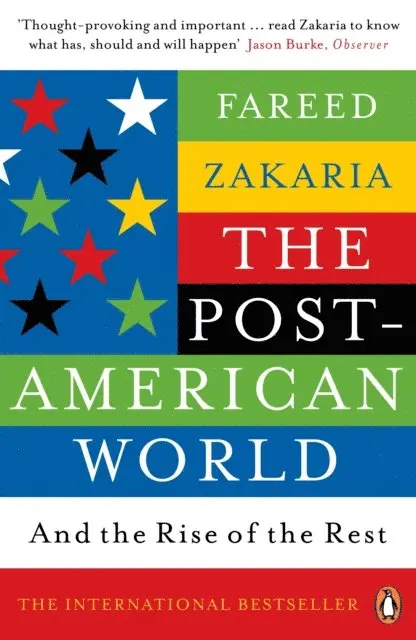
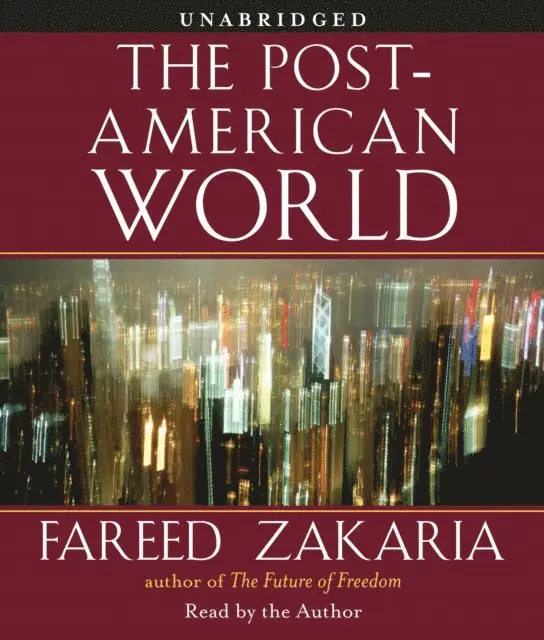
'Thought provoking and important ... read Zakaria to know what has, should and will happen' ObserverThe growth of countries such as India, China, Brazil, Russia, South Africa and Kenya is generating a new landscape. The tallest buildings, biggest dams, highest-grossing movies and most advanced mobile phones are now all being made outside Europe and the United States. Countries that previously lacked polotical confidence and national pride are finding them.Is this an opportunity, or a threat? Fareed Zakaria's acclaimed bestseller, now expanded with a new afterword and throroughly updated throughout, has been heralded as the most thought-provoking book yet on our uncertain times. With lucidity, insight and imagination, he shows how the West must transform its global strategy, moving from a position of hegemony to one that recognizes this seismic power shift.
267 kr
Skickas inom 7-10 vardagar
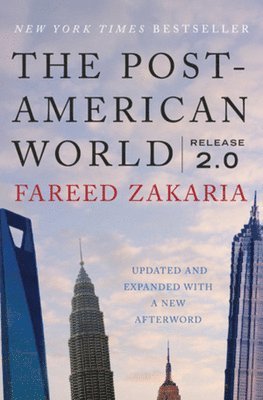
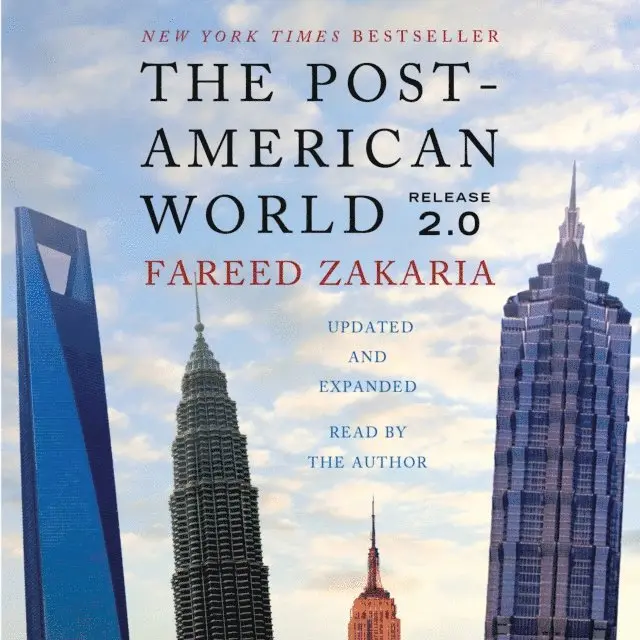
Fareed Zakaria’s international bestseller The Post-American World pointed to the “rise of the rest”—the growth of countries like China, India, Brazil, and others—as the great story of our time, the story that will undoubtedly shape the future of global power. Since its publication, the trends he identified have proceeded faster than anyone could have anticipated. The 2008 financial crisis turned the world upside down, stalling the United States and other advanced economies. Meanwhile emerging markets have surged ahead, coupling their economic growth with pride, nationalism, and a determination to shape their own future.In this new edition, Zakaria makes sense of this rapidly changing landscape. With his customary lucidity, insight, and imagination, he draws on lessons from the two great power shifts of the past 500 years—the rise of the Western world and the rise of the United States—to tell us what we can expect from the third shift, the “rise of the rest.” The great challenge for Britain was economic decline. The challenge for America now is political decline, for as others have grown in importance, the central role of the United States, especially in the ascendant emerging markets, has already begun to shrink. As Zakaria eloquently argues, Washington needs to begin a serious transformation of its global strategy, moving from its traditional role of dominating hegemon to that of a more pragmatic, honest broker. It must seek to share power, create coalitions, build legitimacy, and define the global agenda—all formidable tasks.None of this will be easy for the greatest power the world has ever known—the only power that for so long has really mattered. America stands at a crossroads: In a new global era where the United States no longer dominates the worldwide economy, orchestrates geopolitics, or overwhelms cultures, can the nation continue to thrive?
245 kr
Skickas
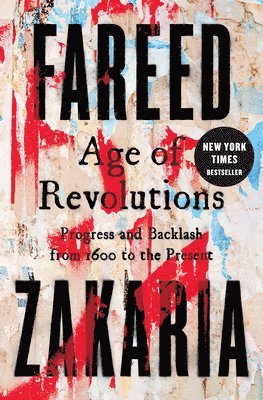
Populist rage, ideological fracture, economic and technological shocks, war, and an international system studded with catastrophic risk—the early decades of the twenty-first century may be the most revolutionary period in modern history. But it is not the first. Humans have lived, and thrived, through more than one great realignment. What are these revolutions, and how can they help us to understand our fraught world?In this major work, Fareed Zakaria masterfully investigates the eras and movements that have shaken norms while shaping the modern world. Three such periods hold profound lessons for today. First, in the seventeenth-century Netherlands, a fascinating series of transformations made that tiny land the richest in the world—and created politics as we know it today. Next, the French Revolution, an explosive era that devoured its ideological children and left a bloody legacy that haunts us today. Finally, the mother of all revolutions, the Industrial Revolution, which catapulted Great Britain and the US to global dominance and created the modern world.Alongside these paradigm-shifting historical events, Zakaria probes four present-day revolutions: globalization, technology, identity, and geopolitics. For all their benefits, the globalization and technology revolutions have produced profound disruptions and pervasive anxiety and our identity. And increasingly, identity is the battlefield on which the twenty-first century’s polarized politics are fought. All this is set against a geopolitical revolution as great as the one that catapulted the United States to world power in the late nineteenth century. Now we are entering a world in which the US is no longer the dominant power. As we find ourselves at the nexus of four seismic revolutions, we can easily imagine a dark future. But Zakaria proves that pessimism is premature. If we act wisely, the liberal international order can be revived and populism relegated to the ash heap of history.As few public intellectuals can, Zakaria combines intellectual range, deep historical insight, and uncanny prescience to once again reframe and illuminate our turbulent present. His bold, compelling arguments make this book essential reading in our age of revolutions.
210 kr
Tillfälligt slut
163 kr
Skickas inom 7-10 vardagar
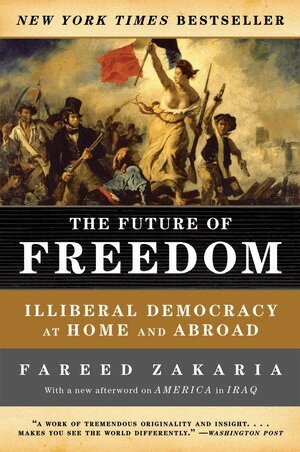
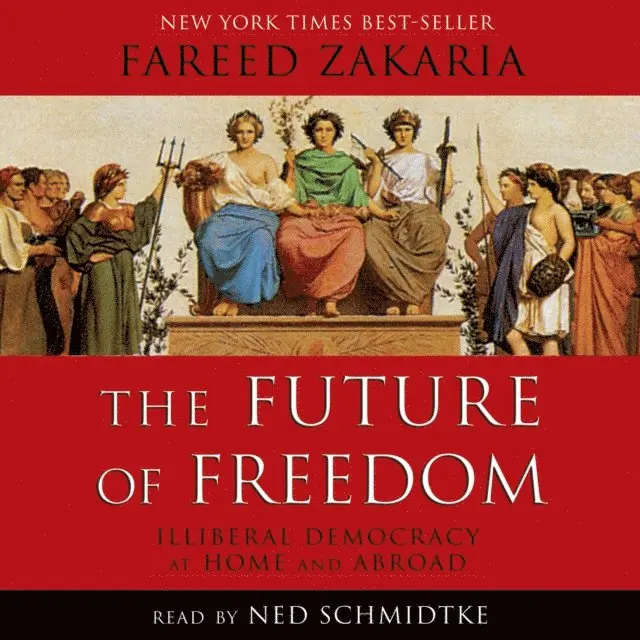
Translated into twenty languages ?The Future of Freedom ?is a modern classic that uses historical analysis to shed light on the present, examining how democracy has changed our politics, economies, and social relations. Prescient in laying out the distinction between democracy and liberty, the book contains a new afterword on the United States's occupation of Iraq and a wide-ranging update of the book's themes.
172 kr
Skickas inom 7-10 vardagar
“This is not a book about thedecline of America, but rather about the rise of everyone else.” So beginsFareed Zakaria’s blockbuster on the United States in the twenty-first century,and the trends he identifies have proceeded faster than anyone anticipated. Howmight the nation continue to thrive in a truly global era? In this fullyupdated 2.0 edition, Zakaria answers these questions with his customarylucidity, insight, and imagination.
241 kr
Skickas inom 7-10 vardagar
Lenin once said, "There are decades when nothing happens and weeks when decades happen." This is one of those times when history has sped up. CNN host and best-selling author Fareed Zakaria helps readers to understand the nature of a post-pandemic world: the political, social, technological, and economic consequences that may take years to unfold. Written in the form of ten "lessons," covering topics from natural and biological risks to the rise of "digital life" to an emerging bipolar world order, Zakaria helps readers to begin thinking beyond the immediate effects of COVID-19. Ten Lessons for a Post-Pandemic World speaks to past, present, and future, and, while urgent and timely, is sure to become an enduring reflection on life in the early twenty-first century.
160 kr
Skickas inom 7-10 vardagar
Lenin once said, "There are decades when nothing happens and weeks when decades happen." This is one of those times when history has sped up. CNN host and best-selling author Fareed Zakaria helps readers to understand the nature of a post-pandemic world: the political, social, technological, and economic consequences that may take years to unfold. Written in the form of ten "lessons," covering topics from natural and biological risks to the rise of "digital life" to an emerging bipolar world order, Zakaria helps readers to begin thinking beyond the immediate effects of COVID-19. Ten Lessons for a Post-Pandemic World speaks to past, present, and future, and, while urgent and timely, is sure to become an enduring reflection on life in the early twenty-first century.
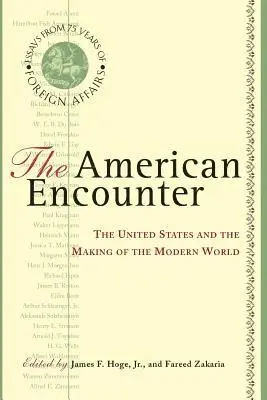
American Encounter
The United States And The Making Of The Modern World: Essays From 75 Years Of Foreign Affairs
Häftad, Engelska, 1998
398 kr
Skickas inom 5-8 vardagar
Since its founding in 1922, Foreign Affairs has been the world's leading journal of international relations, a distinction earned by providing the most insightful and far-reaching commentary on global politics and economic policy available anywhere. America has increasingly played a pivotal role in world events, whether military, political, economic, or ideological, and Foreign Affairs and its contributors have been at the centre of each debate.It was in Foreign Affairs that George Kennan first proposed the policy of containment that became the touchstone of U.S. strategy during the Cold War that statesmen-scholars like Henry Kissinger and Arthur Schlesinger have debated the contentious issues of nuclear weapons and human rights that journalists like Walter Lippmann and James Reston have offered prescient analyses of American foreign policy and that thinkers like Isaiah Berlin and Samuel Huntington have explained the changing nature of the world. In The American Encounter, readers will find these landmark essays and many more in a unique intellectual history of this century and of the extraordinary role that America has played in it.There is no other book like this, because there is no other publication like Foreign Affairs. The American Encounter is a powerful link to the giants of history,those visionaries whose warnings and advice still speak to us today, offering wisdom, insight, and a greater understanding of America's place in the world.
339 kr
Skickas inom 7-10 vardagar
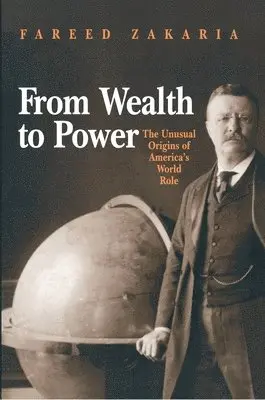
What turns rich nations into great powers? How do wealthy countries begin extending their influence abroad? These questions are vital to understanding one of the most important sources of instability in international politics: the emergence of a new power. In From Wealth to Power, Fareed Zakaria seeks to answer these questions by examining the most puzzling case of a rising power in modern history--that of the United States. If rich nations routinely become great powers, Zakaria asks, then how do we explain the strange inactivity of the United States in the late nineteenth century? By 1885, the U.S. was the richest country in the world. And yet, by all military, political, and diplomatic measures, it was a minor power. To explain this discrepancy, Zakaria considers a wide variety of cases between 1865 and 1908 when the U.S. considered expanding its influence in such diverse places as Canada, the Dominican Republic, and Iceland. Consistent with the realist theory of international relations, he argues that the President and his administration tried to increase the country's political influence abroad when they saw an increase in the nation's relative economic power.But they frequently had to curtail their plans for expansion, he shows, because they lacked a strong central government that could harness that economic power for the purposes of foreign policy. America was an unusual power--a strong nation with a weak state. It was not until late in the century, when power shifted from states to the federal government and from the legislative to the executive branch, that leaders in Washington could mobilize the nation's resources for international influence. Zakaria's exploration of this tension between national power and state structure will change how we view the emergence of new powers and deepen our understanding of America's exceptional history.
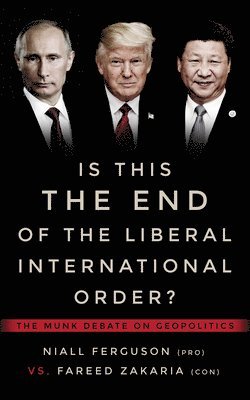
Is This the End of the Liberal International Order?
The Munk Debate on Geopolitics
Häftad, Engelska, 2017
207 kr
Skickas inom 3-6 vardagar
136 kr
Tillfälligt slut
Is China's rise unstoppable? Powered by the human capital of 1.3 billion citizens, the latest technological advances, and a comparatively efficient system of state-directed capitalism, China seems poised to become the global superpower this century. But the Middle Kingdom also faces a series of challenges. From energy scarcity to environmental degradation to political unrest and growing global security burdens, a host of factors could derail China's global ascent. In this edition of The Munk Debates — Canada's premier international debate series — former U.S. Secretary of State Henry Kissinger and CNN's Fareed Zakaria square off against leading historian Niall Ferguson and world-renowned economist David Daokui Li to debate the biggest geopolitical issue of our time: Does the 21st century belong to China? Highly electrifying and thoroughly engrossing, the Munk Debate on China is the first formal public debate Dr. Kissinger has participated in on China's future, and includes exclusive interviews with Henry Kissinger and David Daokui Li.
136 kr
Tillfälligt slut
With tensions between Iran, Israel, and Western powers reaching new highs over the Islamic Republic’s nuclear enrichment program, the tenth edition of the Munk Debates investigates how the world should respond to Iran’s nuclear ambitions. For some, the case for a pre-emptive strike on Iran is ironclad. An Iranian bomb would flood the volatile Middle East with nuclear weapons and trap Israel in a state of perilous insecurity — along with much of the world’s oil supply. Others argue that a nuclear Iran could be the very stabilizing force that the region needs, as the threat of nuclear war makes conventional conflicts more risky. These same voices also ask: can the West and Israel afford to attack Iran when doing so could roll back the Arab Spring and re-entrench reactionary forces throughout the Middle East?In this edition of the Munk Debates — Canada’s premier international debate series — former Israel Defense Forces head of military intelligence Amos Yadlin, Pulitzer Prize–winning political commentator Charles Krauthammer, CNN host Fareed Zakaria, and Iranian-born academic Vali Nasr debate the consequences of a nuclear-armed Iran. For the first time ever, this electrifying debate, which played to a sold-out audience, is now available in print, along with candid interviews with the debaters. With tempers flaring between governments, the world’s oil supply in peril, and global security at risk, the Munk Debate on Iran tries to answer: Can the world tolerate an Iran with nuclear weapons?
Has Obama Made the World a More Dangerous Place?
The Munk Debate on U.S. Foreign Policy
Häftad, Engelska, 2015
132 kr
Tillfälligt slut
The fourteenth semi-annual Munk Debate, which will be held in Toronto on November 5, 2014, pits Bret Stephens and Robert Kagan against Fareed Zakaria and Anne-Marie Slaughter to debate the legacy of President Obama.From Ukraine to the Middle East to China, the United States is redefining its role in international affairs. Alliance building, public diplomacy, and eschewing traditional warfare in favour of the focused use of hard power such as drones and special forces are all hallmarks of the so-called Obama Doctrine. Is this a farsighted foreign policy for the United States and the world in the twenty-first century — one that acknowledges and embraces the increasing diffusion of power among states and non-state actors? Or, is an America “leading from behind” a boon for the nations and blocs who want to roll back economic globalization, international law, and the spread of democracy and human rights?In this edition of the Munk Debates, Pulitzer Prize–winning journalist Bret Stephens and famed historian and foreign policy commentator Robert Kagan square off against CNN’s Fareed Zakaria and noted academic and political commentator Anne-Marie Slaughter to debate the legacy of President Obama. With ISIS looking to reshape the Middle East, Russia increasingly at odds with the rest of the West, and the Israeli-Palestinian conflict at a standstill, the Munk Debate on Foreign Policy asks: Has Obama’s foreign policy taken the U.S. in the right direction?
82 kr
Skickas inom 7-10 vardagar
Is it time to reaffirm our liberal values? Or are we seeing the birth-pangs of a new era? Two great thinkers debate the question burning behind headlines across the world.‘No civilization, no matter how mighty it may appear to itself, is indestructible.’–Niall Ferguson‘We do not need to invent the world anew. The international order established by the United States after World War II is in need of expansion and repair, but not reconception.’–Fareed ZakariaFears of a globalized world are rampant. Across the West, borders are being reasserted and old alliances tested to their limits. Could this be the end of the liberal order or will the major crises of the twenty-first century strengthen our resolve?
152 kr
Skickas
A New York Times BestsellerThe international best-selling author explores the revolutions, past and present, that define the chaotic, polarized and unstable age in which we live.Fareed Zakaria first warned of the threat of “illiberal democracy” two decades ago. Now comes Age of Revolutions: Progress and Backlash from 1600 to the Present. A decade in the making, the book is based on deep research and conversations with world leaders from Emmanuel Macron to Lee Kuan Yew. In it Zakaria sets our era of populist chaos into the sweep of history.Age of Revolutions tells the story of progress and backlash, of the rise of classical liberalism and of the many periods of rage and counter-revolution that followed seismic change. It begins with the upstart Dutch Republic, the first modern republic and techno-superpower where refugees and rebels flocked for individual liberty. That haven for liberalism was almost snuffed out by force – until Dutch ideas leapt across the English Channel in the so-called “Glorious Revolution.” Not all revolutions were so glorious, however. The French Revolution shows us the dangers of radical change that is imposed top-down. Lasting change comes bottom-up, like the Industrial Revolution in Britain and the United States, which fueled the rise of the world’s modern superpowers and gave birth to the political divides we know today. Even as Britain and America boomed, technology unsettled society and caused backlash from machine-smashing Luddites and others who felt threatened by this new world.In the second half of the book, Zakaria details the revolutions that have convulsed our times: globalization in overdrive, digital transformation, the rise of identity politics, and the return of great power politics with a vengeful Russia and an ascendant China. Vladimir Putin and Xi Jingping see a world upended by liberalism – and want to turn back the clock on democracy, women’s rights, and open societies. Even more dangerous than aggression abroad is democratic decay at home. This populist and cultural backlash that has infected the West threatens the very foundations of the world that the Enlightenment built – and that we all take too easily for granted.The book warns us that liberalism’s great strength has been freeing people from arbitrary constraints—but its great weakness has been leaving individuals isolated, to figure out for themselves what makes for a good life. This void – the hole in the heart – can all too easily be filled by tribalism, populism, and identity politics. Today’s revolutions in technology and culture can even leave people so adrift that they turn against modernity itself.