Ferenc Gyuris - Böcker
Visar alla böcker från författaren Ferenc Gyuris. Handla med fri frakt och snabb leverans.
6 produkter
6 produkter
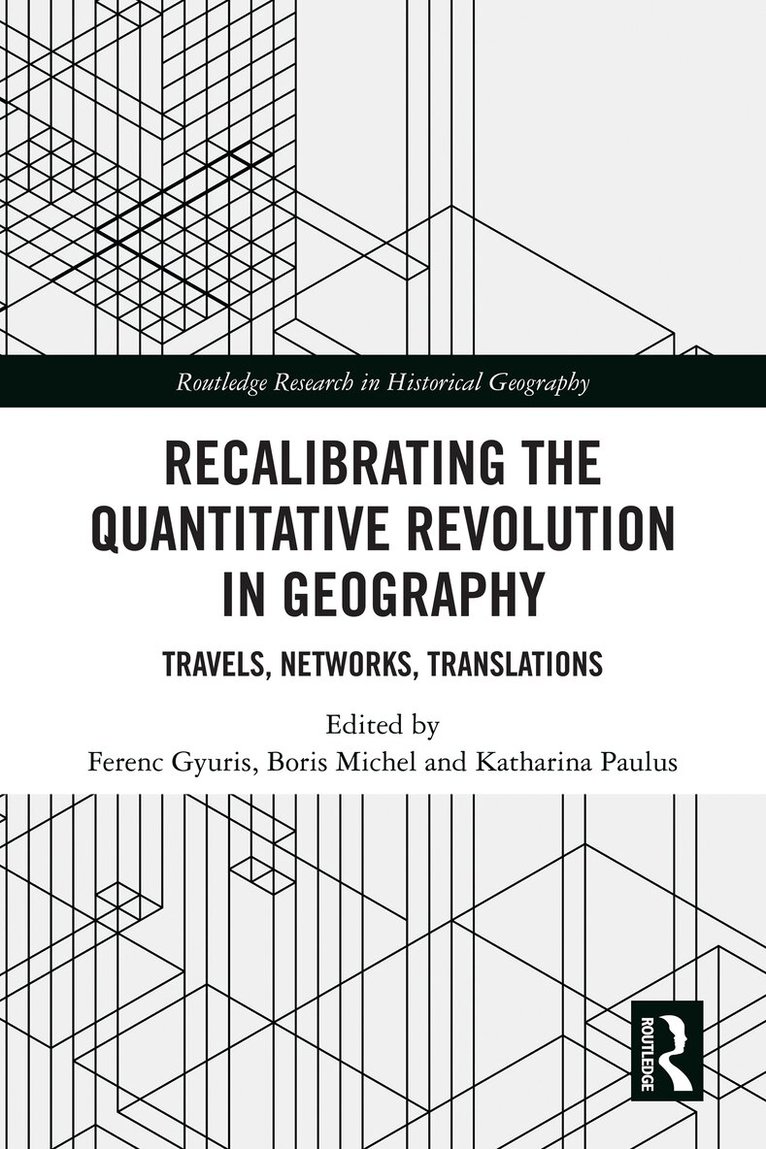
Recalibrating the Quantitative Revolution in Geography
Travels, Networks, Translations
Inbunden, Engelska, 2022
2 088 kr
Skickas inom 10-15 vardagar
This book brings together international research on the quantitative revolution in geography. It offers perspectives from a wide range of contexts and national traditions that decenter the Anglo-centric discussions. The mid-20th-century quantitative revolution is frequently regarded as a decisive moment in the history of geography, transforming it into a modern and applied spatial science. This book highlights the different temporalities and spatialities of local geographies laying the ground for a global history of a specific mode of geographical thought. It contributes to the contemporary discussions around the geographies and mobilities of knowledge, notions of worlding, linguistic privilege, decolonizing and internationalizing of geographic knowledge.This book will be of interest to researchers, postgraduates and advance students in geography and those interested in the spatial sciences.
Recalibrating the Quantitative Revolution in Geography
Travels, Networks, Translations
Häftad, Engelska, 2024
617 kr
Skickas inom 10-15 vardagar
This book brings together international research on the quantitative revolution in geography. It offers perspectives from a wide range of contexts and national traditions that decenter the Anglo-centric discussions. The mid-20th-century quantitative revolution is frequently regarded as a decisive moment in the history of geography, transforming it into a modern and applied spatial science. This book highlights the different temporalities and spatialities of local geographies laying the ground for a global history of a specific mode of geographical thought. It contributes to the contemporary discussions around the geographies and mobilities of knowledge, notions of worlding, linguistic privilege, decolonizing and internationalizing of geographic knowledge.This book will be of interest to researchers, postgraduates and advance students in geography and those interested in the spatial sciences.
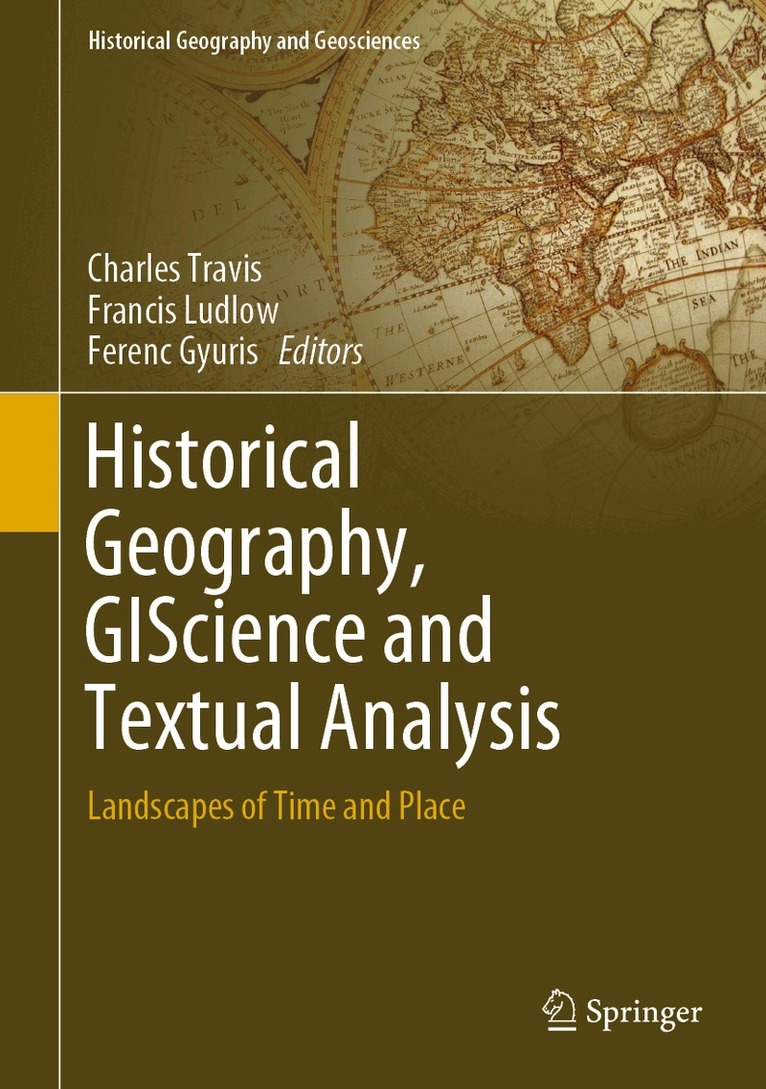
Historical Geography, GIScience and Textual Analysis
Landscapes of Time and Place
Inbunden, Engelska, 2020
1 795 kr
Skickas inom 10-15 vardagar
This book illustrates how literature, history and geographical analysis complement and enrich each other’s disciplinary endeavors. The Hun-Lenox Globe, constructed in 1510, contains the Latin phrase 'Hic sunt dracones' ('Here be dragons'), warning sailors of the dangers of drifting into uncharted waters. Nearly half a millennium earlier, the practice of ‘earth-writing’ (geographia) emerged from the cloisters of the great library of Alexandria, as a discipline blending the twin pursuits of Strabo’s poetic impression of places, and Herodotus’ chronicles of events and cultures. Eratosthenes, a librarian at Alexandria, and the mathematician Ptolemy employed geometry as another language with which to pursue ‘earth-writing’. From this ancient, East Mediterranean fount, the streams of literary perception, historical record and geographical analysis (phenomenological and Euclidean) found confluence. The aim of this collection is to recover such means and seek the fount of such rich waters, by exploring relations between historical geography, geographic information science (GIS) / geoscience, and textual analysis. The book discusses and illustrates current case studies, trends and discourses in European, American and Asian spheres, where historical geography is practiced in concert with human and physical applications of GIS (and the broader geosciences) and the analysis of text - broadly conceived as archival, literary, historical, cultural, climatic, scientific, digital, cinematic and media. Time as a multi-scaled concept (again, broadly conceived) is the pivot around which the interdisciplinary contributions to this volume revolve. In The Landscape of Time (2002) the historian John Lewis Gaddis posits: “What if we were to think of history as a kind of mapping?” He links the ancient practice of mapmaking with the three-part conception of time (past, present, and future). Gaddis presents the practices of cartography and historical narrative as attempts to manage infinitely complex subjects by imposing abstract grids to frame the phenomena being examined— longitude and latitude to frame landscapes and, occidental and oriental temporal scales to frame timescapes. Gaddis contends that if the past is a landscape and history is the way we represent it, then it follows that pattern recognition constitutes a primary form of human perception, one that can be parsed empirically, statistically and phenomenologically. In turn, this volume reasons that literary, historical, cartographical, scientific, mathematical, and counterfactual narratives create their own spatio-temporal frames of reference. Confluences between the poetic and the positivistic; the empirical and the impressionistic; the epic and the episodic; and the chronologic and the chorologic, can be identified and studied by integrating practices in historical geography, GIScience / geoscience and textual analysis. As a result, new perceptions and insights, facilitating further avenues of scholarship into uncharted waters emerge. The various ways in which geographical, historical and textual perspectives are hermeneutically woven together in this volume illuminates the different methods with which to explore terrae incognitaes of knowledge beyond the shores of their own separate disciplinary islands.
Historical Geography, GIScience and Textual Analysis
Landscapes of Time and Place
Häftad, Engelska, 2021
1 795 kr
Skickas inom 10-15 vardagar
This book illustrates how literature, history and geographical analysis complement and enrich each other’s disciplinary endeavors. The Hun-Lenox Globe, constructed in 1510, contains the Latin phrase 'Hic sunt dracones' ('Here be dragons'), warning sailors of the dangers of drifting into uncharted waters. Nearly half a millennium earlier, the practice of ‘earth-writing’ (geographia) emerged from the cloisters of the great library of Alexandria, as a discipline blending the twin pursuits of Strabo’s poetic impression of places, and Herodotus’ chronicles of events and cultures. Eratosthenes, a librarian at Alexandria, and the mathematician Ptolemy employed geometry as another language with which to pursue ‘earth-writing’. From this ancient, East Mediterranean fount, the streams of literary perception, historical record and geographical analysis (phenomenological and Euclidean) found confluence. The aim of this collection is to recover such means and seek the fount of such rich waters, by exploring relations between historical geography, geographic information science (GIS) / geoscience, and textual analysis. The book discusses and illustrates current case studies, trends and discourses in European, American and Asian spheres, where historical geography is practiced in concert with human and physical applications of GIS (and the broader geosciences) and the analysis of text - broadly conceived as archival, literary, historical, cultural, climatic, scientific, digital, cinematic and media. Time as a multi-scaled concept (again, broadly conceived) is the pivot around which the interdisciplinary contributions to this volume revolve. In The Landscape of Time (2002) the historian John Lewis Gaddis posits: “What if we were to think of history as a kind of mapping?” He links the ancient practice of mapmaking with the three-part conception of time (past, present, and future). Gaddis presents the practices of cartography and historical narrative as attempts to manage infinitely complex subjects by imposing abstract grids to frame the phenomena being examined— longitude and latitude to frame landscapes and, occidental and oriental temporal scales to frame timescapes. Gaddis contends that if the past is a landscape and history is the way we represent it, then it follows that pattern recognition constitutes a primary form of human perception, one that can be parsed empirically, statistically and phenomenologically. In turn, this volume reasons that literary, historical, cartographical, scientific, mathematical, and counterfactual narratives create their own spatio-temporal frames of reference. Confluences between the poetic and the positivistic; the empirical and the impressionistic; the epic and the episodic; and the chronologic and the chorologic, can be identified and studied by integrating practices in historical geography, GIScience / geoscience and textual analysis. As a result, new perceptions and insights, facilitating further avenues of scholarship into uncharted waters emerge. The various ways in which geographical, historical and textual perspectives are hermeneutically woven together in this volume illuminates the different methods with which to explore terrae incognitaes of knowledge beyond the shores of their own separate disciplinary islands.
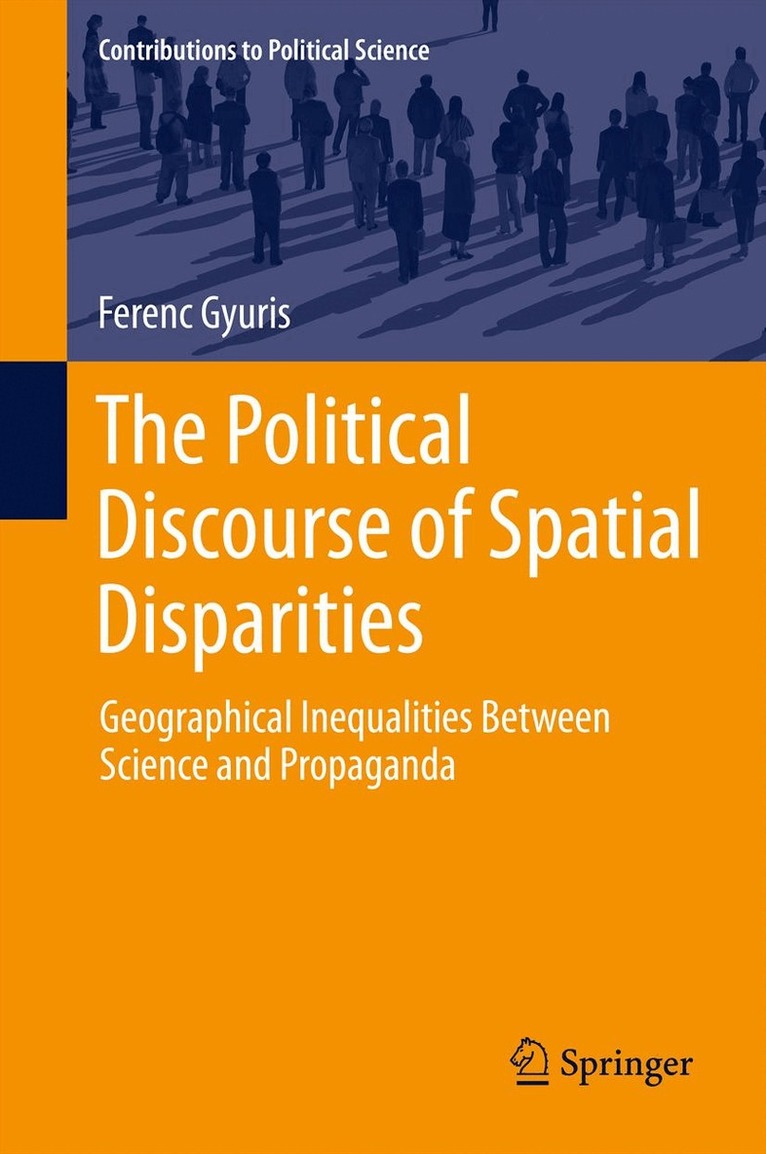
Political Discourse of Spatial Disparities
Geographical Inequalities Between Science and Propaganda
Inbunden, Engelska, 2013
1 064 kr
Skickas inom 10-15 vardagar
This work aims to provide unique insights into the multidisciplinary research on spatial disparities from an unconventional point of view. It breaks with the conventional narrative that tends to interpret this theoretical tradition as a series of factual contributions to a better understanding of the issue. Instead, related theories are investigated in their political, economic, and social contexts, and spatial disparity research is presented as a political discourse. It also reveals how the propagandistic problematization or de-problematization of geographical inequalities serves the substantiation of political goals, while taking advantage of the legitimate authority of science and the image of scientific objectivity. The book explains how the discourse has functioned from 19th century social physics over the Cold War period up to Marxist geographies of the current neoliberal age, and in what way and to what extent political considerations prevent related concepts producing ‘objective’ knowledge about the complex phenomenon of spatial inequalities.
Political Discourse of Spatial Disparities
Geographical Inequalities Between Science and Propaganda
Häftad, Engelska, 2016
1 064 kr
Skickas inom 10-15 vardagar
This work aims to provide unique insights into the multidisciplinary research on spatial disparities from an unconventional point of view. It breaks with the conventional narrative that tends to interpret this theoretical tradition as a series of factual contributions to a better understanding of the issue. Instead, related theories are investigated in their political, economic, and social contexts, and spatial disparity research is presented as a political discourse. It also reveals how the propagandistic problematization or de-problematization of geographical inequalities serves the substantiation of political goals, while taking advantage of the legitimate authority of science and the image of scientific objectivity. The book explains how the discourse has functioned from 19th century social physics over the Cold War period up to Marxist geographies of the current neoliberal age, and in what way and to what extent political considerations prevent related concepts producing ‘objective’ knowledge about the complex phenomenon of spatial inequalities.