Charles Travis – författare
1 282 kr
Läs direkt efter köp
1 246 kr
Läs direkt efter köp
1 335 kr
Läs direkt efter köp
1 031 kr
Läs direkt efter köp
1 068 kr
Läs direkt efter köp
1 317 kr
Skickas inom 3-6 vardagar
1 239 kr
Skickas inom 5-8 vardagar
1 990 kr
Skickas inom 5-8 vardagar
923 kr
Skickas inom 5-8 vardagar
905 kr
Skickas inom 3-6 vardagar
556 kr
Skickas inom 5-8 vardagar
1 368 kr
Skickas inom 5-8 vardagar
2 070 kr
Skickas inom 3-6 vardagar
3 659 kr
Skickas inom 10-15 vardagar
695 kr
Skickas inom 10-15 vardagar
833 kr
Skickas inom 10-15 vardagar
790 kr
Läs direkt efter köp
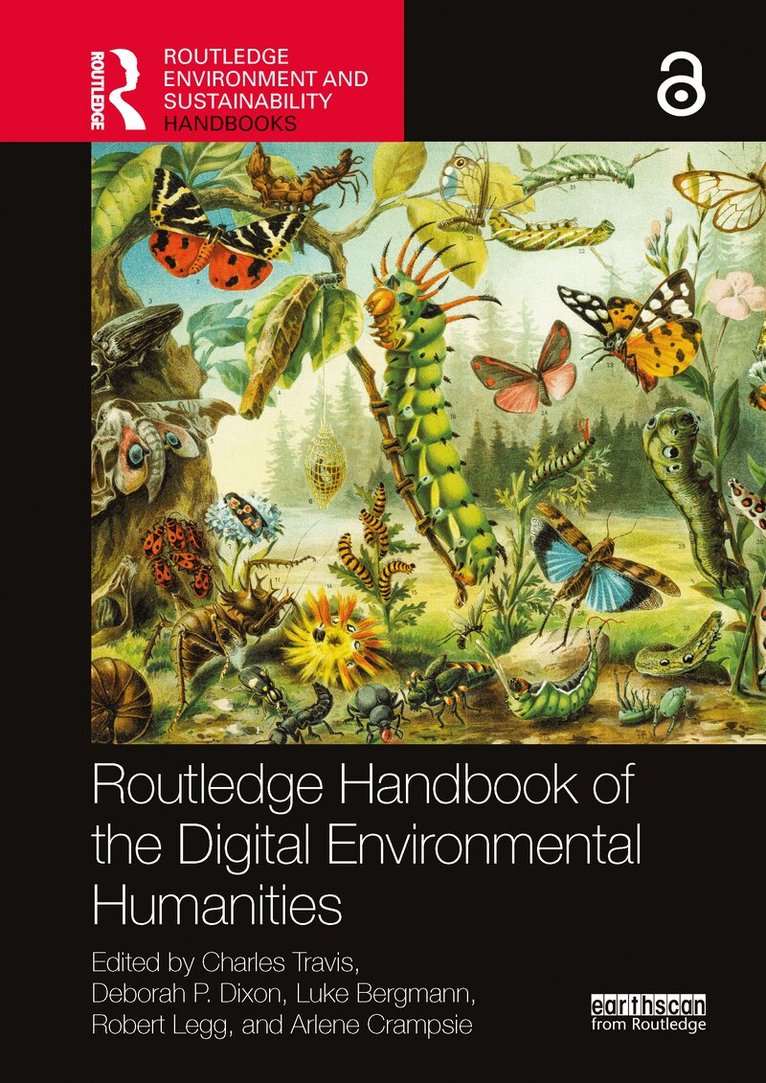
The Routledge Handbook of the Digital Environmental Humanities explores the digital methods and tools scholars use to observe, interpret, and manage nature in several different academic fields.
Employing historical, philosophical, linguistic, literary, and cultural lenses, this handbook explores how the digital environmental humanities (DEH), as an emerging field, recognises its convergence with the environmental humanities. As such, it is empirically, critically, and ethically engaged in exploring digitally mediated, visualised, and parsed framings of past, present, and future environments, landscapes, and cultures. Currently, humanities, geographical, cartographical, informatic, and computing disciplines are finding a common space in the DEH and are bringing the use of digital applications, coding, and software into league with literary and cultural studies and the visual, film, and performing arts. In doing so, the DEH facilitates transdisciplinary encounters between fields as diverse as human cognition, gaming, bioinformatics and linguistics, social media, literature and history, music, painting, philology, philosophy, and the earth and environmental sciences.
This handbook will be essential reading for those interested in the use of digital tools in the study of the environment from a wide range of disciplines and for those working in the environmental humanities more generally.
790 kr
Läs direkt efter köp
The Routledge Handbook of the Digital Environmental Humanities explores the digital methods and tools scholars use to observe, interpret, and manage nature in several different academic fields.
Employing historical, philosophical, linguistic, literary, and cultural lenses, this handbook explores how the digital environmental humanities (DEH), as an emerging field, recognises its convergence with the environmental humanities. As such, it is empirically, critically, and ethically engaged in exploring digitally mediated, visualised, and parsed framings of past, present, and future environments, landscapes, and cultures. Currently, humanities, geographical, cartographical, informatic, and computing disciplines are finding a common space in the DEH and are bringing the use of digital applications, coding, and software into league with literary and cultural studies and the visual, film, and performing arts. In doing so, the DEH facilitates transdisciplinary encounters between fields as diverse as human cognition, gaming, bioinformatics and linguistics, social media, literature and history, music, painting, philology, philosophy, and the earth and environmental sciences.
This handbook will be essential reading for those interested in the use of digital tools in the study of the environment from a wide range of disciplines and for those working in the environmental humanities more generally.
1 835 kr
Skickas inom 10-15 vardagar
1 835 kr
Skickas inom 10-15 vardagar
2 358 kr
Läs direkt efter köp
1 835 kr
Skickas inom 10-15 vardagar
2 222 kr
Skickas inom 10-15 vardagar
2 925 kr
Läs direkt efter köp
2 222 kr
Skickas inom 10-15 vardagar
1 620 kr
Skickas inom 10-15 vardagar
2 049 kr
Läs direkt efter köp
1 620 kr
Skickas inom 10-15 vardagar
1 890 kr
Skickas inom 10-15 vardagar
2 436 kr
Läs direkt efter köp
This volume is dedicated to collaborative research across STEM disciplines, the arts and humanities. It includes six sections, framed from a global perspective and exhibits contributions from key experts in the field, emerging scholarly voices, and STEAM practitioners. The added value of STEAM projects in research is highlighted in the first section of this book. Ranging from the spatial, medical and environmental humanities to heritage science, this section discusses the course and paths STEAM projects may evolve to in the near future.
The second section features reflective essays by scientists and artists on the development of their research, their professional growth and personal learning experiences that the art/science collaborations have afforded their work and careers. Sections III and IV provides practical guidance and advice on facilitating STEAM teams and describe successful collaborative projects. By presenting the objectives and outcomes of relevant research, the chapters in these sections discuss the various steps taken by different teams to achieve project fruition. Paying particular attention to barriers inhibiting STEAM collaboration, these sections also explore the ways in which research teams were able to work effectively. The fifth section presents a review of policy issues and the potential impacts of STEAM research for administrators, funders and policy makers. In its pursuit for balance and inclusion, the volume concludes with a critical reflection on STEAM that argues a different perspective and will prove food for thought to readers.