• Fri frakt över 249 kr
  • •
  • Snabba leveranser
  • •
  • Billiga böcker
Kundservice

Du är på sajten för privatpersoner.

Företag, bibliotek eller offentlig verksamhet?

Du handlar på classic.bokus.com, där alla dina funktioner finns intakta.
Till classic.bokus.com
Bokus logotyp. Gå till startsidan.
  • Erbjudanden
  • Nyheter
  • Student
  • Topplistor
  • Barn & ungdom
  • Bokus Play
  • E-böcker
  • Pocketböcker
  • Spel & pussel

10% rabatt på allt med kod: NYSTART10 →

Sidfot

Mina sidor

    Hjälp

    • Kundservice
    • Vanliga frågor och svar
    • Frakt och leverans
    • Retur vid ångerrätt
    • Reklamera vara
    • Betalning
    • Köpvillkor
    • Allmänna villkor
    • Information om webbplatsens tillgänglighet

    Om Bokus

    • Om oss
    • Pressrum
    • För studenter
    • För företag
    • För bibliotek och offentlig verksamhet
    • För leverantörer
    • Hållbarhet

    Populärt

    • Aktuella erbjudanden
    • Presentkort
    • Studentlitteratur
    • Nya böcker
    • Topplistor
    • Signerade böcker
    • Engelska böcker

    Inspiration

    • Boktips
    • BookTok
    • Populära bokserier
    • Barnbokskaraktärer
    • Populära författare
    Logotyp för Bokus
    Följ oss på Facebook (extern länk)Följ oss på Instagram (extern länk)Följ oss på YouTube (extern länk)Följ oss på TikTok (extern länk)
    bokus @ CookiesAnpassa cookiesIntegritetspolicyKöpvillkor
    Till Citymail hemsida (extern länk)Till Budbee hemsida (extern länk)Till Postnord hemsida (extern länk)Till Schenker hemsida (extern länk)Till Early Bird hemsida (extern länk)Till Walleys hemsida (extern länk)
    1. Naturvetenskap och teknik
    2. Geovetenskap
    3. Miljövetenskap och miljöpolitik

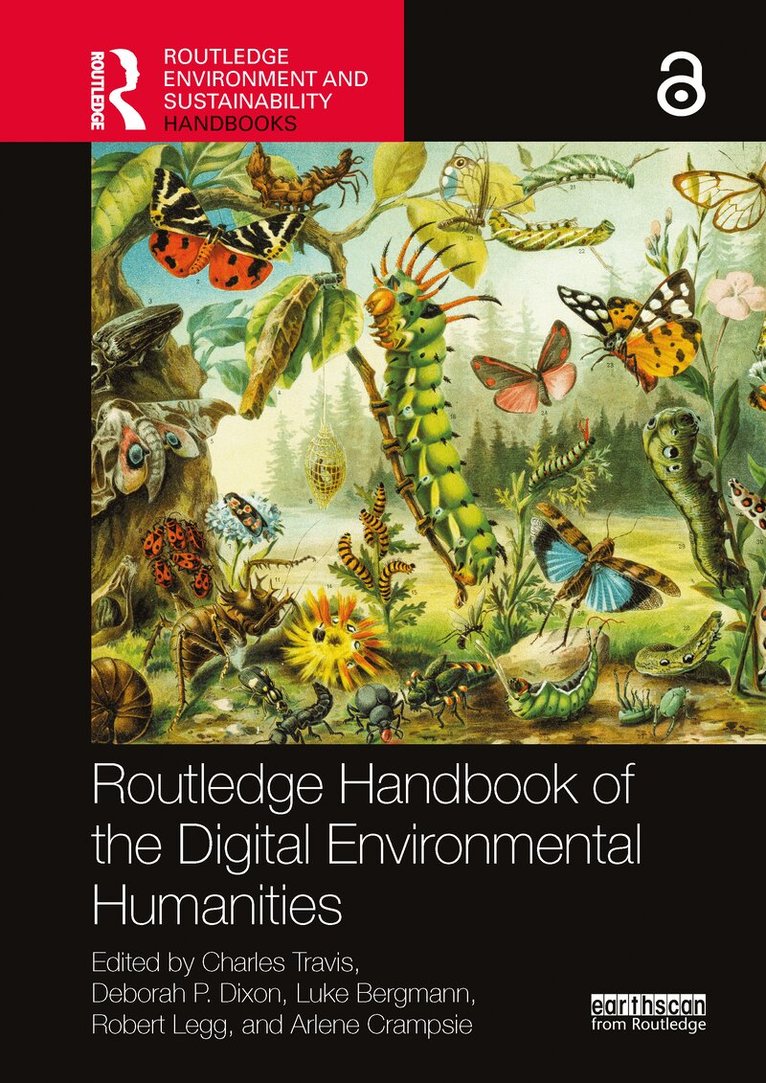
    Routledge Handbook of the Digital Environmental Humanities

    AvCharles Travis,Deborah P. Dixon

    Häftad, Engelska, 2025

    Del i serien Routledge Environment and Sustainability Handbooks

    695 kr

    Beställningsvara. Skickas inom 10-15 vardagar. Fri frakt över 249 kr.

    Beskrivning

    The Routledge Handbook of the Digital Environmental Humanities explores the digital methods and tools scholars use to observe, interpret, and manage nature in several different academic fields.Employing historical, philosophical, linguistic, literary, and cultural lenses, this handbook explores how the digital environmental humanities (DEH), as an emerging field, recognises its convergence with the environmental humanities. As such, it is empirically, critically, and ethically engaged in exploring digitally mediated, visualised, and parsed framings of past, present, and future environments, landscapes, and cultures. Currently, humanities, geographical, cartographical, informatic, and computing disciplines are finding a common space in the DEH and are bringing the use of digital applications, coding, and software into league with literary and cultural studies and the visual, film, and performing arts. In doing so, the DEH facilitates transdisciplinary encounters between fields as diverse as human cognition, gaming, bioinformatics and linguistics, social media, literature and history, music, painting, philology, philosophy, and the earth and environmental sciences.This handbook will be essential reading for those interested in the use of digital tools in the study of the environment from a wide range of disciplines and for those working in the environmental humanities more generally.

    Produktinformation

    • Utgivningsdatum:2025-03-13
    • Mått:174 x 246 x 30 mm
    • Vikt:1 000 g
    • Format:Häftad
    • Språk:Engelska
    • Serie:Routledge Environment and Sustainability Handbooks
    • Antal sidor:536
    • Förlag:Taylor & Francis Ltd
    • ISBN:9780367536695

    Utforska kategorier

    • Miljövetenskap och miljöpolitik inom Naturvetenskap och teknik
    • Grafik och bildbehandling inom Data och IT
    • Språk: referensverk och allmänt inom Språk och ordböcker

    Mer om författaren

    Charles Travis is Associate Professor of Geography and GIS in the Department of History at the University of Texas, Arlington, USA, and Associate Research Fellow at the Trinity Centre for the Environmental Humanities, Trinity College Dublin, Ireland.Deborah P. Dixon is Professor of Geography at the School of Geography and Earth Sciences at the University of Glasgow, Scotland.Luke Bergmann is Associate Professor of Geography and Canada Research Chair in GIS, Geospatial Big Data and Digital Geohumanities with the Department of Geography at the University of British Columbia, Vancouver, Canada.Robert Legg is Professor of Geography with the Department of Earth, Environmental, and Geographical Sciences at Northern Michigan University, Marquette, Michigan, USA.Arlene Crampsie is Assistant Professor of Historical Geography at the School of Geography at University College Dublin, Ireland.

    Innehållsförteckning

    • Introduction: Routledge Handbook of the Digital Environmental Humanities; PART I Overviews 1 Cowboys, Cod, Climate, and Conflict: Navigations in the Digital Environmental Humanities; 2 The Armchair Traveller’s Guide to Digital Environmental Humanities; 3 Deep Weather; 4 Adding Spatial Context to the 17 April 1975 Evacuation of Phnom Penh: How Spatial Video Geonarratives Can Geographically Enrich Genocide Testimony; 5 Normalised Alterity: Visualising Black Spatial Humanities; 6 New Machines in the Garden: The Digital Environmental Humanities; PART II Voicing Indigeneity 7 From Localised Resistance to the Social Distance Powwow: Movements in the World of Indigenous Americans; 8 Countermapping Plants and Indigenous Lifeways in North America: A Case Study of Tending to Turtle Island; 9 The Double Data Movement towards the Ecological Pluriverse: The Case of the Native Land Information System; 10 Groundworks: Re-storying Northern California with Emplaced Indigenous Media; 11 Datafication, Digitisation, and the Narration of Agriculture in Malawi: From Productivity Measures to Curated Folklore; 12 Spatial Video Geonarratives: Digitising Indigenous Folklores in Urban Flooding Lived Experiences; PART III Geopoetics and Performance 13 Exploring Sensible Virtual Immersive Spaces through Digital Georamas; 14 The Digital Poetics of Lost Waterscapes in Coimbatore, South India; 15 Relationality in the Online Literary Journal Spiral Orb; 16 Chemo Creatures in a Digital Ocean!: The Making of a Speculative Ecosystem; 17 Innovative and Creative Geographies: The Shifting Boundaries of Inside, Outside, Real, and Imagined Spaces; 18 The Sound of Environmental Crisis: Silence as/and (Eco)Horror in A Quiet Place; PART IV Species, Systems, Sustainability 19 Genotype, Phenotype, Phototype: Digital Photography, Biological Variety, and Excessive Overpopulation of Types; 20 (Inter)National Connections: Linking Nordic Animals to Biodiversity Observation Networks; 21 A Shark in Your Pocket, a Bird in Your Hand(Held): The Spectacular and Charismatic Visualisation of Nature in Conservation Apps; 22 Images of Nature through Platforms: Practices and Relationships as a Research Field and an Epistemic Vantage Point of DEH; 23 A Novel Method Suggestion for the Achievement of Environmental Citizenship Behaviour in the Digitising World; PART V Digital Chronicles of Environment, Literature, Cartography, and Time 24 Online Transcription of Regional Icelandic Manuscripts Initiative; 25 "Thick Mapping" for Environmental Justice: EJScreen, ArcGIS, and Contemporary Literature; 26 One Map Closer to the End of the World (As We Know It): Thinking Digital Cartographic Humanities with the Anthropocene; 27 The Deafening Roar of the Digital Environmental Humanities: Case Studies in New Scholarship; 28 The COVID-19 Testimonies Map: Representing Italian "Pandemic Space" Perceptions with Neogeography Technologies; PART VI Algorithmic Landscaping 29 Digital Oil and the Planetary Oilfield; 30 Between Digital and Territorial Turns: A Forking Path; 31 Landscapes in Motion: Cartographies of Connectivity and the Place of Physical Geography in the Environmental and Spatial Humanities; 32 (Re)Imagining the Ibis: Multispecies Future(s), Smart Urban Governance, and the Digital Environmental Humanities; 33 Elemental Computation: From Non-human Media to More-than-Digital Information Systems