Fernando Coimbra - Böcker
Visar alla böcker från författaren Fernando Coimbra. Handla med fri frakt och snabb leverans.
7 produkter
7 produkter
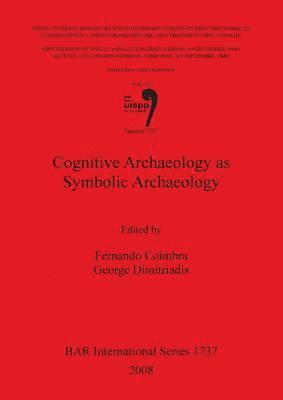
Del 1737 - BAR International Series
Cognitive Archaeology as Symbolic Archaeology
Häftad, Engelska, 2008
366 kr
Skickas inom 5-8 vardagar
366 kr
Skickas inom 5-8 vardagar
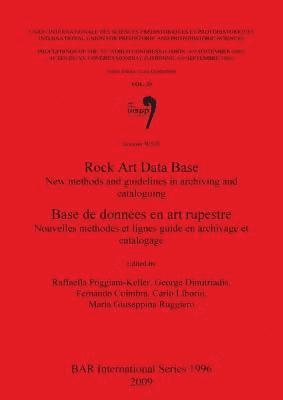
Del 1996 - BAR International Series
Rock Art Data Base
New methods and guidelines in archiving and cataloguing / Nouvelles méthodes et lignes guide en archivage et catalogage
Häftad, Engelska, 2009
430 kr
Skickas inom 5-8 vardagar
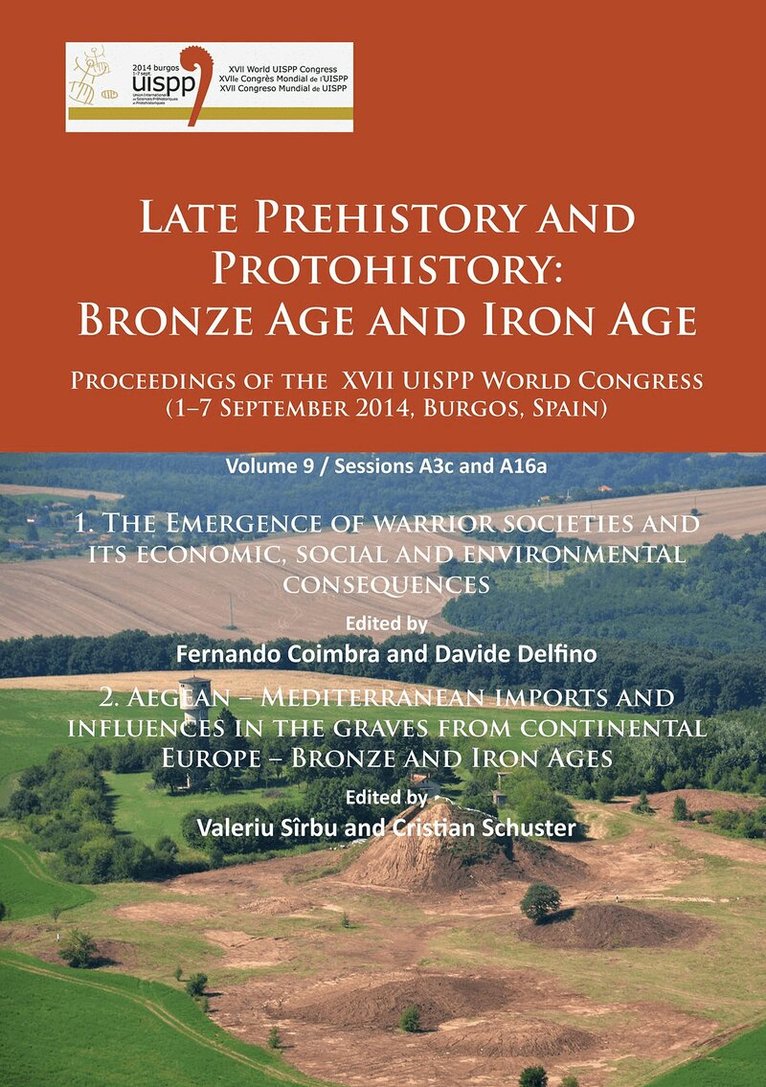
Del 9 - Proceedings of the XVII UISPP World Congress (1–7 September 2014, Burgos, Spain)
Late Prehistory and Protohistory: Bronze Age and Iron Age (1. The Emergence of warrior societies and its economic, social and environmental consequences; 2. Aegean – Mediterranean imports and influences in the graves from continental Europe – Bronze and Iron Ages)
Proceedings of the XVII UISPP World Congress (1–7 September 2014, Burgos, Spain) Volume 9 / Sessions A3c and A16a
Häftad, Engelska, 2016
576 kr
Skickas
1. The Emergence of warrior societies and its economic, social and environmental consequences. Proceedings of the XVII UISPP World Congress (1–7 September 2014, Burgos, Spain) Session A3c edited by Fernando Coimbra and Davide Delfino: Several works have been dedicated to the aim of warfare in European Bronze Age, by a point of view of bronze technology and archaeometallurgy. The present volume wants to be a short and actualized contribution to the study and interpretation of warrior societies, through a point of view of the marks of the first warfare in Europe, its causes and its consequences in all the intelligible evidences, both from a point of view of material culture, of landscape, of human behavior and artistic manifestations. 2. Aegean – Mediterranean imports and influences in the graves from continental Europe – Bronze and Iron Ages. Proceedings of the XVII UISPP World Congress (1–7 September 2014, Burgos, Spain) Session A16a edited by Valeriu Sîrbu and Cristian Schuster: There is already a ‘history’ with not only different, but sometimes contradictory opinions regarding the role played by the Aegean-Mediterranean area in the evolution of the peoples who lived in continental Europe during the age of Bronze and Iron, including burial customs. The organizers of this session proposed, through ongoing communication and the discussions that followed, to obtain new data on the influences and Aegean-Mediterranean imports found in the graves, and the possible movements of groups of people who carried them. The main area of interest focused on the ‘roads’ and the stages of their penetration, but also considered feedback from peripheral areas. The session aims to highlight the role of the southern imports in the evolution of local communities’ elites and their impact on the general development of the populations of continental Europe, the possible meanings of their deposit in the burials. Analysis of these phenomena over wide geographical areas (from the Urals to the Atlantic) and large chronological periods (the third-. first millennia BC) allow the identification of certain traits as general (eg., the continuity and discontinuity), or particular (eg., the impact of imports and southern influences on communities of different geographical areas).
Del 10 - Proceedings of the XVII UISPP World Congress (1–7 September 2014, Burgos, Spain)
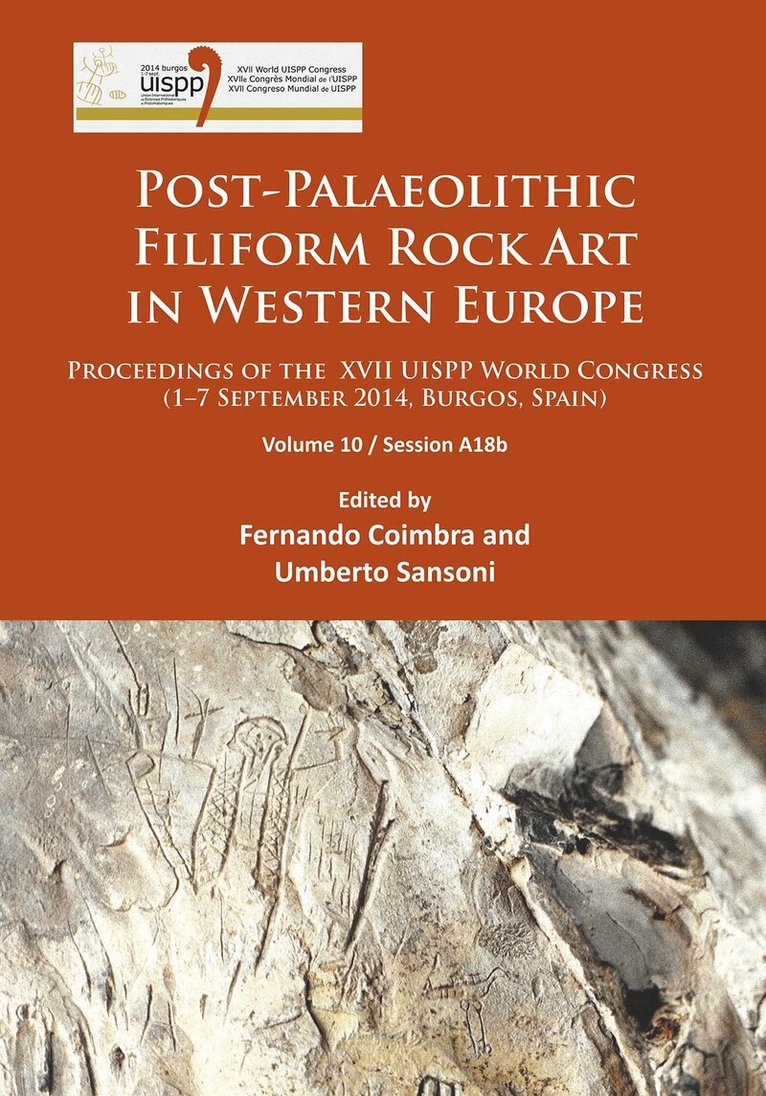
Post-Palaeolithic Filiform Rock Art in Western Europe
Proceedings of the XVII UISPP World Congress (1–7 September 2014, Burgos, Spain) Volume 10 / Session A18b
Häftad, Engelska, 2016
366 kr
Skickas
Filiform rock art appears as a spontaneous technique, more simple and immediate than pecking, good either for autonomous strands of expression, or for sketches and first drafts regarding works of painting or pecking. According to the order of presentation of the session’s papers during the XVII IUPPS (UISPP) Conference in Burgos, the articles published here are the following: Late prehistoric incised rock art in southern Europe: a contribution for its typology, by Fernando A. Coimbra, where the author presents a preliminary typology of this kind of rock art, divided in two groups (geometric and figurative), approaching not only common themes to several countries, but also some examples that have only a regional character; Filiform rock art in mount Bego (Tende, Maritime Alps, France), by Nicoletta Bianchi, which analyses some cases where pecked carvings overlap filiforms, therefore pre-dating pecked engravings and studies the interaction of the two carvings tradition; Filiform figures in the rock art of Valcamonica from Prehistory to the Roman age, by Umberto Sansoni, Cinzia Bettineschi and Silvana Gavaldo, that provides a general corpus of the figurative incised rock art of Valcamonica with a quantitative and qualitative approach, by considering the typological variety, the long-lasting chronological dating and the strong relation with the local pecked rock art of the Camunian filiforms; Threadlike engravings of historical period on the rocks and plaster of churches and civic buildings. Some comparisons and proposals of interpretation, by Federico Troletti, which presents the incised engravings exclusively of historical time located in some sites of Valcamonica – the area of Campanine di Cimbergo and Monticolo di Darfo; The rock art from Figueiredo (Sertã, Portugal): typology, parallels and chronology, by Fernando A. Coimbra and Sara Garcês, focusing vi on the description of the engravings from three carved rocks with incised motives from the place of Figueiredo, in central Portugal, which were studied during different fieldworks. Two other papers of researchers that couldn’t attend the Conference were also presented: The filiform rock art from Kosovo, by Shemsi Krasniqi, which presents recent findings from Kosovo with a similar typology of figures from other European countries; The filiform rock engravings of the Parete Manzi of Montelapiano (Chieti, Italy), by Tomaso Di Fraia, which analyses the problematic of incised rock art from a rock shelter in the centre of Italy.
680 kr
Skickas
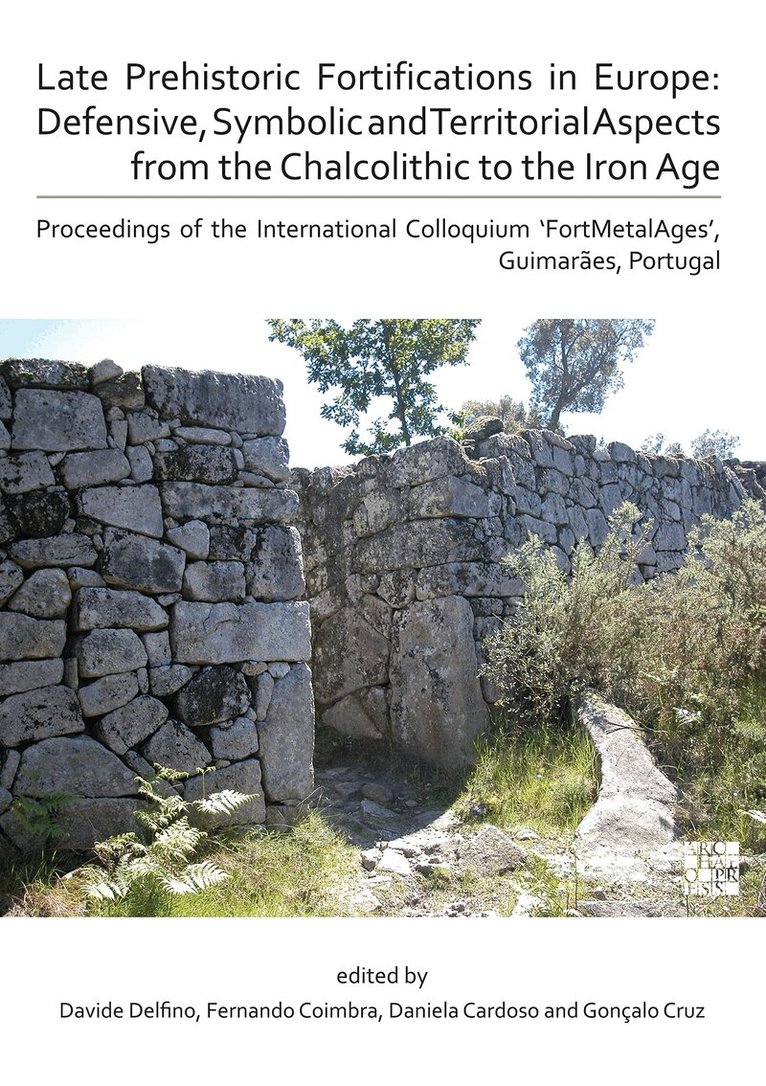
Late Prehistoric Fortifications in Europe: Defensive, Symbolic and Territorial Aspects from the Chalcolithic to the Iron Age presents the contributions to the International Colloquium ‘FortMetalAges’ (10th–12th November 2017, Guimarães, Portugal), The Colloquium was organised by the Scientific Commission ‘Metal Ages in Europe’ of the International Union of Prehistoric and Protohistoric Sciences (UISPP/ IUSPP) and by the Martin Sarmento Society of Guimarães. Nineteen papers discuss different interpretive ideas for defensive structures whose construction had necessitated large investment, present new case studies, and conduct comparative analysis between different regions and chronological periods from the Chalcolithic to the Iron Age.
760 kr
Kommande
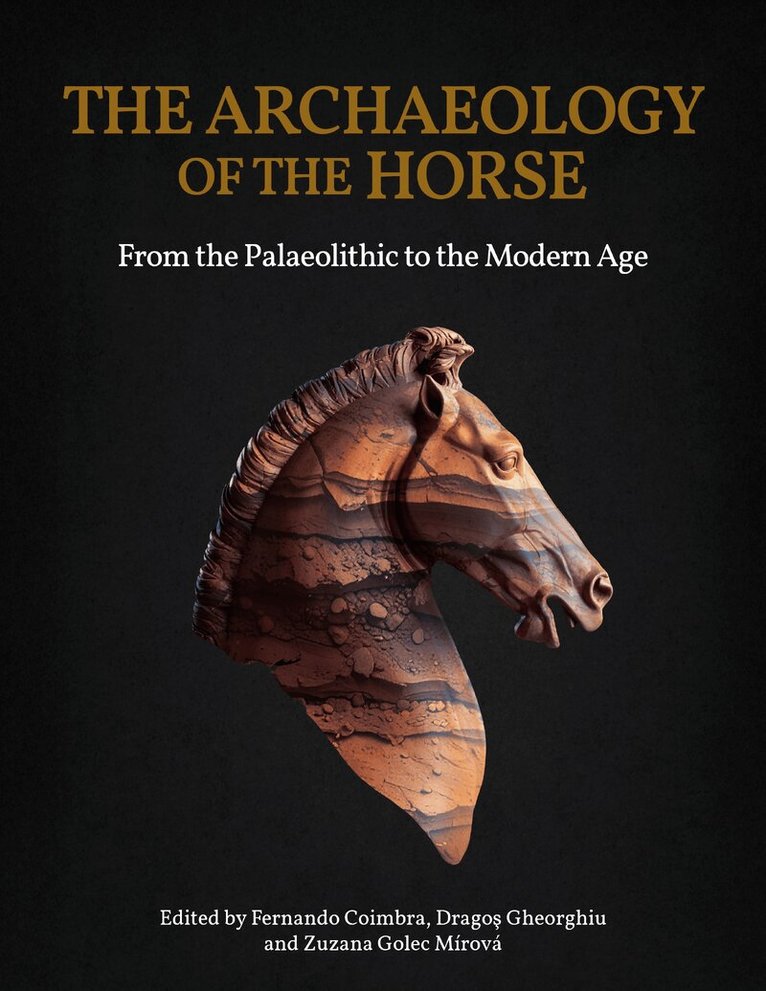
The horse has a strong presence in archaeology. Its relationship with past human beings has great diversity, which can be analysed through economic, social, artistic and mythological aspects. This book, the outcome of a session at the European Association of Archaeologists' Annual Meeting in Rome in 2024, focuses on a variety of different aspects about the archaeology of the horse, such as its presence in prehistoric rock art and sculpture, antiquity and medieval art, the domestication process, the use of the horse for riding and traction, its use in funerary rituals, symbolism and presence in myths in diverse societies, among other themes.In the Palaeolithic, this animal was not only a source of meat for nourishment, but it appears in the origins of artistic representations through paintings and carvings on cave walls and on open air outcrops. The domestication process included the use of mare’s milk, which is rich in proteins and carbohydrates, being low in fat, and having a high content in vitamin C, making it better than cow’s milk. When horses started to be ridden people could travel faster, developing trade and communication, disclosing cultural issues. With the emergence of complex societies, the horse was used in hunting, as a ‘war machine’ and as a symbol of social status. Iconography available in a variety of archaeologically visible media such as rock art, sculptures, numismatics, mosaics, and frescoes, among other artistic manifestations, enables us to understand better the importance of the horse in the development of civilisation. The book seeks to go beyond previous publications about the horse, which usually do not encompass prehistoric cultures, are often geographically limited, or focus on physical characteristics of the horse in battle or on descriptions of horse equipment with a lack of scientific archaeological context. The chapters presented here engage with the human-horse relationship on a variety of levels and at different time periods, with an emphasis on the social and cultural significance of the horse, zooarchaeological evidence, the role of horses in combat and ritual contexts and the relationship between horse and rider in iconography, art and burial rites.