• Fri frakt över 249 kr
  • •
  • Snabba leveranser
  • •
  • Billiga böcker
Kundservice

Du är på sajten för privatpersoner.

Företag, bibliotek eller offentlig verksamhet?

Du handlar på classic.bokus.com, där alla dina funktioner finns intakta.
Till classic.bokus.com
Bokus logotyp. Gå till startsidan.
  • Erbjudanden
  • Nyheter
  • Student
  • Topplistor
  • Barn & ungdom
  • Bokus Play
  • E-böcker
  • Pocketböcker
  • Spel & pussel

10% rabatt på allt med kod: NYSTART10 →

Sidfot

Mina sidor

    Hjälp

    • Kundservice
    • Vanliga frågor och svar
    • Frakt och leverans
    • Retur vid ångerrätt
    • Reklamera vara
    • Betalning
    • Köpvillkor
    • Allmänna villkor
    • Information om webbplatsens tillgänglighet

    Om Bokus

    • Om oss
    • Pressrum
    • För studenter
    • För företag
    • För bibliotek och offentlig verksamhet
    • För leverantörer
    • Hållbarhet

    Populärt

    • Aktuella erbjudanden
    • Presentkort
    • Studentlitteratur
    • Nya böcker
    • Topplistor
    • Signerade böcker
    • Engelska böcker

    Inspiration

    • Boktips
    • BookTok
    • Populära bokserier
    • Barnbokskaraktärer
    • Populära författare
    Logotyp för Bokus
    Följ oss på Facebook (extern länk)Följ oss på Instagram (extern länk)Följ oss på YouTube (extern länk)Följ oss på TikTok (extern länk)
    bokus @ CookiesAnpassa cookiesIntegritetspolicyKöpvillkor
    Till Citymail hemsida (extern länk)Till Budbee hemsida (extern länk)Till Postnord hemsida (extern länk)Till Schenker hemsida (extern länk)Till Early Bird hemsida (extern länk)Till Walleys hemsida (extern länk)
    1. Historia och arkeologi
    2. Arkeologi
    3. Arkeologiska perioder och områden

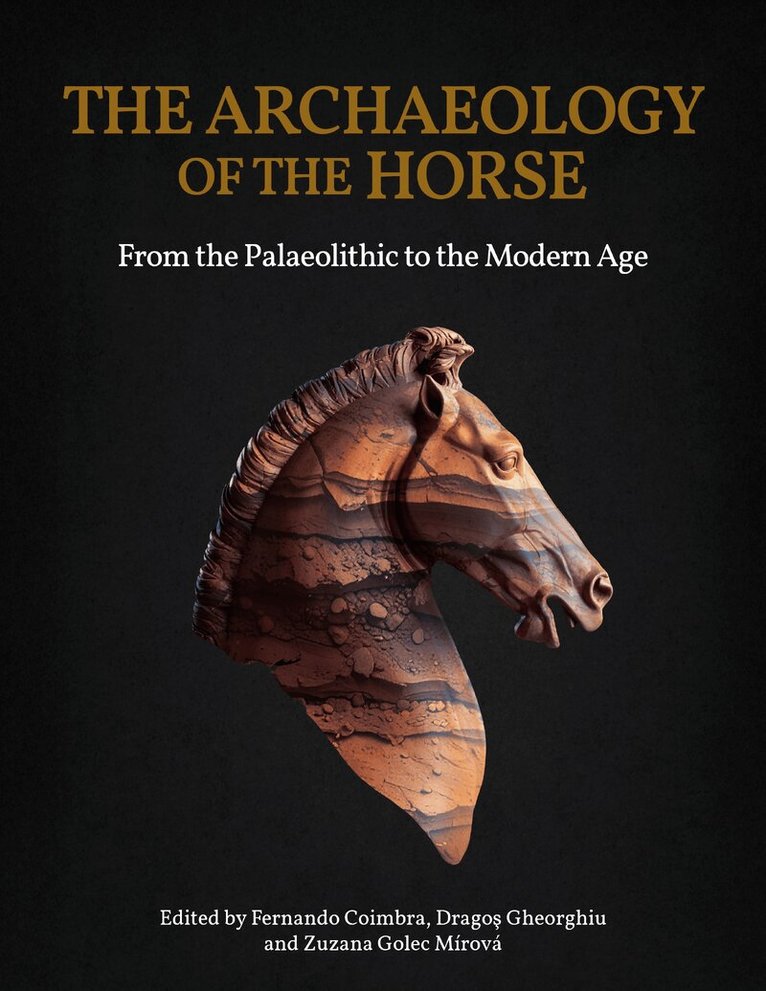
    Archaeology of the Horse

    From the Palaeolithic to the Modern Age

    AvFernando Coimbra,Dragoş Gheorghiu

    Häftad, Engelska, 2026

    764 kr

    Kommande

    Beskrivning

    The history of the relationship between humans and equines reveals the gradual development of a symbiotic association over time. This relationship began with the perception of the horse as a source of food, progressed through processes of taming and domestication, and eventually evolved into the visual metaphor of the Centaur, in which the image of the horse merges symbiotically with that of the human. This metaphor therefore functions not only as a poetic image, but also as an analytical model for understanding long-term human– horse entanglement.It demonstrates a form of symbiosis in which the horse is not merely a cultural animal, but something far more complex. Through careful analysis from iconographic and material culture perspectives, The Archaeology of the Horse examines themes of social power, warfare, mobility, ideology, socio-cultural systems, and religious and ritual significance. In this context, the horse emerges as a key analytical tool across rock art, material culture, and bioarchaeology.The transition from a source of food to Centaur should be understood not as a narrative of human dominance over the horse, but as a long and dynamic process of co-evolution, in which humans and horses shaped a shared history. Consequently, this book seeks to begin to explore the many nuances that have characterised the relationships between human and horse over the millennia and pave the way for future research.

    Produktinformation

    • Utgivningsdatum:2026-07-31
    • Mått:170 x 240 x undefined mm
    • Format:Häftad
    • Språk:Engelska
    • Antal sidor:240
    • Förlag:Casemate Publishers
    • ISBN:9798888572269

    Utforska kategorier

    • Arkeologiska perioder och områden inom Historia och arkeologi

    Mer om författaren

    Fernando Coimbra holds a PhD from the University of Salamanca and Post-doctoral research in rock art in the Geosciences Centre (University of Coimbra). His studies of rock art inspired a further interest in horses and their role in society, especially in protohistory. In 2013 he coordinated an international congress about the horse and the bull in prehistory and in history. He is a visiting professor at the Polytechnic Institute of Tomar, in Portugal. Dragoş Gheorghiu is an historical anthropologist and archaeologist whose studies focus on the process of cognition and imagination, material culture, ancient technologies and iconography. Much of his research focuses on Chalcolithic societies in south-eastern Europe, from the spatial organisation of settlements to the material culture of everyday life. He addressed the domestication of the horse in the technological context of the period. Zuzana Golec Mírová is an archaeologist, currently working at the Institute of Archaeology of the Czech Academy of Sciences and the Institute of Archaeology, Faculty of Arts, Charles University in Prague. She has been dealing with the issue of horses in prehistory since her bachelor studies. In 2019, she published a monograph about horses in the Bronze and Iron Ages in Moravia (Czech Republic).

    Innehållsförteckning

    • Contributors Foreword Umberto Albarella1. Representations of Equidae in European Upper Palaeolithic art Ingmar M. Braun2. Navigating a way through: the horses of Cueva de la Pileta, Andalucía, Spain George H. Nash3. Equids in prehistoric subsistence practices: a review of the Portuguese Palaeolithic to Bronze Age record Catarina Guinot and Nelson J. Almeida4. The Chalcolithic stone horse heads insignia from the 5th millennium BC Danube-Pontic region Dragoş Gheorghiu5. Horses during the European Bronze Age and Iron Age: archaeology, iconography, and mythology Fernando Coimbra6. The horse in the art of the Koban culture Nadezhda Kotova and Sergey Makhortykh7. Reflection of the horse in material culture in Moravia (Czech Republic) in the Urnfields and Hallstatt Period Zuzana Golec Mírová8. The horse sacrifices in the royal Hellenistic necropolis of the Getae in their capital “Dausdava-Helis” (Sboryanovo National Reserve, north-east Bulgaria): an overview of studies Diana Gergova9. About heroes and horses: horseman iconography in representative sumptuous tombs (4th–3rd centuries BC) Sorin Cleşiu10. As prestigious as Marengo: the art of horsemanship riding in Geometric Argive pottery and burials Camila Diogo De Souza11. Height and weight of horses in Portugal between the late medieval and the early modern periods: an approach based on written sources Afonso Soares de Sousa and João Nisa12. Conclusions: from prey to centaur Dragoş Gheorghiu, Zuzana Golec Mírová, and Fernando Coimbra