Franka Vaughan – författare
Visar alla böcker från författaren Franka Vaughan. Handla med fri frakt och snabb leverans.
2 produkter
2 produkter
1 202 kr
Kommande
In this book, law and society researchers reflect on past, new, and emerging participatory action research (PAR). In particular, the book explores two key dimensions of community-engaged law and society research: the process, methods, and challenges of collaborative research on justice, and innovative dissemination techniques of co-created knowledge, including theatre, art, museum exhibits, walking tours, music, and web platforms. The book highlights different strengths and features of PAR research, with chapters that cover a wide range of locales.More specifically, the chapters explore the following key questions:-How does knowledge-building about the meanings and mechanisms of justice emerge and form within law and society scholarship?-How can we, as researchers, build space for public conversations about justice?-How do colonialism, sexism and racism impact these conversations?-What do meaningful partnership and collaboration look like in law and society, and how does this work take shape, recognizing these structures of inequality?-How can we better, with more impact, share research with/in communities, and what opportunities are there for knowledge sharing to create space for conversations about justice?The book delves into research projects and innovative methods that do novel work in charting out new methods and, consequently, builds new knowledge in socio-legal justice scholarship. It speaks to diverse range of researchers, research subjects, and research priorities.
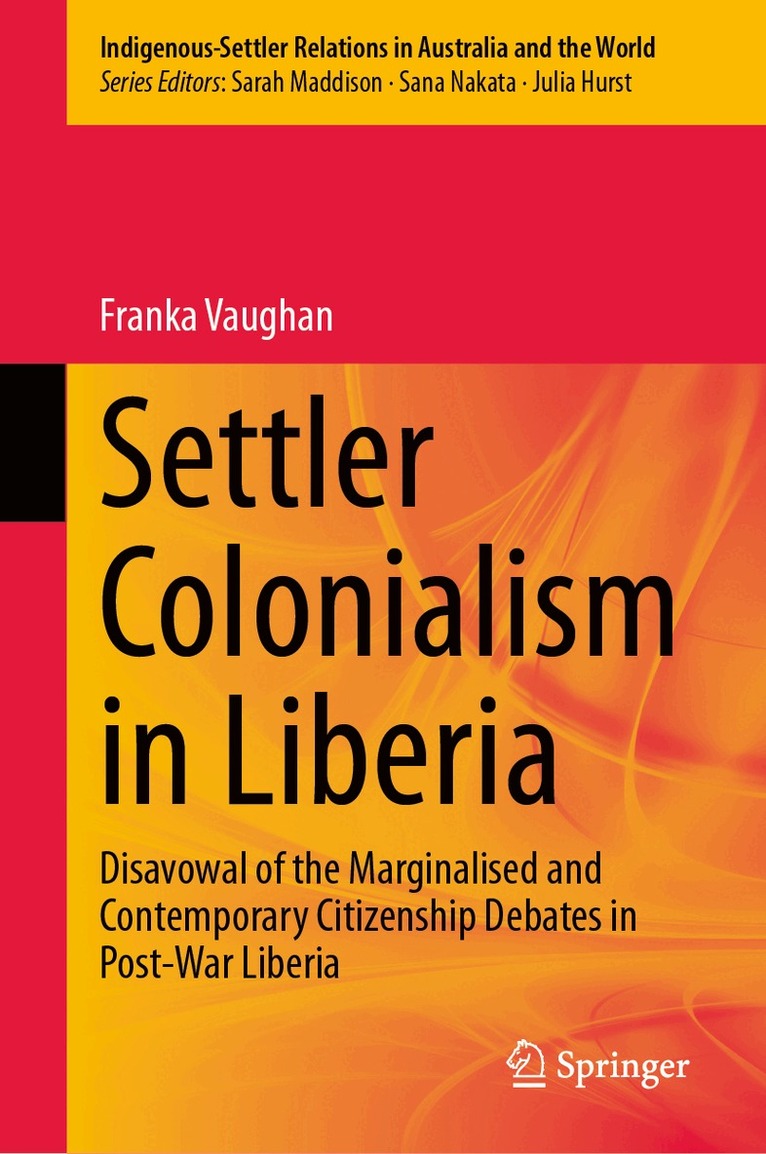
Settler Colonialism in Liberia
Disavowal of the Marginalised and Contemporary Citizenship Debates in Post-War Liberia
Inbunden, Engelska, 2026
1 430 kr
Skickas inom 10-15 vardagar
This book is a retelling of the history of Liberia’s formation through the lens of settler colonial theory to understand the antagonisms that continue to shape contemporary citizenship debates. It discusses Liberia as representing an interesting puzzle on the distinction between settler colonialism and postcolonialism. While Liberia is often heralded as one of two African countries that were never colonised, this book presents the country as a unique settler state established by free and formerly enslaved Black Americans, who, the author argues, were settler-colonists despite their positioning as Black people in the slaveholding regime. The book, therefore, complicates conventional perspectives by unravelling Liberia’s settler colonial “present”, highlighting the persistent impact of historical structures on the contemporary socio-political landscape. It shows that when the Black Americans dispossessed and marginalised the Africans they met upon arrival in Liberia, they established the antagonisms and enduring unequal structures that continue to shape citizenship and identity debates in the post-war era. By exploring Liberia's contemporary and contentious discourse on dual citizenship, the book delves into the nuanced terrain of claims and counterclaims surrounding proposed changes to the country's citizenship laws.