Annie Bunting – författare
Visar alla böcker från författaren Annie Bunting. Handla med fri frakt och snabb leverans.
7 produkter
7 produkter
936 kr
Skickas inom 5-8 vardagar
Contemporary slavery has recently and unexpectedly emerged as a source of both popular fascination and a spur to political mobilization. This volume brings together a cast of leading experts to carefully explore how the history and iconography of slavery has been invoked to support a series of government interventions, activist projects, legal instruments, and rhetorical and visual performances. However well-intentioned these interventions might be, they nonetheless remain subject to a host of limitations and complications. Recent efforts to combat contemporary slavery are too often sensationalist, self-serving, and superficial; and therefore end up failing the crucial test of speaking truth to power. The widely held notion that anti-slavery is one of those rare issues that "transcends" politics or ideology is only sustainable because the underlying issues at stake have been constructed and demarcated in a way that minimizes direct challenges to dominant political and economic interests. This must change.
869 kr
Skickas inom 10-15 vardagar
With forced marriage, as with so many human rights issues, the sensationalized hides the mundane, and oversimplified popular discourses miss the range of experiences. In sub-Saharan Africa, the relationship between coercion and consent in marriage is a complex one that has changed over time and place, rendering impossible any single interpretation or explanation.The legal experts, anthropologists, historians, and development workers contributing to Marriage by Force? focus on the role that marriage plays in the mobilization of labor, the accumulation of wealth, and domination versus dependency. They also address the crucial slippage between marriages and other forms of gendered violence, bondage, slavery, and servile status.Only by examining variations in practices from a multitude of perspectives can we properly contextualize the problem and its consequences. And while early and forced marriages have been on the human rights agenda for decades, there is today an unprecedented level of international attention to the issue, thus making the coherent, multifaceted approach of Marriage by Force? even more necessary.
384 kr
Skickas inom 10-15 vardagar
With forced marriage, as with so many human rights issues, the sensationalized hides the mundane, and oversimplified popular discourses miss the range of experiences. In sub-Saharan Africa, the relationship between coercion and consent in marriage is a complex one that has changed over time and place, rendering impossible any single interpretation or explanation.The legal experts, anthropologists, historians, and development workers contributing to Marriage by Force? focus on the role that marriage plays in the mobilization of labor, the accumulation of wealth, and domination versus dependency. They also address the crucial slippage between marriages and other forms of gendered violence, bondage, slavery, and servile status.Only by examining variations in practices from a multitude of perspectives can we properly contextualize the problem and its consequences. And while early and forced marriages have been on the human rights agenda for decades, there is today an unprecedented level of international attention to the issue, thus making the coherent, multifaceted approach of Marriage by Force? even more necessary.
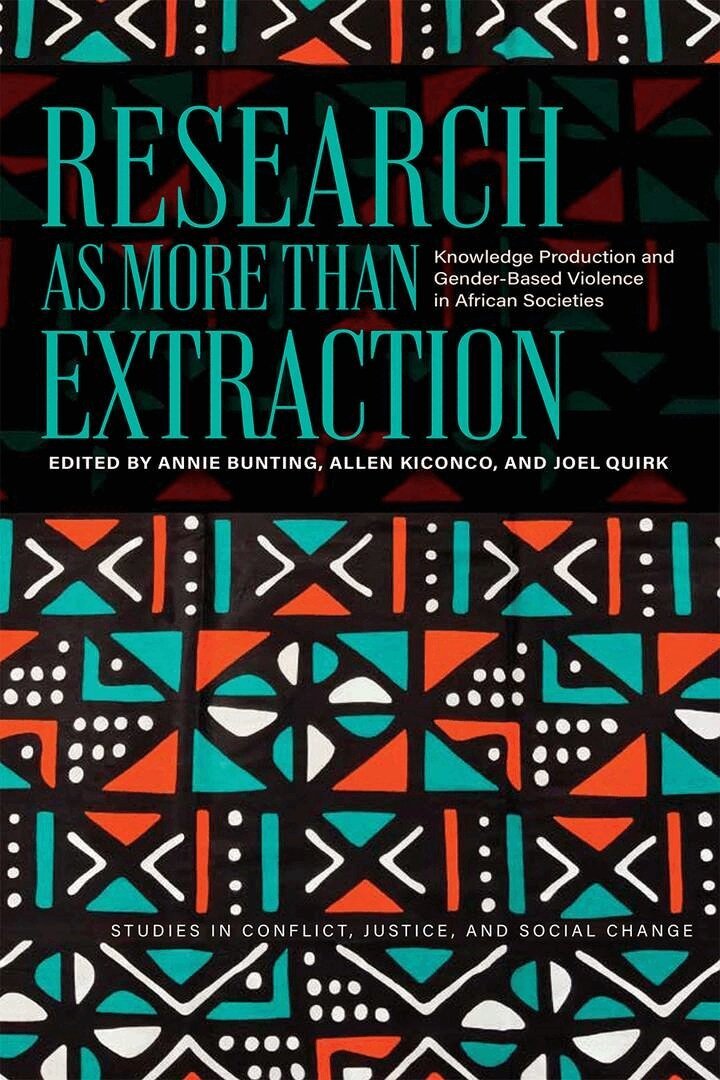
Research As More Than Extraction
Knowledge Production and Gender-Based Violence in African Societies
Inbunden, Engelska, 2023
751 kr
Skickas inom 5-8 vardagar
This volume offers practical, detailed guidance and case studies on how to avoid exacerbating inequalities while researching gender-based violence and other related issues in Africa. Wartime violence and its aftermath present numerous practical, ethical, and political challenges that are especially acute for researchers working on gender-based and sexual violence. Drawing upon applied examples from across the African continent, this volume features unique contributions from researchers and practitioners with decades of experience developing research partnerships, designing and undertaking fieldwork, asking sensitive questions, negotiating access, collecting and evaluating information, and validating results. These are all endeavors that also raise pressing ethical questions, especially in relation to retraumatization, social stigma, and even payment of participants. Ethical and methodological questions cannot be separated from political and institutional considerations. Systems of privilege and marginalization cannot be wished away, so they need to be both interrogated and contested. This is where precedents and power relations established under colonialism and imperialism take center stage. Europeans have been extracting valuable resources from the African continent for centuries. Research into gender-based violence risks being yet another extractive industry. There are times when committed individuals can make valuable contributions to a more equitable future, but funding streams, knowledge hierarchies, and institutional positions continue to have powerful effects.Accordingly, the contributors to this volume also concentrate upon the layered effects of power and position, relationships between researchers, organizations, and communities, and the political economy of knowledge production; this brings into focus questions about how and why information gets generated, for which kinds of audiences, and for whose benefit.
Research As More Than Extraction
Knowledge Production and Gender-Based Violence in African Societies
Häftad, Engelska, 2023
379 kr
Skickas inom 5-8 vardagar
This volume offers practical, detailed guidance and case studies on how to avoid exacerbating inequalities while researching gender-based violence and other related issues in Africa. Wartime violence and its aftermath present numerous practical, ethical, and political challenges that are especially acute for researchers working on gender-based and sexual violence. Drawing upon applied examples from across the African continent, this volume features unique contributions from researchers and practitioners with decades of experience developing research partnerships, designing and undertaking fieldwork, asking sensitive questions, negotiating access, collecting and evaluating information, and validating results. These are all endeavors that also raise pressing ethical questions, especially in relation to retraumatization, social stigma, and even payment of participants. Ethical and methodological questions cannot be separated from political and institutional considerations. Systems of privilege and marginalization cannot be wished away, so they need to be both interrogated and contested. This is where precedents and power relations established under colonialism and imperialism take center stage. Europeans have been extracting valuable resources from the African continent for centuries. Research into gender-based violence risks being yet another extractive industry. There are times when committed individuals can make valuable contributions to a more equitable future, but funding streams, knowledge hierarchies, and institutional positions continue to have powerful effects.Accordingly, the contributors to this volume also concentrate upon the layered effects of power and position, relationships between researchers, organizations, and communities, and the political economy of knowledge production; this brings into focus questions about how and why information gets generated, for which kinds of audiences, and for whose benefit.
438 kr
Skickas inom 10-15 vardagar
This volume brings together a cast of leading experts to carefully explore how the history and iconography of slavery has been invoked to support a series of government interventions, activist projects, legal instruments, and rhetorical performances. However well-intentioned these interventions might be, they nonetheless remain subject to a host of limitations and complications. Recent efforts to combat contemporary slavery are too often sensationalist, self-serving, and superficial and, therefore, end up failing the crucial test of speaking truth to power.The widely held notion that antislavery is one of those rare issues that "transcends" politics or ideology is only sustainable because the underlying issues at stake have been constructed and demarcated in a way that minimizes direct challenges to dominant political and economic interests. This must change. By providing an original approach to the underlying issues at stake, Contemporary Slavery will help readers understand the political practices that have been concealed beneath the popular rhetoric and establishes new conversations between scholars of slavery and trafficking and scholars of human rights and social movements.Contributors:Jean Allain, Jonathan Blagbrough, Roy Brooks, Annie Bunting, Austin Choi-Fitzpatrick, Andrew Crane, Rhoda Howard-Hassmann, Fuyuki Kurasawa, Benjamin Lawrance, Joel Quirk, and Darshan Vigneswaran
1 202 kr
Kommande
In this book, law and society researchers reflect on past, new, and emerging participatory action research (PAR). In particular, the book explores two key dimensions of community-engaged law and society research: the process, methods, and challenges of collaborative research on justice, and innovative dissemination techniques of co-created knowledge, including theatre, art, museum exhibits, walking tours, music, and web platforms. The book highlights different strengths and features of PAR research, with chapters that cover a wide range of locales.More specifically, the chapters explore the following key questions:-How does knowledge-building about the meanings and mechanisms of justice emerge and form within law and society scholarship?-How can we, as researchers, build space for public conversations about justice?-How do colonialism, sexism and racism impact these conversations?-What do meaningful partnership and collaboration look like in law and society, and how does this work take shape, recognizing these structures of inequality?-How can we better, with more impact, share research with/in communities, and what opportunities are there for knowledge sharing to create space for conversations about justice?The book delves into research projects and innovative methods that do novel work in charting out new methods and, consequently, builds new knowledge in socio-legal justice scholarship. It speaks to diverse range of researchers, research subjects, and research priorities.