Gail Kern Paster - Böcker
Visar alla böcker från författaren Gail Kern Paster. Handla med fri frakt och snabb leverans.
8 produkter
8 produkter
279 kr
Skickas inom 7-10 vardagar
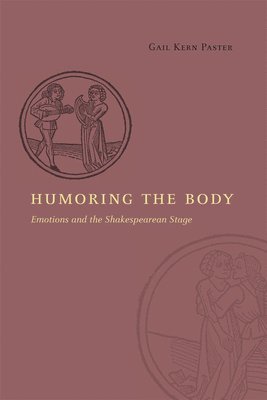
Thought modern readers no longer believe in the four humors of Galenic naturalism - blood, choler, melancholy, and phlegm - early modern thought found in these bodily fluids the key to explaining human emotions and behavior. In Humoring the Body, Gail Kern Paster proposes a new way to read the emotions of the early modern stage so that contemporary readers may recover some of the historical particularity in early modern expressions of emotional self-experience. Using notions drawn from humoral medical theory to untangle passges from important moral treatises, medical texts, natural histories, and major plays of Shakespeare and his contemporaries, Paster identifies a historical phenomenology in the language of affect by reconciling the significance of the four humors as the language of embodied emotion. She urges modern readers to resist the influence of post-Cartesian abstraction and the disembodiment of human psychology lest they miss the body-mind connection that still existed for Shakespeare and his contemporaries and constrained them to think differently about how their emotions were embodied in a premodern world.
326 kr
Skickas inom 7-10 vardagar
1 745 kr
Skickas inom 10-15 vardagar
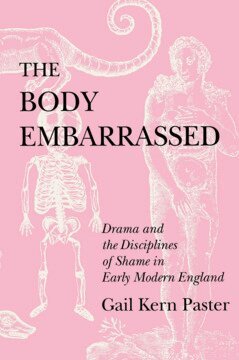
Men and women in early modern Europe experienced their bodies very differently from the ways in which contemporary men and women do. In this challenging and innovative book, Gail Kern Pasterexamines representations of the body in Elizabethan-Jacobean drama in the light of humoral medical theory, tracing the connections between the history of the visible social body and the history of the subject's body as experienced from within.Focusing on specific bodily functions and on changes in the forms of embarrassment associated with them, Paster extends the insights of such critics and theorists as Mikhail Bakhtin, Norbert Elias, and Thomas Laqueur. She first surveys comic depictions of incontinent women as "leaky vessels" requiring patriarchal management and then considers the relation between medical bloodletting practices and the gender implications of blood symbolism. Next she relates the practice of purging to the theme of shame and assays ideas about pregnancy, childbirth, and nursing in medical and other nonliterary texts. Paster then turns to the use of reproductive processes in the plot structures of key Shakespeare plays and in Dekker's, Ford's, and Rowley's Witch of Edmonton.Including twelve vivid illustrations, The Body Embarrassed will be fascinating reading for students and scholars in the fields of Renaissance studies, gender studies, literary theory, the history of drama, andcultural history.
514 kr
Skickas inom 10-15 vardagar
Men and women in early modern Europe experienced their bodies very differently from the ways in which contemporary men and women do. In this challenging and innovative book, Gail Kern Pasterexamines representations of the body in Elizabethan-Jacobean drama in the light of humoral medical theory, tracing the connections between the history of the visible social body and the history of the subject's body as experienced from within.Focusing on specific bodily functions and on changes in the forms of embarrassment associated with them, Paster extends the insights of such critics and theorists as Mikhail Bakhtin, Norbert Elias, and Thomas Laqueur. She first surveys comic depictions of incontinent women as "leaky vessels" requiring patriarchal management and then considers the relation between medical bloodletting practices and the gender implications of blood symbolism. Next she relates the practice of purging to the theme of shame and assays ideas about pregnancy, childbirth, and nursing in medical and other nonliterary texts. Paster then turns to the use of reproductive processes in the plot structures of key Shakespeare plays and in Dekker's, Ford's, and Rowley's Witch of Edmonton.Including twelve vivid illustrations, The Body Embarrassed will be fascinating reading for students and scholars in the fields of Renaissance studies, gender studies, literary theory, the history of drama, andcultural history.
422 kr
Skickas inom 10-15 vardagar
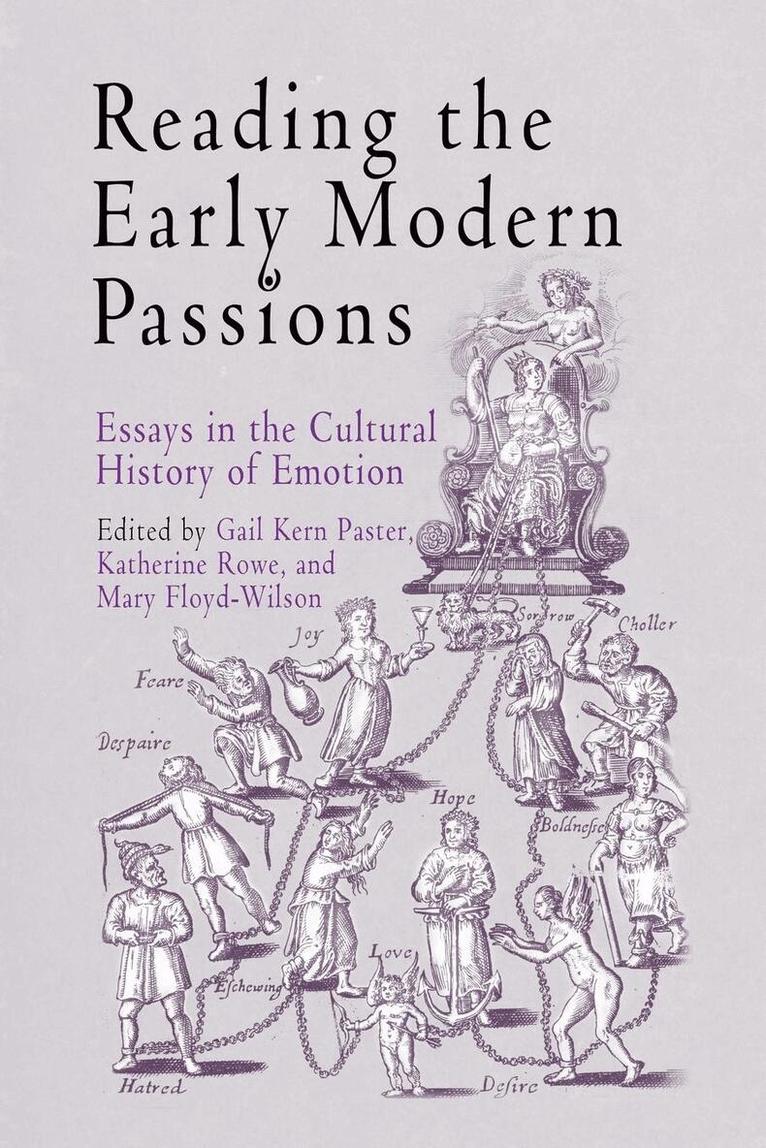
How translatable is the language of the emotions across cultures and time? What connotations of particular emotions, strongly felt in the early modern period, have faded or shifted completely in our own? If Western culture has traditionally held emotion to be hostile to reason and the production of scientific knowledge, why and how have the passions been lauded as windows to higher truths? Assessing the changing discourses of feeling and their relevance to the cultural history of affect, Reading the Early Modern Passions offers fourteen interdisciplinary essays on the meanings and representations of the emotional universe of Renaissance Europe in literature, music, and art.Many in the early modern era were preoccupied by the relation of passion to action and believed the passions to be a natural force requiring stringent mental and physical disciplines. In speaking to the question of the historicity and variability of emotions within individuals, several of these essays investigate specific emotions, such as sadness, courage, and fear. Other essays turn to emotions spread throughout society by contemporary events, such as a ruler's death, the outbreak of war, or religious schism, and discuss how such emotions have widespread consequences in both social practice and theory.Addressing anxieties about the power of emotions; their relation to the public good; their centrality in promoting or disturbing an individual's relation to God, to monarch, and to fellow human beings, the authors also look at the ways emotion serves as a marker or determinant of gender, ethnicity, and humanity. Contributors to the volume include Zirka Filipczak, Victoria Kahn, Michael Schoenfeldt, Bruce Smith, Richard Strier, and Gary Tomlinson.
560 kr
Skickas inom 5-8 vardagar
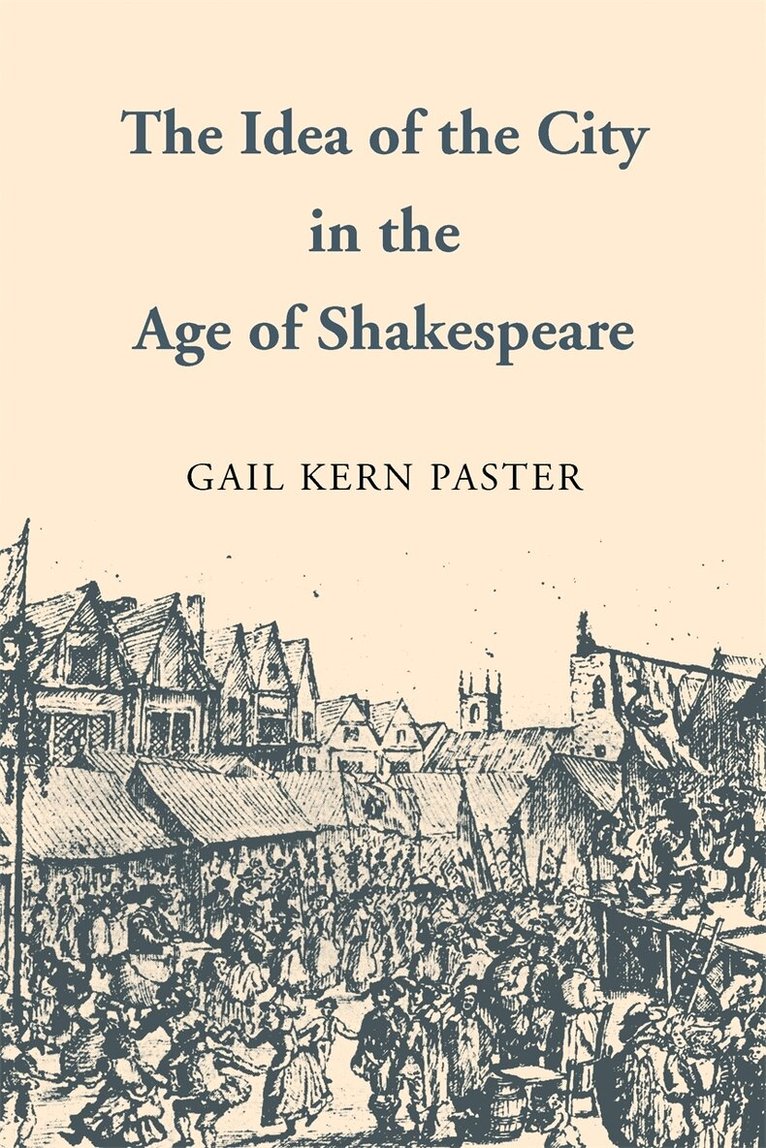
Gail Kern Paster explores the role of the city in the works of William Shakespeare, Thomas Middleton, and Ben Jonson. Paster moves beyond the usual presentation of the city-country dichotomy to reveal a series of oppositions that operate within the city's walls. These oppositions—city of God and city of man, Jerusalem and Rome, bride of the Lamb and whore of Babylon, ideal and real—together create a dual image of the city as a visionary ideal society and as a predatory trap, founded in fratricide, shadowed in guilt. In the theater, this duality affects the fate of early modern city dwellers, who exemplify even as they are controlled by this contradictory reality.
2 169 kr
Skickas inom 10-15 vardagar
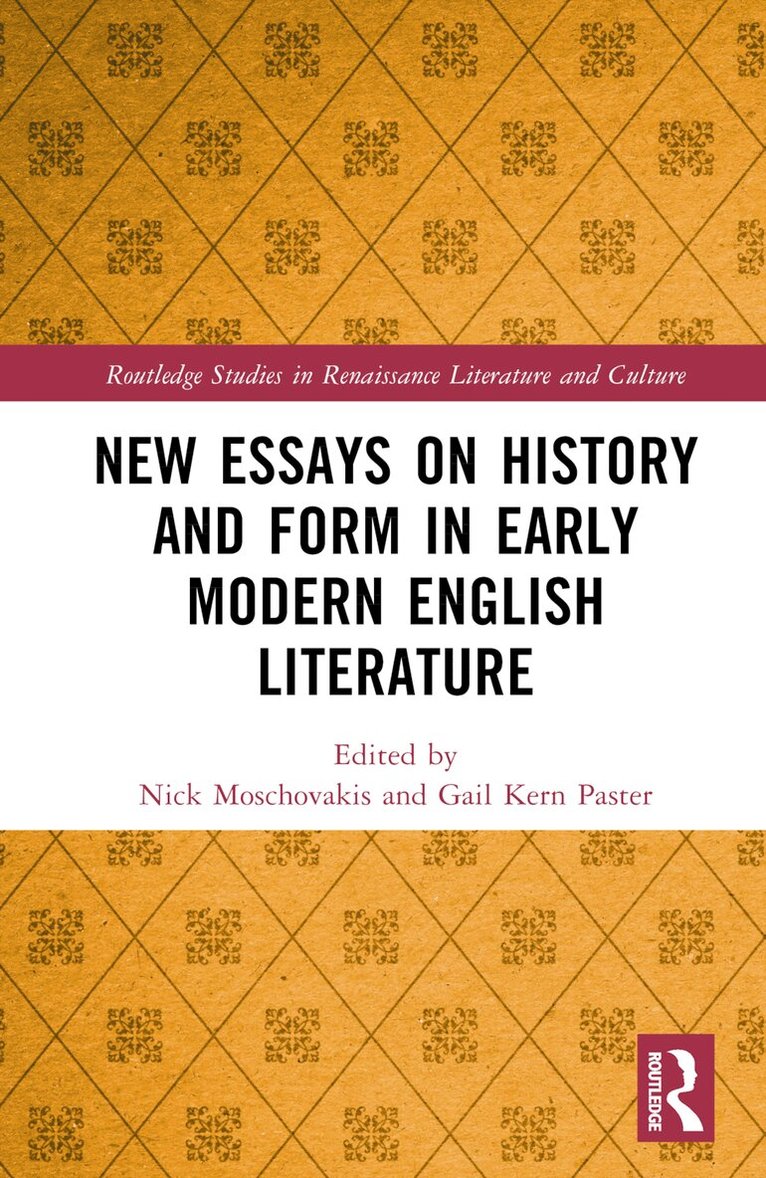
This volume convenes eight noted scholars with varied positions at the interface of formal and historical literary criticism. The editors’ introduction—a far-reaching account of how both methods have intersected in studies of early modern English texts since the 1990s—is the first such survey in more than 15 years, making it invaluable to scholars entering this area. Three essays address foundational questions about genre, fictionality, and formlessness; five feature close readings of texts or passages ranging from the more canonical (Shakespeare, Herbert, Milton) to the less so (an official record of the 1604 Hampton Court Conference). For scholars and students alike, the book thus models a variety of ways both to conceptualize and to analyze the value of literature at the formal–historical interface. Encompassing drama, lyric, satirical and polemical prose, and metrical as well as rhetorical and logical forms, the collection closes with an afterword by theorist Caroline Levine.
725 kr
Skickas inom 10-15 vardagar
This volume convenes eight noted scholars with varied positions at the interface of formal and historical literary criticism. The editors’ introduction—a far-reaching account of how both methods have intersected in studies of early modern English texts since the 1990s—is the first such survey in more than 15 years, making it invaluable to scholars entering this area. Three essays address foundational questions about genre, fictionality, and formlessness; five feature close readings of texts or passages ranging from the more canonical (Shakespeare, Herbert, Milton) to the less so (an official record of the 1604 Hampton Court Conference). For scholars and students alike, the book thus models a variety of ways both to conceptualize and to analyze the value of literature at the formal–historical interface. Encompassing drama, lyric, satirical and polemical prose, and metrical as well as rhetorical and logical forms, the collection closes with an afterword by theorist Caroline Levine.