Gary Saul Morson – författare
Visar alla böcker från författaren Gary Saul Morson. Handla med fri frakt och snabb leverans.
22 produkter
22 produkter
Häftad, Engelska, 1996
610 kr
Skickas inom 5-8 vardagar
In this important and controversial book, one of our leading literary theorists presents a major philosophical statement about the meaning of literature and the shape of literary texts. Drawing on works by the Russian writers Dostoevsky, Tolstoy, and Chekhov, by other writers as diverse as Sophocles, Cervantes, and George Eliot, by thinkers as varied as William James, Mikhail Bakhtin, and Stephen Jay Gould, and from philosophy, the Bible, television, and much more, Gary Saul Morson examines the relation of time to narrative form and to an ethical dimension of the literary experience.Morson asserts that the way we think about the world and narrate events is often in contradiction to the truly eventful and open nature of daily life. Literature, history, and the sciences frequently present experience as if contingency, chance, and the possibility of diverse futures were all illusory. As a result, people draw conclusions or accept ideologies without sufficiently examining their consequences or alternatives. However, says Morson, there is another way to read and construct texts. He explains that most narratives are developed through foreshadowing and "backshadowing" (foreshadowing ascribed after the fact), which tend to reduce the multiplicity of possibilities in each moment. But other literary works try to convey temporal openness through a device he calls "sideshadowing." Sideshadowing suggests that to understand an event is to grasp what else might have happened. Time is not a line but a shifting set of fields of possibility. Morson argues that this view of time and narrative encourages intellectual pluralism, helps to liberate us from the false certainties of dogmatism, creates a healthy skepticism of present orthodoxies, and makes us aware that there are moral choices available to us.
Inbunden, Engelska, 2011
1 143 kr
Skickas inom 5-8 vardagar
In this lively gambol through the history of quotations and quotation books, Gary Saul Morson traces our enduring fascination with the words of others. Ranging from the remote past to the present, he explores the formation, development, and significance of quotations, while exploring the "verbal museums" in which they have been collected and displayed--commonplace books, treasuries, and anthologies. In his trademark clear, witty, and provocative style, Morson invites readers to share his delight in the shortest literary genre. The author defines what makes a quote quotable, as well as the (unexpected) differences between quotation and misquotation. He describes how quotations form, transform, and may eventually become idioms. How much of language itself is the residue of former quotations? Weaving in hundreds of intriguing quotations, common and unusual, Morson explores how the words of others constitute essential elements in the formation of a culture and of the self within that culture. In so doing, he provides a demonstration of that very process, captured in the pages of this extraordinary new book.
Häftad, Engelska, 2015
191 kr
Skickas inom 5-8 vardagar
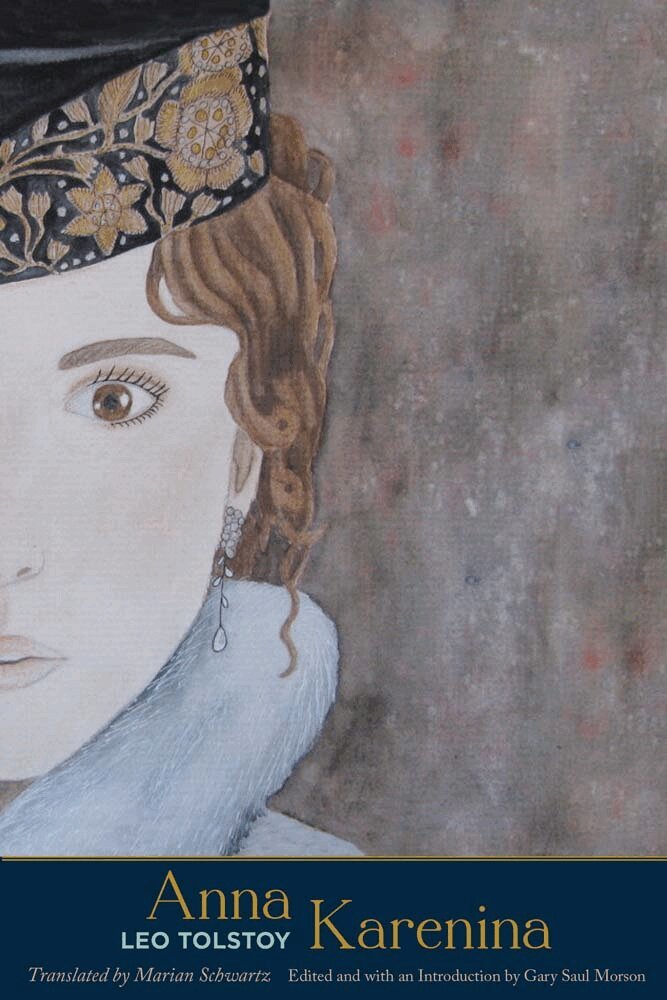
Publication of this exacting new translation of Tolstoy’s great Anna signifies a literary event of the first magnitudeTolstoy produced many drafts of Anna Karenina. Crafting and recrafting each sentence, he was anything but casual in his use of language. His project, translator Marian Schwartz observes, “was to bend language to his will, as an instrument of his aesthetic and moral convictions.” In her magnificent new translation, Schwartz embraces Tolstoy’s unusual style—she is the first English language translator ever to do so. Previous translations have departed from Tolstoy’s original, “correcting” supposed mistakes and infelicities. But Schwartz uses repetition where Tolstoy does, wields a judicious cliché when he does, and strips down descriptive passages as he does, re-creating his style in English with imagination and skill. Tolstoy’s romantic Anna, long-suffering Karenin, dashing Vronsky, and dozens of their family members, friends, and neighbors are among the most vivid characters in world literature. In the thought-provoking Introduction to this volume, Gary Saul Morson provides unusual insights into these characters, exploring what they reveal about Tolstoy’s radical conclusions on romantic love, intellectual dishonesty, the nature of happiness, the course of true evil, and more. For readers at every stage—from students first encountering Anna to literary professionals revisiting the novel—this volume will stand as the English reader’s clear first choice.
Häftad, Engelska, 2025
233 kr
Skickas inom 5-8 vardagar
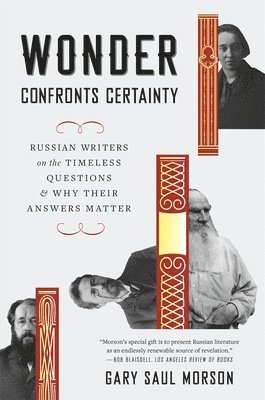
An Air Mail Editor’s Pick A Spectator Book of the Year “[A] masterly panorama of classic Russian literature and its hinterland of ideas.”—Wall Street Journal “Wise and authoritative…As the best Russian literature teaches, the emancipation of the human will from all limits and restraints is the path of individual and collective perdition. We should all be grateful to Gary Saul Morson for drawing out that indispensable insight with such lucidity, erudition, and grace.” —Daniel J. Mahoney, New Criterion “Wonder Confronts Certainty is Gary Saul Morson's magnum opus.” —Joseph Epstein, Washington Free BeaconSince the age of Tolstoy, Dostoevsky, and Chekhov, Russian literature has posed questions about good and evil, moral responsibility, and human freedom with a clarity and intensity found nowhere else. In this wide-ranging meditation, Gary Saul Morson delineates intellectual debates that have coursed through two centuries of Russian writing, as the greatest thinkers of the empire and then the Soviet Union enchanted readers with their idealism, philosophical insight, and revolutionary fervor. Morson describes the Russian literary tradition as an argument between a radical intelligentsia that uncompromisingly followed ideology down the paths of revolution and violence, and writers who probed ever more deeply into the human condition. Exploring apologia for bloodshed, Morson adapts Mikhail Bakhtin’s concept of the non-alibi—the idea that one cannot escape or displace responsibility for one’s actions. And, throughout, Morson isolates a characteristic theme of Russian culture: how the aspiration to relieve profound suffering can lead to either heartfelt empathy or bloodthirsty tyranny. What emerges is a contest between unyielding dogmatism and open-minded dialogue, between heady certainty and a humble sense of wonder at the world’s elusive complexity—a thought-provoking journey into inescapable questions.
Inbunden, Engelska, 2017
336 kr
Skickas inom 5-8 vardagar
A provocative and inspiring case for a more humanistic economics Economists often act as if their methods explain all human behavior. But in Cents and Sensibility, an eminent literary critic and a leading economist make the case that the humanities, especially the study of literature, offer economists ways to make their models more realistic, their predictions more accurate, and their policies more effective and just. Gary Saul Morson and Morton Schapiro trace the connection between Adam Smith's great classic, The Wealth of Nations, and his less celebrated book on The Theory of Moral Sentiments, and contend that a few decades later Jane Austen invented her groundbreaking method of novelistic narration in order to give life to the empathy that Smith believed essential to humanity. Morson and Schapiro argue that Smith's heirs include Austen, Anton Chekhov, and Leo Tolstoy as well as John Maynard Keynes and Milton Friedman. Economists need a richer appreciation of behavior, ethics, culture, and narrative--all of which the great writers teach better than anyone.Cents and Sensibility demonstrates the benefits of a freewheeling dialogue between economics and the humanities by addressing a wide range of problems drawn from the economics of higher education, the economics of the family, and the development of poor nations. It offers new insights about everything from the manipulation of college rankings to why some countries grow faster than others. At the same time, the book shows how looking at real-world problems can revitalize the study of literature itself. Original, provocative, and inspiring, Cents and Sensibility brings economics back to its place in the human conversation.
Häftad, Engelska, 2018
187 kr
Skickas inom 5-8 vardagar
In Cents and Sensibility, an eminent literary critic and a leading economist make the case that the humanities—especially the study of literature—offer economists ways to make their models more realistic, their predictions more accurate, and their policies more effective and just. Arguing that Adam Smith’s heirs include Austen, Chekhov, and Tolstoy as much as Keynes and Friedman, Gary Saul Morson and Morton Schapiro trace the connection between Adam Smith’s great classic, The Wealth of Nations, and his less celebrated book on ethics, The Theory of Moral Sentiments. The authors contend that a few decades later, Jane Austen invented her groundbreaking method of novelistic narration in order to give life to the empathy that Smith believed essential to humanity. More than anyone, the great writers can offer economists something they need—a richer appreciation of behavior, ethics, culture, and narrative. Original, provocative, and inspiring, Cents and Sensibility demonstrates the benefits of a dialogue between economics and the humanities and also shows how looking at real-world problems can revitalize the study of literature itself. Featuring a new preface, this book brings economics back to its place in the human conversation.
Inbunden, Engelska, 2021
334 kr
Skickas
A timely exploration of intellectual dogmatism in politics, economics, religion, and literature—and what can be done to fight itPolarization may be pushing democracy to the breaking point. But few have explored the larger, interconnected forces that have set the stage for this crisis: namely, a rise in styles of thought, across a range of fields, that literary scholar Gary Saul Morson and economist Morton Schapiro call “fundamentalist.” In Minds Wide Shut, Morson and Schapiro examine how rigid adherence to ideological thinking has altered politics, economics, religion, and literature in ways that are mutually reinforcing and antithetical to the open-mindedness and readiness to compromise that animate democracy. In response, they propose alternatives that would again make serious dialogue possible.Fundamentalist thinking, Morson and Schapiro argue, is not limited to any one camp. It flourishes across the political spectrum, giving rise to dueling monologues of shouting and abuse between those who are certain that they can’t be wrong, that truth and justice are all on their side, and that there is nothing to learn from their opponents, who must be evil or deluded. But things don’t have to be this way. Drawing on thinkers and writers from across the humanities and social sciences, Morson and Schapiro show how we might begin to return to meaningful dialogue through case-based reasoning, objective analyses, lessons drawn from literature, and more.The result is a powerful invitation to leave behind simplification, rigidity, and extremism—and to move toward a future of greater open-mindedness, moderation, and, perhaps, even wisdom.
Häftad, Engelska, 2023
166 kr
Skickas
A timely exploration of intellectual dogmatism in politics, economics, religion, and literature—and what can be done to fight itPolarization may be pushing democracy to the breaking point. But few have explored the larger, interconnected forces that have set the stage for this crisis: namely, a rise in styles of thought, across a range of fields, that literary scholar Gary Saul Morson and economist Morton Schapiro call “fundamentalist.” In Minds Wide Shut, Morson and Schapiro examine how rigid adherence to ideological thinking has altered politics, economics, religion, and literature in ways that are mutually reinforcing and antithetical to the open-mindedness and readiness to compromise that animate democracy. In response, they propose alternatives that would again make serious dialogue possible.Fundamentalist thinking, Morson and Schapiro argue, is not limited to any one camp. It flourishes across the political spectrum, giving rise to dueling monologues of shouting and abuse between those who are certain that they can’t be wrong, that truth and justice are all on their side, and that there is nothing to learn from their opponents, who must be evil or deluded. But things don’t have to be this way. Drawing on thinkers and writers from across the humanities and social sciences, Morson and Schapiro show how we might begin to return to meaningful dialogue through case-based reasoning, objective analyses, lessons drawn from literature, and more.The result is a powerful invitation to leave behind simplification, rigidity, and extremism—and to move toward a future of greater open-mindedness, moderation, and, perhaps, even wisdom.
Häftad, Engelska, 1988
428 kr
Skickas inom 10-15 vardagar
For decades, the formal peculiarities of War and Peace disturbed Russian and Western critics, who attributed both the anomalous structure and the literary power of the book to Tolstoy's "primitive," unruly genius. Using that critical history as a starting point, this volume recaptures the overwhelming sense of strangeness felt by the work's first readers and thereby illuminates Tolstoy's theoretical and narratological concerns.The author demonstrates that the formal peculiarities of War and Peace were deliberate, designed to elude what Tolstoy regarded as the falsifying constraints of all narratives, both novelistic and historical. Developing and challenging the ideas of Mikhail Bakhtin, Morson explores Tolstoy's account of the work's composition in light of various myths of the creative process. He proposes a theory of "creation by potential" that incorporates Tolstoy's main concerns: the "openness" of each historical moment; the role of chance in history and within narrative patterns; and the efficacy of ordinary events, "hidden in plain view," in shaping history and individual psychology. In his reading of Tolstoy, he demonstrates how we read literary works within the "penumbral text" of associated theories of creativity.
Häftad, Engelska, 1990
453 kr
Skickas inom 5-8 vardagar
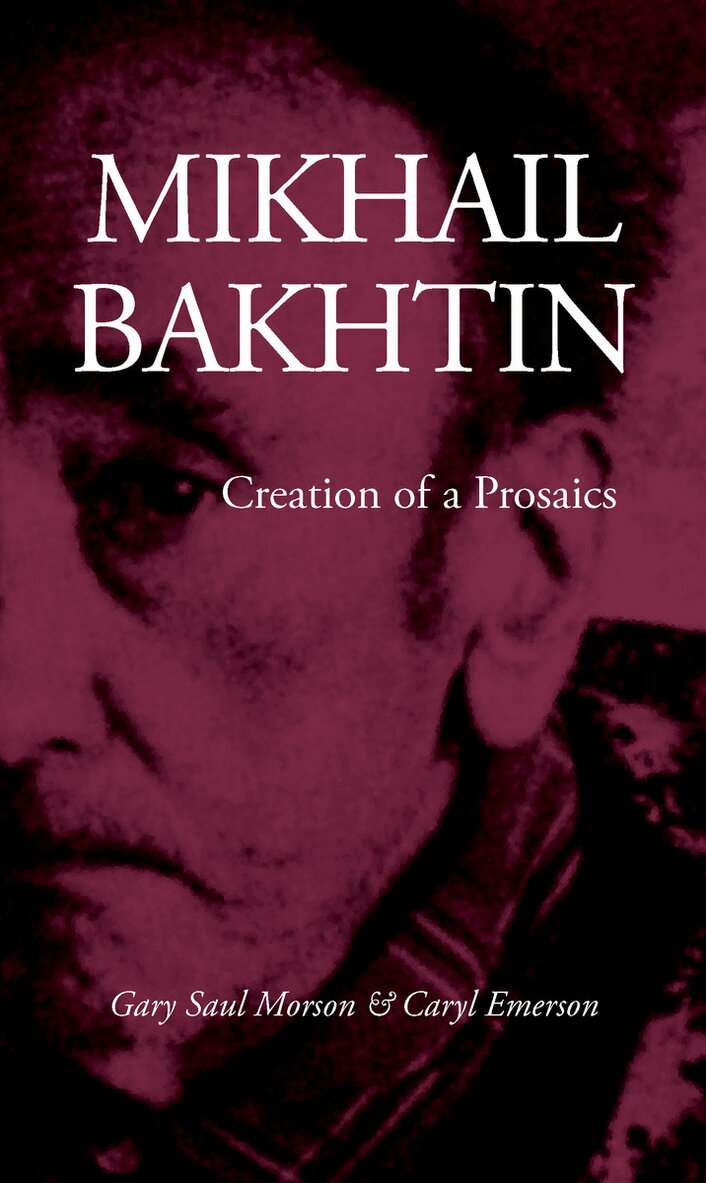
Books about thinkers require a kind of unity that their thought may not possess. This cautionary statement is especially applicable to Mikhail Bakhtin, whose intellectual development displays a diversity of insights that cannot be easily integrated or accurately described in terms of a single overriding concern. Indeed, in a career spanning some sixty years, he experienced both dramatic and gradual changes in his thinking, returned to abandoned insights that he then developed in unexpected ways, and worked through new ideas only loosely related to his earlier concernsSmall wonder, then, that Bakhtin should have speculated on the relations among received notions of biography, unity, innovation, and the creative process. Unity—with respect not only to individuals but also to art, culture, and the world generally—is usually understood as conformity to an underlying structure or an overarching scheme. Bakhtin believed that this idea of unity contradicts the possibility of true creativity. For if everything conforms to a preexisting pattern, then genuine development is reduced to mere discovery, to a mere uncovering of something that, in a strong sense, is already there. And yet Bakhtin accepted that some concept of unity was essential. Without it, the world ceases to make sense and creativity again disappears, this time replaced by the purely aleatory. There would again be no possibility of anything meaningfully new. The grim truth of these two extremes was expressed well by Borges: an inescapable labyrinth could consist of an infinite number of turns or of no turns at all.Bakhtin attempted to rethink the concept of unity in order to allow for the possibility of genuine creativity. The goal, in his words, was a "nonmonologic unity," in which real change (or "surprisingness") is an essential component of the creative process. As it happens, such change was characteristic of Bakhtin's own thought, which seems to have developed by continually diverging from his initial intentions. Although it would not necessarily follow that the development of Bakhtin's thought corresponded to his ideas about unity and creativity, we believe that in this case his ideas on nonmonologic unity are useful in understanding his own thought—as well as that of other thinkers whose careers are comparably varied and productive.
Häftad, Engelska, 1989
260 kr
Skickas inom 5-8 vardagar
Häftad, Engelska, 2009
446 kr
Skickas inom 5-8 vardagar
The essential entries from Dostoevsky's complete Diary, called his boldest experiment in literary form, are now available in this abridged edition; it is a uniquely encyclopedic forum of fictional and nonfictional genres. A Writer's Diary began as a column in a literary journal, but by 1876 Dostoevsky was able to bring it out as a complete monthly publication with himself as an editor, publisher, and sole contributor, suspending work on The Brothers Karamazov to do so.The Diary's radical format was matched by the extreme range of its contents. In a single frame it incorporated an astonishing variety of material: short stories; humorous sketches; reports on sensational crimes; historical predictions; portraits of famous people; autobiographical pieces; and plans for stories, some of which were never written while others appeared later in the Diary itself. A range of authorial and narrative voices and stances and an elaborate scheme of allusions and cross-references preserve and present Dostoevsky's conception of his work as a literary whole.Selected from the two-volume set, this abridged edition of A Writer's Diary appears in a single paperback volume, along with a new condensed introduction by editor Gary Saul Morson.
Häftad, Engelska, 2016
484 kr
Skickas inom 5-8 vardagar
Nabokov's translation of Pushkin's Eugene Onegin (1964) and its accompanying Commentary, along with Ada, or Ardor (1969), his densely allusive late Englishlanguage novel, have appeared nearly inscrutable to many interpreters of his work. If not outright failures, they are often considered relatively unsuccessful curiosities. In Bozovic's insightful study, these key texts reveal Nabokov's ambitions to reimagine a canon of nineteenth- and twentieth-century Western masterpieces with Russian literature as a central, rather than marginal, strain. Nabokov's scholarly work, translations, and lectures on literature bear resemblance to New Critical canon reformations; however, Nabokov's canon is pointedly translingual and transnational and serves to legitimize his own literary practice. The new angles and theoretical framework offered by Nabokov's Canon help us to understand why Nabokov's provocative monuments remain powerful source texts for several generations of diverse international writers, as well as richly productive material for visual, cinematic, musical, and other artistic adaptations.
Inbunden, Engelska, 2016
1 502 kr
Skickas inom 10-15 vardagar
Nabokov's translation of Pushkin's Eugene Onegin (1964) and its accompanying Commentary, along with Ada, or Ardor (1969), his densely allusive late Englishlanguage novel, have appeared nearly inscrutable to many interpreters of his work. If not outright failures, they are often considered relatively unsuccessful curiosities. In Bozovic's insightful study, these key texts reveal Nabokov's ambitions to reimagine a canon of nineteenth- and twentieth-century Western masterpieces with Russian literature as a central, rather than marginal, strain. Nabokov's scholarly work, translations, and lectures on literature bear resemblance to New Critical canon reformations; however, Nabokov's canon is pointedly translingual and transnational and serves to legitimize his own literary practice. The new angles and theoretical framework offered by Nabokov's Canon help us to understand why Nabokov's provocative monuments remain powerful source texts for several generations of diverse international writers, as well as richly productive material for visual, cinematic, musical, and other artistic adaptations.
Häftad, Engelska, 2016
484 kr
Skickas inom 5-8 vardagar
This innovative study brings the early writings of Mikhail Bakhtin into conversation with Max Scheler and Fyodor Dostoevsky to explore the question of what makes emotional co-experiencing ethically and spiritually productive. In Problems of Dostoevsky's Poetics, Bakhtin's well-known concept of the dialogical partner expresses what he sees as the potential of human relationships in Dostoevsky's work. But his earlier reflections on the ethical and aesthetic uses of empathy, in part inspired by Scheler's philosophy, suggest a still more fundamental form of communication that operates as a basis for human togetherness in Dostoevsky. Applying this rich and previously neglected theoretical apparatus in a literary analysis, Wyman examines the obstacles to active empathy in Dostoevsky's fictional world, considers the limitations and excesses of empathy, addresses the problem of frustrated love in The Idiot and Notes from Underground, and provides a fresh interpretation of two of Dostoevsky's most iconic characters, Prince Myshkin and Alyosha Karamazov.
Inbunden, Engelska, 2016
1 502 kr
Skickas inom 10-15 vardagar
This innovative study brings the early writings of Mikhail Bakhtin into conversation with Max Scheler and Fyodor Dostoevsky to explore the question of what makes emotional co-experiencing ethically and spiritually productive. In Problems of Dostoevsky's Poetics, Bakhtin's well-known concept of the dialogical partner expresses what he sees as the potential of human relationships in Dostoevsky's work. But his earlier reflections on the ethical and aesthetic uses of empathy, in part inspired by Scheler's philosophy, suggest a still more fundamental form of communication that operates as a basis for human togetherness in Dostoevsky. Applying this rich and previously neglected theoretical apparatus in a literary analysis, Wyman examines the obstacles to active empathy in Dostoevsky's fictional world, considers the limitations and excesses of empathy, addresses the problem of frustrated love in The Idiot and Notes from Underground, and provides a fresh interpretation of two of Dostoevsky's most iconic characters, Prince Myshkin and Alyosha Karamazov.
Inbunden, Engelska, 2013
1 632 kr
Skickas inom 5-8 vardagar
This far-ranging study develops Morson’s concept of “prosaics,” which stresses the importance of ordinary events and the novel’s unique ability to portray them. Arguing that time is open and contingency real, Morson develops a “prosaics of process” showing how some masterpieces have found an alternative to structure. His well-known pseudonym Alicia Chudo, the inventor of “misanthropology,” explores the disturbing philosophical content of laughter, disgust, and even empathy. Northwestern University’s most popular professor, Morson attributes declining student interest in literature to current teaching methods. He argues in favor of showing how literature fosters empathy with people unlike ourselves. Ever playful, Morson explores the relation of games to wit, which expresses the power of the mind to triumph over contingency in the social world.
Häftad, Engelska, 2018
456 kr
Skickas inom 5-8 vardagar
This far-ranging study develops Morson’s concept of “prosaics,” which stresses the importance of ordinary events and the novel’s unique ability to portray them. Arguing that time is open and contingency real, Morson develops a “prosaics of process” showing how some masterpieces have found an alternative to structure. His well-known pseudonym Alicia Chudo, the inventor of “misanthropology,” explores the disturbing philosophical content of laughter, disgust, and even empathy. Northwestern University’s most popular professor, Morson attributes declining student interest in literature to current teaching methods. He argues in favor of showing how literature fosters empathy with people unlike ourselves. Ever playful, Morson explores the relation of games to wit, which expresses the power of the mind to triumph over contingency in the social world.
Häftad, Engelska, 2026
111 kr
Skickas inom 5-8 vardagar
Christianity shaped the West, bringing conquest and religious strife but also the modern ideals of emancipation, human rights, and democracy. Now Christendom’s influence is waning, and many churches are seeing decline in membership. What happens if we lose the Christian teaching that each human being is made in the image of God, and that humankind, in all its diversity, is one whole. This issue of Plough looks at the social, political, and cultural implications, reminding readers that Jesus brought more than a religion and that this is not how his story ends.On this theme: Karen Kilby asks how Christians should respond to churches in decline.Galen Watts argues that modernity has replaced traditional religion with other gods.King-Ho Leung posits that Marx misunderstood Christianity.John Ehrett shows what right-wing politics looks like without Christian moorings.Gary Saul Morson recounts how Solzhenitsyn found faith in the gulag.Margarita Mooney found faith alive in Communist Cuba.Easton Law dispels some common myths about the church in China.Graham Tomlin recounts Blaise Pascal conversion from cultural Christian to true believer.Also in this issue: George Scialabba finds moral exemplars in George Eliot’s Middlemarch.Francis Young tells a story in which a mystical white reindeer appears.Chris Zimmerman interviews Israelis and Palestinians who have lost children to the conflict.Plough Quarterly features stories, ideas, and culture for people eager to apply their faith to the challenges we face. Each issue includes in-depth articles, interviews, poetry, book reviews, and art.
Inbunden, Engelska
457 kr
Tillfälligt slut
Inbunden, Engelska, 2023
452 kr
Tillfälligt slut
A noted literary scholar traverses the Russian canon, exploring how realists, idealists, and revolutionaries debated good and evil, moral responsibility, and freedom.Since the age of Tolstoy, Dostoevsky, and Chekhov, Russian literature has posed questions about good and evil, moral responsibility, and human freedom with a clarity and intensity found nowhere else. In this wide-ranging meditation, Gary Saul Morson delineates intellectual debates that have coursed through two centuries of Russian writing, as the greatest thinkers of the empire and then the Soviet Union enchanted readers with their idealism, philosophical insight, and revolutionary fervor.Morson describes the Russian literary tradition as an argument between a radical intelligentsia that uncompromisingly followed ideology down the paths of revolution and violence, and writers who probed ever more deeply into the human condition. The debate concerned what Russians called “the accursed questions”: If there is no God, are good and evil merely human constructs? Should we look for life’s essence in ordinary or extreme conditions? Are individual minds best understood in terms of an overarching theory or, as Tolstoy thought, by tracing the “tiny alternations of consciousness”? Exploring apologia for bloodshed, Morson adapts Mikhail Bakhtin’s concept of the non-alibi—the idea that one cannot escape or displace responsibility for one’s actions. And, throughout, Morson isolates a characteristic theme of Russian culture: how the aspiration to relieve profound suffering can lead to either heartfelt empathy or bloodthirsty tyranny.What emerges is a contest between unyielding dogmatism and open-minded dialogue, between heady certainty and a humble sense of wonder at the world’s elusive complexity—a thought-provoking journey into inescapable questions.