• Fri frakt över 249 kr
  • •
  • Snabba leveranser
  • •
  • Billiga böcker
Kundservice

Du är på sajten för privatpersoner.

Företag, bibliotek eller offentlig verksamhet?

Du handlar på classic.bokus.com, där alla dina funktioner finns intakta.
Till classic.bokus.com
Bokus logotyp. Gå till startsidan.
  • Erbjudanden
  • Nyheter
  • Student
  • Topplistor
  • Barn & ungdom
  • Bokus Play
  • E-böcker
  • Pocketböcker
  • Spel & pussel

10% rabatt på allt med kod NYSTART10 →

Sidfot

Mina sidor

    Hjälp

    • Kundservice
    • Vanliga frågor och svar
    • Frakt och leverans
    • Retur vid ångerrätt
    • Reklamera vara
    • Betalning
    • Köpvillkor
    • Allmänna villkor
    • Information om webbplatsens tillgänglighet

    Om Bokus

    • Om oss
    • Pressrum
    • För studenter
    • För företag
    • För bibliotek och offentlig verksamhet
    • För leverantörer
    • Hållbarhet

    Populärt

    • Aktuella erbjudanden
    • Presentkort
    • Studentlitteratur
    • Nya böcker
    • Topplistor
    • Signerade böcker
    • Engelska böcker

    Inspiration

    • Boktips
    • BookTok
    • Populära bokserier
    • Barnbokskaraktärer
    • Populära författare
    Logotyp för Bokus
    Följ oss på Facebook (extern länk)Följ oss på Instagram (extern länk)Följ oss på YouTube (extern länk)Följ oss på TikTok (extern länk)
    bokus @ CookiesAnpassa cookiesIntegritetspolicyKöpvillkor
    Till Citymail hemsida (extern länk)Till Budbee hemsida (extern länk)Till Postnord hemsida (extern länk)Till Schenker hemsida (extern länk)Till Early Bird hemsida (extern länk)Till Walleys hemsida (extern länk)
    1. Ekonomi och Ledarskap
    2. Nationalekonomi
    3. Mikroekonomi

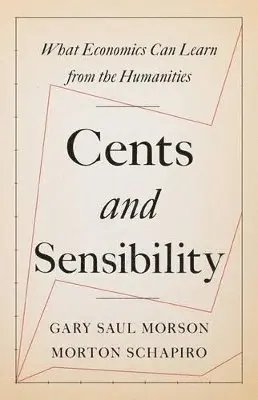
    Cents and Sensibility

    What Economics Can Learn from the Humanities

    AvGary Saul Morson,Morton Schapiro

    Inbunden, Engelska, 2017

    363 kr

    Beställningsvara. Skickas inom 5-8 vardagar. Fri frakt över 249 kr.

    Fler format och utgåvor

    Häftad

    196 kr

    Beskrivning

    A provocative and inspiring case for a more humanistic economics Economists often act as if their methods explain all human behavior. But in Cents and Sensibility, an eminent literary critic and a leading economist make the case that the humanities, especially the study of literature, offer economists ways to make their models more realistic, their predictions more accurate, and their policies more effective and just. Gary Saul Morson and Morton Schapiro trace the connection between Adam Smith's great classic, The Wealth of Nations, and his less celebrated book on The Theory of Moral Sentiments, and contend that a few decades later Jane Austen invented her groundbreaking method of novelistic narration in order to give life to the empathy that Smith believed essential to humanity. Morson and Schapiro argue that Smith's heirs include Austen, Anton Chekhov, and Leo Tolstoy as well as John Maynard Keynes and Milton Friedman. Economists need a richer appreciation of behavior, ethics, culture, and narrative--all of which the great writers teach better than anyone.Cents and Sensibility demonstrates the benefits of a freewheeling dialogue between economics and the humanities by addressing a wide range of problems drawn from the economics of higher education, the economics of the family, and the development of poor nations. It offers new insights about everything from the manipulation of college rankings to why some countries grow faster than others. At the same time, the book shows how looking at real-world problems can revitalize the study of literature itself. Original, provocative, and inspiring, Cents and Sensibility brings economics back to its place in the human conversation.

    Produktinformation

    • Utgivningsdatum:2017-05-30
    • Mått:140 x 216 x 29 mm
    • Vikt:454 g
    • Format:Inbunden
    • Språk:Engelska
    • Antal sidor:320
    • Förlag:Princeton University Press
    • ISBN:9780691176680

    Utforska kategorier

    • Mikroekonomi inom Ekonomi och Ledarskap
    • Nationalekonomi inom Ekonomi och Ledarskap
    • Högskola och universitet inom Psykologi och pedagogik

    Mer om författaren

    Gary Saul Morson is the Lawrence B. Dumas Professor of the Arts and Humanities and professor of Slavic languages and literatures at Northwestern University. His many books include Narrative and Freedom, "Anna Karenina" in Our Time, and The Words of Others: From Quotations to Culture. Morton Schapiro is the president of Northwestern University and a professor of economics. His many books include The Student Aid Game (Princeton). Morson and Schapiro are also the editors of The Fabulous Future?: America and the World in 2040.

    Recensioner i media

    "Focusing mostly on integrating exposure to great realist novels (such as Anna Karenina, Middlemarch, and War and Peace) into economics education, the authors use three case studies on, respectively, higher education, the family, and the economic development of nations to make an insightful and compelling argument. Morson and Schapiro succeed in finding new ways of thinking about big issues as well as new ways to read classic novels... The case studies read like popular nonfiction. There's immense joy to be found throughout this work on thinking with creativity and passion."--Publishers Weekly

    Innehållsförteckning

    • Acknowledgments ix 1 Spotting the Spoof: The Value of Telling Stories Out of (and in) School 1 Twin Crises 4 The Dehumanities 5 Humanomics 8 A Return to the "Real" Adam Smith 18 The Value of Telling Stories Out of (and in) School 20 Two Stories 23 2 A Slow Walk to Judgment: Hedgehogs and Foxes, Wisdom and Prediction 46 3 The Power and Limits of the Economic Approach: Case Study 1-How to Improve American Higher Education 64 Enrollment Management 65 Who Teaches Undergraduates? 80 Data Reporting 87 The Allocation of State Operating Subsidies 98 The Federal Interest in Enrollment, Completion, and Matching 105 4 Love Is in the Air ... or at Least in the Error Term: Case Study 2-What Economists Can and Cannot Teach Us about the Family 119 Do Preferences Change? 126 The Economics of the Intimate 129 Children 138 Crime and Punishment 144 Three Responses to the Economic Model 147 Irrationality of the Second Order 150 Selling Kidneys 153 A Foxy Approach to Economic Demography 162 5 The Ultimate Question: Case Study 3-Why Do Some Countries Develop Faster Than Others? Economics, Culture, and Institutions 167 The Hedgehog of Geography 169 Foxy and Other Economists 180 The Harm That Hedgehogs Do 195 6 The Best of the Humanities 200 Justifying the Humanities 206 The Humanities as Often Taught 209 Why Not Just Read SparkNotes? 212 Overcoming the Human 213 Character and Nanocharacter 216 Ethics and Stories 218 Experience from Within 222 Globalization 232 World Literature and the Curriculum 234 Writing and Argument 238 Conclusion 241 7 De-hedgehogizing Adam Smith: The Economics That Might Be 243 Sympathy and Empathy 248 Theory as Anti-Theory 249 Smith the Novelist 252 Negative Pluralism 254 Rethinking the Invisible Hand 255 What Humanists Can Learn from Economists 259 Humanism and Behavioral Economics 261 8 Humanomics: A Dialogue of Disciplines 288 Index 295