Geert Roskam - Böcker
Visar alla böcker från författaren Geert Roskam. Handla med fri frakt och snabb leverans.
10 produkter
10 produkter
244 kr
Skickas inom 7-10 vardagar
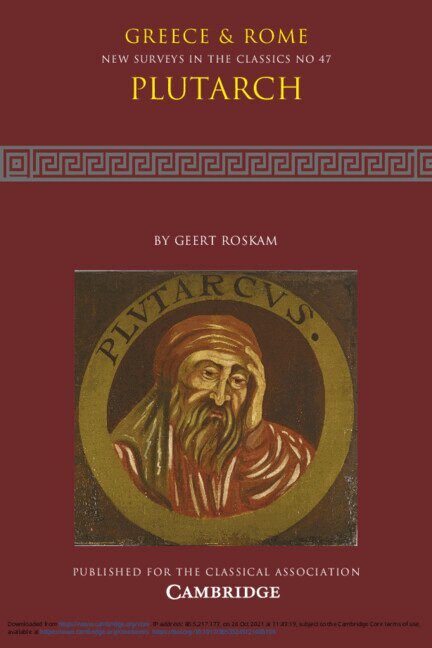
Plutarch of Chaeronea is one of the most influential and fascinating authors of antiquity. His Parallel Lives and Moralia are storehouses of challenging questions, valuable insights and interesting observations. Moreover, they contain a wealth of quotations from and references to earlier writers and traditions, and thus provide one of the richest gateways to the ancient world. This book introduces the reader to Plutarch's life and to the different facets of his variegated thinking and writing, such as his tremendous erudition, his Platonism and (moral) philosophy, his interpretation of history and his view of God. Above all, Plutarch stands out as a particularly clever and subtle thinker, driven by a spirit of painstaking enquiry (zetesis) that shows authentic and impressive intellectual honesty and sincere love of the truth. In this respect, as in many others, he remains an inspiring model even for us today.
Networking Through Biography: Constructing Intellectual Junctions in Antiquity, the Renaissance and the Arabo-Islamic World
Inbunden, Arabiska
2 522 kr
Kommande
1 773 kr
Skickas inom 5-8 vardagar
This collection deals with utopias in the Greek and Roman worlds. Plato is the first and foremost name that comes to mind and, accordingly, 3 chapters (J. Annas; D. El Murr; A. Hazistavrou) are devoted to his various approaches to utopia in the Republic, Timaeus and Laws. But this volume's central vocation and originality comes from our taking on that theme in many other philosophical authors and literary genres. The philosophers include Aristotle (Ch. Horn) but also Cynics (S. Husson), Stoics (G. Reydams-Schils) and Cicero (S. McConnell). Other literary genres include comedic works from Aristophanes up to Lucian (G. Sissa; S. Kidd; N.I. Kuin) and history from Herodotus up to Diodorus Siculus (T. Lockwood; C. Atack; I. Sulimani). A last comparative chapter is devoted to utopias in Ancient China (D. Engels).
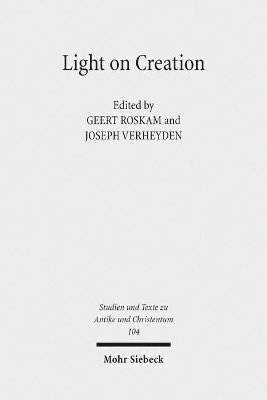
Del 104 - Studien und Texte zu Antike und Christentum / Studies and Texts in Antiquity and Christianity
Light on Creation
Ancient Commentators in Dialogue and Debate on the Origin of the World
Häftad, Engelska, 2017
1 581 kr
Skickas inom 11-20 vardagar
Der vorliegende Band enthält die Ergebnisse eines internationalen Kolloquiums, welches im Februar 2015 an der geisteswissenschaftlichen Fakultät der KU Leuven abgehalten wurden und Experten in (spät)antiker Philosophie und frühchristlichen Studien zusammenbrachte. Die Beiträger wurden gebeten, über die Rezeption zweier grundlegender Texte, die sich mit dem Ursprung der Welt befassen, zu reflektieren - dem dritten Buch von Platons Timaios und der Schöpfungsgeschichte aus Genesis. Die Organisatoren hatten zwei Ziele: Sie wollten ein Forum bieten, um den Dialog zwischen Kollegen aus diesen Fachgebieten voranzutreiben, indem sie aus vergleichender Perspektive sowohl ein entscheidendes Thema untersuchen, welches beide Traditionen teilen, als auch die literarischen Gattungen, durch die dieses Thema entwickelt und überliefert wurde.
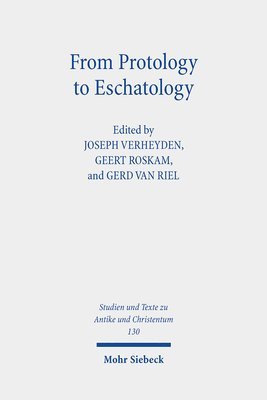
Del 130 - Studien und Texte zu Antike und Christentum / Studies and Texts in Antiquity and Christianity
From Protology to Eschatology
Competing Views on the Origin and the End of the Cosmos in Platonism and Christian Thought
Häftad, Engelska, 2022
1 309 kr
Skickas inom 5-8 vardagar
Wie haben griechische philosophische und frühchristliche Tradition über den Ursprung und das Ziel des Kosmos reflektiert und über die Antworten, die in den jeweiligen Traditionskreisen gegeben wurden? Die Aufsätze in diesem Band zeigen, dass die griechische philosophische und die frühchristliche Tradition ein gemeinsames Interesse daran hatten, nicht nur über die Prinzipien nachzudenken, die die Kosmologie bestimmen, und darüber, wie der Kosmos auf seine Prinzipien zurückgreift, sondern auch über die Antworten, die in beiden Tradition diesbezüglich gegeben wurden.
On the Path to Virtue
The Stoic Doctrine of Moral Progress and Its Reception in (Middle-) Platonism
Inbunden, Engelska, 2005
859 kr
Skickas inom 5-8 vardagar
In the first part about the specific Stoic doctrine on moral progress (prokope) attention is first given to the subtle view developed by the early Stoics, who categorically denied the existence of any mean between vice and virtue, and yet succeeded in giving moral progress a logical and meaningful place within their ethical thinking. Subsequently, the position of later Stoics (Panaetius, Hecato, Posidonius, Seneca, Musonius Rufus, Epictetus and Marcus Aurelius) is examined. Most of them appear to adopt a basically 'orthodox' view, although each one of them lays his own accents and deals with Chrysippus' tenets from his own personal perspective. Occasionally, the 'heterodox' position of Aristo of Chios proves to have remained influential too. The second part of the study deals with the polemical reception of the Stoic doctrine of moral progress in (Middle-)Platonism. The first author who is discussed is Philo of Alexandria. Philo deals with the Stoic doctrine in a very ideosyncratical way. He never explicitly attacked the Stoic view on moral progress, although it is clear from various passages in his work that he favoured the Platonic-Peripatetic position rather than the Stoic one.Next, Plutarch's position is examined, through a detailed analysis of his treatise 'De profectibus in virtute'.Finally, attention is given to two school handbooks dating from the period of Middle-Platonism (Alcinous and Apuleius). In both of them, the Stoic doctrine is rejected without many arguments, which shows that a correct (and anti-Stoic) conception of moral progress was regarded in Platonic circles as a basic knowledge for beginning students.The whole discussion is placed into a broader philosophical-historical perspective by the introduction (on the philosophical tradition before the Stoa) and the epilogue (about later discussions in Neo-Platonism and early Christianity).
416 kr
Tillfälligt slut
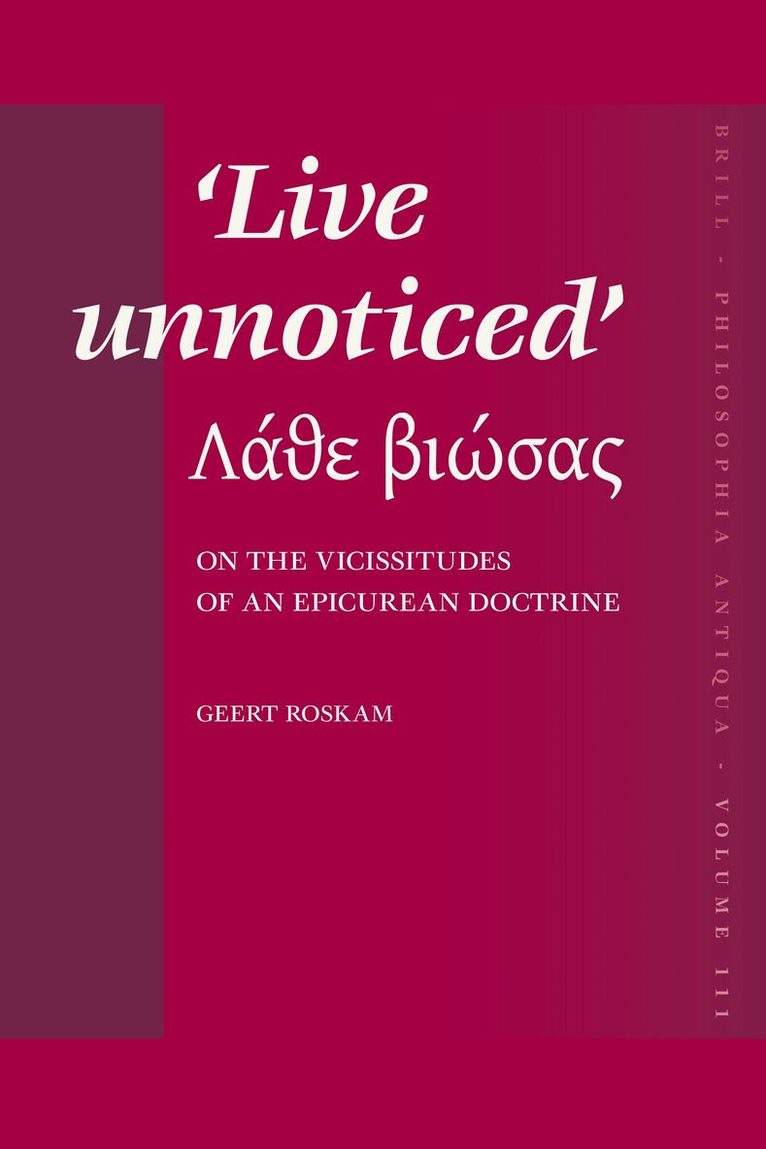
Plutarch's De latenter vivendo is the only extant work from Antiquity in which Epicurus' famous ideal of an 'unnoticed life' (lathe biosas) is thematised as such. Moreover, the short rhetorical work provides a lot of interesting information about Plutarch's polemical strategies and about his own philosophical convictions in the domains of ethics, politics, metaphysics, and eschatology. In this book, Plutarch's anti-Epicurean polemic is understood against the background of the previous philosophical tradition. An examination of Epicurus' own position is followed by a discussion of Plutarch's polemical predecessors (Timocrates, Cicero, the early Stoics, and Seneca) and contemporaries (Epictetus), and by a systematical and detailed analysis of Plutarch's own arguments. The lemmatic commentary offers additional information and parallel passages (both from Plutarch's own works and from others authors) that cast a new light on the text.
Plutarch's "Maxime cum principibus philosopho esse disserendum"
An Interpretation with Commentary
Inbunden, Engelska, 2009
582 kr
Tillfälligt slut
The question of the political relevance of philosophy, and of the role which the philosopher should play in the government of his state, was often discussed in Antiquity. Plato’s ideal of the philosopher-king is well-known, but was precisely his failure to realise his political ideal in Syracuse not the best argument against the philosopher’s political engagement? Nevertheless, Plato’s ideal remained attractive for later Greek thinkers. This is illustrated, for instance, by one of Plutarch’s short political works, in which he tries to demonstrate that the philosopher should especially associate with powerful rulers, because he can in this way exert the greatest positive influence on his society and at the same time maximise his personal pleasure. This study provides a thorough analysis of Plutarch’s Maxime cum principibus philosopho esse disserendum. A lengthy general introduction deals with the author and the text and discusses each step in Plutarch’s argumentation in detail. A systematic lemmatic commentary then provides a systematic complement to the previous analysis of the work, dealing with many problems of textual criticism, explaining all kinds of realia, and discussing a great number of passages through parallels from Plutarch’s own oeuvre and from other authors.
763 kr
Tillfälligt slut
Plutarch of Chaeronea, Platonist, polymath, and prolific writer, was by no means an armchair philosopher. He believed in the necessity for a philosopher to affect the lives of his fellow citizens. That urge inspired many of his writings to meet what he considered people's true needs. Although these writings on practical ethics illustrate in various ways Plutarch's authorial talents and raise many challenging questions (regarding their overall structure, content, purpose, and underlying philosophical and social presuppositions), they have attracted only limited scholarly attention. Virtues for the People contains a collection of essays that deal with these questions from different perspectives and as such throw a new light upon this multifaceted domain of Plutarch's thinking and writing. Special points of interest are the concept of ‘popular philosophy' itself and its implications, its dependence on a more theoretical philosophical background, and the importance of moral progress, the therapy of wickedness, and the common experiences of everyday life. Ebook available in Open Access.This publication is GPRC-labeled (Guaranteed Peer-Reviewed Content).
986 kr
Skickas inom 5-8 vardagar
Plutarch was a brilliant Platonist, an erudite historian, a gifted author of highly polished literary dialogues, a priest of Apollo at Delphi, and a devoted politician in his hometown Chaeronea. He felt confident in the most technical and specialized discussions, yet was not afraid of rhetorical generalizations. In his voluminous oeuvre, he appears as a sharp polemicist and a loving father, an ardent pupil but also a kind, inspiring teacher, a sober historian and a teller of wondrous tales. In view of all these different personae, erudite versatility is without any doubt a major characteristic of Plutarch’s works. A Versatile Gentleman is dedicated to Luc Van der Stockt, professor emeritus of Greek language and literature at KU Leuven and a truly versatile gentleman. The volume aims to do justice to his and Plutarch’s versatility by discussing the Chaeronean from many different angles. As such, it sheds new light on the coherence of, and the tensions in, Plutarch’s thinking and writing.This publication is GPRC-labeled (Guaranteed Peer-Reviewed Content).