Geoffrey Hewings - Böcker
Visar alla böcker från författaren Geoffrey Hewings. Handla med fri frakt och snabb leverans.
4 produkter
4 produkter
Latin American Business
Equity Distortion in Regional Resource Allocation in Brazil
Inbunden, Engelska, 2007
663 kr
Skickas inom 10-15 vardagar
Examine the costs and benefits of fiscal wars between Brazilian statesLatin American Business examines Brazil’s use of fiscal incentives to attract investors to help remedy disparities in the country’s regional distribution of income. Since the 1990s, individual Brazilian states have taken the initiative in trying to lure domestic and foreign firms to locate within their borders, targeting the automotive industry, textiles, and shoe production. But their efforts have led to mixed results and questions about whether these fiscal wars have been legitimate attempts at regional economic development or simply a distortion in the allocation of resources. This insightful collection of case studies and essays sheds considerable light on the issue. For several generations, the notion has been debated both in advanced industrial countries and in developing countries that regional differences in income will gradually be eliminated as poor regions (where money is scare but labor is not) benefit from the inflow of investments. In reality, this has rarely happened; Latin American Business examines why that has been the case in Brazil. The book’s contributors fuel this continuing debate, analyzing topics that include Bahia’s efforts to attract a Ford plant, the Mercedes-Benz project in Juiz de Fora, the case of Renault in Paraná, fiscal incentive programs in Pernambuco, and the tax incentive policies of Ceará. Latin American Business includes:an evaluation of the costs and benefits of federal and state incentives given to Ford Motor Company to attract a plant in Bahia an analysis of the use of state and municipal incentives by the state of Minas Gerais in dealing with Mercedes-Benz Corporation a look at Paraná’s agreement with Renault and the degree to which it has created jobs and attracted other investments an examination of structural changes in the Brazilian automotive industry a look at the Brazilian automotive industry in the 1990s an evaluation of the results of Pernambo’s fiscal incentives program from 1996 to 2003 a discussion of the economic logic for tax incentives a look at the economic effects of regional tax incentives and much moreLatin American Business is an essential resource for academics, business practitioners, public policymakers, and anyone working in the international development community.
Latin American Business
Equity Distortion in Regional Resource Allocation in Brazil
Häftad, Engelska, 2007
931 kr
Tillfälligt slut
Examine the costs and benefits of fiscal wars between Brazilian statesLatin American Business examines Brazil’s use of fiscal incentives to attract investors to help remedy disparities in the country’s regional distribution of income. Since the 1990s, individual Brazilian states have taken the initiative in trying to lure domestic and foreign firms to locate within their borders, targeting the automotive industry, textiles, and shoe production. But their efforts have led to mixed results and questions about whether these fiscal wars have been legitimate attempts at regional economic development or simply a distortion in the allocation of resources. This insightful collection of case studies and essays sheds considerable light on the issue. For several generations, the notion has been debated both in advanced industrial countries and in developing countries that regional differences in income will gradually be eliminated as poor regions (where money is scare but labor is not) benefit from the inflow of investments. In reality, this has rarely happened; Latin American Business examines why that has been the case in Brazil. The book’s contributors fuel this continuing debate, analyzing topics that include Bahia’s efforts to attract a Ford plant, the Mercedes-Benz project in Juiz de Fora, the case of Renault in Paraná, fiscal incentive programs in Pernambuco, and the tax incentive policies of Ceará. Latin American Business includes:an evaluation of the costs and benefits of federal and state incentives given to Ford Motor Company to attract a plant in Bahia an analysis of the use of state and municipal incentives by the state of Minas Gerais in dealing with Mercedes-Benz Corporation a look at Paraná’s agreement with Renault and the degree to which it has created jobs and attracted other investments an examination of structural changes in the Brazilian automotive industry a look at the Brazilian automotive industry in the 1990s an evaluation of the results of Pernambo’s fiscal incentives program from 1996 to 2003 a discussion of the economic logic for tax incentives a look at the economic effects of regional tax incentives and much moreLatin American Business is an essential resource for academics, business practitioners, public policymakers, and anyone working in the international development community.
1 578 kr
Skickas inom 10-15 vardagar
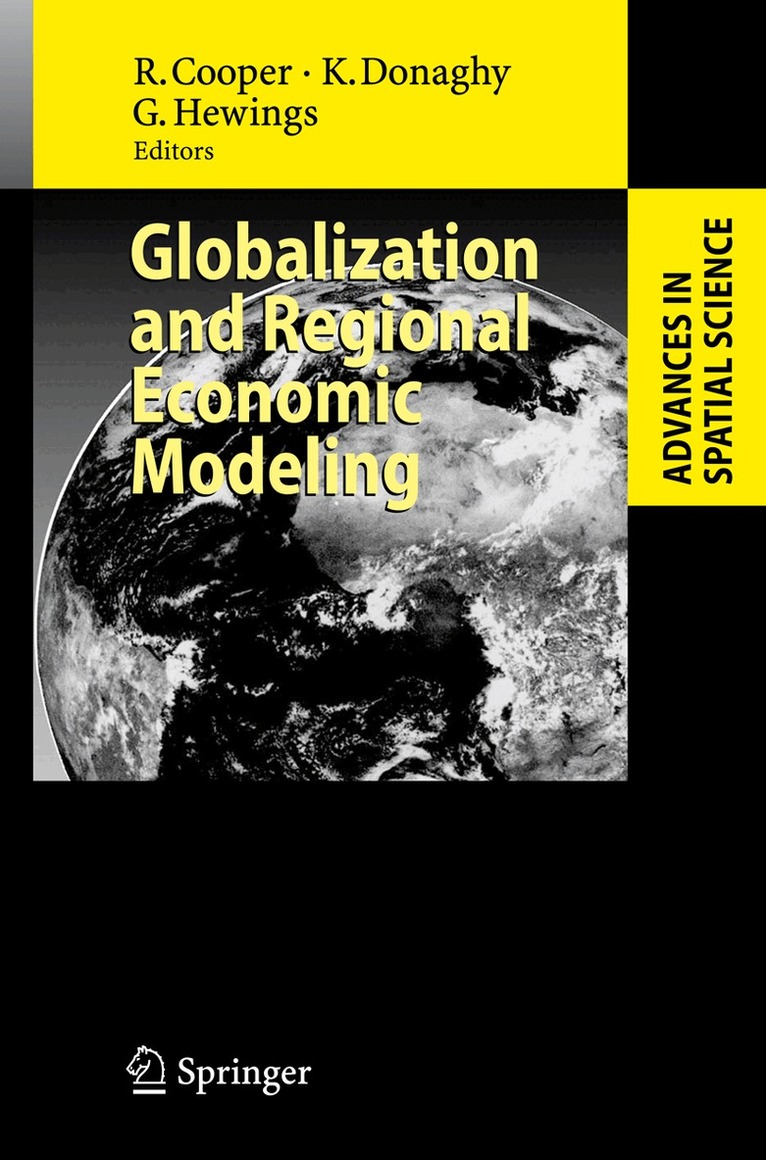
Globalization is affecting regional economies in a broad spectrum of aspects, from labor market conditions and development policies to climate change. To understand better how this works, we need both conceptual and methodological contributions. We need new schemes to organize our thinking, direct our attention, and frame thought experiments on the basis of which guidance may be offered. And we need methodological innovations that enable us to carry out studies and thought experiments at levels of spatial and temporal resolution and formal complexity adequate to capture and account for the phenomena that characterize globalization. The chapters of this volume, written by an international cast of eminent regional scientists, represent contributions of both types, in many cases introducing and demonstrating the use of new tools for analyzing and understanding enormous changes underway in regional economies around the world.
1 625 kr
Skickas inom 10-15 vardagar
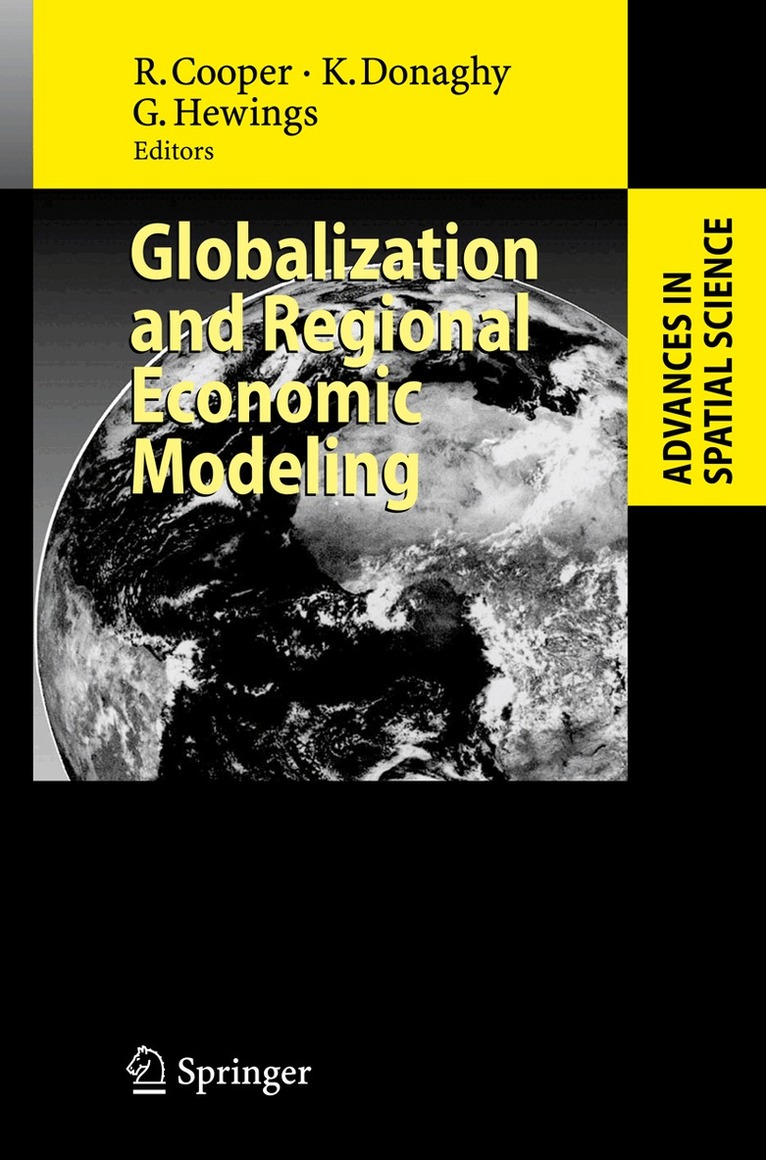
Globalization is affecting regional economies in a broad spectrum of aspects, from labor market conditions and development policies to climate change. To understand better how this works, we need both conceptual and methodological contributions. We need new schemes to organize our thinking, direct our attention, and frame thought experiments on the basis of which guidance may be offered. And we need methodological innovations that enable us to carry out studies and thought experiments at levels of spatial and temporal resolution and formal complexity adequate to capture and account for the phenomena that characterize globalization. The chapters of this volume, written by an international cast of eminent regional scientists, represent contributions of both types, in many cases introducing and demonstrating the use of new tools for analyzing and understanding enormous changes underway in regional economies around the world.